Brussels wants to cover roughly two-thirds of the €70 billion hole Kyiv faces next year — and to send the bill, ultimately, to Moscow. Whether all 27 member states will sign up is the fight that now moves to two summits.
Track it live: Ukraine war map · Wars tracker
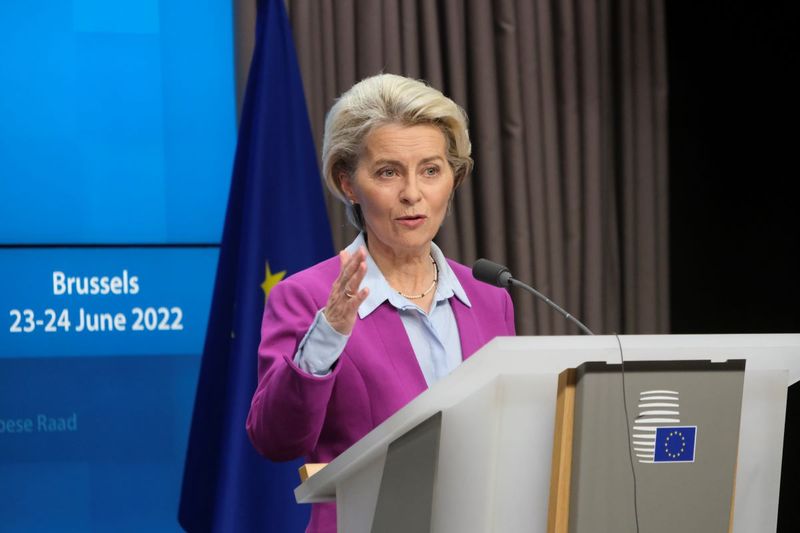
BRUSSELS, November 18, 2026 — The EU 45 billion loan Ukraine 2027 proposal landed on Wednesday, when the European Commission proposed a new €45 billion (about $49.5 billion) loan to Ukraine for 2027, Commission President Ursula von der Leyen announced, according to Reuters reporting from Brussels on November 18. The structure is the story: Ukraine would repay the principal only once it receives war reparations from Russia. If Russia does not pay, the draft reserves a right for the EU to fall back on immobilised Russian sovereign assets — a provision that, as of Wednesday, is draft language, not decided law. The loan still requires approval from EU member states and institutions before a euro can move.
What Brussels proposed: €25 billion for defence, €20 billion for the budget
The purpose, in the Commission’s framing, is to cover around two-thirds of an anticipated €70 billion financing gap Ukraine faces in 2027 as it fights Russia’s invasion, launched in 2022. In the formal reporting of the proposal, the split is up to €25 billion for defence and up to €20 billion to support the government budget — the money that keeps salaries, pensions and basic services paid while the war consumes revenue. An earlier draft breakdown subdivided the non-defence share into €10 billion of budget support and €10 billion of macro-financial assistance; that earlier split should be read as a drafting stage, not a second, competing final number. The headline split is €25 billion defence / €20 billion budget support.
The arithmetic is worth doing plainly. €45 billion is about 64 percent of the €70 billion gap — “around two-thirds,” as the Commission puts it. It does not close the gap: even if approved in full and on time, Kyiv would still need roughly €25 billion more from other sources — bilateral donors, the IMF programme, domestic revenue and any further EU instruments — to fully fund 2027. And the defence share, at €25 billion against €20 billion for the budget, signals where Brussels thinks the binding constraint sits: not only paying the state’s bills, but paying for the weapons, ammunition and air defence that the state’s survival depends on — the same need visible nightly in our coverage of Russia’s 433-drone barrage that cut power to hundreds of thousands across Ukraine.
How the Ukraine reparations loan would work
The mechanics follow the template the EU has already used once. The EU would raise the money by borrowing on capital markets, backed by headroom in the EU budget — the margin between what the budget can legally spend and what it has committed. Ukraine is liable for the interest in principle, though the EU could subsidise that cost, according to Economy Commissioner Valdis Dombrovskis’s remarks reported by Interfax-Ukraine. Disbursements would be conditional: Dombrovskis tied the money to Ukraine continuing reforms on the rule of law, anti-corruption and the management of public money. The principal, uniquely, is not scheduled against Kyiv’s future budgets at all. It falls due, in the design, only when reparations arrive from Moscow — which is why supporters call it a reparations loan and why its legal fallback matters so much.
The fallback: immobilised Russian assets
If Russia never pays, the draft reserves the EU a right to use immobilised Russian sovereign assets instead. That single clause carries the heaviest legal and political baggage in the proposal. Roughly €200 billion of Russian central bank assets are immobilised in the EU, most of them held at Euroclear in Belgium — a concentration that has made Belgium the pivotal, and most cautious, voice in the long-running debate over whether touching the principal, rather than only the windfall profits, exposes the host state to Russian litigation and retaliation. Wednesday’s draft does not settle that debate. It writes the fallback into the text as a reserved right, leaving the fight over whether it could ever be exercised for later. Readers should hold the distinction firmly: the reparations condition is the proposal’s core; the assets fallback is, for now, a clause in a draft.
Context: the €90 billion loan, and why a €70 billion gap remains
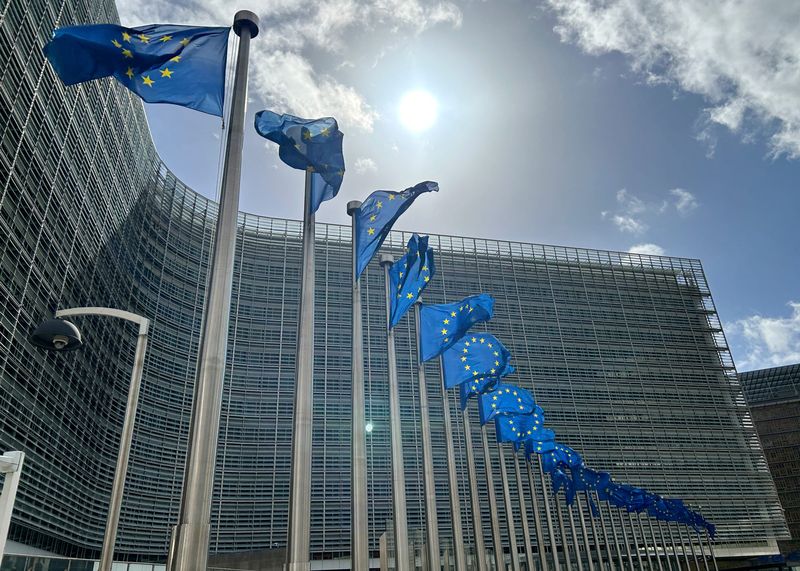
This proposal comes on top of the €90 billion loan EU leaders agreed at the end of last year for 2026–2027, also borrowed against EU budget headroom and also structured so that Ukraine repays only from Russian reparations. That loan is partway through disbursement. A reasonable question follows: if €90 billion was agreed for 2026–2027, why does a €70 billion gap open up in 2027 alone? The reporting points to the shape of the earlier package — spread across two years and multiple purposes — set against the sheer burn rate of a full-scale war entering another year: air defence interceptors, artillery, drones, energy-system repair after strikes such as those in a single week of 115 missiles and 3,000 drones, by Kyiv’s count, plus a civilian budget whose tax base the war keeps shrinking. If Wednesday’s loan is approved, combined EU loan exposure to Ukraine under the reparations format would reach €135 billion — €90 billion plus €45 billion — a figure that frames both the scale of the commitment and the size of the bet that reparations, or the fallback, eventually cover it.
Why this matters
Analysis: three things are being decided inside one loan document, and they should be separated. First, cash flow: without external financing on roughly this scale, Ukraine’s 2027 budget and defence procurement face a cliff, and cliffs in wartime are measured in air defence coverage and salaries, not spreadsheets. Second, leverage: von der Leyen framed the loan, in remarks reported by RFE/RL, as the best way to give Ukraine a strong hand at the negotiating table — an argument that a funded Kyiv negotiates differently from a Kyiv weeks from insolvency. That is her framing, offered here as her stated rationale, not as a verified outcome. Third, precedent: each reparations-structured loan normalises the principle that the aggressor, not the victim or the taxpayer, is the intended final payer — while quietly transferring the risk to EU balance sheets for as long as reparations remain unpaid and hypothetical.
The view from Kyiv
For Ukraine, the proposal answers the largest single uncertainty in its 2027 planning, if it survives the summits. The conditionality — rule of law, anti-corruption, public money management — is language Kyiv has heard with every package since 2022, and it cuts both ways: it is the price of the money, and it is also, in the Commission’s design, the mechanism meant to reassure the member states writing the guarantees. The defence share would flow into exactly the procurement lines that our reporting on Patriot missile sign-off delays shows to be chronically short.
The view from EU taxpayers and sceptical capitals
The counter-argument, made by sceptics of joint borrowing in every recent EU financing fight, is that “repaid by reparations” describes an intention, not a schedule. Russia has made no promise to pay reparations, and there was no verified official Russian response specifically to Wednesday’s proposal at the time of writing — that absence is stated plainly here rather than filled with speculation. If reparations never arrive and the assets fallback proves legally unusable, the guarantees behind €135 billion of combined loans sit with the EU budget and, behind it, member states. Critics of common borrowing also object in principle: loans raised against shared budget headroom mutualise risk among 27 countries with very different exposures to the war. Supporters answer that the alternative — a Ukrainian fiscal collapse — would cost Europe more. Both arguments are live in the summit rooms; neither was resolved on Wednesday.
The defence industry angle
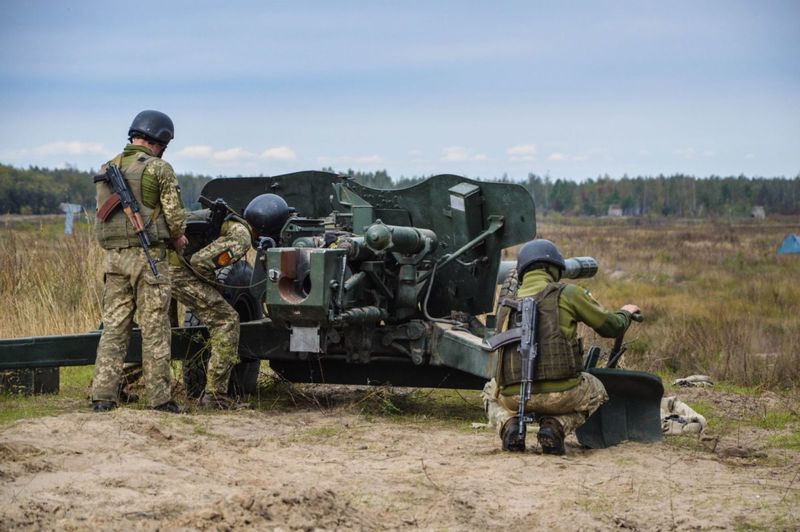
A €25 billion defence tranche is also an industrial signal. European defence firms have spent three years expanding shell, missile and drone capacity against uncertain order books; a funded, multi-year Ukrainian requirement underwrites that expansion in a way one-off donations do not. How much of the defence money would be spent inside the EU, and how much on faster non-EU supply, is one of the detailed questions member states will press in the coming weeks — and one on which Wednesday’s proposal reporting leaves real uncertainty.
What happens next: the November 26–27 and December summits
EU leaders first discuss the proposal at the European Council in Brussels on November 26–27, a summit where the €1.8 trillion 2028–2034 EU budget is also on the table — meaning the Ukraine loan will be negotiated in the same room, and possibly the same trades, as the bloc’s seven-year finances. Earlier reporting has aimed at final agreement at the December 17–18 summit; that is a reported aim, not a guarantee. Three scenarios frame the path. In the first, approval in substance by December, with drafting fights over the assets fallback pushed into implementing text. In the second, delay: unanimity and budget-headroom objections — the standing risks in any borrowing of this size — push a decision into the new year while disbursement timelines slip. In the third, redesign: the loan survives but smaller, or with the fallback clause stripped to win over the most exposed member states, shifting more of the 2027 gap back onto Kyiv’s other donors. The watch list is concrete: language on the fallback after November 26–27, any Belgian conditions on Euroclear, and whether the December summit conclusions name a figure at all.
Conclusion
Wednesday’s proposal is, on its face, a loan. Underneath, it is a statement about who Europe believes should pay for Russia’s war, and a wager that a legal structure can hold that belief in place for as long as politics requires. The facts are narrow and should stay narrow: €45 billion proposed, €25 billion for defence and €20 billion for the budget, repayment tied to reparations that Russia has not promised, approval still to come. Everything else — the leverage at the negotiating table, the safety of the fallback, the fairness of the risk — is argument, and the argument now moves to Brussels on November 26.
Sources
Sources: Reuters, November 18, 2026 (10:30 UTC) — the Commission’s €45 billion ($49.5 billion) proposal for 2027, the reparations-only repayment condition, the draft fallback on immobilised Russian sovereign assets, the €70 billion anticipated gap, the €25 billion / €20 billion split, the borrowing-against-headroom mechanism and the relationship to the €90 billion loan agreed last year. RFE/RL, November 18, 2026 — von der Leyen’s framing of the loan as giving Ukraine a strong hand at the negotiating table. Interfax-Ukraine, November 18, 2026 — Economy Commissioner Valdis Dombrovskis on interest liability, a possible EU interest subsidy and reform conditionality (rule of law, anti-corruption, public money management). European Commission reporting, November 18, 2026 — the proposal and summit timeline (first discussion November 26–27; a December 17–18 agreement reported as an aim in earlier reporting). Background on immobilised Russian assets and the Euroclear debate in Belgium is presented as background with attribution, as reported across EU coverage. No verified official Russian response to the November 18 proposal was available at the time of writing, and none is quoted.