Myanmar junta airstrikes Rakhine October 2026
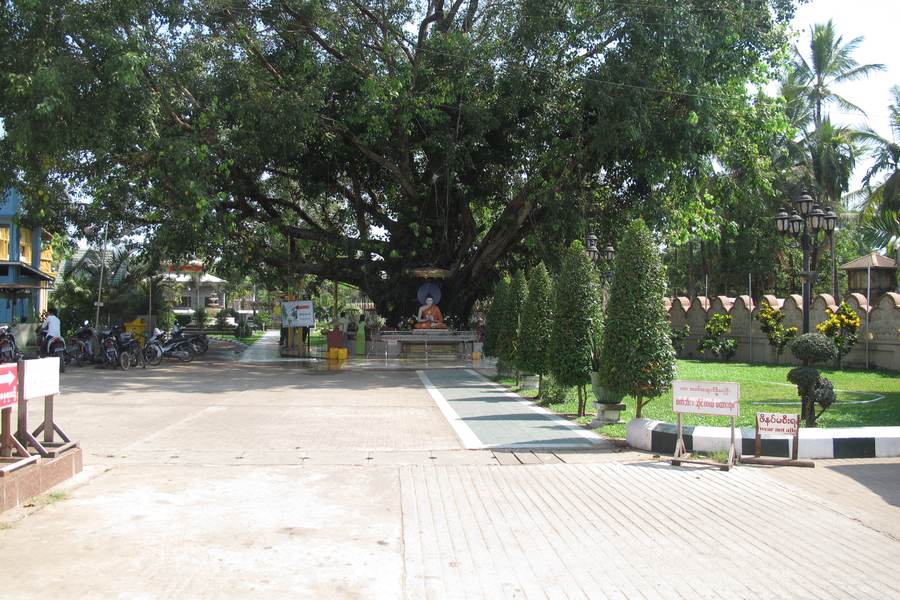
Myanmar junta airstrikes in Rakhine escalated sharply in the first 48 hours of October 2026, spreading from a midnight bombing of a displacement shelter to a multi-township air campaign — and, hundreds of miles to the south, to machine-gun strafing runs over villages still counting their flood dead. The timing is the story’s sharpest edge: the strikes came days after the United Nations condemned the September 28 bombing of Kyauktaw’s India Market, which reportedly killed 50 civilians, and hours after Fortify Rights said that attack may constitute a war crime.
What follows is reconstructed from three reporting streams — Burma News International and the Global Arakan Network in Rakhine, and the Human Rights Foundation of Monland (HURFOM) in Tanintharyi — each describing strikes within a single 48-hour window. None has been independently verified by Signal Post News; independent access to all of these areas is restricted. But the specificity of the accounts — named villages, named victims, bomb weights, airbases, times of day — is what makes them worth examining closely, and what separates them from the vaguer toll announcements that follow many of Myanmar’s airstrikes.
The midnight strike on Aungphyupyin
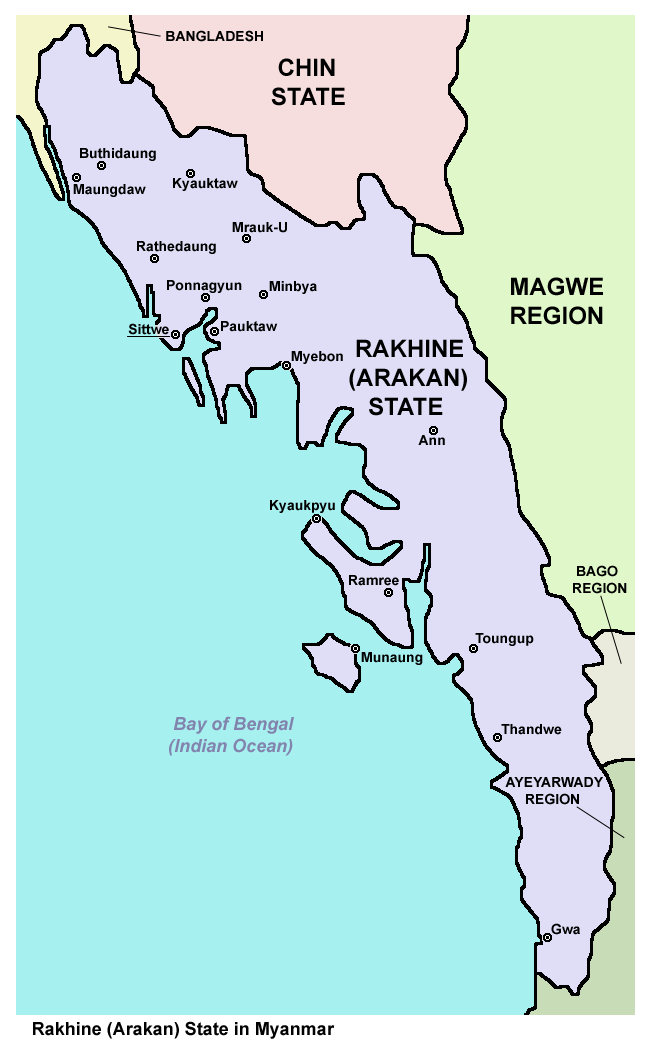
Around 1:00 AM on October 2, a junta jet fighter bombed a shelter for internally displaced people at Aungphyupyin Village in Ponnagyun Township, Rakhine State, near a motorcycle repair workshop along the Kyauktaw–Ponnagyun Road, according to Burma News International. BNI reported three civilians wounded: 30-year-old Daw Khin Wai Soe, herself displaced, who suffered a severe fracture of her right arm; 18-year-old Maung Kyaw Moe Lwin, also displaced, hit by shrapnel in both thighs; and 17-year-old local resident Ko Aung Min, wounded in the abdomen and right knee. Several homes were damaged.
The Global Arakan Network, citing One Nation News, independently confirmed the strike: a jet that took off from Tada-U airbase dropped a 500-pound bomb at approximately 12:51 AM. Its account lists two injured — Daw Khin Wai Soe and Maung Kyaw Moe Lwin, both displaced persons sheltering in the village — and damaged homes. The one-person discrepancy, BNI’s third casualty, the 17-year-old local, is normal for fast-moving war-zone reporting where casualty lists are still being reconciled. The accounts converge on the essentials: a displacement shelter, the middle of the night, a heavy bomb.
Note what was hit. Not a market at noon this time, but a shelter where displaced people were sleeping — people already uprooted by the war, struck in the place they fled to. If the accounts hold, this is the conflict’s logic applied to the population the conflict itself displaced.
October 1: airstrikes across five Rakhine townships
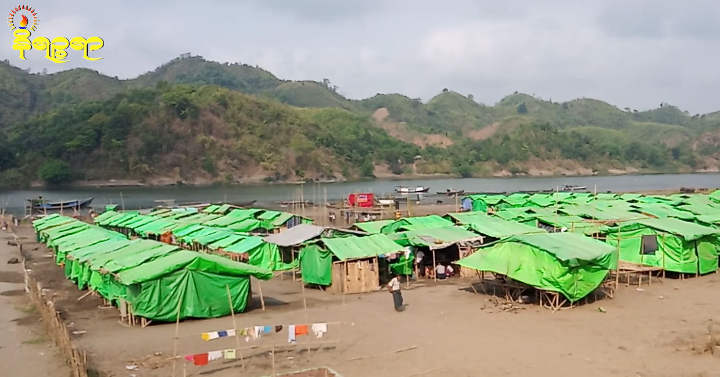
The midnight strike capped a day of bombing across the state. The m.CDM domestic news digest for October 2 reported that on October 1 the junta carried out successive airstrikes on Kyauktaw — including a monastery near Thakyarset Village — as well as Thandwe, Wirathani, Rathedaung and Ponnagyun, killing one civilian and injuring nine. The same digest reported the Kachin Independence Army’s allegation that the military used prisoners from Bhamo Prison as human shields. That allegation is attributed to the KIA via m.CDM and has not been independently verified.
The bombing had already begun the night before. The Global Arakan Network reported that around 9:00 PM on September 30, junta jets carried out consecutive strikes near Kyaukseik Village in Ponnagyun Township, wounding a 4-year-old displaced child, Maung Nay Kyaw Lin, whose left leg was cut by shattered glass, and 26-year-old local resident Ma Khin Khin Than, who suffered severe injuries. Local sources described repeated bombardment across Ponnagyun, Rathedaung and Weerathani townships between 9:00 PM and midnight, with the full casualty extent still being established.
There is a ground-war backstory to the air campaign. The Global Arakan Network reported that since September 4 the junta pushed more than 1,000 troops in columns into Ponnagyun Township, was repeatedly defeated by the Arakan Army, and has since “continuously targeted non-military civilian residential areas with relentless airstrikes and heavy artillery bombardment.” That is the outlet’s characterization, but it fits the observable pattern: ground offensives fail, and the bombs fall on the towns instead.
Bombs over a flood zone: the Dawei strikes
Nearly a thousand kilometers south, a different disaster was unfolding underneath the bombs. HURFOM reported that around 3:00 PM on October 1, a junta fighter jet dropped two 250-pound bombs and opened fire with machine guns around Sin Kyan village and the Pi Taing and Laba village tracts in Thayetchaung Township, Dawei District, Tanintharyi Region. The attack followed an airstrike the previous evening near Yay Wai village in Pakari village tract, east of Dawei.
No casualties were reported from the airstrikes themselves, a local resident told HURFOM. But the context is what makes the report harrowing: heavy rain since late September had triggered severe flooding and landslides across Launglon, Thayetchaung and Dawei townships. Local relief organizations put the flood toll at more than 40 dead across more than 60 affected villages — and in some villages, bodies had still not been recovered when the jets came. “They just keep bombing,” the resident said. “This isn’t happening in only one or two villages — most villages across the district are affected. Some still haven’t received any help. In some places, they haven’t even recovered the bodies.” Another line from the same account deserves to be quoted in full: “They should not be bombing these areas. Families have lost loved ones and are grieving, and the rescue work is still unfinished.”
The air attacks were not the only military pressure on the flood zone. In a separate October 2 report, HURFOM described junta columns advancing into villages in Yebyu and Launglon townships as residents struggled with flooding and landslides — troops entering Thit Taw Taung village while it was flooded between September 26 and 29, artillery shells fired into the village, a 100-soldier column moving into Kyauk Sin village on September 28, and forces operating along the Myeik–Dawei section of Union Highway No. 8, forcing whole communities to flee. Dawei recorded its highest rainfall in 80 years; the military kept moving anyway.
Why this matters
Three things make this 48-hour window significant beyond its casualty count. First, it is escalation after condemnation. The UN secretary-general “strongly condemned” the Kyauktaw strike; the UN human-rights chief said it underlined the grave plight of civilians in Rakhine; Britain condemned it; Fortify Rights said it may be a war crime. The junta’s answer was not restraint but a wider air campaign — the latest evidence that international condemnation, unaccompanied by material pressure on the things that keep jets flying (weapons, spare parts, aviation fuel), does not alter the military’s targeting calculus.
Second, the target set is widening downward: from a crowded market at noon, to a displacement shelter at 1:00 AM, to villages in the middle of flood recovery. When the displaced are bombed in their shelters and the flooded are bombed during rescue work, the category of “safe place” in this war effectively empties out. That is not collateral damage in any meaningful sense of the phrase; it is the predictable outcome of treating populated areas as the battlefield.
Third, the geography. Rakhine and Tanintharyi are roughly a thousand kilometers apart. Simultaneous air operations on two distant fronts signal that the junta’s air fleet — its one remaining asymmetric advantage as ground control collapses — is being used as a nationwide instrument of punishment rather than as tactical support for ground troops. Air power has become the strategy.
Background: from the 2021 coup to the fall of Rakhine
Myanmar has been in turmoil since the military seized power from the elected government of Aung San Suu Kyi on February 1, 2021, and the war in Rakhine reignited in November 2023 when a ceasefire between the junta and the Arakan Army collapsed. Since then the AA — one of Myanmar’s most powerful ethnic armed groups — has seized town after town. Fortify Rights now puts the junta’s losses at 14 of Rakhine State’s 17 townships.
The AA was part of the Three Brotherhood Alliance, but it is now the last of the three still fighting; the other two factions accepted Chinese-brokered truces. That leaves the AA as the junta’s most potent remaining opponent — and, from Naypyidaw’s perspective, the one whose territory must be made ungovernable. Records from the HDCO show the junta has killed more than 1,200 civilians in Arakan since November 2023, with airstrikes the largest single cause of civilian casualties since December 2024. The trajectory is unmistakable: as the military retreats on land, it escalates from the air.
The September 28 Kyauktaw market bombing — covered in detail in our earlier report — was the deadliest point on that trajectory so far: 50 reported killed, at least 58 wounded, the UN’s condemnation, and now a war-crime allegation. This week’s strikes are the trajectory continuing.
Who benefits, who loses, what the critics say
The junta has not publicly responded to these specific strikes in the cited reporting, and its standing position — stated previously — is that it “exercises maximum restraint to avoid civilian harm.” The gap between that claim and the recorded tolls is where the hard questions sit. The KIA’s allegation that Bhamo Prison inmates were used as human shields, if true, would add a further grave breach; it remains an allegation, reported by m.CDM and not independently verified.
The Arakan Army benefits politically from each documented strike: every bombed market and shelter is evidence for the accountability tracks now circling the junta — the UN’s Independent Investigative Mechanism for Myanmar, which has called for eyewitness material on the Kyauktaw strike, and The Gambia v. Myanmar at the International Court of Justice. The ULA/AA’s September 28 statement called attacks on hospitals, clinics, schools, markets and villages “routine and habitual war crimes” — its characterization — and vowed “corresponding and appropriate retaliatory measures” against documented perpetrators, from commanders to pilots. Retaliation is the near-term risk the AA’s own words point to.
Civilians lose, in the most literal sense: the displaced bombed in their shelters, flood victims bombed during rescue work, and a running ledger — more than 1,200 dead in Arakan alone — that keeps growing while each side litigates intent.
The critics’ practical argument, made most forcefully by Fortify Rights, is about the supply chain: aircraft need weapons, spare parts and aviation fuel, and the states and intermediaries that provide them are enabling the campaign. Cutting those inputs would not end the war, but it would degrade the one instrument the junta still uses freely. That case will be tested less in Naypyidaw than in the capitals that sell the fuel.
The numbers, in context
3 injured — or 2. BNI reports three wounded at Aungphyupyin; the Global Arakan Network, citing ONN, reports two. The discrepancy is a reminder that these are claims, not confirmed facts — but both accounts agree a 500-pound-class bomb fell on a displacement shelter at around 1:00 AM.
1 killed, 9 injured across five townships in a single day. The October 1 toll, per m.CDM, spread over Kyauktaw, Thandwe, Wirathani, Rathedaung and Ponnagyun — a statewide tempo, not an isolated sortie.
Two 250-pound bombs, strafing runs, zero reported casualties. The Dawei strikes show the campaign’s breadth even where it kills no one: the point, from the air, may be disruption and terror as much as destruction.
40+ flood dead, 60+ villages affected. The natural disaster underneath the military one in Dawei District — the figure that makes bombing a flood zone during body recovery what it is.
14 of 17 townships. The territorial fact driving everything: a military that has lost Rakhine on the ground and is trying to deny it from the air.
1,200+ civilians killed in Arakan since November 2023. The HDCO ledger this week’s strikes add to — the context that converts each new bombing from an isolated tragedy into a data point.
What happens next
Three scenarios are visible. In the first, the Arakan Army retaliates — it has vowed to, and says it has documented the perpetrators — striking junta positions or supply lines, and the coming weeks become a round of escalation in northern Rakhine, with civilians in AA-held towns bearing the risk of follow-on strikes. In the second, the condemnations are absorbed without material consequence: the strikes continue, the IIMM and rights groups keep logging them, and the 1,200-plus count grows — the pattern since 2021. In the third, states act on the supply-chain argument and move against the weapons and jet-fuel flows; the air fleet’s tempo degrades over months, not days, and enforcement depends on tracing intermediaries willing to look the other way.
The near term most resembles a blend of the first two: retaliation risk highest in northern Rakhine, condemnation without cost everywhere else. The honest position for readers is the narrow one: the claims are specific, multi-sourced and serious, and they are not yet independently verified — while the pattern they would fit, air power punishing territory the junta can no longer hold, is by now the documented shape of this war.
Sources
- Burma News International (BNI), October 2, 2026: reporting on the ~1:00 AM strike on the IDP shelter at Aungphyupyin Village, Ponnagyun Township — three civilians injured (Daw Khin Wai Soe, Maung Kyaw Moe Lwin, Ko Aung Min), several homes damaged.
- Global Arakan Network (citing One Nation News): Airstrike on Aung Phyu Pyin in Ponnagyun at Midnight Injures Two Innocent Civilians (October 2, 2026) — ~12:51 AM strike, 500-pound bomb, jet from Tada-U airbase, two IDPs injured, homes damaged.
- m.CDM Domestic News: October 2, 2026 (m.CDM Domestic News) — October 1 strikes on Kyauktaw (monastery near Thakyarset Village), Thandwe, Wirathani, Rathedaung and Ponnagyun (1 killed, 9 injured); KIA’s Bhamo Prison human-shields allegation.
- HURFOM: Junta Bombs Flood-Hit Dawei District as Families Search for the Dead (October 2, 2026) — two 250-pound bombs and machine-gun fire near Sin Kyan village and the Pi Taing and Laba village tracts, Thayetchaung Township; flood toll and resident accounts.
- Fortify Rights: Myanmar: Junta Airstrikes on Civilians in Rakhine May Constitute a War Crime (October 2, 2026) — war-crime assessment of the Kyauktaw strike, 14-of-17 townships figure, weapons/jet-fuel recommendation.
- Global Arakan Network: Two Injured, Including a 4-Year-Old Child, in Consecutive Jet Fighter Airstrikes on Ponnagyun (October 1, 2026) — September 30 night strikes near Kyaukseik Village, Ponnagyun Township.
- HURFOM: Military Advances Force Villagers to Flee Amid Flooding and Landslides in Yebyu and Launglon (October 2, 2026) — junta columns advancing amid floods in Dawei District.
- ISP-Myanmar: Kyauktaw’s Man-Made Hell: Every Bomb Deepens the Resentment (October 1, 2026) — analysis column on the September 28 Kyauktaw strikes.