Myanmar junta airstrike Kyauktaw market
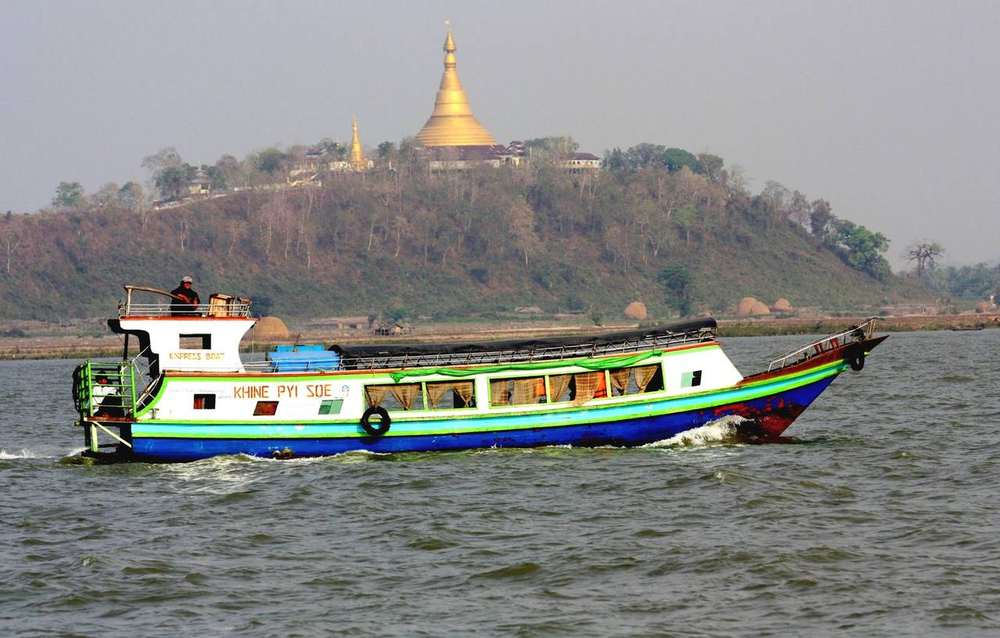
Myanmar junta airstrike Kyauktaw market — those five words describe what may be the deadliest single attack on civilians in Rakhine state this year. On Monday, September 28, a junta jet fighter struck the vicinity of the Kisapanadi Bridge and the India Market in Kyauktaw town, in the north of the state, during peak trading hours. According to the Arakan Army, the ethnic armed group that controls the area, and Wai Hun Aung, an aid worker whose team operates in the region, at least 33 people were killed and 36 injured. Reuters, which reported the figures, said it could not independently verify them.
Every number in this story therefore belongs to the ledger of claims, not confirmed fact. But the specificity of the accounts — a four-minute strike window, a named bridge, a named market, body counts updated through the afternoon — is precisely what makes this incident worth examining closely, and what separates it from the vaguer toll announcements that follow many of Myanmar’s airstrikes.
What happened at the India Market
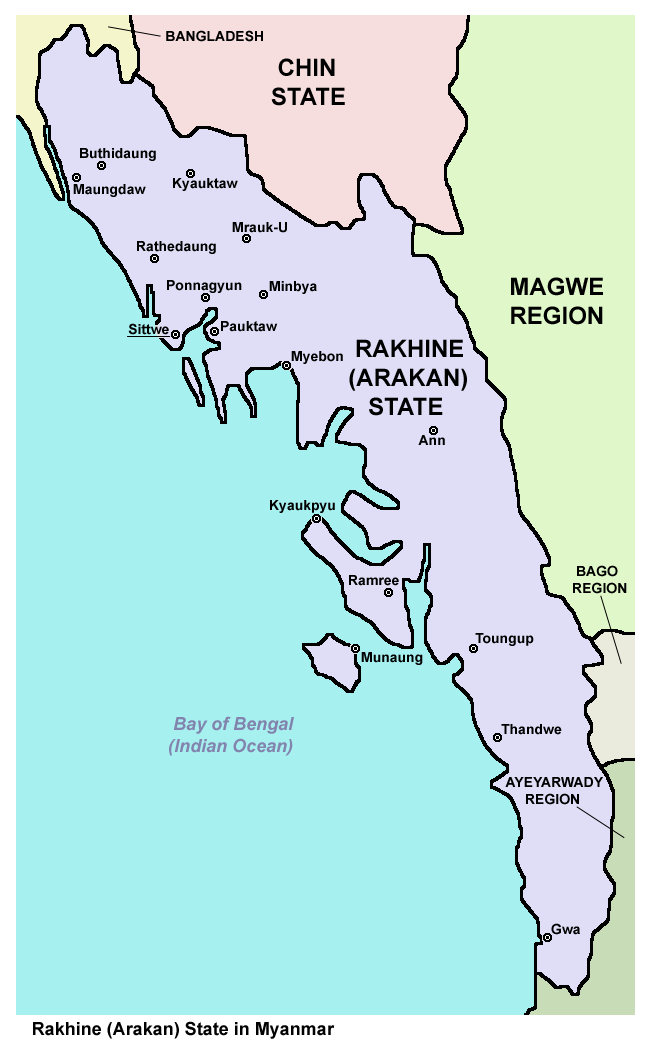
The account carried by Narinjara, via the Global Arakan Network, is unusually granular. Between 12:10 PM and 12:14 PM local time, the report says, the jet struck near the Kisapanadi Bridge, which spans the Kaladan river at the entrance to Kyauktaw, and the adjacent India Market. Thirty-two bodies had been recovered as of past 3:00 PM, with the toll possibly rising toward around 40 as rescue work continued. The bridge itself suffered structural damage. At the market, the timing could hardly have been worse: peak trading hours, when rickshaws, motorcycles, cars and farm trucks crowd the commercial strip. Many of those vehicles were set ablaze in the strike.
Reuters’ account, published at 11:36 UTC on September 28, put the figures at at least 33 killed and 36 injured, attributing them to the Arakan Army and to Wai Hun Aung. The aid worker told Reuters: “This location is quite far from the fighting and has nothing to do with the conflict,” describing Kyauktaw as a riverside town in the north of Rakhine state, which borders Bangladesh.
The two accounts converge on the essentials — a crowded civilian market, midday, dozens of casualties — while differing slightly on the precise killed figure, which is normal for fast-moving reporting in a war zone where independent access is restricted. Neither has been independently confirmed.
The junta’s silence — and its standing claim
A Myanmar government spokesperson did not immediately respond to Reuters’ request for comment on the Kyauktaw strike. That silence is itself part of the pattern: junta airstrikes on civilian areas are rarely acknowledged in real time, and the military’s standing public position, stated previously, is that it “exercises maximum restraint to avoid civilian harm.”
The gap between that claim and the recorded tolls is where the hard questions sit. If the Kyauktaw figures hold, this would be the second mass-casualty air attack on a civilian site in Arakan in recent weeks, and it fits a documented trajectory: records from the HDCO show the junta has killed more than 1,200 civilians in Arakan since the war returned there in November 2023, with airstrikes the largest single cause of civilian casualties since December 2024. A military exercising “maximum restraint” does not produce a civilian death ledger that large; a military that treats air power as a substitute for lost ground does.

Why Kyauktaw, and why a market
Kyauktaw is a town of strategic ordinariness: 65 miles north of Sittwe, the state capital, sitting at the Kaladan river crossing that gives it its economic life. The Arakan Army captured it around February 2024, and with Rakhine now controlled almost entirely by the AA — one of Myanmar’s most powerful opposition groups — the junta has few ground options left in the state. That is the context in which air power becomes the default instrument.
There is a military logic to hitting a bridge and a market, and it is worth stating plainly without endorsing it. Bridges are the AA’s arteries; markets are where a town’s cash economy breathes. Degrading both squeezes the group’s logistics and its tax base. But that logic requires accepting the mass killing of the people standing on the bridge and shopping in the market as the cost — which is precisely why such strikes, if the casualty claims are accurate, look less like precision counter-insurgency and more like punishment of the population living under AA control.
The aid worker’s quoted observation — that the location is “quite far from the fighting and has nothing to do with the conflict” — cuts at the heart of it. Kyauktaw has been under AA control for more than two and a half years. There was no battle under way in the market at noon on Monday. Whatever military purpose the strike served, it was visited on a civilian space at the hour of maximum civilian density.
A pattern, not an aberration
The 1,200-plus civilian deaths in Arakan since November 2023 are the figure that puts Monday’s strike in its proper frame. That is not a toll produced by accidents. It is the toll of a campaign in which air attacks became, from December 2024 onward, the leading killer of civilians — a shift that coincides exactly with the junta’s loss of ground to the AA. As the military has retreated on land, it has escalated from the air.
The Arakan Army’s own strategic position sharpens the picture. The AA was part of the Three Brotherhood Alliance, but it is now the last of the three still fighting — the other two factions agreed Chinese-brokered truces. That leaves the AA as the junta’s most potent remaining opponent and, from Naypyidaw’s perspective, the one whose territory must be made ungovernable. Rakhine’s civilians are caught between a rebel administration trying to consolidate control and a junta determined to make that control worthless.
Why this matters
If verified, the Kyauktaw strike would be one of the largest single-incident civilian death tolls from a junta airstrike this year — and it lands at a moment when the war in Arakan is entering a new phase. With the AA as the last major force still fighting after the Chinese-brokered truces took its partners off the battlefield, the junta can now concentrate its diminished air fleet on one front. The market strike suggests what that concentration looks like in practice.
The deeper significance is about the kind of war Myanmar is becoming. When air power becomes the primary instrument against a territorially successful insurgency, civilian spaces become the battlefield — not by collateral accident but by strategic design, because the insurgency governs the towns. The “maximum restraint” language is then not a description of conduct but a legal shield: the military claims it is fighting rebels, the rebels claim it is murdering shoppers, and the bodies accumulate in markets and schools while each side litigates intent. The HDCO record — more than 1,200 dead, air attacks the leading cause for nearly two years — is the trend line that makes Monday’s reported toll plausible even before it is verified.
There is also the accountability dimension. A strike of this scale on a named market, with named witnesses and a running body count, is exactly the kind of incident that international investigators — including the UN’s Independent Investigative Mechanism for Myanmar — log and preserve. Each such strike tightens the documentary record, whether or not the junta ever acknowledges a single one.
The numbers, in context
At least 33 killed, 36 injured. Attributed to the Arakan Army and an aid worker; Reuters could not independently verify. If confirmed, the toll rivals the worst mass-casualty airstrikes in Arakan since 2023 — and it came from a four-minute strike window, a reminder of how much destruction a single sortie can inflict on a crowded space.
32 bodies recovered by past 3:00 PM, toll possibly rising toward ~40. Narinjara’s afternoon update suggests the final count may be higher still. In strikes on markets, the wounded-to-killed ratio often shifts toward more deaths as the critically injured succumb — the 36 injured are themselves a figure to watch in the coming days.
More than 1,200 civilians killed in Arakan since November 2023. The HDCO figure is the context that converts Monday from an isolated tragedy into a data point. Air attacks have been the largest cause of civilian casualties since December 2024. Kyauktaw is what that trend looks like up close.
What happens next
Three scenarios are visible. In the first, the Arakan Army responds in kind — striking junta positions or supply lines — and the week becomes a round of escalation in northern Rakhine, with civilians in AA-held towns bearing the risk of follow-on strikes. In the second, the junta’s silence holds and the incident enters the archive: logged by investigators, unacknowledged by Naypyidaw, absorbed into the 1,200-plus count with no political consequence. In the third, the scale of the reported toll draws international attention — statements from ASEAN, from Beijing, whose brokered truces sit on the other front, and from the UN mechanism — raising the diplomatic cost without necessarily changing the military calculus.
The honest position for readers is the narrow one: dozens of civilians are reported dead in a market at midday, the claims are specific and sourced but unverified, and the pattern they would fit — air power punishing territory the junta can no longer hold — is by now the documented shape of this war. Verification, when it comes, will matter enormously for accountability. But the trend it would confirm is already on the record.
Sources
- Reuters: At least 33 people killed in western Myanmar airstrike, rebel group and aid worker say
- Global Arakan Network (Narinjara reporting): Kyauktaw bombing kills 33 civilians, injures 36 others