Myanmar junta airstrike NUG headquarters
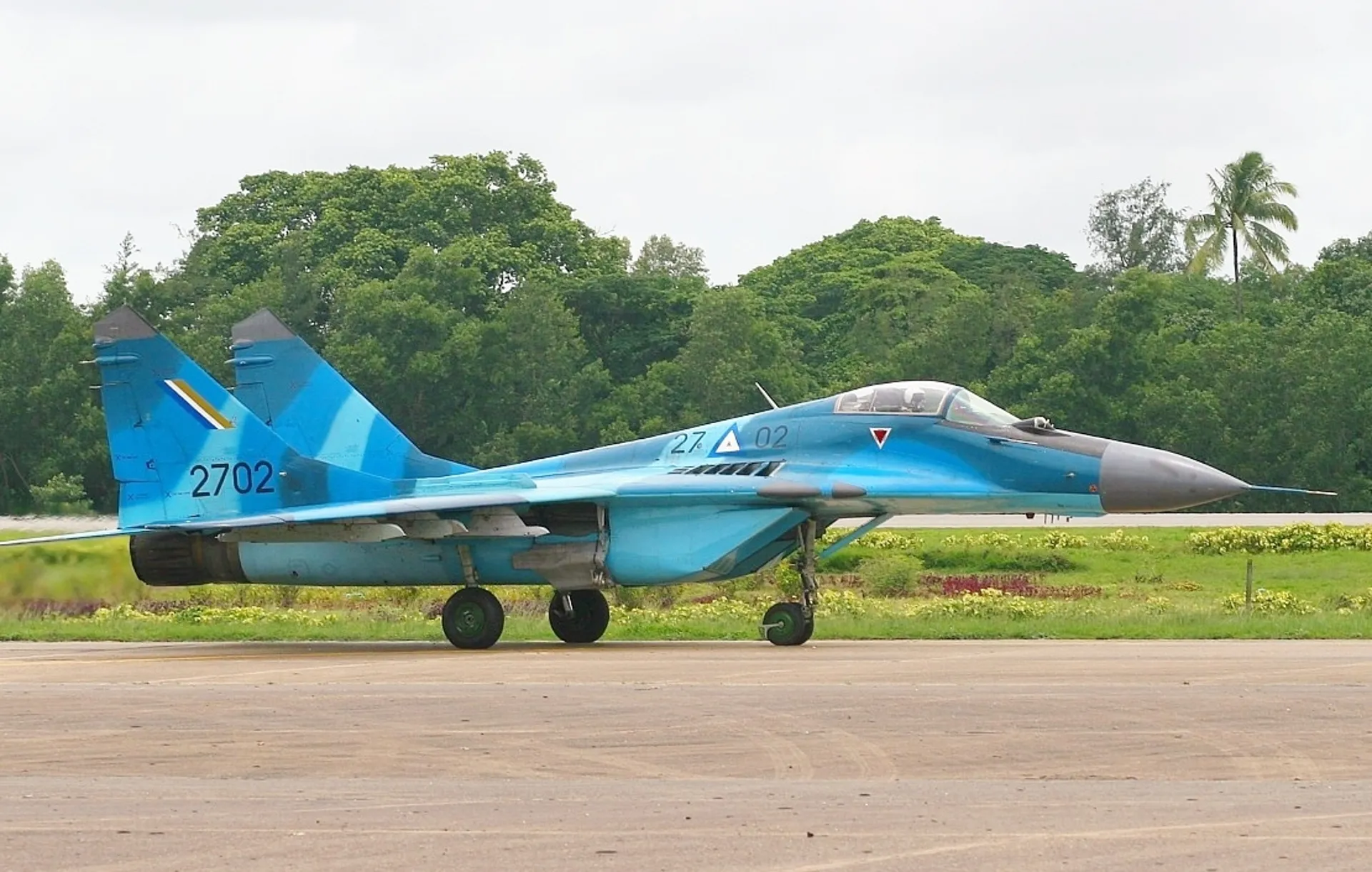
A Myanmar junta airstrike on an NUG headquarters compound near the border of Bago Region and Mon State killed four to five people on September 24, according to two regional news outlets. Myanmar Pressphoto Agency reported four People's Defence Force fighters killed; MoeMaKa English reported five deaths. Signal Post News cannot independently reconcile those accounts, so the toll remains four to five killed rather than one definitive number.
The same reports said the attack hit the National Unity Government's Special Regional Military Command headquarters at around 11 a.m. Myanmar Pressphoto Agency said six bombs struck the compound and that artillery fire followed, impeding rescue and evacuation. MoeMaKa described the attack as possibly the first direct strike on an NUG regional command headquarters. If confirmed, that would make the event more than another battlefield air raid: it would show that the military had located and reached a node intended to coordinate resistance forces across several regions.
What happened
The reporting agrees on the place, morning timing and central fact of an airstrike on the command site, but it diverges on the number killed. Myanmar Pressphoto Agency put the toll at four PDF fighters. MoeMaKa reported five killed and named Aung San Shar among the dead. Because wartime reports can reflect different hospital, unit or recovery cutoffs, the discrepancy should remain visible until the command or another independent source publishes a verified roster.
Both outlets said former Myanmar military personnel who joined the Civil Disobedience Movement were among the wounded. Ex-Major Tin Lin Aung and ex-Sergeant Nay Win Aung were reported severely injured. Their presence at the headquarters is strategically significant: defectors can contribute knowledge of doctrine, targeting procedures, logistics and command culture that civilian resistance forces did not possess before the coup.
The claim that artillery followed the bombing matters operationally and humanely. Follow-on fire can delay medics, scatter surviving staff and turn a recoverable wound into a death. The available reports do not establish the weapon type, launch platform, exact impact points or whether every bomb hit the compound. They also do not provide an official junta account of the operation.
Why this matters
Air power has long given Myanmar's military an advantage over dispersed resistance forces, but a successful strike on a regional headquarters changes the problem from general exposure to command vulnerability. Headquarters connect intelligence, planning, communications and logistics. Even when most fighters remain intact, a strike can interrupt decisions across multiple units and force commanders to choose between coordination and concealment.
MoeMaKa reported that the Special Regional Military Command oversees five tactical commands, 15 battalions and three PDF columns operating across Mon, Karen and Dawei areas. Signal Post News has not independently verified that organizational count. If accurate, the headquarters was not merely a local camp: it was an operational bridge across fronts where anti-junta forces, local PDFs and established ethnic armed organizations have different structures and priorities.
The reported first direct strike also carries a signaling effect. For the junta, it demonstrates reach and may be intended to erode confidence in rear-area sanctuaries. For the resistance, it is a warning that fixed or repeatedly used facilities can be found. Yet destroying a building is not the same as dismantling a command. The strategic result depends on who survived, what communications were lost, whether plans and devices were compromised, and how quickly authority moved elsewhere.
The command's role in a war fragmented since the 2021 coup
Myanmar's civil war grew out of the military's February 2021 overthrow of the elected government. The National Unity Government emerged from lawmakers, activists and other opponents of the coup and later established a chain of command for People's Defence Forces. Those forces operate alongside, and sometimes in coordination with, ethnic armed organizations that have fought the central military for decades.
That coalition has expanded the geography of resistance but created a coordination challenge. Local knowledge and decentralized initiative make units harder to eradicate; fragmented command can make joint operations, supply and discipline harder to sustain. A special regional command is meant to reduce that friction. The more successfully it integrates battalions and columns, however, the more valuable it becomes as a target.
The strike therefore tests whether the NUG's developing military institutions can be both coherent and survivable. Conventional armies depend on identifiable headquarters, staff cycles and communications. Insurgencies survive by dispersing. Myanmar's resistance needs elements of both: enough structure to plan across regions, but not so much concentration that one accurate strike removes critical people and information.
September's air campaign: command sites and civilian exposure
The headquarters attack sits within a broader September air campaign reported across resistance-held and contested areas. On September 24, Kantarawaddy Times reported that an airstrike in Bawlakhe killed two men and injured four people, including a child. The outlet said 12 civilians had been killed in Karenni State during September. Those are local-media figures that Signal Post News has not independently verified.
Five days earlier, the Human Rights Foundation of Monland reported bomb damage to five buildings at two schools in Bilin Township. The report did not establish that students were present at the moment of impact. Even when schools are empty, damage removes community infrastructure and can interrupt education or shelter capacity. The incidents are not proof that every strike belongs to one coordinated target list, but together they show the range of objects exposed during the air campaign: a resistance command, villages and schools.
That pattern places different legal questions side by side. A command headquarters used for military operations may qualify as a military objective. Civilians, schools and other civilian objects remain protected unless and for such time as they become military objectives. Parties must also take feasible precautions and avoid attacks expected to cause civilian harm excessive to the concrete and direct military advantage anticipated. Public reporting reviewed here is not detailed enough for a legal finding about any individual strike.
Intelligence, surveillance and the unconfirmed social-media theory
The most consequential unanswered question is how the location was discovered. A headquarters can be exposed by aerial surveillance, signals intelligence, a compromised device, a human source, predictable vehicle movement or repeated communications. It can also be found by combining minor clues that seem harmless on their own.
MoeMaKa discussed speculation that social-media posts exposed the site's location. That theory is unconfirmed. No publicly available evidence reviewed by Signal Post News proves that a post, photograph or geotag led to the strike. Treating the claim as fact would risk blaming victims or personnel without evidence and would distract from other plausible intelligence routes.
The operational-security lesson does not depend on proving one leak. Staff can reduce exposure by stripping metadata, delaying publication, controlling backgrounds and landmarks in images, varying routes, compartmenting schedules and limiting the number of devices present at one command site. Those measures impose real costs: slower coordination, less public documentation and more friction between units. The balance is not secrecy for its own sake, but reducing the signature an adversary can repeatedly observe.
The CDM-defector angle
The reported wounding of Tin Lin Aung and Nay Win Aung highlights why defectors are high-value participants and high-value targets. Former officers and noncommissioned officers can translate the military's internal language, anticipate standard operating procedures and help new formations formalize training. They may also carry networks inside the security apparatus or understand vulnerabilities in air-ground coordination.
Their involvement has a political dimension as well. The Civil Disobedience Movement sought to deny the post-coup authorities the labor and legitimacy needed to govern. Military defectors embody a breach in the institution on which the junta most depends. Publicizing their casualties may serve junta messaging; preserving their expertise may be especially important to the resistance.
But expertise concentrated at a headquarters creates risk. A resistance movement can replace equipment faster than it can replace experienced officers who understand both conventional military systems and a dispersed insurgent network. The human loss may therefore matter more than the damaged compound.
Before and after: what one headquarters strike changes
| Measure | Before the strike | After the strike |
|---|---|---|
| Command model | A regional node reportedly coordinated five tactical commands, 15 battalions and three PDF columns | Staff must determine what can remain centralized and what should disperse |
| Perceived sanctuary | A border-area headquarters could support planning away from many immediate front lines | The site is demonstrated—or at least reported—to be within the junta's target reach |
| Human capital | CDM defectors brought institutional military knowledge into the resistance | Two defectors were reportedly severely wounded, putting scarce expertise at risk |
| Information discipline | Public visibility can support recruitment, legitimacy and coordination | Images, devices, visitors and routines will face tighter scrutiny |
The numbers show the asymmetry. Six reported bombs were directed at a site connected, according to MoeMaKa, to 18 subordinate battalions and columns plus five tactical commands. A small number of accurate weapons can therefore disrupt a much larger organizational network. Yet the reverse is also true: a network spread across dozens of units can absorb the loss of one physical location if authority, communications and records are redundant.
A cross-conflict comparison: the headquarters dilemma
Across conflicts, armed groups that move from local cells toward regional commands face a recurring trade-off. Centralization improves campaign planning, logistics and accountability. It also creates detectable patterns: meetings, radio traffic, supply deliveries and senior personnel converging at known times. Modern surveillance makes those patterns easier to fuse into a target picture.
The comparison should not be overstated. Myanmar's terrain, communications infrastructure, air-defense scarcity and mix of ethnic armed organizations are distinct. Unlike a state military with hardened bunkers and layered air defenses, many resistance formations rely on concealment and mobility. Unlike a purely clandestine cell system, the NUG also seeks public legitimacy and a recognizable command structure. That combination makes resilience—not permanent invisibility—the more realistic objective.
The relevant measure of success is therefore not whether headquarters are ever hit. It is whether command continues after they are hit: orders reach units, casualty reporting remains reliable, successors assume authority and sensitive information is protected. A strike that produces a dramatic image but no sustained operational paralysis may have limited military value. A less visible loss of staff, devices or trust could have a larger one.
Who benefits, who loses and what critics fear
The junta benefits if the attack removes experienced personnel, exposes the command network or forces it into slower communications. It also gains a deterrent message for local supporters who believed the border area was relatively secure. Those advantages depend on the accuracy of the reporting and on what was actually destroyed or captured.
The NUG and aligned forces lose people, continuity and possibly confidence in their security practices. They can limit that damage by moving command functions rather than trying to recreate the same headquarters elsewhere. A more dispersed model may survive better but can weaken oversight and make coordinated offensives harder.
Civilians lose when intensifying air operations spread across contested areas. The Bawlakhe casualties and Bilin school damage reported this month illustrate the concern: even a campaign aimed partly at resistance infrastructure can impose fear, displacement and service loss on nearby communities. Local monitors also face verification constraints, while access restrictions make independent casualty confirmation difficult.
Critics of the junta will see the strike as part of a strategy that relies on air power where ground control is contested and that has repeatedly harmed civilians. Critics of the resistance may question whether locating a headquarters near communities or public facilities creates avoidable risk. The available reports do not provide enough geographic detail to determine the compound's distance from civilians, schools or homes, so that concern should be posed as a question, not stated as a proven failure.
There is a wider accountability concern. When neither side publishes target information, casualty rosters or after-action evidence, narratives harden before facts do. Independent monitors need access, satellite imagery and witness protection to distinguish a militarily consequential command strike from inflated claims—and to investigate any civilian harm.
What happens next
Dispersal and tighter operational security. The most likely immediate response is to break command functions into smaller cells, rotate meeting sites, reduce device use and impose stricter rules on images and visitors. The cost will be slower decisions and greater difficulty coordinating the five tactical commands, 15 battalions and three columns reported under the regional structure.
Retaliation risk. Units linked to the command may seek a rapid battlefield response to show that the strike did not paralyze them. That can restore morale, but hurried retaliation may expose more positions or increase civilian risk. The junta may also conduct follow-up strikes if surveillance indicates that surviving staff regrouped.
ASEAN and U.N. response—or silence. International institutions have repeatedly called for an end to violence in Myanmar, but statements have not removed the junta's air advantage. A meaningful response would require more than condemnation: improved incident documentation, pressure on aviation-fuel and weapons supply chains, humanitarian access, and protection for investigators. Consensus divisions inside ASEAN and the U.N. Security Council make a strong near-term measure unlikely.
The election backdrop. The military's planned election process gives air operations an additional political context. The junta can use strikes on command sites to argue that it is restoring order before voting. Opponents argue that an election conducted amid conflict, detention and exclusion cannot resolve the legitimacy crisis created by the coup. More successful strikes could weaken resistance coordination; they could also reinforce the view among opponents that armed pressure, rather than electoral participation under military rules, is the only available path.
The clearest indicators will be operational rather than rhetorical: whether the regional command reappears in public statements, whether subordinate units sustain coordinated activity, whether casualty names are reconciled and whether new strikes follow in Mon, Karen, Dawei or Bago areas. Until that evidence emerges, the responsible conclusion is limited but important: regional outlets report that the junta found and bombed a significant NUG command site, killed four to five people, and exposed a new level of risk for resistance coordination.
Sources
- Myanmar Pressphoto Agency — four reported killed, six bombs, wounded CDM officers and follow-on artillery
- MoeMaKa English — five reported killed, command footprint and possible first direct strike
- Kantarawaddy Times — Bawlakhe casualties and September Karenni civilian toll
- Human Rights Foundation of Monland — reported damage at two Bilin Township schools
Verification note: The core details come from regional media reporting. Signal Post News could not independently verify the casualty roster, weapon type, command footprint, social-media-location theory or precise damage. The death toll is presented as four to five because the two principal reports differ.
Related coverage
- Rights group reports torture and medical neglect of women prisoners in Myanmar
- U.N. investigators warn there is no safe return to Rakhine State
- Russian strikes kill civilians and damage a Kyiv data center