The UN Myanmar war crimes report issued Thursday delivers a direct warning to governments considering a Rakhine State Rohingya return: the conditions required for repatriation do not exist. The Independent Investigative Mechanism for Myanmar, or IIMM, says serious international crimes continue across the country and that Rakhine State remains exceptionally volatile for every community caught in the conflict.
The Mechanism lists aerial bombardment, artillery shelling, drone attacks, arbitrary detention, sexual and gender-based crimes, torture and killings among the harms civilians continue to face. It also says basic necessities are scarce in many places and humanitarian assistance has been obstructed. Its conclusion is narrow but consequential: return cannot yet be considered safe, voluntary, dignified or sustainable.
What the Mechanism found
The IIMM does not issue a general political assessment and it does not administer refugee returns. Created by the U.N. Human Rights Council in 2018, it collects, preserves and analyzes evidence of the most serious international crimes and violations committed in Myanmar since 2011, then prepares material that national, regional or international courts may use.
That evidentiary mandate matters. In a September 7 statement to the Human Rights Council, Mechanism head Nicholas Koumjian said serious international crimes were being committed with greater frequency and intensity. He said the military was increasingly using aerial attacks, including drones and paramotors that are harder to detect, and that investigators had observed more “double-tap” strikes in which a second attack hits rescuers and people helping the wounded.
In Rakhine State, Koumjian said the Mechanism was investigating allegations of killings, arbitrary detention, torture and forced displacement by various armed groups. The statement did not reduce the crisis to one perpetrator or one community: ethnic Rakhine and other groups have suffered bombing, shelling and blocked aid, while Rohingya and other minorities remain trapped between combatants.
Why this matters
Repatriation is not safe simply because a government labels it voluntary. A meaningful choice requires reliable information, freedom from coercion and a destination where returnees can obtain food, shelter, documents, movement and protection. The Mechanism's assessment says the violence and deprivation undermining each of those conditions are still present.
The timing is especially important because regional governments are discussing returns. Malaysia is preparing a September 29 repatriation flight under an arrangement with Myanmar's authorities, while rights groups warn that Rohingya could be exposed to renewed violence and forced recruitment. Our separate report explains why more than 160 organizations want Malaysia to stop that return plan.
The new statement does not rule out return forever. It says the prerequisite is an end to the crimes and violence causing suffering across Myanmar. That distinction matters: return remains a right, but a timetable imposed before protection exists risks converting that right into another displacement.
How we got here
Myanmar's military drove more than 700,000 Rohingya into Bangladesh during its 2017 clearance operations. A 2025 Mechanism report found that the destruction did not end when residents fled. In seven northern Rakhine village tracts it examined, Rohingya homes and property were destroyed and Border Guard Police bases were built on seized land.
At Myo Thu Gyi, the Mechanism said more than 800 homes, shops, markets and mosques existed before the 2017 violence. By 2018, more than 411 acres had been burned and flattened, and a large Border Guard Police base stood where Rohingya villages had been. It identified the Ministry of Home Affairs, the Border Guard Police, Asia World Company and other corporations as entities that financed, occupied or physically developed the seized sites.
The 2021 military takeover widened the conflict across the country. Rakhine then became a major front between Myanmar's military and the Arakan Army. The Mechanism's annual-report analysis says investigators are also examining allegations against the Arakan Army, including rape of Rohingya women, summary executions, recruitment of children under 15, destruction of mosques and repurposing of land for non-Rohingya settlement. Those are allegations under investigation, not court judgments.
Who benefits, who loses, and the caveats
Authorities that want to reduce refugee populations gain politically from presenting return as an administrative problem with a departure date. Myanmar's military authorities gain legitimacy when regional governments negotiate directly with them, while armed actors can gain control over abandoned land, labor and movement. Communities in host countries may hear a promise of relief from strained services and local tensions.
The costs fall most heavily on returnees. Without citizenship, property restitution, physical security and humanitarian access, a family can be transported across a border yet remain displaced in every meaningful sense. Bangladesh and other host states also lose if an unsafe return collapses and triggers another flight.
There are important limits to the evidence. The Mechanism is an investigative body, not a court, and its statements do not themselves establish criminal liability. Access restrictions also mean that investigators rely on witnesses, imagery, digital material and documents that must be authenticated and connected to specific incidents and chains of command. The IIMM's findings carry weight because of that method, but prosecutions and judgments belong to separate authorities. The pressure on those institutions is explored in our coverage of the threat of sanctions against the International Criminal Court.
What the numbers mean
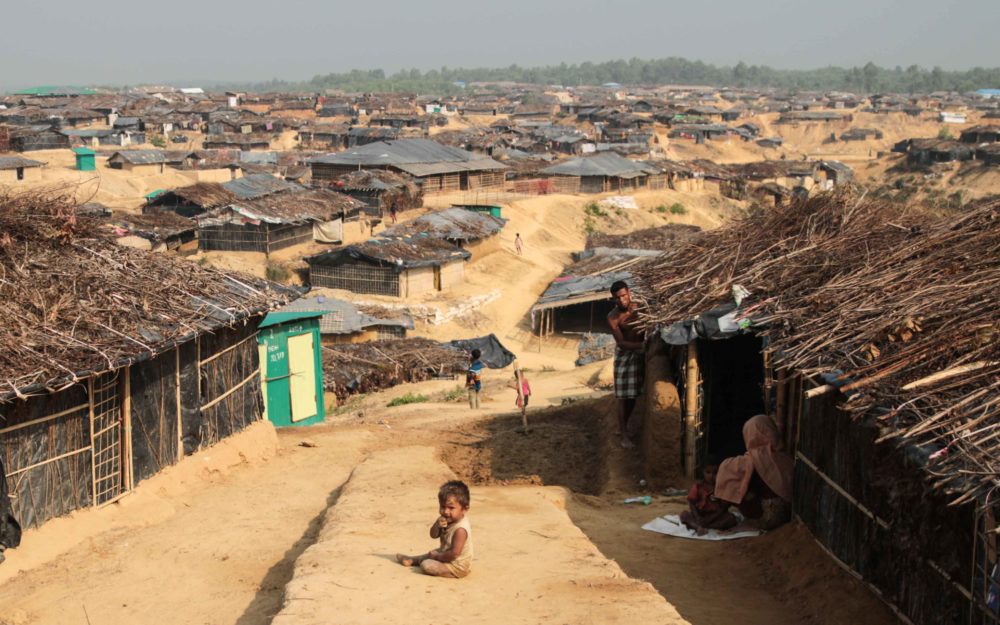
Koumjian told the Human Rights Council that more than 154,000 Rohingya had crossed into Bangladesh since early 2024, joining close to one million people already unable to return. Those figures measure continued flight and accumulated displacement, not a complete count of everyone affected inside Myanmar.
The Mechanism said it had collected material from more than 1,600 sources and more than 750 witness testimonies. Its eighth annual report recorded 27 evidence-and-analysis packages containing 6,626 items shared with accountability authorities during the reporting year. Volume alone does not prove a criminal case; the significance lies in whether evidence can establish acts, perpetrators, command relationships, financing and knowledge to the standard required by a court.
The same caution applies to legal milestones. The International Criminal Court prosecutor announced in November 2024 that he had requested an arrest warrant for Min Aung Hlaing over alleged deportation and persecution of Rohingya. A request is not an arrest or conviction, and the 2026 annual-report analysis said any decision could remain confidential under amended court rules.
What happens next
The immediate test is whether governments pause proposed returns and adopt the Mechanism's conditions as a practical checklist: violence must stop; humanitarian agencies must have access; people must be able to decide freely; and returnees must have a viable path to homes, land, documentation and security.
The longer test is accountability. The IIMM will continue collecting evidence and sharing it with authorities pursuing cases involving Rohingya and crimes committed since the coup. That process may support proceedings at the International Court of Justice, the International Criminal Court or national courts, but the Mechanism cannot arrest suspects, order reparations or compel Myanmar's authorities to cooperate.
For now, the clearest policy line is also the most restrained one: there is no credible safe-return date. Any government moving people back to Rakhine before the conflict and abuses end would be acting against the U.N. evidence body's current assessment, not implementing it.
Sources
This analysis draws on the IIMM statement on conditions for return, the Mechanism's report on destruction and dispossession of Rohingya property, its September 7 Human Rights Council statement, and an independent line-by-line analysis of the eighth annual report. Claims and allegations are attributed to the body or source that made them.