The Mossad chief joint Iran strikes case was put to US officials in person last week: Roman Gofman met CIA Director John Ratcliffe in Washington and, according to Israeli media reported by Reuters, travelled on to Miami to see special envoy Steve Witkoff — while former minister Ron Dermer ran a parallel lobbying track for Prime Minister Benjamin Netanyahu.
Track it live: Iran war tracker · Live wars tracker
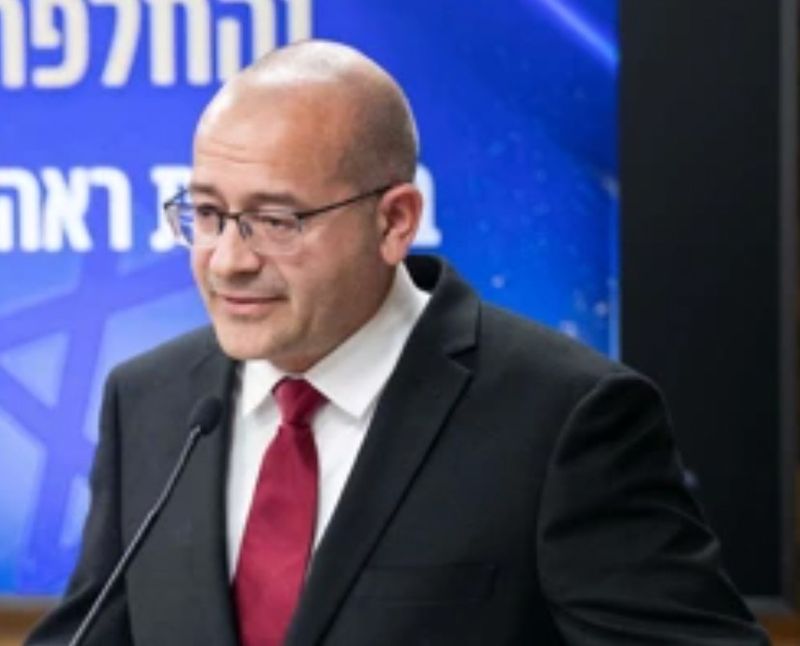
JERUSALEM, November 18, 2026 — The director of Israel’s Mossad intelligence agency, Roman Gofman, advocated for joint US-Israeli strikes on Iran during meetings with US officials last week, Reuters reported on Wednesday, citing two people briefed on the visit. The Mossad chief joint Iran strikes pitch was delivered at the top of the American intelligence and diplomatic system: Gofman met CIA Director John Ratcliffe in Washington, briefed US officials on Israeli intelligence concerning Iran, and, according to Israeli media reported by Reuters, also travelled to Miami to meet special envoy Steve Witkoff. In parallel, former Israeli minister Ron Dermer, a close confidant of Prime Minister Benjamin Netanyahu, was in the United States at the same time advocating a joint attack in meetings with Trump administration officials, the two sources told Reuters. Both outreaches, the sources said, formed part of Netanyahu’s effort to persuade President Donald Trump to launch a new attack on Iran. What Reuters reported is lobbying, described by anonymous briefed sources — not a decision, not an approved plan and not strikes under way. No part of the report says Trump agreed to anything, and the same report carries two substantial counterweights: Israel’s own military assesses that Iran does not pose an imminent threat to Israel, and the White House says its economic pressure campaign makes major combat operations unnecessary. Those counterweights are set out in full below, because they are part of the story, not a footnote to it.
What happened: the Washington and Miami meetings
The centrepiece of the visit, as Reuters reported it, was the Washington leg. Gofman met CIA Director John Ratcliffe, and he briefed US officials on Israeli intelligence on Iran. One of the two sources briefed on the visit said the intelligence related to Iran’s nuclear programme. That detail matters for understanding the shape of the argument being made: an intelligence briefing is the evidentiary half of a lobbying case, the material offered to support the policy conclusion the visitor wants the host to reach. Reuters did not report what the intelligence contained, what it showed, or how US officials responded to it, and this article does not speculate on any of those points. The report establishes that the briefing happened and what its subject was said to be; it does not establish that the intelligence persuaded anyone.
The second leg took the case to the president’s envoy. Gofman also travelled to Miami to meet special envoy Steve Witkoff, Reuters reported, attributing that element of the itinerary to Israeli media. Witkoff’s involvement is significant because of the channel he represents: he is the envoy associated with the indirect US-Iran diplomacy that Qatar has been mediating, so a visit to him places the Israeli case inside the diplomatic track as well as the intelligence one. The itinerary had in fact been signalled days earlier. Axios reported on November 13, citing three people familiar with the plans, that Gofman was in Washington for talks with Ratcliffe and was expected in Miami to meet Witkoff. Axios also reported that the Mossad, the CIA and the White House declined to comment — a silence that continued into this week’s reporting, in which the CIA again declined to comment and a White House official, while setting out the administration’s position on Iran, did not comment on a Gofman-Ratcliffe meeting. Netanyahu’s office did not immediately respond to Reuters’ request for comment.
A second channel: Ron Dermer’s parallel mission
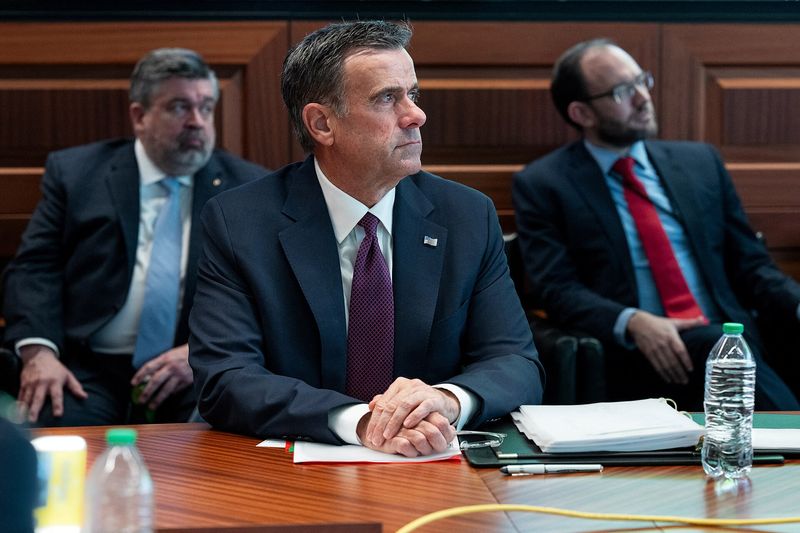
Gofman was not the only Israeli emissary making the case. Ron Dermer, a former Israeli minister and a close confidant of Netanyahu, was in the United States at the same time advocating a joint attack in meetings with Trump administration officials, the two Reuters sources said. The parallel structure is itself part of the news. An intelligence chief carries the evidence; a trusted political confidant carries the political argument. Sending both at once is how a government signals that a request is a priority of the prime minister personally, rather than a position being floated by one agency. Reuters’ sources made that connection explicit: both outreaches were part of Netanyahu’s effort to convince Trump to launch a new attack. The word to hold on to is “effort.” An effort to convince is a description of advocacy, and advocacy is all that the reporting documents. Whether it is working — whether anyone in Washington has moved toward the Israeli position as a result — is something neither Reuters nor Axios reported, and the White House’s on-record response, set out below, points in the opposite direction.
Why this matters
Analysis: the visit matters less for what it decided — nothing in the reporting suggests it decided anything — than for what it reveals about where the Iran file now sits in three capitals at once. In Jerusalem, the prime minister’s office is investing its two most credible messengers in a single argument: that the moment to strike again is now, and that it will not stay open. In Washington, the president has publicly moved the other way within the same fortnight, saying on November 9 that he would hold off on strikes, while his officials describe economic pressure as already devastating enough to make major combat operations unnecessary. And in the Gulf, leaders who would live with the retaliation are asking Trump directly not to attack. A lobbying trip is the visible tip of that three-way contest, and its timing — days after a presidential hold-off, in a week when US and Iranian forces have exchanged fire again — is what elevates it from routine intelligence diplomacy to a signal worth reading carefully.
There is also a structural reason the Gofman channel carries weight. Intelligence chiefs do not usually function as public advocates, and the Mossad director least of all; when the head of a foreign intelligence service personally briefs his counterpart on the evidence for a joint operation, the briefing is the diplomacy. It gives the receiving government something it can test against its own intelligence, and it gives the sending government a deniable, professional setting in which to make an intensely political request. That is precisely why the precision of the attribution matters. Everything known about the content of these meetings comes from people briefed on them who spoke to Reuters and Axios on condition of anonymity. Their account is detailed and mutually consistent across the two reports, but it remains an account of advocacy, offered by sources with their own reasons for describing it, and it should be weighed as such.
Context and background
The war these meetings are about began on February 28, when the United States and Israel launched a joint attack on Iran. A fragile ceasefire has formally held since April, but “formally” is doing considerable work in that sentence: this week the two sides exchanged fire again, with the United States bombing a missile site on Qeshm Island and Iranian attacks directed at Kuwait and Bahrain. Signal Post News has covered both halves of that exchange: the US strike on the IRGC missile site on Qeshm Island, and Iran’s Guards claiming a strike on a US radar in Bahrain as tanker claims mounted around Hormuz. It is against that live backdrop — a ceasefire that holds on paper while ordnance still moves — that a resumption of the wider war would risk the major escalation everyone quoted in this story is either urging or warning against.
The immediate political sequence runs the other way. On November 9, Trump said he would hold off on strikes on Iran, following a meeting with Qatar’s prime minister; Qatar is mediating indirect talks between the United States and Iran. Signal Post News reported that hold-off at the time: Trump may hold off on Iran attacks unless Tehran provokes the US, sources said. Gofman’s visit came after that statement, which frames the trip’s purpose precisely: it was an attempt to reopen a question the president had, nine days before Axios first reported the travel, publicly set aside. The Qatari mediation channel remains open in the background of everything in this article; it is the diplomatic alternative to the course Gofman and Dermer were advocating, and the Gulf leaders urging restraint, discussed below, are in several cases the same governments sustaining that channel.
The angles
Netanyahu’s window: the argument for acting soon
The case Netanyahu’s emissaries carried, as the two Reuters sources described it, rests on time. The prime minister believes the opportunity to launch an attack is narrowing. One source specified the mechanism: Israel is concerned that the United States could begin drawing down its substantial military deployment in the region before the end of the year. The logic is operational rather than rhetorical. A joint attack of the kind mounted in February depends on American forces in theatre — air defences, naval power, strike assets and the logistics beneath them. If that deployment thins, the joint option thins with it, whatever either government’s intentions. On this account, the lobbying calendar was set not by anything Iran did last week but by an American force-posture clock that Israel believes is already ticking toward the end of the year.
The Israeli military’s assessment: no imminent threat
The most consequential sentence in Reuters’ report may be the one that cuts against the visit’s purpose. Israel’s own military assesses that Iran does not pose an imminent threat to Israel, meaning immediate military action is not necessary. That assessment does not say Iran poses no threat, and it does not address what Iran’s programme might become over a longer horizon; it addresses imminence, which is the standard that arguments for immediate action usually have to meet. Its presence in the same report as the lobbying account changes how the lobbying should be read. The urgency in Netanyahu’s window argument is, on the sources’ own telling, about opportunity — American deployments and political timing — rather than about an Iranian move that Israel’s military judges to be imminent. Readers should keep those two different kinds of urgency separate, because the advocates quoted in this story have an interest in blending them.
The White House: pressure, not combat
Washington’s answer, as Reuters reported it, was a statement of sufficiency. A White House official said Trump believed Washington’s economic pressure campaign was so “devastating” to Iran that there was no need for “major combat operations.” The official added the administration’s standing formulation: the president has all options at his disposal to ensure Iran never gets a nuclear weapon. Read together, the two sentences are a holding position, not a door slammed shut — pressure is working, force is unnecessary, and nothing is renounced. But as a response to a week of in-person Israeli advocacy, it is not an encouraging one for Jerusalem: the official did not comment on a Gofman-Ratcliffe meeting, the CIA declined to comment, and the public line remained that the existing campaign is enough. Nothing in the reporting indicates the lobbying changed the administration’s stated position.
Gulf leaders urge restraint
A third person involved in US-Iran diplomatic efforts told Reuters that Gulf leaders have spoken to Trump asking him not to attack Iran, fearing retaliation against Gulf Arab states. Their concern is geographic and concrete: Gulf states host American forces, sit across narrow water from Iran, and absorbed the logic of retaliation throughout this year’s war, in which Iranian fire has repeatedly reached toward Gulf targets, including this week’s attacks connected to Bahrain and Kuwait. The Gulf appeal and the Israeli appeal are thus mirror images arriving at the same desk. One side argues the window is closing; the other argues the costs of walking through it would land on them. Trump’s November 9 hold-off came after a meeting with Qatar’s prime minister, and Qatar’s mediation of the indirect talks gives the restraint case an institutional channel that a single lobbying trip does not displace.
European scepticism, and the domestic politics claim
Two European officials added a further doubt, telling Reuters that Iran’s economy is under pressure but there is no indication its government is close to collapse, and questioning what a renewed offensive could achieve. That is a challenge to the theory of victory rather than to the timing: if pressure has not brought the government near collapse, and a new offensive’s achievable end-state is unclear, then the case for escalation has to rest on narrower grounds, such as setting back a programme rather than changing a regime. Finally, the domestic frame. Netanyahu is serving as caretaker prime minister after an inconclusive election last month. His rivals accuse him of seeking to escalate in order to improve his standing; that is their claim, reported by Reuters as an accusation, and Netanyahu denies it. This article reports the accusation and the denial because both are part of the political record around the lobbying — and attributes the motive to the rivals who assert it, not to the evidence, which shows advocacy by Netanyahu’s emissaries and says nothing by itself about why he ordered it.
The timeline and the deployment question
Laid out in order, the sequence is compact. February 28: the war begins with a joint US-Israeli attack. April: a fragile ceasefire formally takes hold, and formally holds, even as exchanges continue beneath it. November 9: Trump says he will hold off on strikes, after meeting Qatar’s prime minister, with Qatar mediating indirect US-Iran talks. November 13: Axios reports Gofman in Washington for talks with Ratcliffe, expected in Miami with Witkoff, with the Mossad, CIA and White House declining to comment. Last week: the meetings themselves, as Reuters’ two briefed sources described them, including Dermer’s parallel advocacy. This week: US and Iranian forces exchange fire again, around Qeshm Island, Kuwait and Bahrain. November 18: Reuters publishes the account of the lobbying. The one forward date in the story is not a deadline anyone has announced; it is the Israeli concern, relayed by one source, that the substantial US military deployment in the region could begin drawing down before the end of the year. No US official in either report confirmed such a drawdown, its scale or its timing, and it should be treated as the premise of the Israeli argument rather than as an established American plan.
What happens next
Analysis and open questions, not predictions. The first scenario is that the holding pattern holds: economic pressure continues, the Qatari-mediated indirect talks continue, the ceasefire continues to hold formally despite exchanges like this week’s, and the lobbying is remembered as pressure that did not move the president. The White House’s stated position, the Israeli military’s no-imminent-threat assessment and the Gulf appeals all point toward that equilibrium, and it requires no one to change their mind. The second scenario is provocation-driven: Trump’s own November 9 formulation held off strikes absent Iranian provocation, and a sufficiently grave Iranian action — against US forces, Gulf states or shipping — could reopen the question on Washington’s terms rather than Jerusalem’s. The third scenario is the one Gofman and Dermer were sent to build: a persuaded president, a joint decision, and a resumed offensive before any drawdown narrows the option. Nothing reported this week shows that scenario advancing beyond advocacy. The signals to watch are therefore specific ones: any change in the White House’s “devastating pressure” formulation; any visible change in the US regional deployment, in either direction; the state of the Qatari channel; and whether Israel’s military assessment, as reported, remains that no imminent threat exists. Until one of those moves, the accurate description of this story is the one Reuters’ sourcing supports: Israel’s intelligence chief and the prime minister’s confidant asked, in person, for a joint attack — and the public record shows the request, not an answer.
Related coverage: U.S. Strikes IRGC Missile Site on Qeshm Island After Iran’s Third Bahrain Drone Attack in Five Days · Iran’s Guards Say They Struck a US Radar in Bahrain as Hormuz Tanker Claims Mount · Trump May Hold Off on Iran Attacks Unless Tehran Provokes US, Sources Say
Sources
Sources: Reuters, November 18, 2026, reporting from Jerusalem by Alexander Cornwell, citing two people briefed on the visit: that Mossad director Roman Gofman advocated for joint US-Israeli strikes on Iran in meetings with US officials last week; that he met CIA Director John Ratcliffe in Washington and briefed US officials on Israeli intelligence on Iran, with one source saying it related to Iran’s nuclear programme; that he travelled to Miami to meet special envoy Steve Witkoff, per Israeli media reported by Reuters; that Ron Dermer was in the US at the same time advocating a joint attack, and that both outreaches were part of Netanyahu’s effort to convince Trump to launch a new attack; that Netanyahu believes the opportunity to attack is narrowing and that Israel is concerned the US could begin drawing down its regional deployment before the end of the year; that Israel’s military assesses Iran does not pose an imminent threat; that two European officials saw no indication Iran’s government is close to collapse and questioned what a renewed offensive could achieve; that a White House official described the economic pressure campaign as “devastating” and said there was no need for “major combat operations”; that a third person involved in US-Iran diplomatic efforts said Gulf leaders have asked Trump not to attack; and that Netanyahu’s rivals accuse him of seeking escalation to improve his standing, which he denies. Axios, November 13, 2026, citing three people familiar: that Gofman was in Washington for talks with Ratcliffe and expected in Miami with Witkoff, and that the Mossad, the CIA and the White House declined to comment. All advocacy claims in this article are attributed to those reports’ anonymous briefed sources; no US or Israeli decision to strike is reported by either outlet.