Iran’s army says it sent “destructive drones” against U.S. Patriot air-defence systems and drone and missile launchers at Kuwait’s Ali Al Salem Air Base — the first Iranian attack on Kuwait since September, Reuters reported on Wednesday. Kuwait’s armed forces said their air defences were repelling hostile drone attacks, that the explosions residents heard were interceptions, and that, for the moment, there were no victims and no material damage. Kuwait pointedly named no attacker. In the same hours, Bahrain said it had intercepted Iranian aerial attacks for the third time this week, and the Saudi-led coalition said it had destroyed a cruise missile the Houthis launched toward Riyadh. The three episodes, arriving a day after U.S. fighter jets struck an IRGC missile launch site on Iran’s Qeshm Island, widened the war’s map to another Gulf host state and tested, again, whether every interception can keep working.
Track it live: Wars tracker · Iran war tracker · Middle East tracker
KUWAIT CITY, November 18, 2026 — Iran attacks Ali Al Salem base: Iran’s army said on Wednesday that it had targeted U.S. drone and missile installations at the Kuwaiti base with drones, after Kuwait said its air defences were countering hostile drones, Reuters reported. The Iranian statement, carried by the state broadcaster IRIB and reported by Europa Press, claimed that “destructive drones” attacked Patriot defence systems and drone and missile launchers belonging to the U.S. Army at Ali Al Salem, and described the response as “decisive, overwhelming” and without “geographical limitations.” It was, Reuters reported, the first Iranian attack on Kuwait since September. Kuwait’s account was narrower and cooler: air defences were repelling hostile drone attacks, the explosions heard were interceptions, there were no victims or material damage for the moment, and the public should stay calm. Kuwait did not attribute the attack to any actor. Washington had issued no official reaction at the time of the Europa Press report.
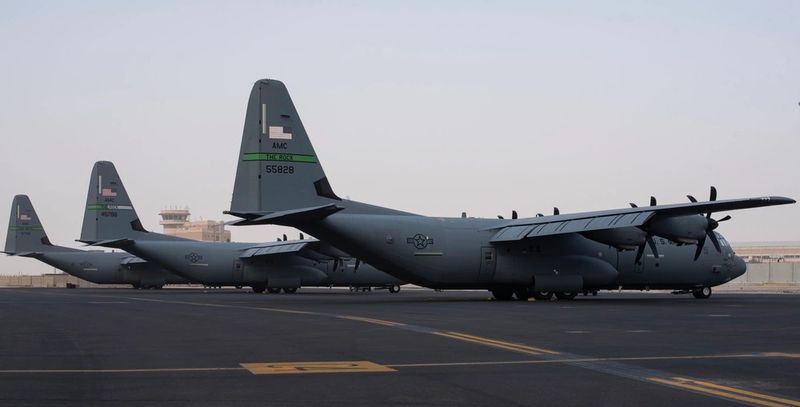
Claimed versus confirmed: two accounts of the same sky
The Ali Al Salem episode arrives in two versions that share a sky and little else, and keeping them separate is the only honest way to report it. In Tehran’s version, relayed by IRIB, Iranian drones reached the base and struck the systems the United States relies on to defend it: Patriot batteries and the launchers for American drones and missiles. In Kuwait City’s version, Kuwaiti air defences engaged hostile drones, the blasts people heard were those engagements, and nothing on the ground was hurt or damaged — for the moment, in the armed forces’ own careful phrasing. Neither version, as reported by Reuters and Europa Press on Wednesday, concedes the other’s central fact. This report therefore records the Iranian strike on Patriot systems as a claim, and the Kuwaiti interception account as the position of the state whose airspace it was.
What Kuwait did not say
As significant as anything Kuwait said is what it withheld. The armed forces described the drones as hostile and said nothing about who sent them. That restraint has a recent contrast: in early September, when drones last came, Kuwait accused Iran of “criminal aggression.” On Wednesday it accused no one. A government that names an attacker takes on obligations — to respond, to demand, to align publicly with whoever answers. A government that reports interceptions and urges calm keeps every channel open, including the one to Tehran. Whether the silence is diplomacy, caution while assessments continue, or a signal aimed at Washington as much as at Iran, Kuwait’s statement as reported does not say, and this report does not guess on its behalf.
Why Ali Al Salem matters
Ali Al Salem is not a peripheral strip. It is the principal air transport hub for U.S. forces in the Middle East — the gateway through which American personnel and cargo rotate into and out of the region — and it sits in Kuwait, at the head of the Gulf, between Iraq and Iran. An attack claimed against its Patriot defences is therefore aimed at two things at once: the physical shield over the gateway, and the political premise that hosting American forces keeps a Gulf state safer rather than making it a target. Tehran’s language of a response with “no geographical limitations” was written to be read in every capital that hosts a U.S. installation, not only in Kuwait City.
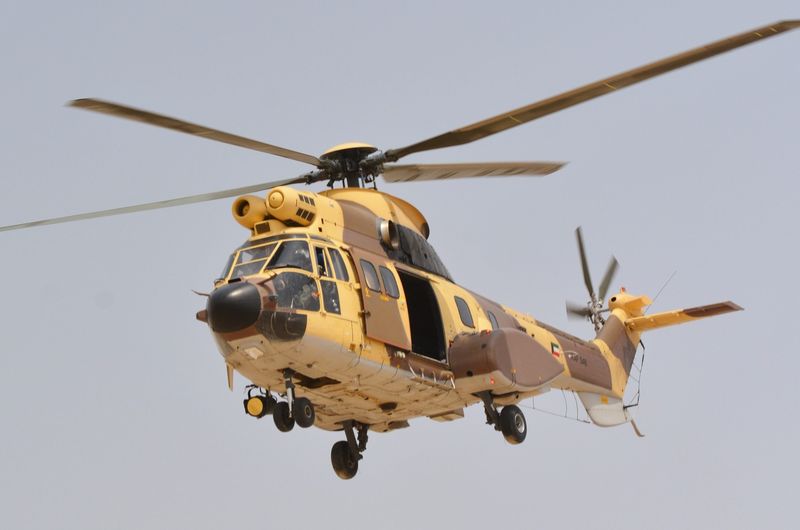
Bahrain: a third interception in a week
While Kuwait’s defences were firing, Bahrain’s were firing for the third time in a single week. Bahrain said it intercepted Iranian aerial attacks again on Wednesday and accused Tehran of pursuing a “systematic hostile approach,” Reuters reported. The kingdom hosts the U.S. Navy’s Fifth Fleet, the command that directs American naval power across the Gulf, the Red Sea and parts of the Indian Ocean, which is why attacks on Bahrain are framed by Tehran as attacks on the United States and felt in Manama as attacks on Bahrain. Three interceptions in a week is no longer an incident rate; it is a tempo, and tempos are what air-defence crews, stocks of interceptors and public nerves are eventually measured against. Our earlier coverage of the overnight alerts that preceded Wednesday’s firing, Bahrain’s all-clear and Kuwait’s overnight drone interceptions, and of the first radar claims at Sheikh Isa, Bahrain’s interception of Iranian drones as Tehran claimed a U.S. radar target, sets out how the Bahraini front of this war reached its third round.
A cruise missile bound for Riyadh, and 60 claimed targets
The third front on Wednesday belonged to Iran’s Houthi allies in Yemen. The Saudi-led coalition’s spokesman, Maj. Gen. Turki Al Malki, said a cruise missile launched by the Houthi group toward the Riyadh Region was intercepted and destroyed on Wednesday, the Qatar News Agency reported, in an account corroborated by Arab News syndication of the Wednesday-morning interception. The episode was distinct from Tuesday’s interceptions over the Saudi capital. Al Malki also said the coalition had earlier carried out a precision military operation destroying 60 legitimate military targets in Sanaa, Hodeidah, Amran and Saada — a figure that is the coalition’s own claim, stated by its spokesman, and not independently verified in the QNA report. The Houthis, Reuters noted, have intensified their attacks on Saudi Arabia while tightening their control over the Bab el-Mandeb strait, the Red Sea’s southern gate.
How the week escalated: Qeshm, Washington and the diplomats
Wednesday’s firing was the answer, in sequence if not by Tehran’s admission, to Tuesday’s American move. On Tuesday, U.S. fighter jets fired on an Islamic Revolutionary Guard Corps missile launch site on Qeshm Island, in the Strait of Hormuz, an unnamed U.S. official told Reuters; Iranian media and officials said the strike did not damage infrastructure. Our report on the U.S. strike on the IRGC missile site on Qeshm Island details that exchange and the Bahraini drone attacks that preceded it. The same Tuesday carried the war’s strangest subplot: President Trump said the United States was taking seriously the possibility that Iran was planning an attack on Washington, following a CNN report about alleged dirty-bomb plotting that Signal Post News has covered separately. On Wednesday, Secretary of State Marco Rubio said there was no imminent threat to the U.S. capital, and Iran’s foreign minister had already dismissed the allegations on Tuesday as “baseless.” Running underneath the firing, the diplomacy never quite stopped: Qatari and Iranian officials met on Tuesday, with Qatar’s Majed Al Ansari speaking of bridging perspectives, and Iran’s foreign minister visited Oman for talks on maritime corridors.
The numbers in context
Three figures organise Wednesday’s story. The first is one-fifth: the share of global energy flows that moved through the Strait of Hormuz before the war, according to Reuters — a strait now partly blocked by Iran, off whose Omani shore, at Khasab, a crew abandoned an LPG tanker on Tuesday. Every missile exchanged over the Gulf is exchanged within sight, economically speaking, of that chokepoint. The second figure is three: Bahrain’s count of Iranian aerial attacks intercepted this week, a tempo that turns air defence from an emergency measure into a standing condition. The third is 60: the coalition’s claimed tally of Houthi military targets destroyed across four Yemeni governorates, offered by its spokesman as the measure of its answer to the Houthi campaign — a claim about scale that, like Tehran’s claim about Patriot systems, awaits evidence neither side has published.
Why this matters
Analysis. The first reason Wednesday matters is the map. Until this week, the war’s Gulf geography ran mainly through Bahrain and the Strait of Hormuz. A claimed Iranian strike on Kuwait — the first since September — adds a second host state to the active map and tests the assumption, held in every Gulf capital, that September was an episode rather than a precedent. If Kuwait can be struck once, the question in Manama, Doha, Abu Dhabi and Riyadh is no longer whether the war can reach a host state, but which host state is reached next, and whether its government answers the way Kuwait did: with interceptions, calm and no name named.
The second reason is the pattern that now links the week’s events. An American strike on Qeshm Island on Tuesday was followed within a day by claimed Iranian strikes in Kuwait, a third Iranian attack intercepted over Bahrain and a Houthi cruise missile aimed at Riyadh. That is the exchange rhythm of a war being fought simultaneously by a state, its allies and its proxies, on at least three axes at once — and each axis has its own escalation logic, its own spokesman and its own claims that cannot all be true. Coordinated or merely simultaneous, the effect on the defenders is the same: no capital gets to treat its own sky as a separate war.
The third reason is what Iran gains even if every drone was intercepted, as Kuwait’s account implies. A claimed strike on Patriot systems costs Tehran little if the claim alone forces the United States and its hosts to reckon with the defence of the gateway base; it advertises reach “without geographical limitations” to every audience Tehran cares about; and it answers Qeshm in kind, within a day, without a single conceded casualty that would demand an American reply in blood. Kuwait’s non-attribution, read alongside, is the counter-move: it denies Tehran the formal accusation that would make the attack a diplomatic fact, and denies Washington a client’s public demand for retaliation. Both governments, in other words, used Wednesday’s words as carefully as its weapons.
The fourth reason is energy. A partly blocked Hormuz, an abandoned LPG tanker off Khasab, Houthi pressure on Bab el-Mandeb and missiles over three Gulf capitals in one morning describe a single system under strain: the waterways and states that move a fifth of the world’s energy. Markets can price a strike; what they struggle to price is a tempo — third interception in a week, first attack on Kuwait since September, sixty targets claimed in Yemen — with no announced end and no capital yet willing to call the exchange by a settled name.
What happens next
The immediate unknown is Washington’s. The United States had issued no official reaction to the Ali Al Salem claim at the time of Europa Press’s report, and its choice — to answer, to reinforce, or to let Kuwait’s calm stand as the response — will set the exchange’s next interval. A second unknown is attribution: if Kuwait later names an origin for the drones, as it did in September, the diplomatic space its silence currently preserves closes at once. A third is mediation: Qatar’s officials were already shuttling between perspectives on Tuesday, Oman was hosting talks on maritime corridors, and the week’s wider stage — the gathering of world leaders in Shenzhen — gives every capital a room, this week, in which the war can be raised without a communiqué admitting it was. What to watch is therefore the same trio that has organised the week: the interval before the next launch, the words chosen by the next capital whose sky is crossed, and whether the interceptions — in Kuwait, in Bahrain, over Riyadh — keep their perfect record. The war’s calibration depends on that record holding every time. Wednesday held. The week is not over.
Sources
- Reuters, November 18, 2026 (Enas Alashray, Cairo; published 00:16 UTC, updated 07:06 UTC): Gulf states intercepted missiles and drones from Iran and Houthi allies on Wednesday after the U.S. struck Qeshm Island; Iran’s army said it targeted U.S. drone and missile installations at Kuwait’s Ali Al Salem base after Kuwait said its air defences were countering hostile drones; the first Iranian attack on Kuwait since September; Bahrain intercepted Iranian aerial attacks for the third time this week and accused Tehran of a “systematic hostile approach”; the Saudi-led coalition destroyed a Houthi cruise missile launched toward Riyadh; Tuesday’s U.S. strike on the IRGC missile launch site on Qeshm Island; Iranian statements that the strike did not damage infrastructure; Trump, Rubio and Iranian foreign ministry statements on the alleged Washington plot; Qatari-Iranian talks and the Oman maritime-corridor visit; Hormuz energy flows, the abandoned LPG tanker off Khasab and Houthi pressure on Bab el-Mandeb.
- Europa Press via Demócrata, November 18, 2026: Iran’s army statement via IRIB claiming “destructive drones” attacked Patriot defence systems and U.S. Army drone and missile launchers at Ali Al Salem base, described as “decisive, overwhelming, no geographical limitations”; Ali Al Salem as the main air transport hub for U.S. forces in the Middle East; Kuwait’s Armed Forces reporting air defences repelling hostile drones, explosions explained as interceptions, no victims or material damage for the moment, and no attribution of the attack; no U.S. official reaction at the time of reporting.
- Qatar News Agency (QNA) via Fana News, November 18, 2026, 06:31 UTC: coalition spokesman Maj. Gen. Turki Al Malki said a cruise missile launched by the Houthi group toward the Riyadh Region was intercepted and destroyed on Wednesday, and that the coalition had earlier destroyed 60 legitimate military targets in Sanaa, Hodeidah, Amran and Saada in a precision military operation.
- Arab News syndication, November 18, 2026: the coalition intercepted and destroyed a Houthi cruise missile launched toward the Riyadh area on Wednesday morning, distinct from Tuesday’s interceptions over Riyadh.
- Photographs: U.S. Air Force photo by Senior Airman Michael S. Murphy via U.S. Central Command (CENTCOM), Ali Al Salem Air Base, October 29, 2021, VIRIN 211029-F-SP573-1006, public domain, via CENTCOM; Kuwait Air Force AS332 Super Puma photograph via Wikimedia Commons (U.S. Army photo by Sgt. 1st Class Suzanne Ringle via DVIDS, public domain). Photographs are file photos and do not depict the events of November 18, 2026.