Monaco bomb suspect BBC interview
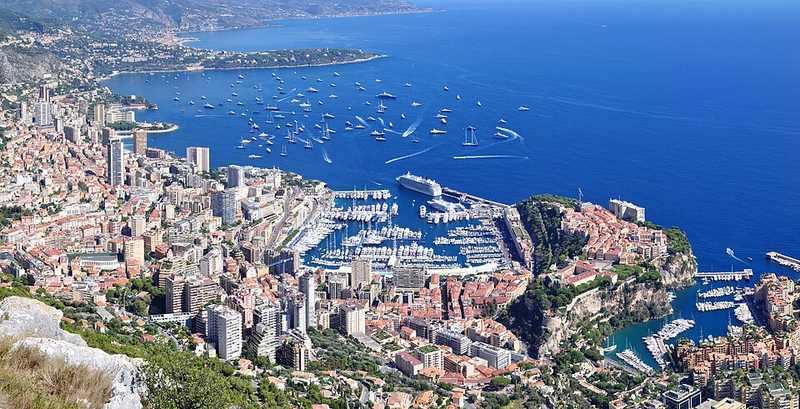
KYIV — The Monaco bomb suspect BBC interview puts a name and an alleged chain of command behind an accusation that has shadowed the June attack for months. Speaking from a Ukrainian prison in an interview facilitated by his lawyer, Vitalii Zhykovych said active-duty HUR officer Vladyslav Reut — known to him as “The Boss” — proposed an operation against property developer Vadym Yermolayev and that Zhykovych understood it had approval from Reut's military-intelligence superiors. Zhykovych offered no publicly disclosed documentary evidence for that belief. HUR did not directly answer the allegation, while Berezovska's husband rejected the claim that she had knowingly served as an agent.
Why the interview matters
This is the first detailed on-record account from a charged participant explicitly tying the alleged assassination plot to Ukraine's military-intelligence hierarchy. If true, it would suggest that a Ukrainian state service authorized or tolerated an operation that wounded a businessman, his partner and his child in Monaco, followed by the killing of the alleged courier outside Kyiv. That would create a profound legal and diplomatic crisis for Kyiv and for European governments supporting Ukraine.
If false, the interview shows how a defendant facing a murder charge can use the prestige of an intelligence-service name to redirect blame, complicate prosecution and feed narratives useful to Yermolayev and Moscow. The central journalistic problem is therefore not whether the accusation is dramatic; it is whether evidence outside Zhykovych's account supports it. The reporting available Friday does not establish that.
The timing deepens the stakes. The Monaco blast came only days before German prosecutors publicly accused “state authorities in Ukraine” of ordering a Ukrainian officer to sabotage the Nord Stream pipelines in 2022. Those are separate cases with different evidence. But together they intensify European scrutiny of alleged Ukrainian operations abroad and increase pressure on President Volodymyr Zelenskyy's government to provide verifiable answers rather than broad assurances.
What Zhykovych says happened
Zhykovych described himself as a former Security Service of Ukraine officer who later worked as an SBU “freelancer.” He said he met Anastasiia Berezovska online and considered the 39-year-old an agent involved in efforts to resist Russia's invasion. According to his account, Reut proposed the Yermolayev operation and initially asked whether Berezovska could carry out a bombing. Zhykovych said he refused because she had no explosives training, but agreed she could conduct reconnaissance.
He then sought to distance himself from the execution of the plot. Zhykovych said Reut communicated with Berezovska directly and allegedly supplied the explosives. He said Berezovska later told him Reut had promised her $50,000. Villagers who knew her said she had been saving to buy a flat, but that circumstance does not prove the source, existence or purpose of any payment.
The new account also conflicts with Zhykovych's own July statement in court, when he said someone on the civilian side had ordered the target. He now places the initiative with an active-duty HUR officer and says he understood the operation to be officially approved. That contradiction is not a minor detail. Prosecutors and defense lawyers will use it to test whether his story evolved as evidence and charges accumulated.
Zhykovych also said Reut discussed two targets. Reporting cited by the BBC says the second name was withheld, while sources suggested it may have been a pro-Russian blogger convicted in absentia of treason. No public evidence disclosed with the interview establishes that a second operation advanced beyond discussion.
The bombing in Monaco
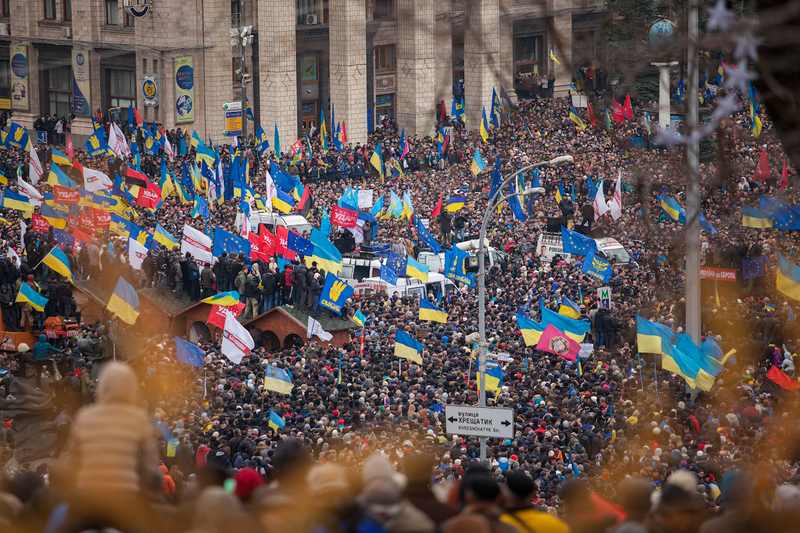
At about 9 p.m. on June 29, an explosive device detonated in the entrance hall of an apartment building between Boulevard d'Italie and Rue Révérend Père Louis Frolla. Yermolayev, a 58-year-old Ukraine-born Cypriot national, was entering with his partner, Anna Nasobina, and his 13-year-old son. Yermolayev and the boy were badly hurt. Nasobina suffered catastrophic injuries. Yermolayev later described the family's survival as extraordinary.
Yermolayev is a real-estate developer sanctioned by Kyiv over alleged business activity in Russian-annexed Crimea. That background supplies possible motives but proves none of them. He has insisted that Ukrainian military intelligence was involved. French investigators, according to Le Figaro reporting cited by The Times, believe the SBU was behind the bombing. That investigative assessment and Zhykovych's claim about HUR point to different Ukrainian services, an unresolved discrepancy that cautions against treating either account as a completed chain of proof.
Investigators allege Berezovska carried the bomb while disguised as a man. She had lived in Germany since fleeing Ukraine with her young son in early 2022. An Interpol Red Notice followed the Monaco attack; she was later spotted in Frankfurt, where authorities searched her flat and car. The pursuit ended not with an arrest but with her body in woods west of Kyiv.
Seven days later, Berezovska was dead
Berezovska was found shot in the head on July 6, one week after the Monaco explosion. Investigators traced payments to her cryptocurrency and bank accounts and arrested Reut and Zhykovych. Reut initially confessed and led investigators to the grave, according to the reporting, then retracted the confession in court and accused Zhykovych of firing the shots.
That reversal leaves two accused men blaming each other for a killing that may determine how a court views every other part of the alleged operation. Reut's initial cooperation is significant, but a retracted confession still has to be tested against forensic evidence, communications, location data and financial records. Zhykovych's new interview must be tested the same way.
Berezovska's husband called the description of her as an intelligence agent nonsense and said she had been pulled into the affair unwittingly. His account is not proof of what she knew, but it directly challenges Zhykovych's characterization and matters because the dead woman cannot answer either version herself.
The credibility test: evidence, denials and institutional ambiguity
Four weaknesses sit at the center of Zhykovych's story. First, he has an obvious incentive to shift responsibility while facing a murder charge. Second, the BBC interview account reported by other outlets did not include independent evidence proving authorization by HUR leadership. Third, his July explanation placed the order on the civilian side, not inside military intelligence. Fourth, he says he rejected using Berezovska for the bombing but still agreed to use her for reconnaissance, leaving him closer to the alleged plot than a simple whistleblower would be.
None of those weaknesses automatically makes the account false. Intelligence operations often leave fragmentary records, use intermediaries and generate conflicting testimony. But they make corroboration essential. Useful evidence would include verified messages between Reut and Berezovska, command records tying Reut's actions to superiors, travel and surveillance data, explosives provenance, and financial transfers consistent with the alleged $50,000 promise.
HUR said it was committed to a full investigation and providing comprehensive support to law enforcement, but did not directly answer whether Reut acted in an official capacity or whether his superiors approved an operation against Yermolayev. The SBU described Zhykovych only as a former law-enforcement officer. Those carefully limited responses preserve investigative space, but they do not resolve the public accusation.
Who benefits, who loses
Zhykovych benefits if the case shifts from a murder prosecution to a scandal about state authorization. Even if a court rejects his account, public focus on HUR could strengthen arguments that he was a peripheral intermediary rather than an organizer. Reut faces the opposite pressure: the more Zhykovych's account is believed, the more the active-duty officer appears to sit at the center of both the Monaco operation and Berezovska's death.
Yermolayev gains support for his long-standing claim that the attack was political and state-linked. Russian officials and pro-Kremlin media gain a ready narrative about Ukrainian covert action in Europe. Those interests do not disprove the allegation, but they explain why an unverified claim will travel faster than the evidence.
HUR and the SBU face a credibility problem whichever version prevails. If an official chain of command existed, Europe will demand accountability. If a serving officer acted without authorization, Kyiv still has to explain how personnel, explosives and alleged overseas targeting escaped control. If the entire state-link claim collapses, the services will need evidence strong enough to overcome months of suspicion rather than a denial alone.
What the numbers mean
The alleged $50,000 payment is large enough to be a motive and small enough to move through fragmented crypto and bank channels, but no verified transfer of that amount has been publicly established. The seven days between the Monaco blast and Berezovska's death created a narrow window in which evidence, witnesses and loyalties could be reorganized. Her death also removed the only person alleged to have carried the device.
The presence of a 13-year-old child at the entrance underscores why the legal classification matters: whatever the intended target, the operation exposed civilians to lethal force in a residential building. More than 90 days of silence before Zhykovych's detailed account gave investigators time to collect evidence, but it also gave every accused person time to construct a defense around what they learned.
What happens next
The Ukrainian murder proceedings are the nearest test. Prosecutors will have to prove who killed Berezovska and why, while the defense will try to force disclosure of intelligence links that could support or undermine Zhykovych's account. Monaco's investigation must separately establish who built, supplied and placed the bomb, and whether instructions crossed borders through a state service or a private network.
Three questions now demand direct answers. Will HUR say whether Reut was acting under orders? Will Zelenskyy's government authorize a transparent inquiry capable of satisfying European investigators? And will evidence emerge about the unnamed second target, or was that detail another uncorroborated fragment?
The likely outcome is not one revelation but a chain of forensic tests: messages, money, ballistics, travel records and command relationships. Until those are public, the interview changes the political stakes more than the evidentiary record. It turns a suspected covert operation into a named allegation against Ukraine's military intelligence — while leaving the decisive question, who authorized what, unanswered.
Sources and reporting notes
- BBC report republished by Ghanamma, October 9, 2026 — the prison interview, Zhykovych's account, responses from HUR and SBU, and Berezovska's husband's denial.
- BBC report republished by Newsatw, October 9, 2026 — additional mirror of the BBC investigation used to cross-check the account.
- New York Post, October 9, 2026 — account of the charges, interview claims and the absence of supporting evidence presented publicly.
- The Times, October 9, 2026 — the Monaco attack, Berezovska killing, court claims and French investigative context.
Zhykovych's allegations are presented as claims, not established facts. Signal Post News has not independently verified that HUR leadership approved the operation, that Reut supplied explosives, or that a $50,000 payment was promised. The accounts of Zhykovych, Reut, Berezovska's husband, HUR, SBU and investigators conflict in material ways.