Days after Malaysia deported 1,500 Myanmar nationals on junta ships — and two days after a junta airstrike killed dozens of civilians in Rakhine — Kuala Lumpur says Myanmar's ruler is coming in October. The visit is about refugees. It is also about legitimacy.
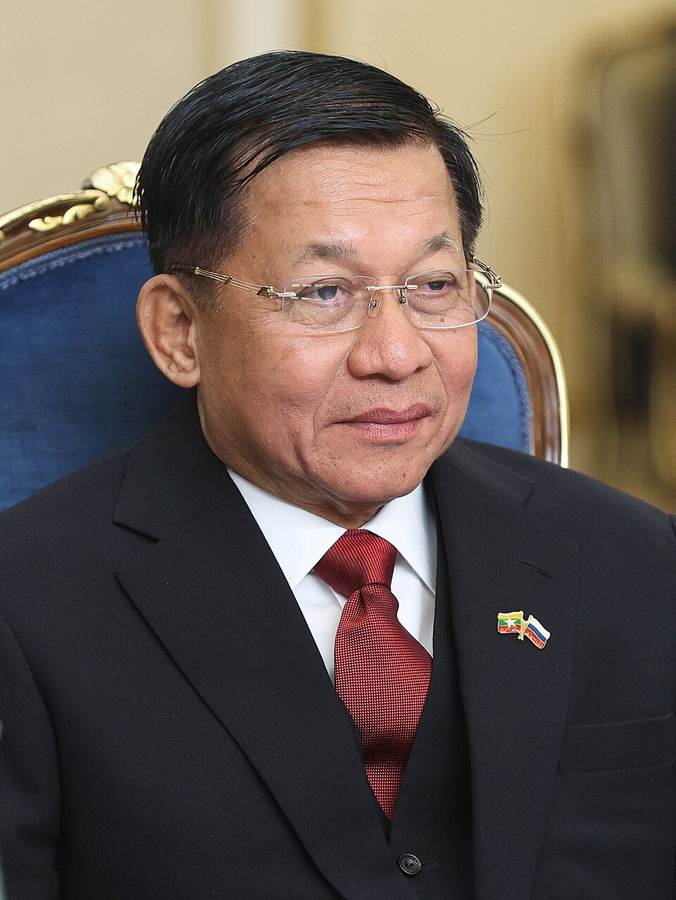
The Min Aung Hlaing Malaysia visit, announced on Wednesday, would put the most diplomatically isolated ruler in Southeast Asia on a plane to Kuala Lumpur. Reuters reported on September 30 that Myanmar's junta chief-turned-president will travel to Malaysia in October, citing Malaysia's state news agency Bernama and government spokesperson Fahmi Fadzil, with the talks centered on returning refugees and people displaced by Myanmar's conflict.
The announcement arrives at a combustible moment. On Tuesday, Malaysia deported nearly 1,500 Myanmar nationals aboard three Myanmar government ships — the first phase of a repatriation program whose second phase would return 3,524 more — despite warnings from the United Nations and rights groups. And it comes two days after a Myanmar military airstrike on a market in Kyauktaw, Rakhine State, killed 49 to 50 civilians, an attack the UN said it was "alarmed" by and the Arakan Army vowed to avenge.
Why this matters
This is not a routine bilateral courtesy call. It is a transaction, and each side is buying something different. For Min Aung Hlaing, an official visit to Malaysia — a founding ASEAN member and one of the region's largest economies — is diplomatic currency of the rarest kind: evidence that the isolation imposed after the 2021 coup is cracking. For Prime Minister Anwar Ibrahim, it is the next step in an engagement doctrine he has defended in public: negotiate with the junta, get Myanmar to take people back, and show a domestic audience that the refugee file is moving.
The timing is the story's sharpest edge. The visit was announced two days after the Kyauktaw market strike and one day after the first deportation ships sailed. That sequence turns October into a test of a specific proposition: that a government can deepen diplomatic relations with a military accused of bombing its own civilians while simultaneously handing it 5,000 people. Whether that proposition holds will be judged not in Kuala Lumpur's press releases but in what happens to the returnees.
How we got here
Myanmar has been at war with itself since Min Aung Hlaing seized power in the February 2021 coup. Roughly 100,000 people have been killed and more than 3.5 million displaced. Malaysia, which never signed the Refugee Convention, became a reluctant host — home to some 193,800 Myanmar refugees as of February, according to UN figures, including well over 100,000 Rohingya.
On September 16, Anwar announced on a podcast that he would invite Min Aung Hlaing for an official visit, explicitly tying trade and friendship to repatriation: Myanmar must take its people back. Myanmar agreed to accept 5,000 refugees in stages. On September 23, more than 160 civil society organizations demanded Malaysia halt the plan, warning that returnees face violence and forced conscription. On September 29, the first ships sailed anyway. On September 30, the visit was confirmed.
The general, meanwhile, has been collecting regional receptions. He visited Vietnam in early September for defense talks and Cambodia on September 11. The Malaysia trip would extend that run — and bring him to a capital whose prime minister was, until recently, one of his loudest critics inside ASEAN.
Who benefits, who loses — and what the critics say
The winners are easy to name. Min Aung Hlaing gets legitimacy — the one commodity sanctions cannot print and isolation cannot supply. Every handshake photograph from a democratic capital chips at the pariah narrative, and it arrives as the International Criminal Court weighs a prosecutor's request for his arrest over alleged deportation and persecution of the Rohingya. Anwar gets a domestic deliverable: visible action on a refugee population facing growing public hostility in Malaysia, plus a story of diplomatic effectiveness.
The critics' case is equally crisp. UNHCR's Assistant High Commissioner for Protection, Edem Wosornu, said the agency was "concerned by these returns at a time when people sent back to Myanmar may face serious risks" — and, crucially, that UNHCR had no access to assess whether the returns were genuinely voluntary. Malaysia asserts they are voluntary; the detainees were in immigration detention, where the line between choice and coercion is thinnest. Rights groups add the conscription warning: returnees, stateless and rightless, land in a country whose military activated a dormant conscription law in 2024 and where rival armed factions all recruit from the vulnerable.
Anwar's answer, given Tuesday: "It's not true to say, just push them back … We, of course, negotiate." The engagement argument deserves a fair hearing. Five years of isolation have not ended the war, freed a single political prisoner, or returned a single refugee safely. Malaysia's position is that talking to the people who control the territory is the only channel that exists — and that a managed, negotiated return beats the limbo of indefinite detention. The counter is that negotiation without verification is deportation with better lighting — and that the Kyauktaw strike, two days before the announcement, shows what "managed" means while the bombs keep falling.
What the numbers mean
Put the figures side by side and the scale of the experiment becomes clear. The 5,000-person arrangement — 1,500 sailed, 3,524 to follow — is roughly 0.14 percent of the 3.5 million displaced inside Myanmar, and about 2.6 percent of the Myanmar refugees Malaysia hosts. As a solution to displacement, it is a rounding error. As a precedent, it is enormous: the first state-organized returns to post-coup Myanmar, and a template every government in the region will study.
The Kyauktaw toll — 49 to 50 civilians in a single market strike — compresses roughly half a day of the war's average lethality over five years into one afternoon. That is the context in which "voluntary return" is being assessed. And the history of organized Rohingya repatriation is a history of failure: Bangladesh's 2018 and 2019 deals collapsed before a single refugee boarded a bus, because the refugees themselves refused to go while the conditions that drove them out persisted. Malaysia is betting that negotiating directly with the general the refugees fear most will succeed where Bangladesh failed.
What happens next — three scenarios
First, the visit proceeds as planned and the repatriation phases continue on schedule. Malaysia declares the model a success; Min Aung Hlaing banks the legitimacy; other governments take notes. This is the most likely near-term outcome, because the domestic incentives in Kuala Lumpur point one way.
Second, the backlash bites. Documented cases of harm to returnees — conscription, detention, abuse — surface in the press; UN pressure and the optics of the Kyauktaw strike force a recalibration. The visit goes ahead but the agenda narrows, or the second phase is quietly rephrased as "under review."
Third, the returns proceed and the precedent spreads. Neighboring governments cite the Malaysian model for their own repatriation programs, and ASEAN's already-frayed consensus on Myanmar — engagement versus isolation — splits openly, with states cutting bilateral deals while the bloc's formal position hollows out.
The honest assessment: the visit will happen, because both leaders need it. What is genuinely uncertain is whether the returns it blesses are remembered as a humanitarian breakthrough or as the moment the region decided that sending people back into a war zone was acceptable statecraft. The refugees, as ever, get the final vote — and the UN's evidence body has already said the conditions for safe return do not exist.
Sources
- Reuters, September 30, 2026 — "Myanmar's Min Aung Hlaing to visit Malaysia in October, report says" (the Bernama report, Fahmi Fadzil, the October visit, the refugee-return talks agenda)
- UN News, September 30, 2026 — UNHCR warning on the Malaysia returns (Edem Wosornu's "serious risks" warning; UNHCR had no access to assess whether returns were genuinely voluntary)
Reporting basis: September 30, 2026. Exact October dates for the visit were not announced. Malaysia asserts the returns are voluntary; UNHCR and rights groups dispute that characterization. Myanmar's agreement covers 5,000 people in stages. Analysis is our own.