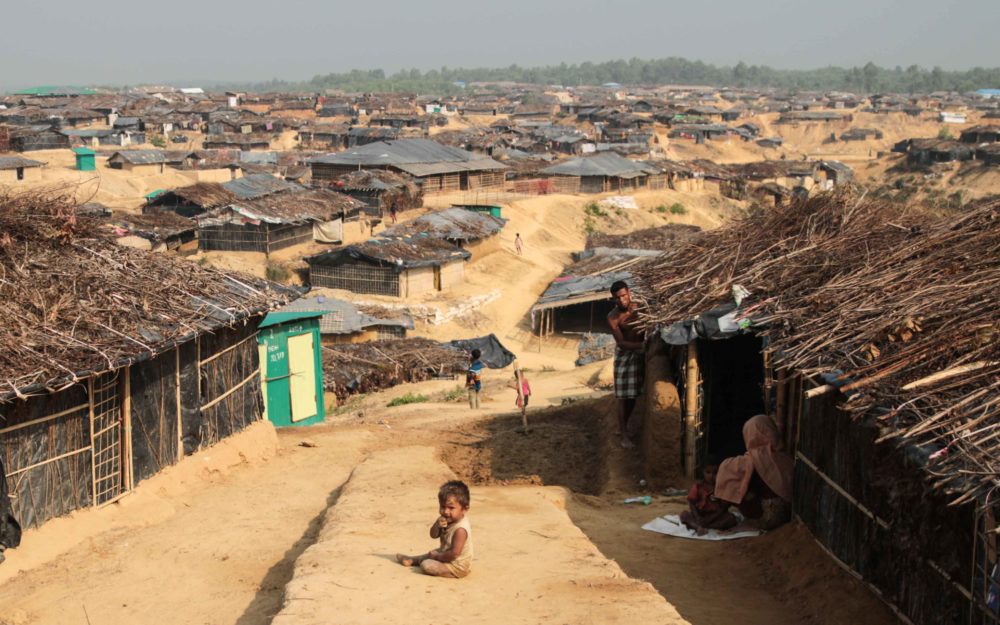
More than 160 civil society organisations released a joint statement on Wednesday demanding that Malaysia halt plans to deport Rohingya refugees to Myanmar, warning that returnees face ongoing violence — and forced conscription into the country's grinding civil war. The Malaysia Rohingya deportation 2026 plan calls for a first group of roughly 1,500 refugees to be flown back on September 29, just six days away, under an arrangement Kuala Lumpur struck directly with Myanmar's junta leader-turned-president, Min Aung Hlaing — the same general an international prosecutor wants arrested for alleged crimes against humanity committed against the Rohingya.
Why this matters
This is not an immigration story. It is a war story. The groups' central warning is that Rohingya sent back to Myanmar will be conscripted — by the military, by the Arakan Army, and by the Arakan Rohingya Salvation Army — three armed factions that all treat the stateless minority as a recruiting pool. To be returned is, on this account, to be handed a rifle for someone else's war.
UN High Commissioner for Human Rights Volker Türk warned earlier this month that there is “no basis” for returning Rohingya amid Myanmar's ongoing insecurity, and that such returns would be a “flagrant breach” of the non-refoulement principle — the bedrock rule that no one should be sent back to face persecution. If the September 29 flight proceeds, it will be the first state-organized Rohingya repatriation since the 2017 genocide and the 2021 coup, and it will set the template for every government in the region looking to shed its refugees. Bangladesh, which hosts close to a million Rohingya, is watching closely.
How we got here
The Rohingya crisis is nearly a decade old. In 2017, a brutal military crackdown in Rakhine State drove more than 700,000 Rohingya into Bangladesh in a matter of weeks — a campaign the statement's authors lay at the feet of Min Aung Hlaing, then the army chief, calling him the “architect of genocide.” In February 2021 he seized power in a coup, and Myanmar has been at war with itself ever since: the junta against a constellation of ethnic armed organisations and resistance forces, with Rakhine State now one of the fiercest fronts.
Malaysia, which never signed the Refugee Convention, became a reluctant host — home to some 193,800 Myanmar refugees as of February, according to the UN, including well over 100,000 Rohingya. On September 16, Prime Minister Anwar Ibrahim announced on a podcast that he would invite Min Aung Hlaing for an official visit to Malaysia, explicitly tying trade and friendship to repatriation: Myanmar must take its people back. Myanmar has agreed to accept 5,000 refugees in stages — without specifying whether any of them are Rohingya.
Three armed groups, one recruiting pool
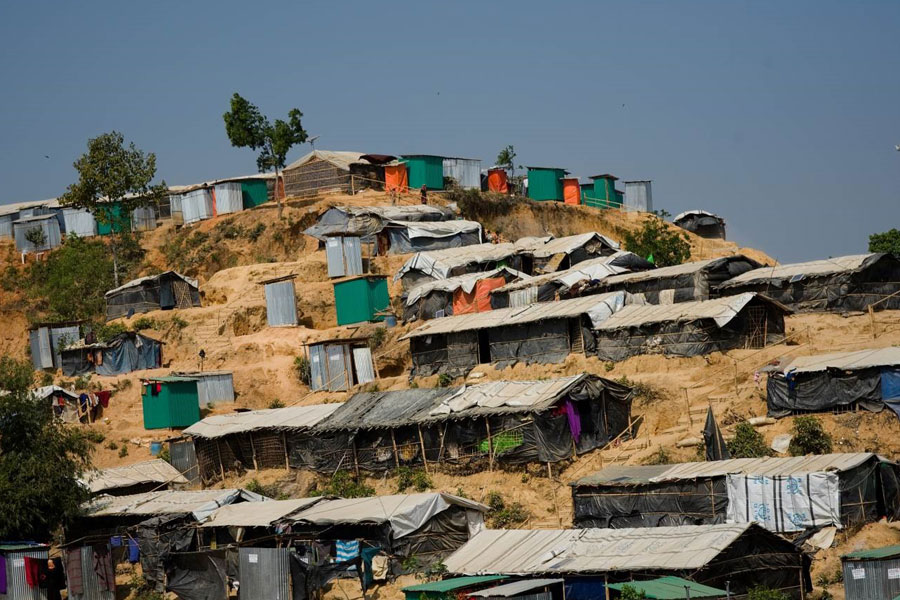
The conscription warning is the story's sharpest edge. Myanmar's military, stretched across multiple fronts, activated a dormant conscription law in 2024 and has been sweeping up young men ever since — Rohingya, denied citizenship and legal protection, are the easiest targets. The Arakan Army, which now controls much of Rakhine, has likewise been accused of pressing Rohingya into service. And the Arakan Rohingya Salvation Army, the militant group whose 2017 attacks Myanmar cites to justify its crackdown, also recruits from the same desperate population.
Returnees would land, stateless and rightless, in a territory where three armies are all hiring. Malaysia's Home Ministry declined to comment on the joint statement, pointing to earlier remarks that the repatriation is voluntary and involves Myanmar nationals — but the groups note, pointedly, that “voluntary” is doing heavy lifting when the alternative is indefinite detention.
Who wins, who loses
The winners are easy to name. Anwar Ibrahim gets a visible domestic win — proof he is “doing something” about a refugee population facing growing public hostility in Malaysia. Min Aung Hlaing gets something far more valuable: legitimacy. An official visit to Kuala Lumpur, from one of the junta's loudest ASEAN critics, is a diplomatic prize — Malaysia becomes the first maritime Southeast Asian state to roll out the red carpet since the coup. The armed groups get manpower.
The losers: the returnees themselves, who would trade precarious safety in Malaysia for a war zone where their ethnicity makes them targets and their statelessness makes them conscriptable; the non-refoulement norm, which bends a little more each time a government finds it inconvenient; and the region's remaining Rohingya, for whom a successful Malaysian deportation becomes the precedent that justifies the next one.
The numbers, in context
Put the figures side by side and the scale of the experiment becomes clear. Malaysia hosts roughly 193,800 Myanmar refugees (UN, February 2026); more than 126,000 of the country's 215,000-plus UNHCR-registered refugees and asylum seekers are Rohingya. Against that, the September 29 first phase — 1,500 people, or 1,476 by Amnesty's count — is a rounding error: less than one percent. But the 5,000-person arrangement behind it is the foot in the door, and Anwar has spoken of repatriating in stages what he puts at roughly 200,000 Rohingya.
Compare with history: Bangladesh's 2018 and 2019 repatriation deals with Myanmar collapsed before a single refugee boarded a bus, because the refugees themselves refused to go while the conditions that drove them out remained unchanged. Malaysia is betting it can succeed where Bangladesh failed — by negotiating directly with the general the refugees fear most.
What happens next — three scenarios
First, the flight proceeds on September 29, quietly, framed as voluntary. Malaysia declares the model a success; Min Aung Hlaing gets his visit; other governments take notes.
Second, the backlash bites. Legal challenges, UN pressure, and the sheer optics of deporting people into a war zone during UN General Assembly week force a delay — Anwar keeps the invitation and shelves the returns as “phased.”
Third, and darkest, the returns go ahead and the conscription warnings prove true. Cases of conscripted returnees surface, Malaysia faces international blowback, and the ASEAN split — maritime states cutting bilateral deals with Naypyidaw while the bloc's consensus crumbles — deepens into an open rift.
The honest assessment: scenario one is the most likely in the near term, because the domestic political incentives in Kuala Lumpur point only one way. But the history of every previous Rohingya repatriation attempt says the refugees themselves get the final vote — and they have never once voted to go back.
Sources
- Reuters, September 23, 2026 — “Civil society groups urge Malaysia to stop Rohingya returns” (the joint statement, the September 29 plan, the conscription warning, the ICC note and the Home Ministry response)
- Amnesty International Malaysia, September 17, 2026 — “Prime Minister's pursuit of refugee returns to Myanmar raises alarming human rights concerns” (the UN non-refoulement warning and ICC arrest-warrant request)
- BusinessToday (Malaysia), September 16, 2026 — “Malaysia seeks Myanmar deal to gradually take back refugees” (Anwar's invitation and stated conditions)
Reporting cutoff: September 23, 2026. Verification caveats: the voluntariness of the returns is asserted by Malaysia and disputed by the groups; the conscription risk is the groups' assessed warning as reported by Reuters; Myanmar's position — that it does not recognize the Rohingya as an ethnic group and that its Rakhine operations responded to militant attacks — is included.