US · New York
New York is separating protest response from counterterrorism: the unit built in 2015 to do both will be wound down, its roughly 500 officers reassigned before next spring, and the first faces a demonstrator meets will increasingly be unarmed civilians with no power to arrest anyone.
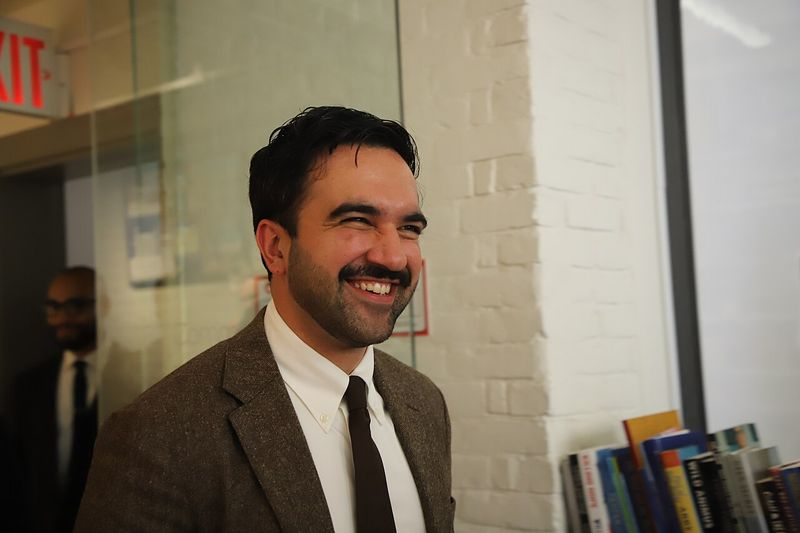
NEW YORK, November 16, 2026 — Mamdani disbands Strategic Response Group: that was the announcement from City Hall on Monday, as Mayor Zohran Mamdani and NYPD Commissioner Jessica Tisch said the department will wind down the SRG, the roughly 500-officer rapid-response unit that has handled both counterterrorism deployments and protest policing since 2015, and rebuild protest response around civilian de-escalation teams and formal bans on the unit’s most controversial tactics. “We are disbanding the SRG,” Mamdani said in his own statement on Monday. “During our campaign for mayor, I promised to disband NYPD’s Strategic Response Group, known as the SRG. Today, we are keeping that promise.”
Precision matters here, because Monday’s announcement is a decision and a timetable, not a completed dissolution. The SRG has not ceased operating, and no officer changed assignment on Monday. Tisch said the unit’s roughly 500 officers will be reassigned within the department before next spring, and the mayor’s office gave no single firm date on which the unit itself formally disappears. What changed on November 16 is the doctrine: protest response and counterterrorism, fused in one unit for eleven years, are to be separated — and the tactics that defined the SRG’s reputation, kettling, tear gas, pepper spray and long guns at demonstrations, are banned under the new protest-response rules announced alongside the plan.
What we know
- The announcement: on Monday, November 16, 2026, Mayor Zohran Mamdani and Commissioner Jessica Tisch jointly announced the disbanding of the NYPD Strategic Response Group (SRG), fulfilling a central Mamdani campaign promise to separate protest response from counterterrorism.
- The unit: created in 2015 under Commissioner William Bratton as a rapid-response force of about 500 officers combining counterterrorism with protest and crowd response. Tisch put the current strength at about 500 officers — not the larger figure that appears in some coverage — and said they will be reassigned within the department before next spring.
- The replacements: a new civilian-led Community Dialogue and De-escalation Division in the Mayor’s Office of Community Safety, whose members are unarmed and have no arrest powers; a new NYPD First Amendment Support Team of 30 uniformed officers trained in communication and de-escalation; and a new Patrol Support Division of vetted officers for patrol duties.
- The banned tactics: at protest response, the plan bans kettling — surrounding protesters to carry out mass arrests — along with tear gas, pepper spray and long guns. The bans are protest-response restrictions, not a department-wide weapons ban.
- The counterterrorism split: the SRG’s counterterrorism functions, including heavy-weapons deployments at critical infrastructure, will consolidate inside the NYPD Intelligence and Counterterrorism Bureau.
- The record: the SRG was rebuked in a 2023 legal settlement after Attorney General Letitia James, the New York Civil Liberties Union and others sued over excessive force against protesters, journalists and legal observers during the summer 2020 protests.
What was announced on November 16
The plan announced Monday has three moving parts, and each one answers a different criticism of the old model. The first is the disbanding itself. The SRG was built, from its 2015 creation, on a deliberate fusion: one highly trained, heavily equipped unit that could guard critical infrastructure against a terrorist attack in the morning and face a crowd in the afternoon. Mamdani’s argument, made through the campaign and repeated on Monday, is that the fusion was the problem — that New Yorkers exercising First Amendment rights should not be policed by a unit organised and equipped for counterterrorism. Disbanding the SRG is the structural expression of that argument: the unit does not get a new commander or a new manual; it gets wound down, with its roughly 500 officers reassigned across the department before next spring, on Tisch’s timetable.
The second part is what replaces it at a protest, and the ordering is the policy. First contact is to be civilian. The new Community Dialogue and De-escalation Division, housed in the Mayor’s Office of Community Safety rather than inside the NYPD, will be staffed by civilians whose job is conversation: liaising with organisers, talking to crowds, and defusing confrontations before they become arrests. Two facts about the division deserve to be stated plainly, because they define how different it is from what it replaces: its members are unarmed, and they have no arrest powers. They cannot compel anyone to do anything. Their authority, such as it is, is presence and persuasion.
Alongside them, inside the department, stands the new First Amendment Support Team: 30 uniformed officers, selected and trained in communication and de-escalation, whose explicit remit is supporting lawful protest rather than controlling it. And behind both, a new Patrol Support Division of vetted officers will handle the patrol duties that remain when a demonstration needs a uniformed police presence. The SRG’s other inheritance — counterterrorism, including heavy-weapons deployments at critical infrastructure — moves in the opposite direction, consolidating inside the NYPD Intelligence and Counterterrorism Bureau, where it will no longer share a chain of command with protest response.
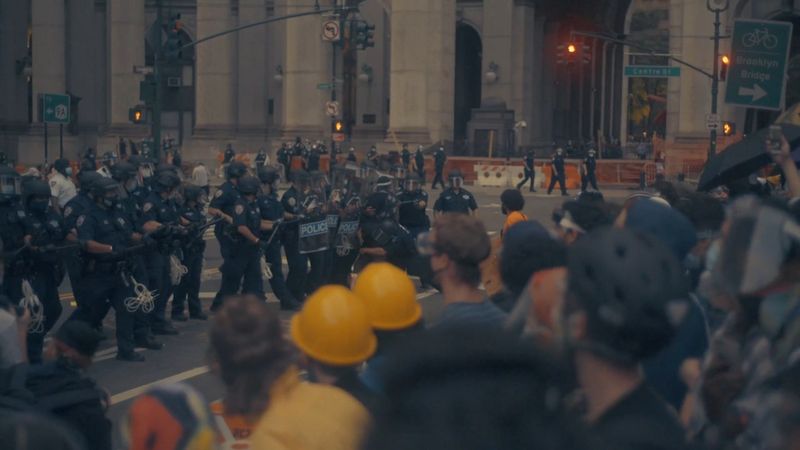
The third part is the tactics list, and it is written as a direct reply to the SRG’s record. Kettling — surrounding a crowd so that mass arrests can follow — is banned at protest response. Tear gas is banned. Pepper spray is banned. Long guns are banned. Each item maps to a specific image from the unit’s history: the encircled crowds of 2020, the chemical agents fired into demonstrations, officers in riot gear carrying rifles through Manhattan streets. The restrictions were announced as formal rules of the new protest-response model, not aspirations, and they apply to protests — they are not a department-wide prohibition on the weapons themselves, which remain part of the NYPD’s counterterrorism and emergency armoury under the bureau that now owns those missions.
Why this matters
New York runs the largest municipal police force in the United States, and what the NYPD does about protests does not stay in New York. Its crowd-control doctrine is studied, borrowed and exported by departments across the country, which is why a reorganisation announced at City Hall on a Monday in November is a national policing story. For decades, the American default — hardened after 2001 — has been to treat a large demonstration as a security event first and a constitutional event second: the same units, the same equipment and often the same officers who prepare for a terrorist attack also manage a march. The SRG was that default in its purest form, a single unit whose founding mission statement joined counterterrorism and protest response in one breath.
Monday’s announcement reverses the default at the level of structure rather than rhetoric. Separating counterterrorism from First Amendment response is not a personnel shuffle; it is a doctrine change. It says the state will no longer organise its answer to a protest around the capabilities it built for its worst-case enemy. The civilian division makes the point physically: the first representative of the city at a demonstration will be a person with no weapon and no power to arrest, whose only tool is talking. That has never been the NYPD’s opening move before.
It is also, unavoidably, a wager. The old model’s defenders — inside policing and outside it — argue that the SRG’s value was precisely its surge capacity: 500 trained officers who could be anywhere in the city, in formation, fast. The new model trades a measure of that capacity for legitimacy, on the theory that most protests never need 500 officers in riot gear and that sending them can manufacture the confrontation it claims to prevent. Whether de-escalation can hold during a genuinely disorderly event — a night when a crowd is not interested in dialogue — is the question the reform cannot answer on paper. It will be answered, in public, the first time the new system meets a crowd that tests it.
How the SRG got here: 2015, 2020 and the settlement
The Strategic Response Group was created in 2015, under Commissioner William Bratton, as a rapid-response unit of about 500 officers. The timing explains the design. New York was a decade and a half past 9/11, the department’s counterterrorism apparatus was at its zenith, and City Hall wanted a standing force that could surge to an attack, a disaster or a crowd without stripping precincts. Protest response was written into the unit’s job from the start — not as an occasional extra, but as a core mission alongside counterterrorism. The SRG became, in short order, the face of the NYPD at demonstrations: bicycle lines, riot helmets, zip ties, and a reputation among organisers that hardened with every deployment.
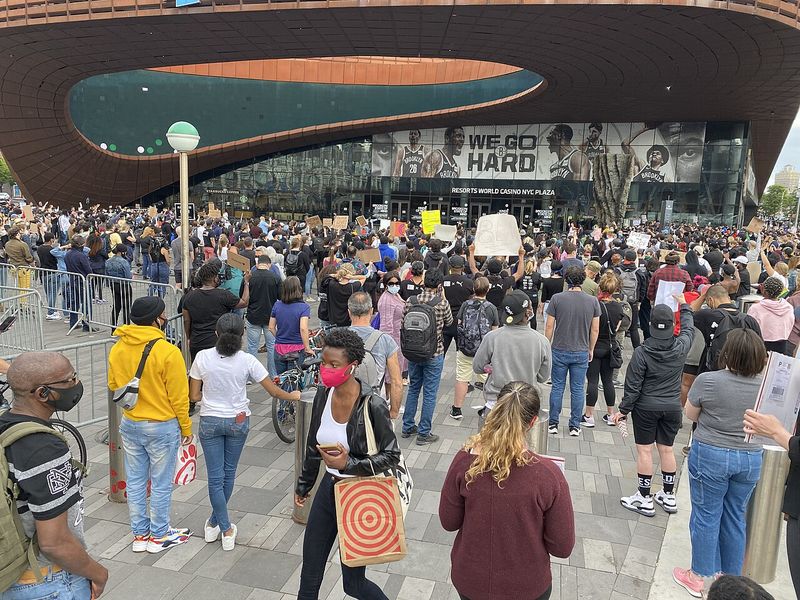
The reckoning came in the summer of 2020. As protests over the killing of George Floyd filled New York’s streets, the SRG was at the centre of the response that civil-liberties groups describe with a consistent vocabulary: excessive force against protesters, journalists and legal observers; pepper spray used by officers in riot gear; mass arrests of crowds that had been surrounded and given nowhere to go. New York Attorney General Letitia James sued, as did the New York Civil Liberties Union and others, and the litigation ended in a 2023 legal settlement that formally rebuked the department’s protest response. Scrutiny of the unit never really subsided afterwards, and it rose again during the immigration-enforcement protests of 2026, when the SRG’s deployments put the 2020 argument back on the front pages.
Against that background, disbanding the SRG was one of the most specific promises of Mamdani’s mayoral campaign — and, once he was in office, one of the slowest to be kept. Through 2026, pressure built from the mayor’s own left flank: supporters who had treated the promise as a day-one item watched months pass and began saying so publicly, a tension visible across his first year, from his confrontations with federal immigration enforcement — covered by this newsroom in Mamdani Bronx ICE Shooting: Mayor Calls Agency ‘Rotten to Its Core’ — to the foreign-policy fights of the autumn, in Mamdani’s Oct. 7 Statement: Condemning Hamas, Accusing Israel of “Ongoing Genocide” — and the Firestorm It Ignited. Monday’s announcement is, in part, an answer to that pressure: the promise, delivered jointly with the commissioner, in the language of a negotiated institutional settlement rather than a unilateral order.
The joint billing is itself part of the story. Jessica Tisch was retained from the prior administration — the institutional counterweight inside Mamdani’s public-safety team, a commissioner whose credibility runs through the department rather than around it. That the disbanding was announced by both offices, with the reassignment timetable in Tisch’s voice, signals how the mayor chose to do it: not as a purge of the department by City Hall, but as a restructuring the commissioner co-owns. The roughly 500 officers are not being dismissed; they are being reassigned, many of them into the counterterrorism work the unit used to split with protest duty. The headcount of the NYPD does not change. What changes is who answers a protest, and how.
Winners, sceptics and the rebranding test
The clearest winners are the mayor’s base and the civil-liberties movement that spent six years litigating and campaigning against the SRG. The Legal Aid Society commended the announcement, and the NYCLU and other civil-rights groups cautiously welcomed it — a welcome with a condition attached, and the condition is the most important sentence in the reaction. The groups warned that the new Patrol Support Division could become a rebranding rather than a true disbanding: the same officers, in the same formations, under a new name on the door. That warning names the accountability test for everything announced on Monday. A disbanding is measured not by the press release but by the roster — who staffs the new division, where its officers came from, and whether the banned tactics stay banned when a protest turns difficult.
Sceptics inside policing make the opposite case, and it deserves to be stated in its strongest form rather than caricatured. Their argument is about capacity: protest response in a city of New York’s size occasionally means genuine disorder — property destruction, attacks on officers or bystanders, crowds in the tens of thousands moving faster than any plan. A 30-officer First Amendment Support Team and an unarmed civilian division are, on this view, a fair-weather structure, and the question is what stands behind them on the bad night, and how quickly, and under whose command. If the honest answer is “the same officers as before, summoned later and angrier,” the reform will have traded symbolism for response time. The administration’s reply, embedded in the design, is that the Patrol Support Division exists precisely for that layer — vetted officers, still police, still able to act — but deployed as a backstop rather than a first impression.
Critics on the right, including the Daily Caller’s coverage on Monday, argue a broader version of the same point: that moves like this in other American cities fuelled disorder by signalling retreat. That is an attributed argument, not an established finding — the evidence across cities is contested, and New York’s version comes with a commissioner publicly committed to the plan and a reassignment, not a reduction, of officers. But it identifies the political exposure accurately. Every future protest that ends in smashed windows will be laid at this announcement’s door, fairly or not; every one that ends peacefully will be claimed as its vindication. The reform has made itself the story of every demonstration that follows it.
The numbers behind the announcement
Scale is the context that keeps this story honest. The SRG’s roughly 500 officers sound like an army until they are set against the department they belong to: an NYPD of more than 33,000 uniformed officers, run on an operating budget of nearly $7 billion a year, in Reuters’ figures. The SRG is about one and a half percent of the force. Disbanding it does not shrink the NYPD in any material sense, and nobody’s neighbourhood loses its precinct officers because of Monday’s announcement. What is being redistributed is specialisation — 500 officers whose training and equipment were organised around surge response, now folded back into the bureaus, including counterterrorism, that own pieces of the old mission.
The asymmetry on the protest side is the operational heart of the plan. Where a major demonstration once met a 500-officer unit, the new model’s named protest-facing elements are a civilian division of talkers and a First Amendment Support Team of 30 uniformed officers — thirty, against the SRG’s five hundred. The Patrol Support Division behind them is deliberately not the headline, and its eventual size and staffing are among the details Monday’s announcement left open. That gap between 30 and 500 is either the reform’s whole point — protests should be met at the scale of conversation, not occupation — or its central vulnerability, and the two readings will not be reconciled by argument. They will be reconciled, or not, by the first summer of demonstrations under the new rules.
What happens next
The dated commitment is Tisch’s: the SRG’s roughly 500 officers will be reassigned within the department before next spring. Reports differ on intermediate timetables — some accounts have the tactic restrictions biting earlier than the unit’s wind-down — but the mayor’s office gave no single firm dissolution date on Monday, and readers should treat the spring reassignment as the only deadline actually on the record. Between now and then, the SRG still exists, still deploys, and operates under an announced death sentence — a transition posture that will itself be scrutinised at every protest it works this winter.
The second track is legislative. The plan closely mirrors Council Member Chi Ossé’s CURB Act proposal, and the open question is whether the City Council codifies the new model — writing the disbanding and the tactic bans into law, where a future mayor cannot quietly reverse them — or whether the reform remains an administrative act of this mayor and this commissioner, reversible by the next pair of signatures. The NYCLU’s rebranding warning points the same way: the groups that welcomed Monday’s announcement will spend the winter reading rosters, deployment orders and the Council’s calendar, because that is where a disbanding becomes permanent or evaporates.
And then there is the test no timetable controls: the first large protest under the new model. If it is policed by civilians talking, 30 officers supporting, and no kettling, no tear gas, no pepper spray and no long guns — and it ends with the crowd going home — Monday’s announcement becomes the template other American cities will be pressed to copy. If a major incident lands mid-transition, while the SRG is half-dissolved and its replacements half-built, the scenarios darken quickly: emergency redeployments under the old habits, a political crisis for a mayor who staked credibility on the change, and a commissioner defending a plan she co-signed. New York has run the experiment of fusing counterterrorism and protest response for eleven years. On Monday, it announced the experiment is over. The results come in starting this spring.
Sources
- Reuters, November 16, 2026 — reporting by Jonathan Allen: the joint Mamdani–Tisch announcement disbanding the Strategic Response Group; Commissioner Tisch’s statement that the unit’s about 500 officers will be reassigned within the department before next spring; the three replacement bodies (the civilian-led Community Dialogue and De-escalation Division, the 30-officer First Amendment Support Team and the Patrol Support Division); the protest-response bans on kettling, tear gas, pepper spray and long guns; the consolidation of counterterrorism functions in the Intelligence and Counterterrorism Bureau; the 2023 settlement background; and the NYPD’s nearly $7 billion annual operating budget.
- CNN, November 16, 2026 — coverage of the announcement: the campaign promise fulfilled, the SRG’s 2015 creation and protest role, the mayor’s statement, the new dialogue-focused units in the NYPD and the Mayor’s Office of Community Safety, and the reaction of civil-liberties groups, including the caution that the Patrol Support Division must not become a rebranding of the SRG.
- USA Today, November 16, 2026 — coverage of the announcement and the replacement structure: the Community Dialogue and De-escalation Division’s unarmed civilian members with no arrest powers, the First Amendment Support Team, and the Patrol Support Division.
- Mayor Zohran Mamdani, statement and post, November 16, 2026 — “We are disbanding the SRG”; “During our campaign for mayor, I promised to disband NYPD’s Strategic Response Group, known as the SRG. Today, we are keeping that promise.”
- Signal Post News, related coverage: Mamdani Bronx ICE Shooting: Mayor Calls Agency ‘Rotten to Its Core’; Mamdani’s Oct. 7 Statement: Condemning Hamas, Accusing Israel of “Ongoing Genocide” — and the Firestorm It Ignited.
- Photos: Mayor Zohran Mamdani in Manhattan on September 24, 2026, Jakwaka via Wikimedia Commons (CC BY-SA 4.0); SRG officers near City Hall on July 1, 2020, New York Motion Picture Company via Wikimedia Commons (CC BY 3.0); a protest crowd outside Barclays Center, Brooklyn, June 2020, Stan Wiechers via Wikimedia Commons (CC BY-SA 2.0) — each credited in its caption.