War · Black Sea
LPG tanker sinks Bulgaria became an official statement on Tuesday: Bulgaria’s defence ministry said the Liberian-flagged LPG tanker Gas Husky sank about 50 miles off the coastal town of Byala, Reuters reported, and the maritime tracker vesseltracker independently reported the same sinking. A search and rescue operation for its crew is under way, and what sank the ship is not known.
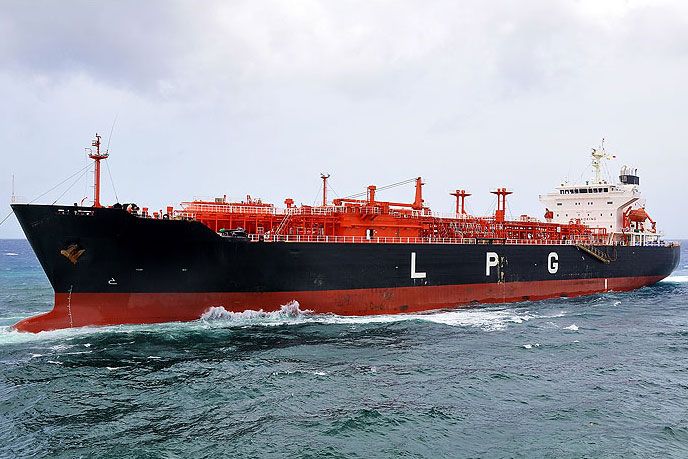
SOFIA, November 17, 2026 — The statement is short and stark. Bulgaria’s defence ministry said in a statement that the Liberian-flagged LPG tanker Gas Husky sank off Bulgaria’s Black Sea coast, about 50 miles off the coastal town of Byala, prompting a search and rescue operation for its crew, Reuters reported. The maritime tracker vesseltracker independently reported the sinking at about 50 nautical miles off Byala, in Bulgaria’s exclusive economic zone — a second account, from a separate source, of the same loss. What no official source has established is why the ship went down. The cause is unknown, and the fate of the Gas Husky’s crew had not been confirmed by Reuters as the rescue operation continued.
Track it live: https://signalpostnews.com/tracker/wars — the wars tracker: the Black Sea shipping war and every conflict Signal Post News is following, in one place.
What we know — and what we do not
- The sinking, as officially stated: Bulgaria’s defence ministry said the Gas Husky sank on Tuesday off Bulgaria’s Black Sea coast, about 50 miles off Byala, and that a search and rescue operation for its crew was under way, according to Reuters’ updated wire carrying the ministry statement. Vesseltracker independently reported the sinking at about 50 nautical miles off Byala in Bulgaria’s exclusive economic zone.
- The ship: the Gas Husky is a Liberian-flagged LPG tanker, IMO 9507764, which was en route from Alexandria toward Romania — Midia, on the Romanian coast — when her distress alert, an EPIRB emergency beacon, activated inside Bulgaria’s exclusive economic zone, according to Bulgarian maritime reporting carried by FXLFM.
- The cause is unknown: no source in this story — not the ministry statement, not Reuters, not the Bulgarian maritime reporting — establishes what sank the Gas Husky. Signal Post News does not assert or imply a drone, mine or missile strike on this vessel, because no verified reporting supports one.
- The crew: a search and rescue operation for its crew is ongoing. No crew count and no casualty figure for the Gas Husky has been established, and this article publishes none.
- The manager: the vessel’s Greece-based manager was not immediately available for comment, Reuters reported.
- The day before: a cargo ship carrying wheat sank about 40 nautical miles off the same stretch of coast on Monday, Reuters reported in its first wire — a separate incident, kept separate throughout this article and detailed in its own section below.
Two wires, two positions: the discrepancy, stated plainly
The public record of this sinking arrived in layers on Tuesday morning, and the layers do not perfectly agree. Readers deserve to see that plainly rather than have it smoothed away, so here is the sequence as it was published.
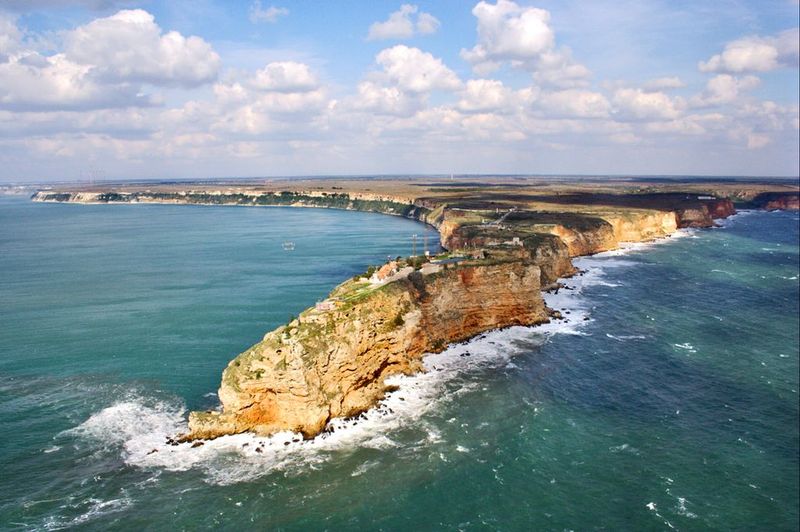
Reuters’ first wire, published at 09:18 UTC on Tuesday, reported that the Gas Husky had activated a distress alert about 60 nautical miles off Cape Kaliakra, inside Bulgaria’s exclusive economic zone, and that Bulgarian maritime authorities were investigating, citing the Bulgarian public broadcaster. In that first account, the cause of the alert and the state of the tanker and her crew were not immediately clear. Bulgarian maritime reporting carried by FXLFM, published at 08:41 UTC and updated at 08:56 UTC, added the vessel’s identity in full — IMO 9507764, en route Alexandria to Romania — and reported that her EPIRB emergency beacon had activated that morning, at a last known position 14.5 nautical miles from the site where the cargo ship Betul 8 had been lost the day before.
Reuters’ updated wire, carrying the Bulgarian defence ministry’s statement, then went further and said something the first wire had not: the ship had sunk. The ministry statement placed the sinking about 50 miles off Byala and dated the distress alert to “early on Monday” — a timing that differs from the first wire’s Tuesday framing, and a position that differs from the first wire’s fix off Cape Kaliakra. Signal Post News presents the ministry statement as what it is: the later, fuller official account, carried by Reuters and independently matched on the central fact — the sinking off Byala — by vesseltracker. Where the wires differ, on timing and on the precise position, this article reports both versions as published and reconciles neither. Investigations at sea routinely revise first fixes; what matters for the record is that the sinking itself now rests on a named ministry statement and a second, independent maritime report, while the cause rests on nothing at all.
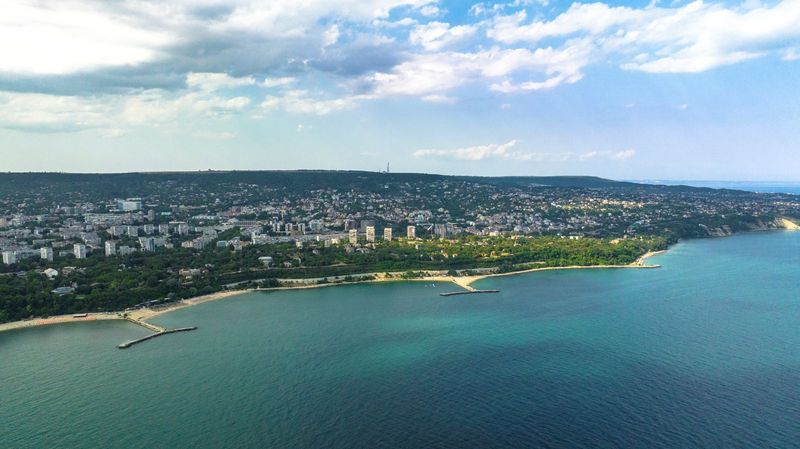
One further report is fenced off from the confirmed record, and it is labelled as such so that no reader mistakes it for more than it is: vesseltracker reported that the crew abandoned ship and were recovered from a life raft and taken to the Chaika airbase near Varna. That account comes from vesseltracker alone; it has not been confirmed by Reuters, and Signal Post News treats the crew’s fate as unconfirmed while the official search and rescue operation continues.
Monday’s ship was a different ship
The Gas Husky is the second vessel lost off this coast in two days, and the discipline of this story is to keep the two losses apart, because they are not the same event and the evidence for each is not interchangeable.
Monday’s ship was the Betul 8, a cargo ship carrying wheat. Reuters’ first wire on the Gas Husky carried the context that a wheat cargo ship had sunk about 40 nautical miles off the same stretch of coast on Monday, November 16. The Bulgarian maritime report carried by FXLFM named that vessel as the Betul 8, reported that she was attacked by drones on November 16, and reported that her 12 crew were evacuated and taken to Varna by helicopter. Those details — the drone attack, the evacuation, the number taken to Varna — come from that Bulgarian maritime report alone, and they belong to the Betul 8 alone. The same report placed the Gas Husky’s last known position 14.5 nautical miles from the Betul 8 site, which is a measure of how crowded with danger this one stretch of NATO-member coastline has become; it is not evidence that the two ships met the same fate by the same means. Nothing in the verified reporting establishes any cause for the Gas Husky’s sinking, and Monday’s drone-attack reporting must not be read across onto Tuesday’s ship.
A spate counted in missing seafarers
Step back from the two ships and the pattern is the one this newsroom has been documenting all autumn: the Black Sea’s shipping war has moved steadily into the waters of NATO members, and it is merchant crews who are paying for it. Reuters, in its first Gas Husky wire, put the human context in a single sentence: the Monday sinking was the latest in a spate of attacks that have left more than 20 seafarers missing and feared dead. That figure is Reuters’ accounting of the wider spate — it is not a figure for the Gas Husky, whose crew’s fate remains unconfirmed, and it is not a figure for any single vessel.
The recent entries in that ledger are a matter of this newsroom’s record. On Sunday, drones struck three ships inside Romanian waters off Sulina, at the Danube’s mouth — the attack we reported in Drones Strike Three Ships in Romanian Waters Off Sulina as Black Sea Ship Drone Attack Reaches NATO’s Doorstep, where Romania scrambled jets twice and, by fortune, no crew was lost. In October, the same Bulgarian coastline saw the sinkings we documented in Bulgaria Black Sea Drone Attack: Two Ships Struck, One Sunk, Crew Missing and in Bulgaria Black Sea Ship Attack Sinks Alfa Watan — attacks inside Bulgaria’s exclusive economic zone in which merchant ships were hit, one sank, and seafarers went missing. The Gas Husky now joins that sequence as a loss whose cause is, for the moment, a blank. A blank is not a small thing: in a sea where drones, mines and missiles are all in documented use against shipping, an unattributed sinking inside a NATO member’s economic zone is precisely the kind of event that demands a careful investigation and punishes a rushed conclusion.
The ship and the run she was on
What is established about the Gas Husky herself can be written in a paragraph, and it should not be inflated beyond it. She is an LPG tanker — a carrier of liquefied petroleum gas, the bottled and heating gas that households and industry across the region burn — sailing under the Liberian flag, the open registry under which a large share of the world’s tanker fleet trades. Her IMO number, 9507764, is the permanent identifier that follows a hull through every change of name, flag and owner. Bulgarian maritime reporting placed her on a laden route from Alexandria, in Egypt, toward Romania — Midia, the Romanian oil and gas port north of Constanta — which is to say she was crossing the western Black Sea, northbound through Bulgaria’s exclusive economic zone, when her EPIRB fired. An EPIRB is not a radio call and it is not a rumour: it is an emergency position-indicating beacon, the device a ship carries so that if the worst happens, the world knows where. Its activation is what set Tuesday’s reporting in motion. Beyond that, the sourcing thins quickly: Reuters reported that the ship’s Greece-based manager was not immediately available for comment, and no statement from the manager, the flag state or the charterer had entered the verified record as this article was published.
Why a sinking in Bulgaria’s zone matters
Bulgaria is a member of NATO and of the European Union, and its exclusive economic zone is not international water in the loose sense: it is the maritime space in which a NATO member state carries defined rights and responsibilities, including for the safety of navigation. A merchant ship sinking there without an established cause therefore lands differently from a loss in a war zone proper. It lands, first, on the alliance’s doorstep — the same doorstep where, in October, Bulgaria moved to join NATO’s anti-drone initiative after drones sank a second cargo ship off its coast in a week. It lands, second, on the energy map: LPG is a heating and cooking fuel for millions of households, and the Alexandria-to-Romania run the Gas Husky was sailing is part of the web of short-sea energy routes that keep the region supplied when pipelines are politically fraught. And it lands, third, on the insurance market, where every unexplained loss in the western Black Sea is priced into the war-risk premiums that decide whether grain, fuel and fertiliser keep moving through these waters at all — or whether owners quietly route around a sea that has become too dangerous to underwrite.
That is the strategic weight of an event whose tactical facts remain, for now, a distress beacon, a ministry statement and a rescue at sea. Two ships lost off one short coastline in two days; a third incident, off Sulina, three days before that; more than 20 seafarers missing and feared dead across the spate, on Reuters’ count. The Black Sea war is no longer only about the ports of Ukraine and Russia. It is about whether ordinary commerce — wheat out, gas in — can still cross the western Black Sea under the flags of neutral registries and the protection, such as it is, of NATO’s littoral states.
What happens next
The first question is the rescue, and it is the only one that matters tonight: whether the search and rescue operation for its crew finds the Gas Husky’s people, and what Bulgarian authorities then say, on the record, about their fate. Until a named official source confirms it, this newsroom will continue to report the crew’s fate as unconfirmed, whatever else circulates.
The second thread is the investigation. Bulgarian maritime authorities were investigating from the first wire onward, and a formal inquiry will have to answer the questions the wires could not: where exactly the ship was when she got into trouble, what her beacon and tracking record shows, whether wreckage or survivors’ testimony points to a cause, and whether the sea itself — weather, condition, cargo — or a weapon explains the loss. If evidence of an attack emerges, it will have to be produced and attributed by investigators, not inferred from the week’s pattern; the pattern is context, not proof. The third thread is the response: whether Sofia, which has already taken its October losses to NATO, treats a second sinking in its zone in two days as grounds for a further allied step, and whether the Greece-based manager and the Liberian registry add their accounts to a record that, at publication, still consists of a ministry statement, two wire versions and a tracker’s corroboration. Signal Post News will update this story as those answers arrive.
Sources
- Reuters, November 17, 2026 (first wire, published 09:18 UTC) — “LPG tanker sends distress signal off Bulgaria’s Black Sea coast”: the Liberian-flagged LPG tanker Gas Husky activated a distress alert about 60 nautical miles off Cape Kaliakra, inside Bulgaria’s exclusive economic zone; Bulgarian maritime authorities investigating (Bulgarian public broadcaster cited); the cause and the state of the tanker and crew not immediately clear; the Greece-based manager not immediately available for comment; and the context that a cargo ship carrying wheat sank about 40 nautical miles off the same coast on Monday, in a spate of attacks that has left more than 20 seafarers missing and feared dead.
- Reuters, November 17, 2026 (updated wire, via Devdiscourse syndication of the Reuters update, updated 09:32 UTC) — Bulgaria’s defence ministry said in a statement that the Gas Husky sank on Tuesday off Bulgaria’s Black Sea coast, about 50 miles off the coastal town of Byala, prompting a search and rescue operation for its crew; the update dated the distress alert to “early on Monday.” The ministry statement is presented in this article as the later, fuller account; the timing and position differences between the two Reuters wires are flagged in the article, not reconciled.
- Bulgarian maritime reporting via FXLFM, November 17, 2026 (published 08:41 UTC, updated 08:56 UTC) — the vessel’s EPIRB emergency beacon activated that morning; IMO 9507764; en route Alexandria to Romania; last known position 14.5 nautical miles from the site where the cargo ship Betul 8 was attacked by drones on November 16; and that report’s account that the Betul 8’s 12 crew were evacuated and taken to Varna by helicopter. The Betul 8 details rest on this report alone and are attributed to it throughout.
- vesseltracker, November 17, 2026 — independent report that the Gas Husky sank about 50 nautical miles off Byala in Bulgaria’s exclusive economic zone, corroborating the defence-ministry account carried by Reuters. Vesseltracker also reported that the crew abandoned ship and were recovered from a life raft to the Chaika airbase near Varna; that report is attributed to vesseltracker alone in this article and is explicitly noted as not confirmed by Reuters. No other vesseltracker claim is relied on in this article, and no crew figure from any source is published for the Gas Husky.
- Signal Post News, related coverage: Drones Strike Three Ships in Romanian Waters Off Sulina as Black Sea Ship Drone Attack Reaches NATO’s Doorstep; Bulgaria Black Sea Drone Attack: Two Ships Struck, One Sunk, Crew Missing; Bulgaria Black Sea Ship Attack Sinks Alfa Watan.
- Photos: an LPG carrier underway at sea, Shana news agency file photograph; Cape Kaliakra, Bulgaria, by Chavdar Nikolov; the Varna coastline from the air, Visit Varna (visit.varna.bg) — each credited in its caption. All are file photographs; none depicts the Gas Husky herself or the events of November 16–17, 2026.