Israeli strikes kill four in Gaza: hospital officials said Israeli strikes on Saturday killed four people across the Gaza Strip — two east of Gaza City, a 14-year-old boy in Deir al-Balah, and one person in Rafah — while Israel's army said it had struck Hamas and Islamic Jihad military operatives in those areas and was checking the results, a year into a ceasefire under which Gaza's health ministry says more than 1,500 Palestinians have now been killed.
Four More Dead in Gaza on a Saturday Morning — a Year Into a Ceasefire That Never Fully Stopped the Strikes
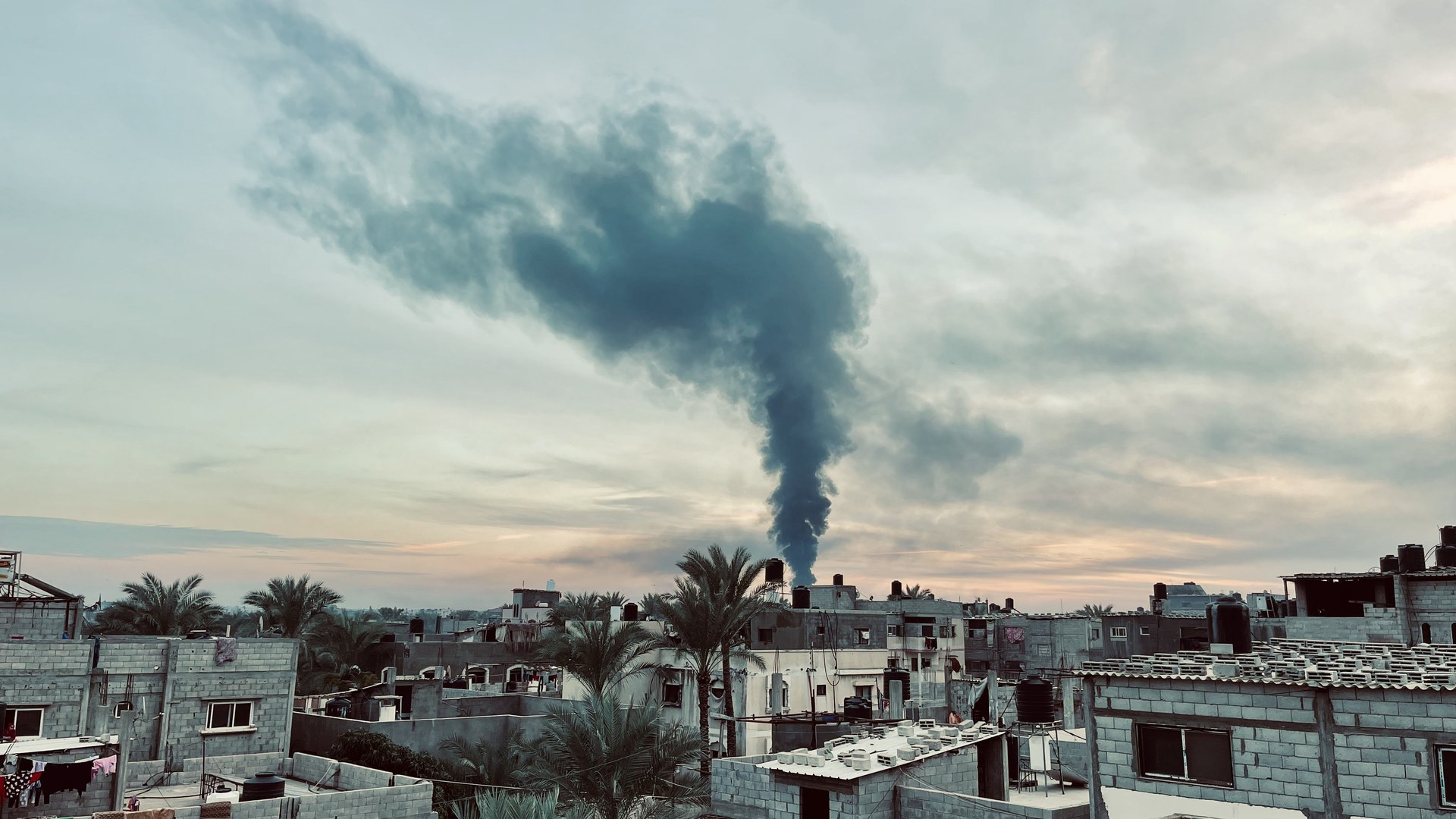
GAZA CITY — Israeli strikes kill four in Gaza on Saturday: that is the count given by hospital officials across the Strip and reported by the Associated Press, in a war that is supposed to be over. Staff at Shifa hospital in Gaza City said one strike killed two people and wounded several others east of the city. Staff at al-Aqsa hospital said a second strike killed a 14-year-old boy in Deir al-Balah, in the central Strip. Staff at the Red Cross field hospital in Rafah, in the south, said a third strike killed one person there. Israel's military said it had struck Hamas and Islamic Jihad military operatives in those areas on Saturday morning and was checking the results of the strikes; it did not immediately respond to the reported strike in Rafah. The deaths are attributed throughout this article to the hospital officials who reported them, as the AP reported them; they have not been independently verified, and the two sides describe the same morning in irreconcilable terms — which is, a year into this ceasefire, the most familiar fact of all.
Track it live: Live global wars tracker · Israel war map
What the hospitals reported
The reports came in from three facilities in three parts of the Strip, and their separation is part of what gives the account its weight: this was not one strike described three ways, but three strikes, in the north, the centre, and the south, each counted by the medical staff who received the dead. East of Gaza City, Shifa hospital staff reported two killed and several wounded. In Deir al-Balah, al-Aqsa hospital staff reported the death of a 14-year-old boy. In Rafah, the Red Cross field hospital reported one person killed. Local reporting added names and texture to the northern strikes: JFeed, an Israeli news site covering the Strip, reported four people killed in three separate drone strikes since Saturday morning, naming three of the dead in the Tuffah neighbourhood of Gaza City — Majed al-Sabaa, killed near the Fahd School, and Abdallah Jaber and Imad Jaber, killed in the Al-Mashahra area — and placing its fourth death in Deir al-Balah. The Palestinian news agency WAFA, as carried by PressTV, reported that an Israeli drone struck a gathering in Tuffah, in northeast Gaza City, on Saturday morning, killing a man and wounding dozens; WAFA also reported Israeli military vehicles firing south of Khan Younis and artillery shelling eastern Gaza City.
The accounts agree on the total — four dead — and on the shape of the morning, three strikes in three areas. They do not perfectly reconcile in their details. JFeed names three dead in Tuffah and one in Deir al-Balah, with no Rafah death in its count; the AP, from the hospitals, counts two east of Gaza City, the teenager in Deir al-Balah, and one in Rafah. Tuffah is in eastern Gaza City, so the Gaza City figures overlap and may describe the same strike from different vantage points — a named neighbourhood count from local stringers against a hospital's intake count — but the Rafah death appears only in the AP's hospital reporting, and the third named man in Tuffah appears only in JFeed's. The honest summary is the one both totals support: four people were killed on Saturday, one of them a 14-year-old boy, in strikes that Israel's army partially acknowledges and attributes to operations against Hamas and Islamic Jihad.
Israel's account
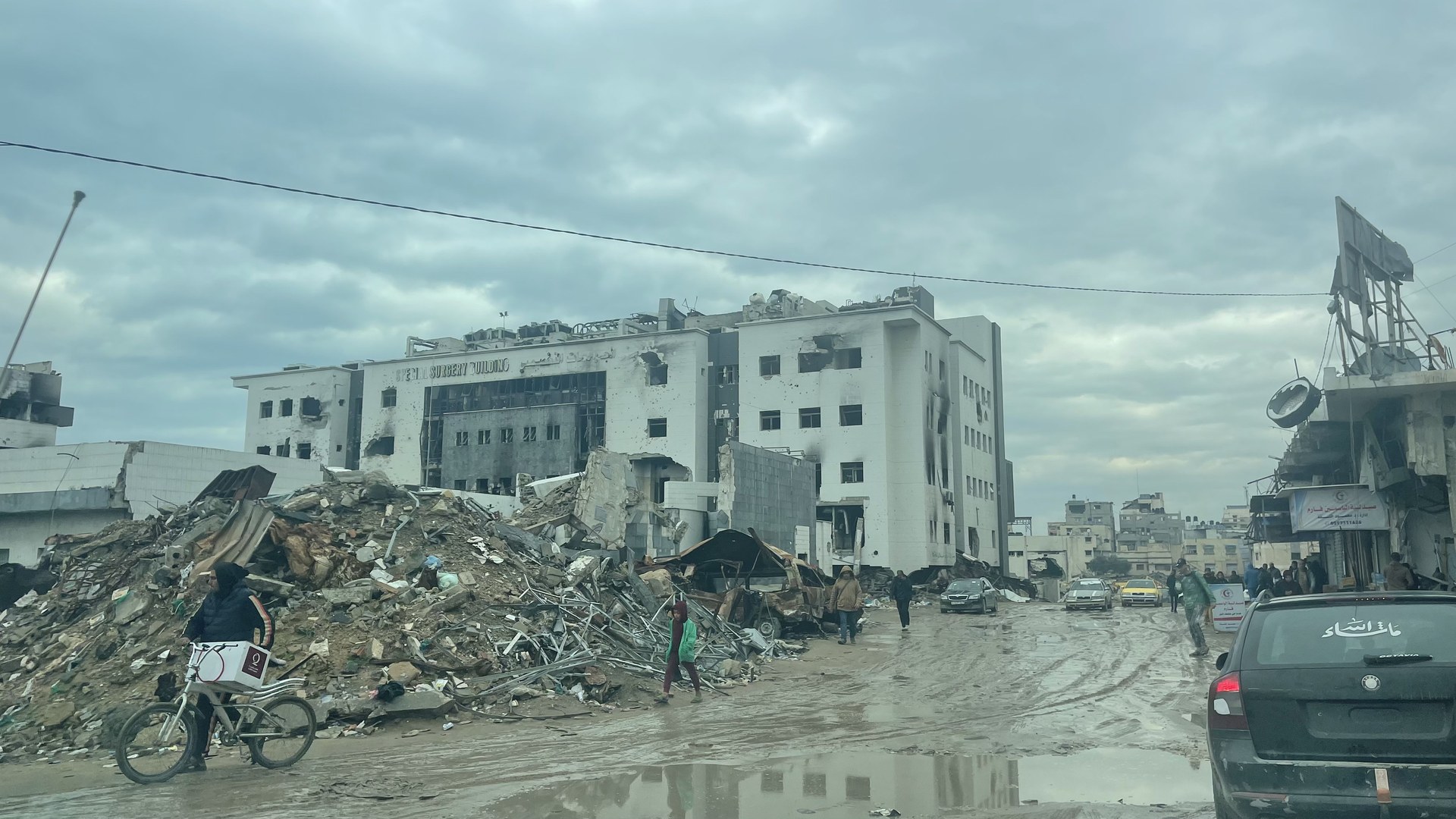
Israel's army said it struck Hamas and Islamic Jihad military operatives in those areas on Saturday morning and that it was checking the results — the standard formulation it has used throughout the ceasefire year for strikes it describes as responses to, or pre-emptions of, militant activity. The army did not immediately respond to the reported strike in Rafah. Israel's stated position across the ceasefire has been consistent: it says Hamas and Palestinian Islamic Jihad have used the truce to rearm, regroup, and re-entrench, that operatives have approached or crossed the lines Israeli forces hold inside Gaza, and that its strikes target military personnel and infrastructure, not civilians. Palestinian officials and Hamas give the mirror-image account: they accuse Israel of undermining the agreement with near-daily fire, of striking gatherings, streets, and neighbourhoods, and of converting a ceasefire into a slower war whose casualties are overwhelmingly the people the truce was meant to protect. Neither side's characterisation can be settled from Saturday's reporting alone, and this article does not settle it. What the hospital reports establish is who arrived dead at three facilities. What the army's statement establishes is that at least some of the strikes were deliberate operations against people it identified as operatives. Between those two facts lies the entire argument of the past year.
A ceasefire that never fully stopped
The ceasefire was reached in October 2025, ending two years of war that began with Hamas's October 2023 attack on Israel and Israel's devastating campaign in Gaza. Its terms halted the large-scale fighting, freed hostages and prisoners in phases, and pulled Israeli forces back to lines inside the Strip. What it did not produce was quiet. Strikes and shootings have continued at a near-daily rhythm — against targets Israel identifies as militants, at crossings and along the withdrawal lines, and, according to Gaza's health authorities, against people whose only description in the record is their age and where they were standing. The health ministry's running count of Palestinians killed by Israeli fire since the ceasefire now stands at more than 1,500. The AP notes that the ministry's figures are seen as generally reliable by United Nations agencies and independent experts, and that the ministry does not break its count down between civilians and militants — a limitation that matters, because Israel maintains that a substantial share of those killed were combatants, while Palestinian officials and rights groups maintain that the overwhelming majority were not. UNICEF added its own grim line to the ledger this week, reporting that 340 children have been killed in Gaza since the ceasefire began — the figure that frames Saturday's youngest death not as an anomaly but as a rate: roughly one child a day, for a year, in a war that has officially ended.
Why this matters
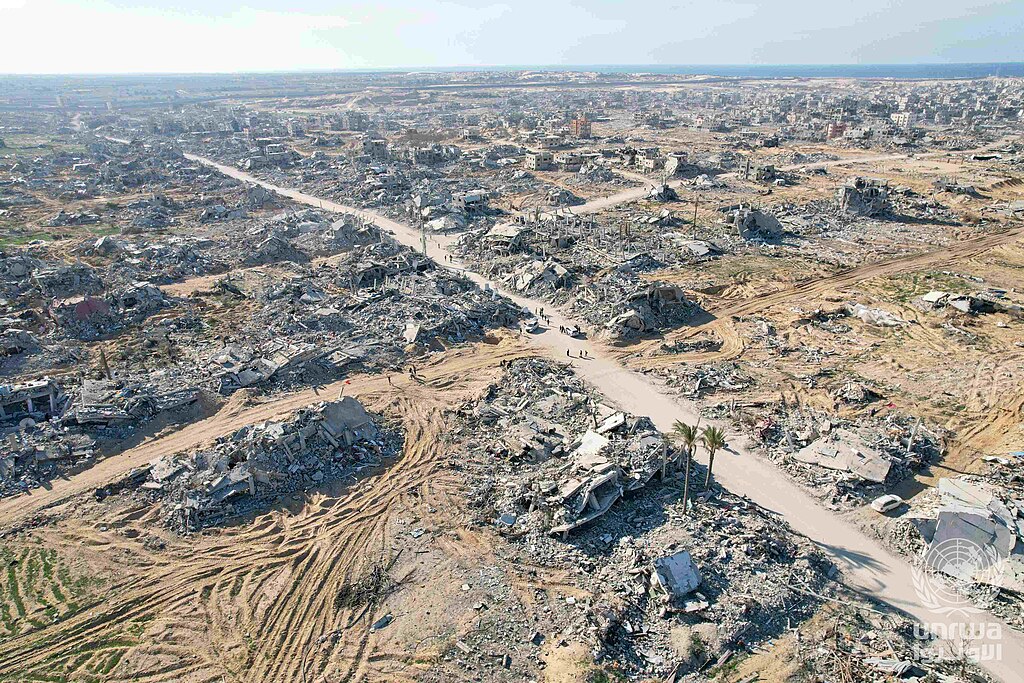
Four deaths on a Saturday would once have been a footnote to a war. A year into a ceasefire, they are a measurement of it. The truce's defenders — in Washington, in the mediating capitals, and in Jerusalem — describe it as holding: the war has not resumed, the hostages came home, the bombardment of 2023–25 has not returned. The truce's critics answer with arithmetic: more than 1,500 dead since it began is not a peace that failed to arrive but a casualty rate that never stopped, and Saturday's strikes — a neighbourhood in Gaza City, a street in Deir al-Balah, a death in Rafah — match the pattern of the whole year, dispersed, small-scale, and continuous. Both descriptions are true of the same facts, and which one prevails politically depends on a question nobody has answered since October 2025: who enforces a ceasefire like this? There is no international force in Gaza with a mandate to investigate a Saturday-morning drone strike, no mechanism that rules on whether the men in Tuffah were operatives or bystanders, and no consequence scheduled for either side when the count rises. Into that vacuum stepped the United Nations' envoy this week, warning the Security Council that the risk of a new Gaza war has never been higher — a warning delivered days before four more deaths demonstrated the mechanism he fears: a truce that absorbs small strikes until, one morning, it doesn't.
What happens next
The immediate questions are the familiar ones, and they will be answered, if at all, in the familiar way. Israel's army says it is checking the results of its strikes; whether it publishes what it found — and whether its account names the same men JFeed named — will determine how much of Saturday can ever be established. Hamas and Palestinian officials will fold the deaths into their standing accusation that Israel is hollowing out the agreement; Israel will fold its operatives claim into its standing case that the armed groups are rebuilding under the truce's cover. The mediators — the United States, Egypt, and Qatar — will weigh, as they have after each of the year's strike days, whether four deaths is a number the ceasefire can absorb. It has absorbed more than 1,500. The scenarios from here are the ones the UN envoy laid out: a managed, grinding status quo in which strikes like Saturday's become the truce's permanent weather; a negotiated tightening of the deal — verification, a buffer regime, an international presence — of the kind diplomats have discussed for a year without building; or a single incident, larger or unluckier than Saturday's, that collapses the distinction between a ceasefire with strikes and a war with pauses. Saturday did not collapse it. It did what the previous year of Saturdays did: it moved the count from one number to a slightly larger one, buried four people — two men named in Tuffah, a boy of 14 in Deir al-Balah, and one more in Rafah — and left the ceasefire exactly where it was, which is the problem.
Related coverage: UNICEF: 340 children killed in Gaza since the ceasefire · UN envoy warns risk of a new Gaza war has never been higher · One year of the Gaza ceasefire
Sources
Associated Press, October 17, 2026 — Middle East roundup: Israeli strikes on Saturday killed four people across Gaza, including a teenager, according to hospital officials — two killed and several wounded east of Gaza City (Shifa hospital staff), a 14-year-old boy killed in Deir al-Balah (al-Aqsa hospital staff), one killed in Rafah (Red Cross field hospital); Israel's army said it struck Hamas and Islamic Jihad military operatives in those areas Saturday morning and was checking the results, and did not immediately respond on Rafah; more than 1,500 Palestinians killed by Israeli fire since the ceasefire was reached last October, per Gaza's health ministry, whose figures AP notes are seen as generally reliable by UN agencies and independent experts and which gives no civilian/militant breakdown (tricityrecordnm.com). JFeed, October 17, 2026 — four killed in three drone strikes since Saturday morning: Majed al-Sabaa near the Fahd School in Tuffah, Gaza City; Abdallah Jaber and Imad Jaber in Al-Mashahra, Tuffah; a fourth killed on Al-Baraka Street, Deir al-Balah (jfeed.com). WAFA via PressTV, October 17, 2026 — an Israeli drone struck a gathering in Tuffah, northeast Gaza City, Saturday morning, killing a man and wounding dozens, WAFA said; Israeli vehicles also fired south of Khan Younis and artillery shelled eastern Gaza City (presstv.co.uk).