China Israel West Bank settlements: Foreign Minister Wang Yi told Israeli President Isaac Herzog in Baku on October 15, 2026 that Israel should stop and reverse its “forced establishment” of settlements in the occupied West Bank, fully open access to Gaza and return to a two-state solution — a demand Israel's own readout of the meeting did not mention.
Baku / Beijing says stop — and reverse. Jerusalem's answer was about trade and Iran
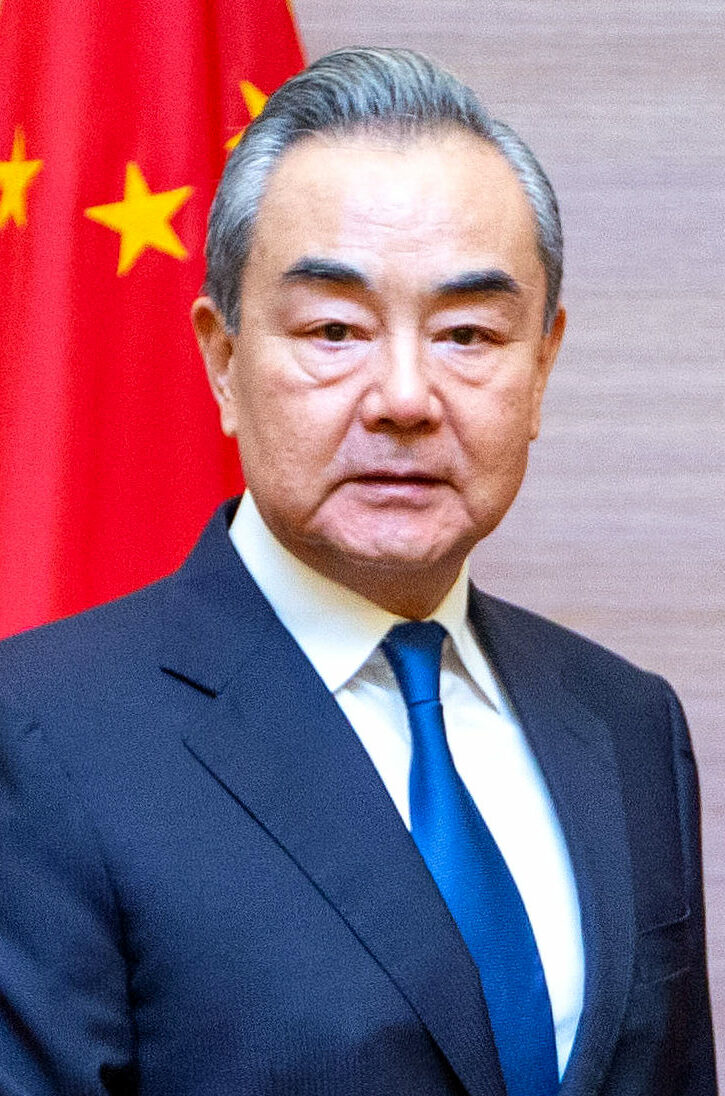
BAKU, Azerbaijan — China has told Israel, face to face and at head-of-state level, that it should stop and reverse its “forced establishment” of settlements in the occupied West Bank. Foreign Minister Wang Yi delivered the message to Israeli President Isaac Herzog when the two met in Azerbaijan on Thursday, October 15, according to a Chinese foreign ministry statement published on Friday and reported by Reuters. Wang called the Palestinian question “the greatest historical injustice of this century,” said promoting peace and reconciliation is the “cornerstone” of China’s Middle East policy, and argued that the two-state solution is the right path — with the immediate priority being to fully open access to the Gaza Strip so a humanitarian “catastrophe” is not allowed to spread. Herzog’s own public account of the same meeting did not mention settlements at all. It emphasised relations between the two countries, trade and security — a split-screen readout that tells you most of what you need to know about where this conversation currently stands.
Track it live: Live global wars tracker · Israel war map · Middle East tracker
What Wang Yi actually said in Baku
The meeting took place on Thursday in Baku, on the sidelines of a summit of the Conference on Interaction and Confidence Building Measures in Asia, according to reporting based on the Chinese statement. The Chinese readout, published Friday, October 16, was unusually direct for a conversation with an Israeli president. Wang said China has consistently held that the Palestinian question is the greatest historical injustice of this century. He said Israel should stop and reverse its forced establishment of settlements in the West Bank. He said the two-state solution — Israel and an independent Palestinian state existing side by side — is the right path to a resolution, and that the immediate priority is to fully open access to the Gaza Strip so the humanitarian catastrophe there is not allowed to spread. And he said China is willing to work with the international community to push all parties back to dialogue and consultation as soon as possible, and to seek a political settlement of the conflict.
Every element of that list was chosen. “Stop” is a demand about the present; “reverse” is a demand about the past — it asks Israel not merely to freeze construction but to undo settlements already built, which no Israeli government currently on offer would accept. “Forced establishment” frames settlement building not as a housing or security policy but as something imposed on another people. And the Gaza sentence ties the West Bank argument to the war’s humanitarian emergency, presenting the two as a single file rather than separate problems. This was not an offhand remark at a press conference. It was a prepared position, delivered to Israel’s head of state, then published by Beijing’s foreign ministry for the record.
What Israel said — and did not say
Israel confirmed the meeting and described a different conversation. According to the Israeli government’s official statement, the discussions covered relations between the two countries and the wider situation in the Middle East. Herzog highlighted the importance of economic, trade and cultural ties between Israel and China, and outlined Israel’s security concerns, particularly those relating to Iran and groups aligned with it. Herzog said in a post on X that the meeting, which took place on Thursday, focused on “relations between our countries and the situation in the Middle East.” His office declined to comment when Reuters asked about the discussions on the West Bank or the Palestinians. The Israeli statement announced no agreement on settlement expansion, and nothing in either readout suggests Israel agreed to stop or change its existing policies.
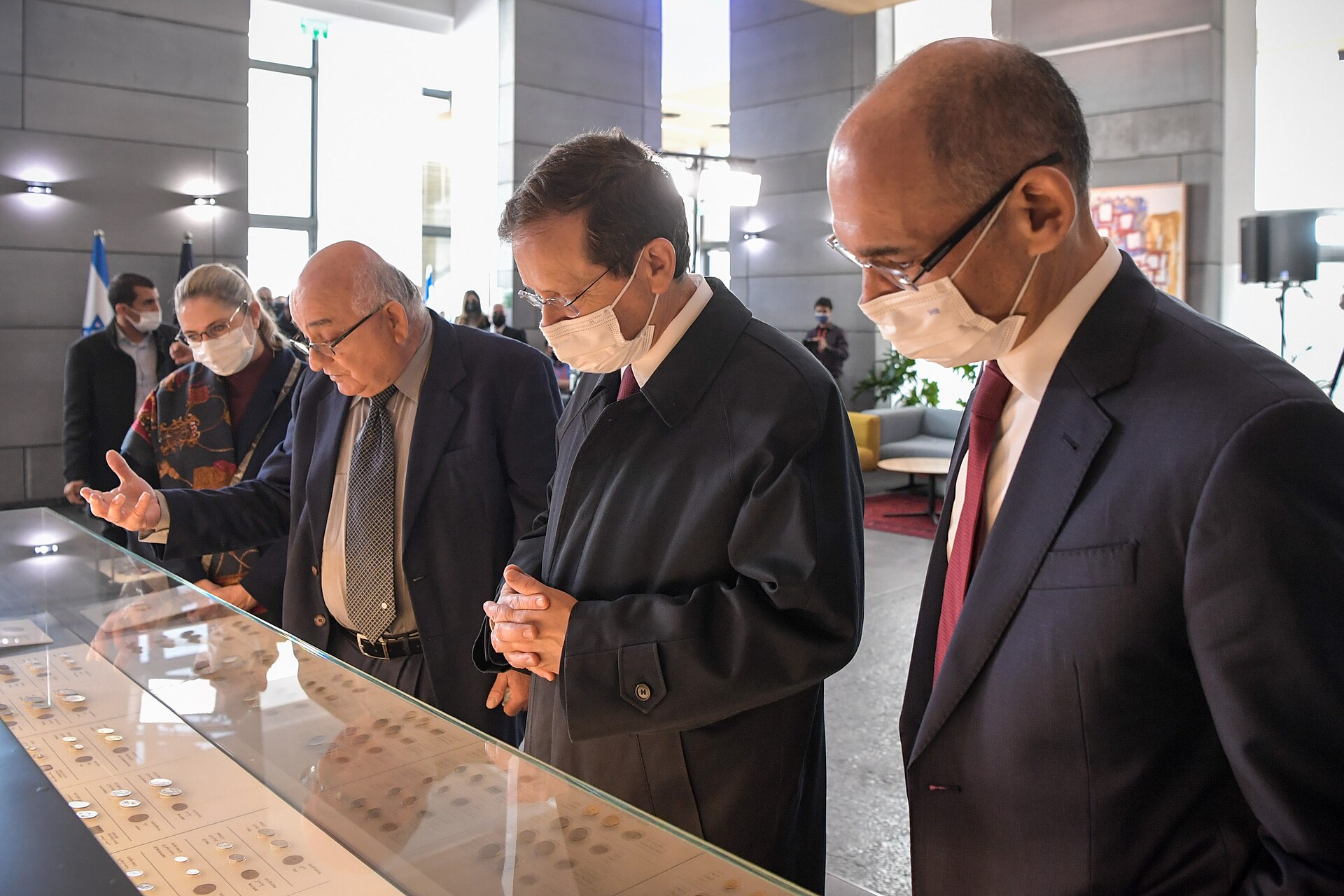
That divergence is itself the news. When two governments publish readouts of the same meeting and one leads with a demand the other does not mention, both are speaking past the room — to their own audiences. Beijing’s audience is the wider Middle East, the Global South and the Palestinian public, for whom the statement is evidence that China raises settlements even when sitting across from an Israeli president. Jerusalem’s audience is domestic and American: the message is that the relationship with a major trading partner is intact, businesslike, and not a venue where Israel accepts lectures on the West Bank. Neither readout is false. They are simply accounts of two different meetings that happened to share a table.
Why this matters
The first reason is timing. Wang’s words landed in the same week that settler violence in the West Bank reached a recorded peak. On Friday, October 16 — the day Beijing published its statement — dozens of masked settlers attacked Palestinian farmers harvesting olives near the village of Abu Falah, northeast of Ramallah, beating a veteran Washington Post photographer, Heidi Levine, on camera and injuring farmers as cars and olive trees were set alight; the UN says the past two weeks have already seen more attacks by violent settlers than the entire previous harvest season, and the Israeli rights group Yesh Din has recorded scores of harvest-related attacks since late September. China did not cite Abu Falah, and there is no evidence Beijing timed its statement to the attack. But diplomats do not speak into a vacuum: a demand to “stop and reverse” settlements reads very differently in a quiet month than it does in a week when settlement-adjacent violence is leading international news bulletins. The context gave Wang’s sentence a weight the sentence alone would not have carried.
The second reason is positioning. China has long been a supporter of the Palestinian cause, and it also has close ties with Israel’s main regional foe, Iran — a combination that makes much of the region listen when Beijing chooses a side in public. Since brokering the 2023 rapprochement between Saudi Arabia and Iran, China has presented itself as the outside power that talks to everyone and lectures in the language of sovereignty and international law rather than democracy or human rights. A settlement demand delivered to Israel’s president, in a third country, on the sidelines of a Eurasian security forum, is exactly that brand of diplomacy: visible, principled on paper, and costing Beijing nothing it was not already spending. For Arab and Muslim-majority states weighing how much to invest in a Chinese-led diplomatic track as American mediation stalls and restarts, Baku was a data point in China’s favour. For Israel, it was a reminder that its second-largest trading relationship comes with a political price tag attached, even when the invoice is presented politely.
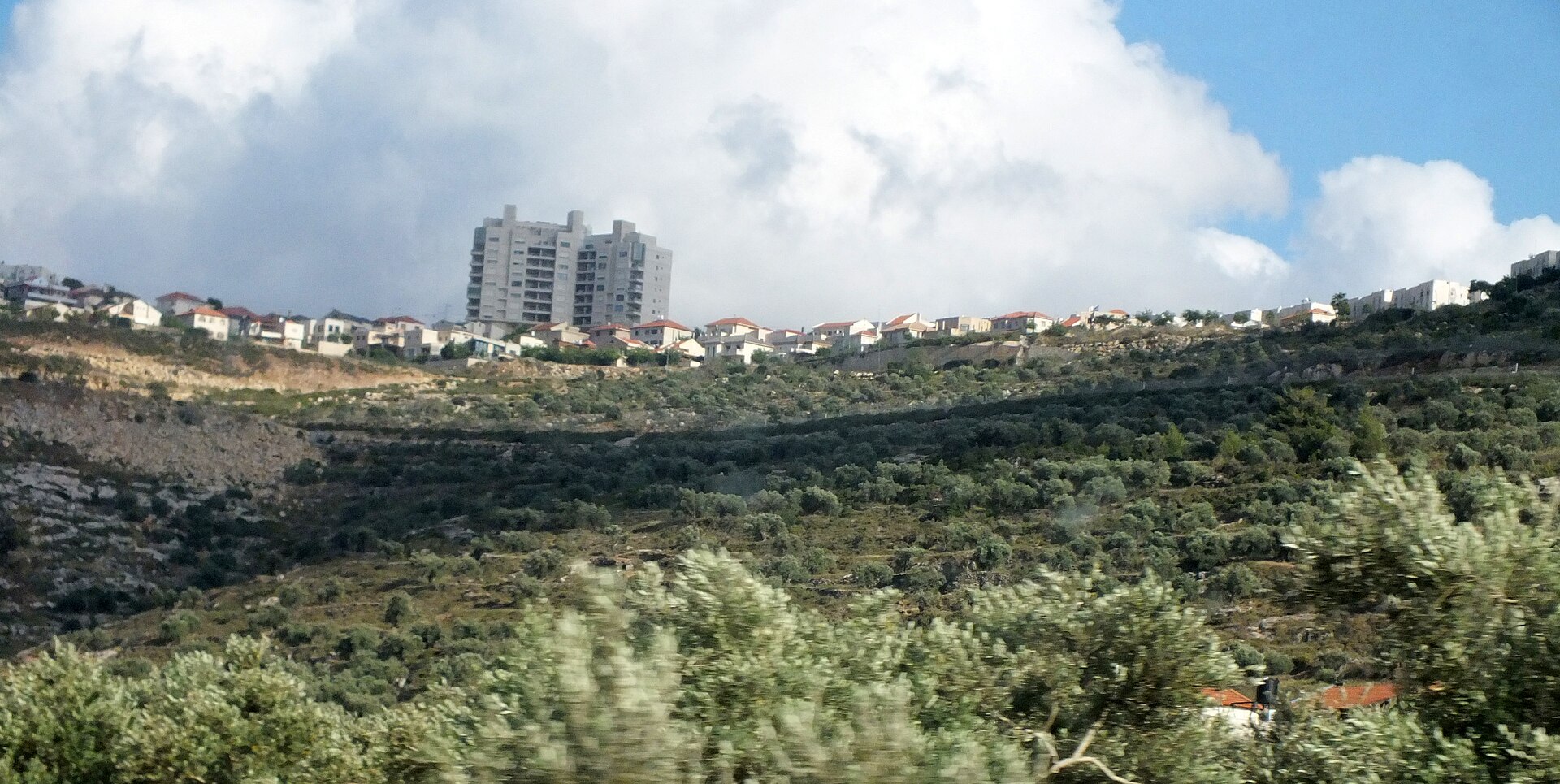
The third reason is what “reverse” would actually mean on the ground, and the numbers expose it. International estimates put the Israeli settler population at more than 700,000 across the West Bank and East Jerusalem, in communities ranging from caravan outposts to cities the size of Ariel. The UN Security Council’s Resolution 2334, passed in 2016, calls settlements a flagrant violation of international law with no legal validity; Israel disputes that characterisation, argues the West Bank is disputed rather than occupied territory, and points to security needs and historical and biblical ties to the land. In December 2025, Israel’s security cabinet approved 19 new West Bank settlements under a proposal backed by Finance Minister Bezalel Smotrich — the direction of travel, under the current government, is expansion, not reversal. So when Beijing says “reverse,” it is asking for something no plausible Israeli coalition would deliver voluntarily, and Beijing certainly knows it. Statements like this are therefore best read not as negotiating positions but as markers: they record where a rising power intends to stand if and when a real settlement negotiation — or a real confrontation at the UN — eventually happens.
Context: how the settlement file reached this point
Israel captured the West Bank from Jordan in the 1967 war, and settlement building began soon after, accelerating under governments of both the Israeli right and centre. The Oslo Accords of the 1990s divided the territory into Areas A, B and C and deferred the settlements’ final status to negotiations that never concluded. Since then the settler population has roughly tripled, the Palestinian Authority has weakened, and the practical geography of a two-state solution has narrowed year by year — which is precisely the arithmetic behind the phrase diplomats now use, that the window is closing. International pressure has recently taken new forms: in September the UN’s updated database listed 61 companies over business activity in the settlements, and Britain, France and Canada were among the states moving on settlement-linked trade measures — pressure through commerce rather than communiqués. China’s Baku statement adds a different kind of pressure: not sanctions, not a boycott list, but a great power saying the quiet part directly to the president of the state concerned, and publishing it.
What each side says
China’s position, as stated in Baku, is that the Palestinian question is a historical injustice, that settlements must stop and be reversed, that Gaza must be fully opened to aid, and that a two-state political settlement is the only durable exit. Israel’s public position in the same meeting was that the relationship matters, that trade and cultural ties should grow, and that Israel’s security concerns — above all Iran and its aligned groups — are the region’s central problem; the Israeli government also maintains, as it has for decades, that settlements are not the obstacle to peace and that their status is a matter for negotiations. Palestinian officials, who were not in the room, have for years asked outside powers to move from statements to consequences. Between those positions, the checkable facts of this week are narrow: a meeting happened in Baku on October 15; Beijing published a demand on October 16; Jerusalem published a readout that did not mention it; and no Israeli policy changed as a result. Everything beyond that is positioning — which, in diplomacy, is not nothing. Positioning is what states do before they act.
What happens next
Three scenarios follow from here. The most likely is absorption: the statement joins the long shelf of international calls Israel has heard, noted and continued past, while China–Israel trade and the working relationship carry on, because both governments have strong reasons to keep them carrying on. The second is accumulation: Baku becomes one exhibit among many — the UN blacklist, European trade measures, record harvest-season violence, American domestic debate — in a slow shift of the international environment in which settlement expansion gets steadily more expensive for Israel even without a single dramatic rupture. The third, least likely in the near term but the one Beijing is auditioning for, is mediation: if a future Gaza or final-status negotiation needs a convener that Iran, the Gulf states and the Palestinians will all take calls from, China has spent this week reminding everyone that it has been making those calls all along. Watch, in the coming weeks, for whether China repeats the “stop and reverse” formula at the UN or in its next Middle East envoy tour — repetition would signal a campaign; silence would signal a one-off marker laid down in Baku, on a Friday, while the olive harvest burned.
Related coverage: Washington Post photographer Heidi Levine beaten at Abu Falah olive harvest · UN settlements blacklist lists 61 companies · Macron’s UN farewell rebukes Trump’s Gaza diplomacy
Sources
Reuters, October 16, 2026 — Chinese Foreign Minister Wang Yi told Israeli President Isaac Herzog that Israel should stop and reverse its “forced establishment” of West Bank settlements, China’s foreign ministry said in a statement on Friday; Herzog’s post on X and his office’s refusal to comment on the West Bank discussion. China’s Ministry of Foreign Affairs, October 16, 2026 — official statement of the Wang–Herzog meeting in Azerbaijan (two-state solution, Gaza access, peace and reconciliation as the cornerstone of China’s Middle East policy). Al Jazeera, October 16, 2026 — China tells Israel to stop forced establishment of West Bank settlements (Gaza humanitarian priority). Government of Israel, October 15, 2026 — official statement on President Herzog’s meeting with Chinese Foreign Minister Wang Yi (bilateral relations, economic, trade and cultural ties, security concerns regarding Iran). Reuters and BBC, October 16, 2026 — settler attack on the Abu Falah olive harvest, Washington Post photographer Heidi Levine injured, UN figures on harvest-season settler attacks.