Tankers attacked off Saudi Arabia: the UK Maritime Trade Operations centre said on Saturday that a tanker was struck by an unknown projectile 68 nautical miles northeast of Jubail on Friday, and that a second tanker was hit by a rocket-propelled grenade fired from a small boat 78 nautical miles northeast of the port — attacks deep inside the Persian Gulf that nobody has claimed, with all crew reported safe.
An RPG From a Small Boat, 78 Miles Off Jubail — the Gulf's Tanker War Reaches Saudi Waters
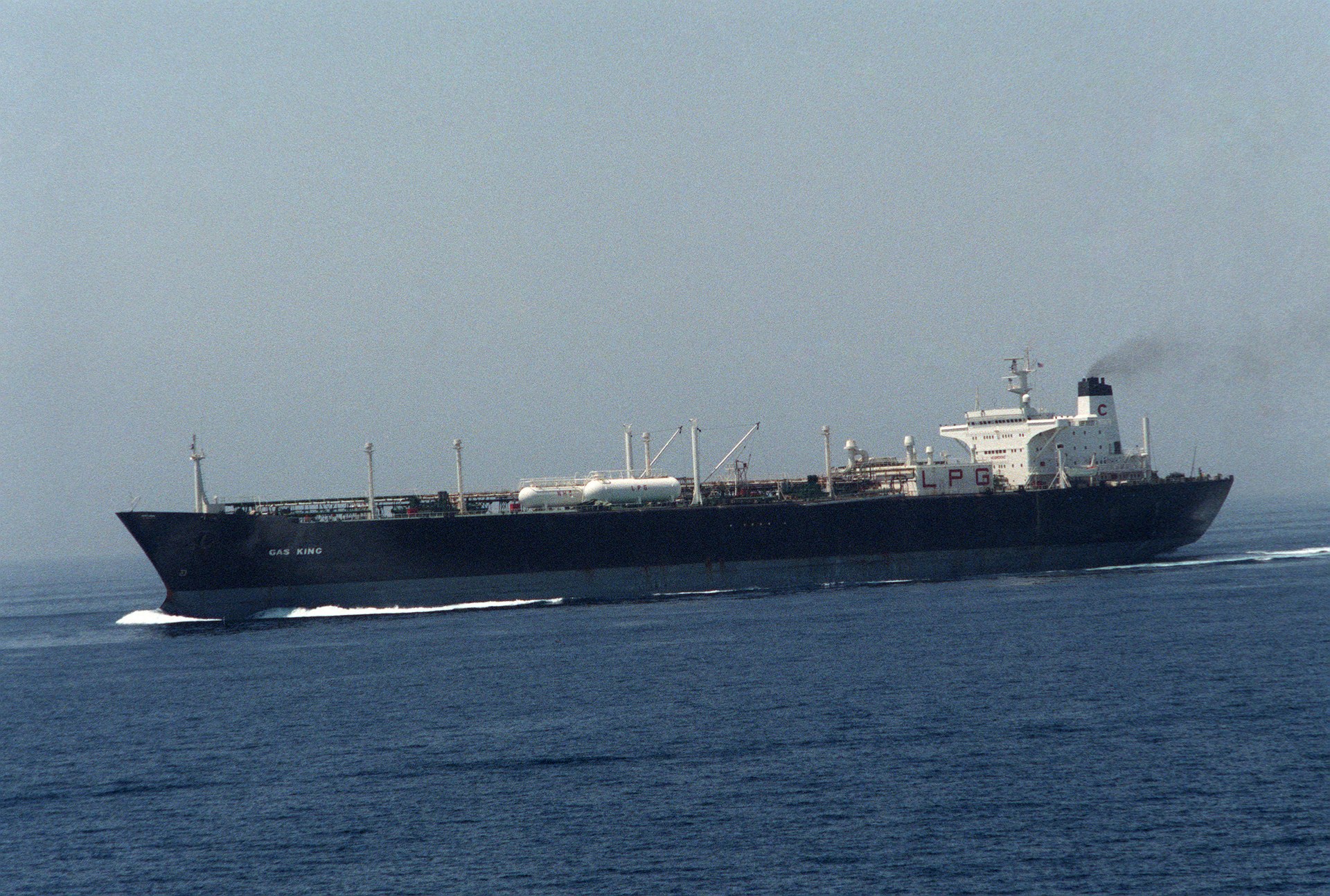
JUBAIL, Saudi Arabia — Tankers attacked off Saudi Arabia is a headline the Gulf has not had to read before this war. The shipping crisis of the past eight months has been fought at the Strait of Hormuz and in the Gulf of Oman — at the Gulf's exit, not inside it. That changed on Friday. The United Kingdom Maritime Trade Operations centre (UKMTO), the Royal Navy-run reporting hub for merchant shipping, said on Saturday that it had received a report of a tanker struck by an unknown projectile 68 nautical miles northeast of Jubail, Saudi Arabia's principal Persian Gulf industrial port, and a second report of a tanker attacked with a rocket-propelled grenade fired from a small boat 78 nautical miles northeast of the same port. All crew members in both reports were safe. Nobody has claimed either attack, and Reuters, which first reported the alerts, noted that it could not immediately establish whether the two reports referred to the same incident — a caution this article keeps in view throughout, because on the evidence published so far, the honest summary is: at least one tanker was attacked off Jubail on Friday, probably two, and the difference matters.
Track it live: Live global wars tracker · Middle East war map
What UKMTO reported
The first report, which UKMTO described as time-late — received after the fact — placed a tanker 68 nautical miles (about 126 kilometres) northeast of Al Jubayl on Friday, struck by what the centre called an unknown projectile. UKMTO said all crew were reported safe and had been evacuated from the vessel, and that no environmental impact had been reported. The centre's standard advice followed: vessels should transit with caution and report any suspicious activity while authorities investigate.
The second report was more specific, and stranger. UKMTO said a tanker was attacked at 1922 GMT on Friday — just before midnight local time — 78 nautical miles (about 144 kilometres) northeast of Jubail, when a rocket-propelled grenade was fired from a small boat and struck the vessel's aft port quarter, the rear-left section of the hull near the stern. All crew were safe. Unlike the first vessel, where the centre could report an evacuation and no pollution, the full extent of the second ship's damage and any environmental impact had not been established when the alert was issued. A rocket-propelled grenade is a shoulder-fired infantry weapon with an effective range measured in hundreds of metres. Whoever fired it was not lobbing missiles from over the horizon; they were alongside, or nearly alongside, a laden tanker in open water at night.
The Associated Press, in its Saturday roundup of Middle East developments, described the incidents plainly as two vessels transiting the Persian Gulf off Saudi Arabia struck on Friday, with crews safe and no claimant. Anadolu Agency carried the same UKMTO alerts. Reuters' caution stands as the one unresolved factual knot: UKMTO issued two alerts describing two attacks at two distances ten nautical miles apart, but with no vessel names released and no independent sighting of either ship, it remains possible — if unlikely, given the different weapons and distances — that confused reporting doubled a single incident. What is not in dispute is the floor of the story: a tanker was attacked on Friday in the northern Persian Gulf, off the Saudi coast, far from anywhere tankers have been attacked in this war until now.
What is not known
Almost everything that would turn an alert into an attribution is still missing. UKMTO did not identify either vessel — no names, no flags, no owners, no cargoes. It is not known whether the ships were loading, leaving, or approaching Saudi terminals, or merely passing through the northern Gulf. No government had publicly assigned blame by Saturday, and no group had claimed responsibility. The damage to the second vessel — the one hit in the stern — was still unassessed in the alert, including the question that matters most after any hull strike: whether anything leaked. And the small boat itself is a blank: an RPG team has to come from somewhere, whether a shoreline more than 70 nautical miles away, a dhow or fishing vessel working the area, or a larger craft acting as a mother ship, and nothing public yet distinguishes those possibilities.
That blank is why the claims now circulating need careful handling. On Saturday, Iran's state broadcaster reported the Islamic Revolutionary Guard Corps saying that a supertanker carrying more than two million barrels of crude had struck a naval mine and caught fire in the Strait of Hormuz. That is an Iranian claim about a different place — Hormuz, not Jubail — which UKMTO has not reported and which carries no confirmed date; it is noted here only because unattributed Gulf incidents attract instant theories, and this one is not evidence about Jubail. The same discipline applies in the other direction: the Houthi movement in Yemen has attacked Saudi targets repeatedly this autumn and fought a long Red Sea campaign against shipping, but the Red Sea is on the opposite side of the Arabian Peninsula from Jubail, and no evidence published by Saturday connects any named actor to Friday's attacks.
A war that has been closing in on the Gulf
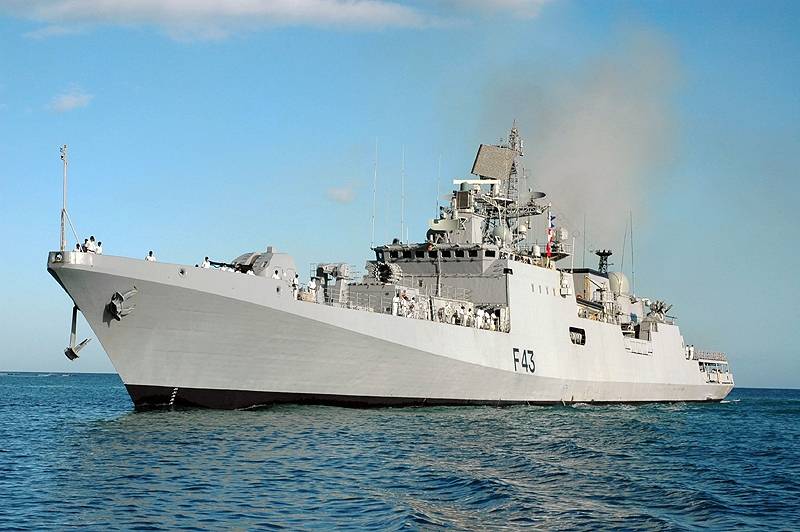
Friday's reports land at the end of a long escalation ladder. Attacks on shipping have climbed since the United States and Israel went to war with Iran in February, and the centre of the campaign has been the Strait of Hormuz, the narrow exit through which every Gulf export must pass. Tankers have been hit by projectiles, boarded, mined — according to Tehran's claims — and turned back in waves that we have tracked ship by ship, most recently in a rolling series of UKMTO alerts around Hormuz and off Oman and Qatar. UKMTO's weekly review, as reported this week, counts 135 such incidents amid the Iran–U.S. conflict in and around the strait. The diplomatic track has not kept pace with the military one: late last month President Trump rejected a Tehran proposal to end the war and reopen the strait, and although indirect negotiations have continued since, the attacks have continued with them.
Until Friday, though, the geography held a shape that insurers, navies, and Gulf governments could plan around. The danger zone was the strait and its approaches — a chokepoint that could be convoyed, escorted, mined-aware, and, at the margins, bypassed: Saudi Arabia's East–West pipeline exists precisely to move crude overland to Yanbu on the Red Sea, out of the Gulf entirely. An attack 78 nautical miles northeast of Jubail is not at the chokepoint. It is in the middle of the basin, in the sea room between the Saudi terminals and the Iranian coast, on the routes tankers use after loading or while approaching to load. If that water is in range, the map of the crisis has to be redrawn — not a strait that can be forced or avoided, but an entire gulf in which a ship is exposed from the moment it leaves the berth.
Why Jubail is not just another port
Jubail — Al Jubayl — is the industrial heart of Saudi Arabia's Gulf coast: the world's largest industrial city, built from the 1970s around the King Fahd Industrial Port and the Jubail Commercial Port, home to the petrochemical complex that anchors the kingdom's non-oil export economy and a significant outlet for refined products and chemicals. It sits on the opposite coast from Yanbu, the Red Sea terminal that has absorbed so much attention this year precisely because it lies outside the Gulf. The northern Gulf around it is working water: tanker routes to and from Saudi and Kuwaiti terminals, supply traffic for offshore fields, fishing fleets, and the naval patrols of half a dozen states. It is also, by Gulf standards, narrow water — from Jubail's offshore anchorages, the Iranian coast is closer than the Strait of Hormuz is. A small boat does not need to cross an ocean to reach a tanker there. It needs a dark night, local knowledge, and a few miles of sea.
An RPG is a different kind of threat
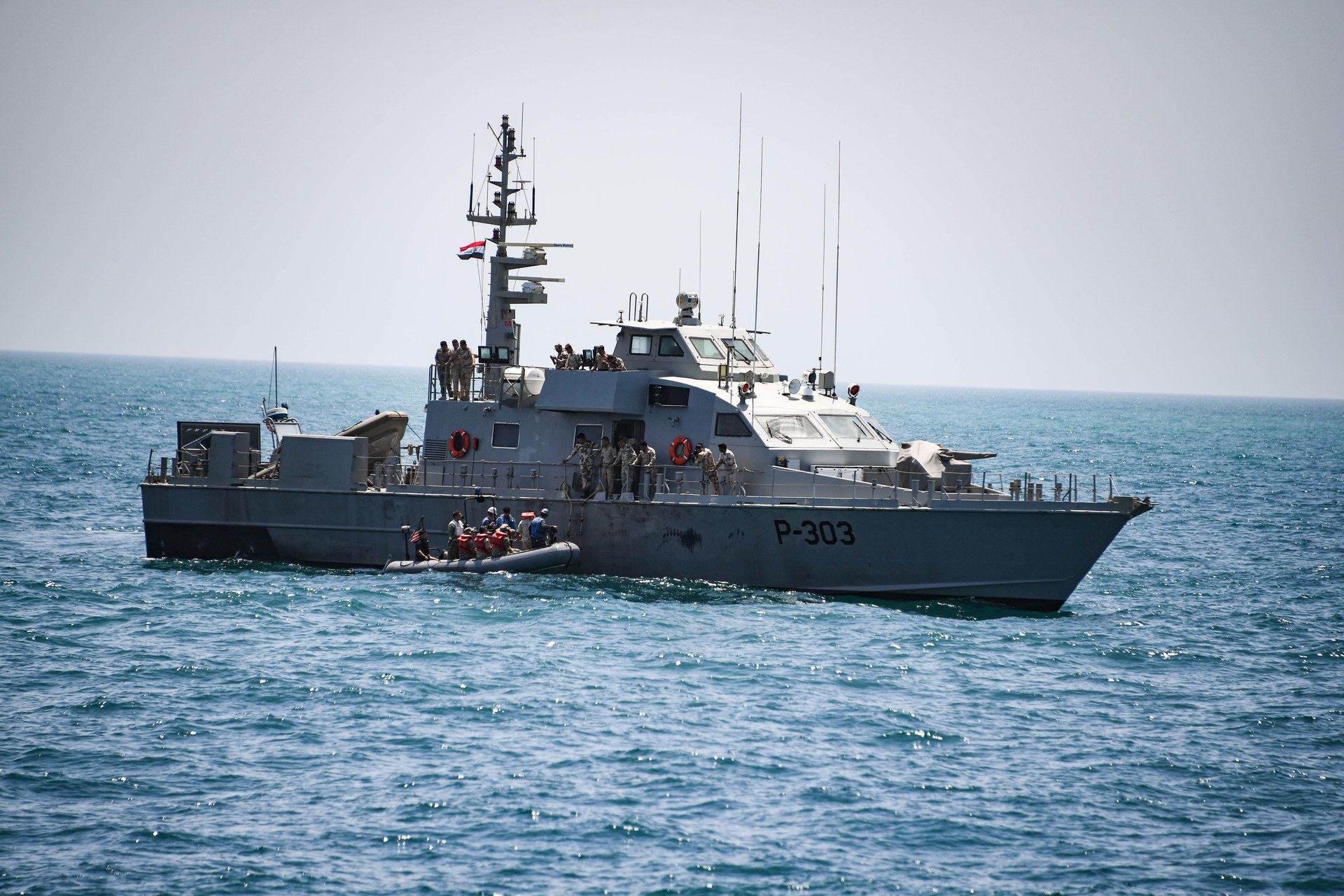
The weapon in the second report deserves its own analysis, because it changes the defensive problem. The Hormuz campaign has been fought mostly with weapons that navies know how to counter, at least in principle: anti-ship missiles and one-way attack drones that can be tracked and intercepted, limpet mines that can be guarded against at anchor, projectiles reported by UKMTO without a specified origin. A rocket-propelled grenade fired from a small boat belongs to a different tradition — the close-quarters swarm tactics pioneered in these waters during the 1984–88 Tanker War, when Iranian Revolutionary Guard speedboats attacked shipping across the Gulf, and revived in the pirate era off Somalia and in the small-boat attacks that opened the 2019 tanker crisis. It cannot be jammed or shot down in flight in any practical sense; the defence is detection and distance, keeping unknown small craft away from a hull that cannot manoeuvre and whose crew cannot fight back. Merchant ships are not built for that fight, which is why the 2019 attacks produced the multinational escort missions that still patrol these waters — and why an RPG strike matters out of proportion to the damage a single grenade can do to a steel hull. It signals that the attacker got close, at night, undetected or unchallenged, in the middle of the Gulf.
Why this matters
The first consequence will be priced before it is investigated. War-risk insurance for Gulf transits is recalculated voyage by voyage, and underwriters price geography: a Hormuz transit premium is one thing, but a premium for the entire Gulf — for the loading berth itself — is another order of cost, and it falls on every barrel Saudi Arabia, Kuwait, and Iraq ship, not merely on the ships that pass the strait. Crewing agencies and unions will ask whether the northern Gulf now counts as a war-risk area for the seafarers who sail it, a designation that triggers bonuses, refusal rights, and manpower shortages far beyond the two ships involved. The second consequence is strategic. Gulf governments have spent this war arguing, implicitly, that the crisis could be contained at the strait while the basin behind it kept working. Friday's reports — if the two-incident reading holds — say the basin itself is contested now. That is the context in which Egypt's President Abdel Fattah el-Sissi said on Saturday, as the AP reported, that Egypt would implement "any measure" to defend its ally Saudi Arabia: a statement made amid Houthi attacks on the kingdom, but one that landed on the same day the kingdom's own Gulf waters produced their first tanker alerts of the war.
There is a harder question underneath, and it is the one investigators will be working on this weekend: range. A projectile that hits a tanker 68 nautical miles offshore and a boat crew that closes to RPG range 78 nautical miles offshore both imply reach deep into the Gulf — from a coast, an island, or a vessel already at sea. Each possibility points at different actors and different responses, and a wrong public attribution in the Gulf has consequences measured in escalation, not embarrassment. That is the strongest argument for the caution in Reuters' own reporting, and for treating every early theory — Iranian, Houthi, or otherwise — as a claim awaiting evidence. Track crude's reaction as markets reopen: live oil price tracker.
What happens next
The immediate sequence is procedural, and it will resolve the story's central uncertainty one way or the other. UKMTO and the Saudi authorities will either identify the vessels — names, flags, damage surveys, photographs — or they will not; if two ships exist, two owners, two flag states, and two insurance files will surface within days, and the "same incident" question will answer itself. Watch, second, for the naval response: whether the U.S.-led maritime coalitions extend their escort and patrol patterns north from the strait into the central Gulf, and whether Saudi Arabia's own navy — which bases its Eastern Fleet at Jubail — announces a visible security operation around its terminals. Watch, third, the market: tanker rates and war-risk quotes on Monday morning will say, in numbers, how much of the Gulf the industry now believes is exposed. And watch, finally, for a claim of responsibility. Every actor in this war has so far wanted credit for its attacks on shipping, because credit is the point of them. An unclaimed attack is either a message whose sender prefers ambiguity — or a story that is not finished yet.
Related coverage: Tanker attack wave around Hormuz: what UKMTO reported · On Peace tanker hit off Hormuz, 12 injured · Tanker Acers struck off Qatar as Hormuz escalation widened
Sources
Reuters, October 17, 2026 — UKMTO alerts: a tanker struck by an unknown projectile 68 nautical miles northeast of Jubail on Friday, crew safe and evacuated, no environmental impact reported; Reuters could not immediately establish whether a second UKMTO report referred to the same incident (reuters.com). Associated Press, October 17, 2026 — Middle East roundup: two vessels transiting the Persian Gulf off Saudi Arabia struck on Friday, crews safe, no claimant; attacks on shipping have risen since President Trump rejected a Tehran proposal late last month while indirect negotiations continued; Egypt's President el-Sissi said Egypt would implement "any measure" to defend Saudi Arabia; Iran's state broadcaster reported an IRGC claim of a supertanker striking a mine in the Strait of Hormuz, unverified and with no date established. Anadolu Agency via AzerNews, October 17, 2026 — UKMTO's second report: a tanker attacked with a rocket-propelled grenade fired from a small boat 78 nautical miles northeast of Jubail at 1922 GMT Friday, aft port quarter damaged, crew safe, damage extent unknown (azernews.az).