Ali al-Amoudi Gaza strike
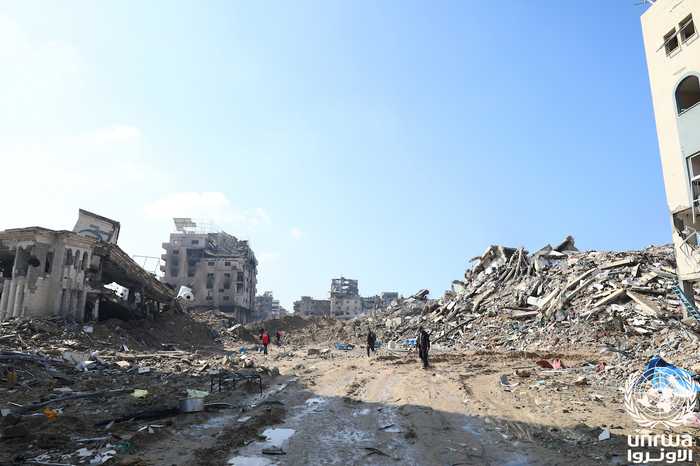
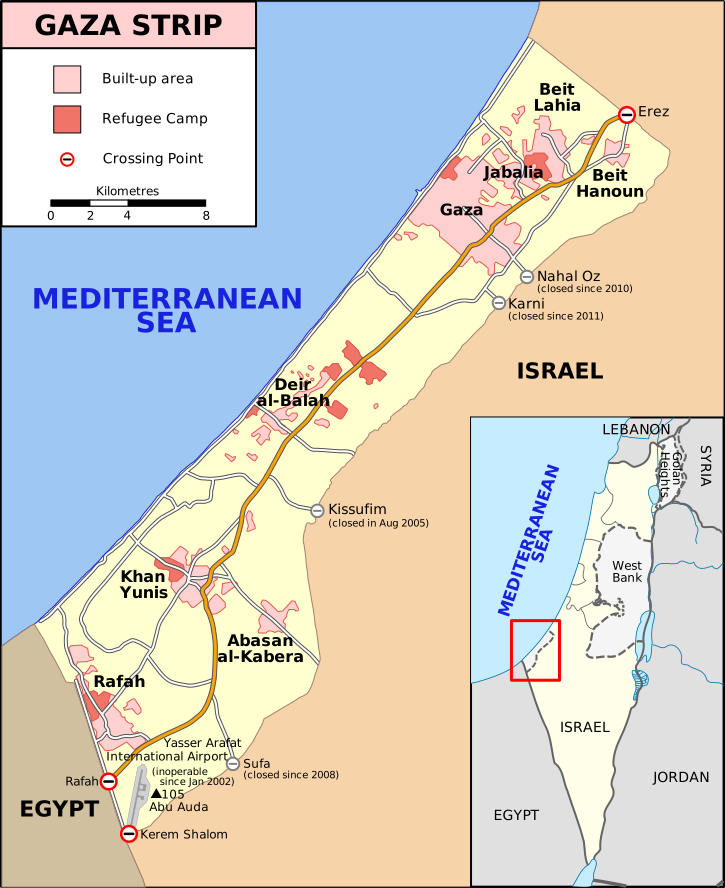
Before dawn on Saturday, October 3, 2026, an Israeli airstrike hit a residential apartment building in western Gaza City. Palestinian health and civil defense officials said at least five people were killed — four of them women, and a girl — Reuters reported. Within hours, a second claim, far larger in its implications, arrived from the Israeli press: citing Israeli security sources, Ynet, The Times of Israel, The Jerusalem Post, Israel Hayom and Kan News all reported that the apartment was not a routine strike. The intended target was Ali al-Amoudi, the de facto leader of Hamas in the Gaza Strip and the man widely regarded as the successor to Yahya Sinwar. His fate is unknown. The IDF had not publicly commented on the operation at last report, and nothing independently confirms that al-Amoudi was even in the building.
Who is Ali al-Amoudi
If the Israeli reporting holds, Israel aimed Saturday at the most senior Hamas figure in Gaza. Al-Amoudi was a close associate of Sinwar — the Hamas leader whose killing in October 2024 marked a turning point in the war — and a product of the same generation: both men were released from Israeli prison in the 2011 Gilad Shalit prisoner exchange. Al-Amoudi served as the head of Sinwar's office and media operation and later rose to head Hamas's political bureau in Gaza; since the assassination of Mohammed Odeh he has been the movement's de facto Gaza chief. Within Hamas, he has been competing with the veteran Nizar Awadallah to formally lead the Gaza branch. That makes him, by any measure, the highest-ranking Hamas figure in Gaza that Israel has claimed to target since Sinwar himself.
Why this matters
Three things make Saturday's strike significant, regardless of whether al-Amoudi survived it. First, the target rank: no Hamas Gaza leader of this seniority has been in Israel's sights since Sinwar's death, and a successful decapitation would be the single biggest disruption to Hamas's Gaza command in two years. Second, the timing: the strike lands on a ceasefire that has been fraying for months, and every senior-targeting operation moves the question from whether the truce is bending to whether it is breaking. Third, the toll: five people dead in a pre-dawn apartment strike — four women and a girl, per Palestinian officials — at a moment when Gaza health officials say at least 1,400 Palestinians have been killed by Israeli fire since the ceasefire began. The gap between the claimed target and the confirmed victims is where this story will be judged.
A leadership election that went nowhere
The succession fight inside Hamas is itself part of the story. The movement recently suspended its internal election to choose a formal Gaza leader after a large number of electors returned blank ballots, according to analytical reporting — a public sign of a genuine split. On one side stands al-Amoudi's network: wartime local commanders, including the Khan Younis field apparatus, who kept the organization running through the war. On the other stands Awadallah's old-guard, founding-generation hierarchy, backed by members of Hamas's overseas political bureau. A blank ballot is, in its own way, a verdict: the movement cannot agree on who speaks for it. A decapitation strike lands very differently on an organization whose line of succession is already an open dispute — it would not just remove a leader, it would remove one side of an unresolved argument about who the leader is.
Background: from Sinwar to a fraying ceasefire
The chain of events is short and brutal. Sinwar was killed in October 2024. Mohammed Odeh's assassination then left al-Amoudi as the de facto Gaza chief. Since October 2025, a US-brokered ceasefire has nominally held between Israel and Hamas — but Israel says Hamas has been rearming and launching attacks in violation of the deal, and has stepped up strikes in recent weeks. Hamas denies rearming or breaching the agreement. The dispute is not academic: Gaza health officials put the toll of Israeli fire since last October's ceasefire at at least 1,400 dead. Each side reads every strike through that argument — Israel as enforcement against a rearming enemy, Hamas as evidence the ceasefire was never meant to hold. Some Israeli media reports of Saturday's operation also mentioned attack helicopters and tanks; those details come from Israeli press reports, not from any confirmed IDF statement.
Who benefits, who loses
If al-Amoudi is dead, Israel gains the biggest command disruption it has achieved in Gaza in two years — but inherits the lesson of every decapitation campaign in the region: organizations built for underground survival tend to regenerate, often with younger and less predictable successors, and Awadallah's camp or a wartime field commander would inherit a movement with no agreed leadership. If he survived, the story reverses: a failed strike on the most senior Gaza figure would be an embarrassment for Israel's intelligence picture and a defiant survival narrative for Hamas. Either way, the immediate losers are civilians — five more names on a casualty list, four of them women — and the ceasefire architecture itself, which absorbs one more shock. Hardliners on both sides benefit from exactly this kind of escalation: confrontation is the currency in which they trade, and each strike makes negotiators' work harder, including any hostage or deal talks still on the table. Critics in Israel will ask whether the operation's intelligence justified the civilian risk; Palestinian officials will say the strike proves the ceasefire is a fiction; outside analysts will note, dryly, that both things can be partly true at once.
The numbers, in context
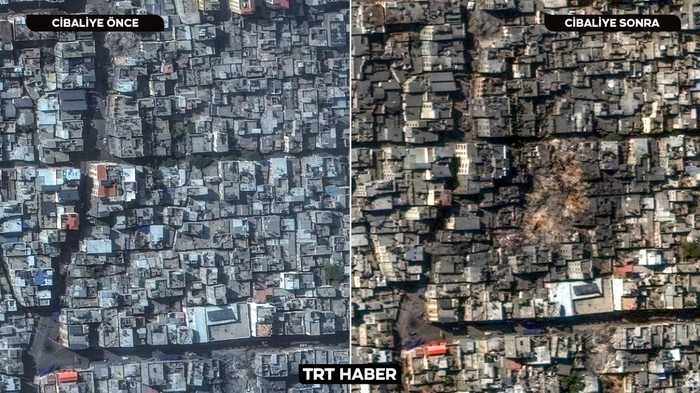
Five killed in a single pre-dawn strike, against 1,400-plus killed by Israeli fire since the October 2025 ceasefire — Saturday's toll is a fraction of the cumulative figure, but it concentrates the war's logic into one apartment building: high-value targeting claims, unverified, sitting atop a civilian casualty count that keeps climbing. Note the toll's own uncertainty: early reporting wavered between four and five dead before Palestinian officials settled on five, a reminder that the first numbers from a strike zone are always provisional. And a historical caution for the decapitation theory: since Sinwar's death two years ago, Hamas in Gaza has not collapsed, it has fragmented — the blank-ballot crisis is the evidence. Removing leaders has not produced surrender; it has produced a leadership vacuum that the movement itself cannot fill.
What happens next
Four scenarios branch from here. One: al-Amoudi is confirmed dead, and Hamas faces a succession crisis in the open — retaliation rhetoric, a rushed internal appointment, and pressure on the Gaza field command to answer. Two: he surfaces alive, and the strike becomes a rallying point — proof of survival that strengthens his hand against Awadallah's camp in the suspended election. Three: the ceasefire holds in name but frays further, with both sides reading Saturday as precedent — Israel for more senior-targeting operations, Hamas's factions for retaliation, and the 1,400 figure climbing toward the next inflection point. Four: outside pressure — the US brokered the ceasefire and retains leverage over both its shape and its collapse — forces a pause, at least publicly, while the real bargaining moves underground. Watch three things in the coming days: whether the IDF issues a formal statement (its silence so far is itself information), whether Hamas's media apparatus shows al-Amoudi alive, and whether Gaza factions respond with rocket fire — the classic accelerant that turns a targeted strike into a round of escalation.
Sources
- The Jerusalem Post (via Jewish Rhode Island): “IDF targets Yahya Sinwar's successor, Hamas Gaza leader Ali al-Amoudi, in strike”
- Kan News reporting on al-Amoudi's survival chances
- Reuters casualty report: “Israeli strike kills five, Gaza health officials say”
- Background: Hamas underground elections and the blank-ballot deadlock
- Biographical references, including Times of Israel and Ynet reporting
Sourcing note: Reuters established the reported civilian toll. The claim that al-Amoudi was the target comes from Israeli media — Ynet, The Times of Israel, The Jerusalem Post, Israel Hayom and Kan News — citing unnamed Israeli security sources. The IDF had not issued a public confirmation, and al-Amoudi's presence or condition remained unverified at publication.