Health / Explained — Is Shamonda virus dangerous to humans? The honest answer, after the first confirmed human infection in France, is: dangerous to one exceptionally vulnerable man, possibly; to the general public, on all current evidence, no — with the unknowns stated plainly.
Is Shamonda virus dangerous to humans? It is the question everyone asked on Thursday, when France confirmed the first human infection with the midge-borne livestock virus ever documented — in a patient who has died. The responsible answer has three parts, and they have to be held together. First: officials in France, the World Health Organization and the European Centre for Disease Prevention and Control (ECDC) all say no risk to the general population has been identified, and the WHO calls this an isolated case unlikely to lead to wider spread. Second: the one person known to have been infected was a man in his 60s whose immune system was severely weakened by a serious illness — he is evidence about what the virus can do to the most vulnerable, not about what it would do to you. Third: whether the virus caused or contributed to his death is still formally under investigation. Anyone who collapses those three statements into either "deadly new virus" or "nothing to worry about" is selling you something. The news report is here: France confirms the first human Shamonda virus case.
Track it live: Live outbreak tracker — disease outbreaks worldwide
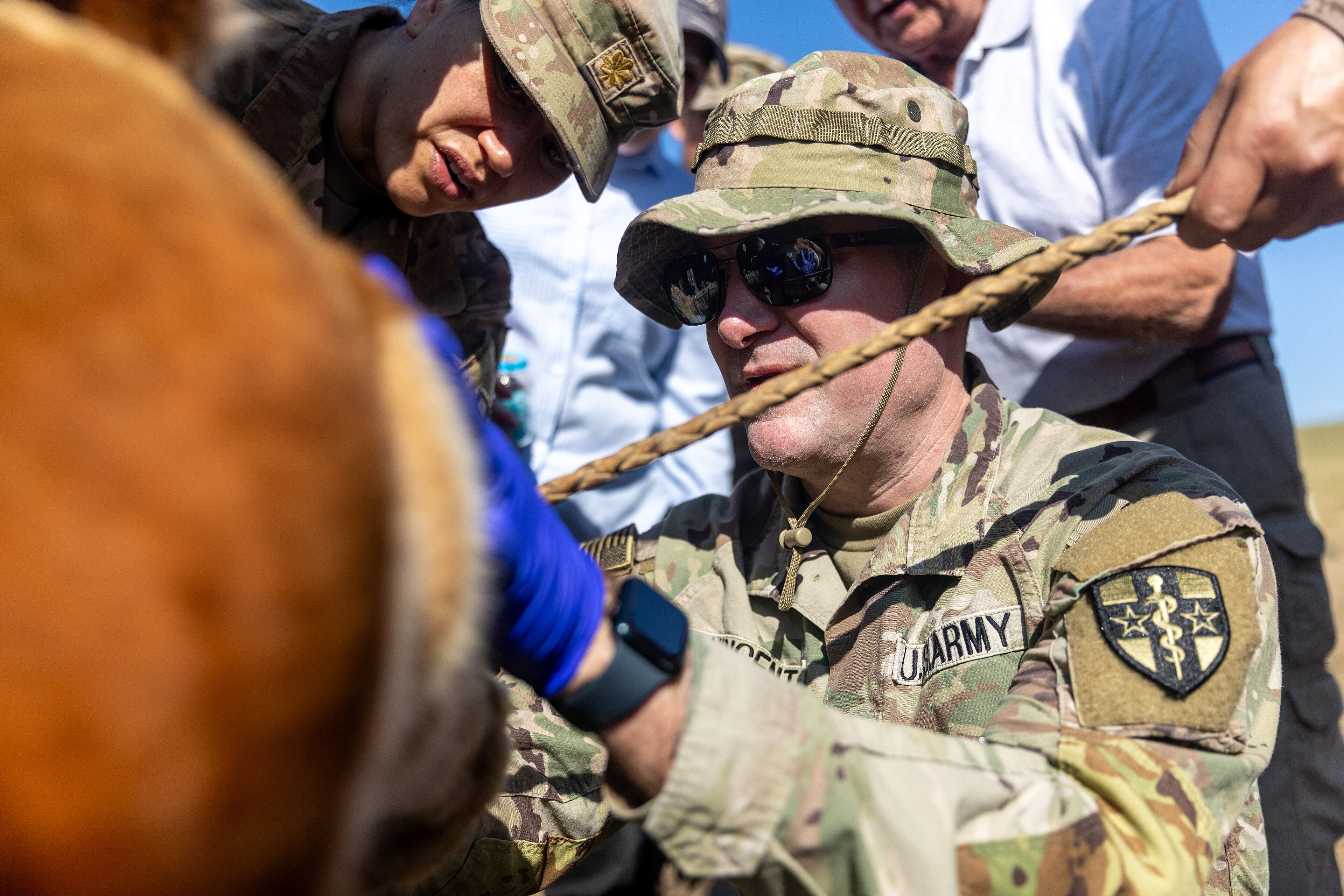
What actually happened in Lyon — with the precision it deserves
The facts, as confirmed by French officials and reported by Reuters: a man in his 60s from the Lyon area of eastern France was treated at the Hospices Civils de Lyon and died in early October. He was receiving treatment for a serious illness that, in the ECDC's words, made him more susceptible to infection than the general population. Testing found Shamonda virus — the first documented detection of the virus in a human being. The leading hypothesis is that he was bitten by an infected Culicoides midge in eastern France, where the virus had circulated in cattle through the spring and summer.
On causation, two official voices said two compatible things. The French agriculture ministry stated that, according to investigations already carried out, the cerebral — brain — complications the patient developed before his death were very likely linked to the infection. The ECDC, in its own statement, said it is carefully monitoring the situation and that investigations into whether the virus caused or contributed to the patient's death, and how the infection was acquired, are ongoing. The ministry is giving its best current assessment; the ECDC is marking the difference between a strong suspicion and a completed proof. The full clinical and pathological account has not been published. No honest headline can yet say "Shamonda killed him" — and none should say the virus was irrelevant to his death, either. What can be said is narrower: a man with a severely compromised immune system became infected with a virus never before found in a person, developed brain complications his doctors' investigators believe were very likely connected to that infection, and died. Both the alarm and the reassurance in this story flow from those qualifiers.
The risk assessment, in officials' own terms
Three assessments were published on Thursday, and they converge. The French government announcement: "Based on the knowledge available regarding this virus, no health risk to the general population has been identified to date." The WHO, which is in contact with the French authorities: based on current information and on how closely related viruses transmit, "this is an isolated human case and it is unlikely to lead to wider spread at this time." The ECDC: monitoring carefully, investigating with French authorities and European partners, with the patient's underlying illness explicitly noted as the factor that set him apart from the general population. Independent expertise pointed the same way: Dr Ben Brennan of the MRC–University of Glasgow Centre for Virus Research, quoted by the Science Media Centre, called the detection an important scientific finding, stressed that the patient had a serious underlying illness leaving him particularly vulnerable, and noted it is not yet known whether Shamonda contributed to his death.
Notice what these assessments rest on. Not on the virus being harmless — nobody can know that from one case — but on its transmission route. Shamonda spreads by midge bite only; it is not known to pass between people; there is no respiratory, food-borne or contact route to amplify it. A virus that cannot move from person to person cannot start an epidemic in humans, full stop. The residual risk is therefore individual and occupational: being bitten by the wrong midge while unusually defenceless. That is a very different risk object from a new influenza or coronavirus, and it is why the official tone — alert, transparent, unpanicked — is proportionate.
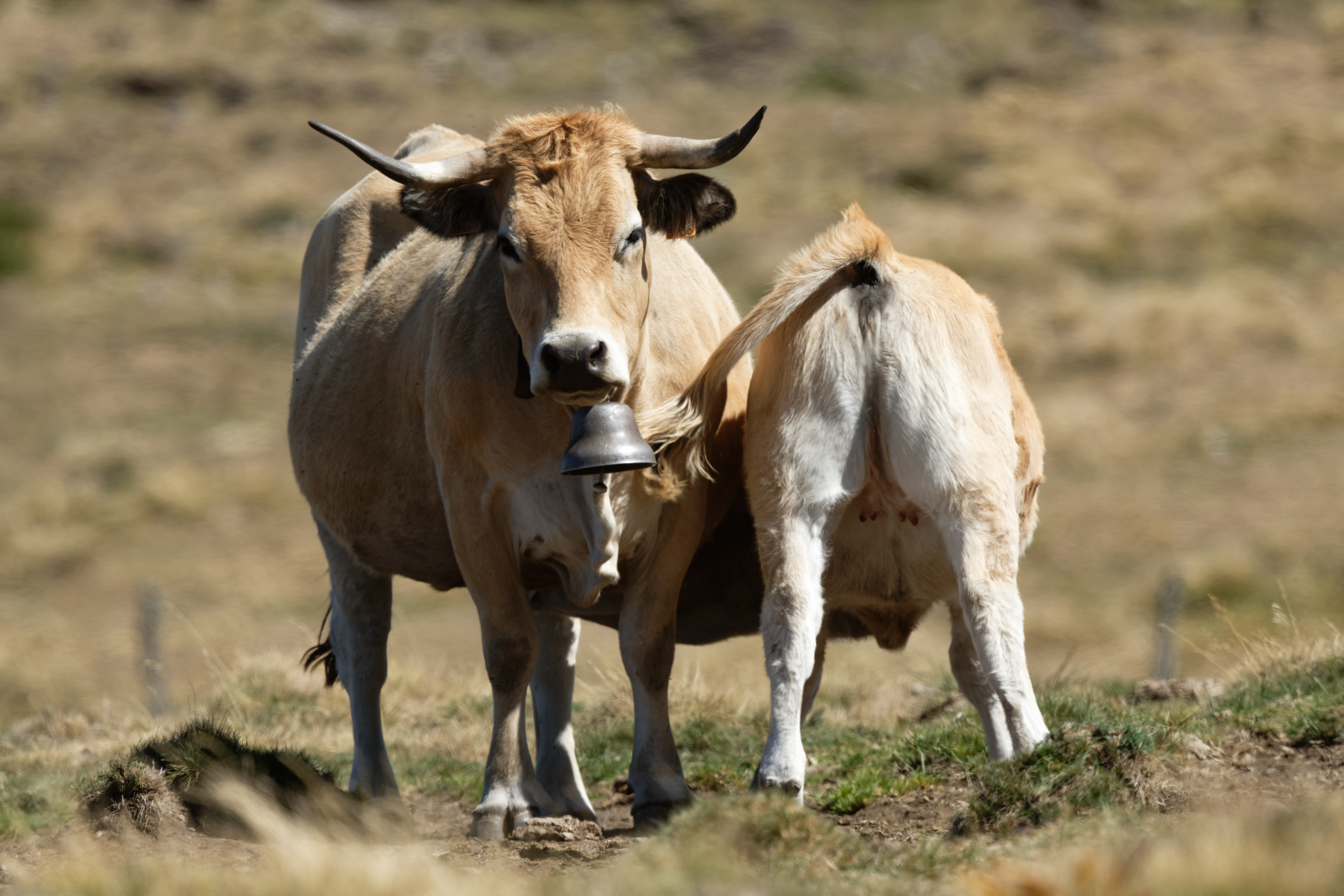
Who, if anyone, should think about their own risk?
Reasoning strictly from the transmission route and the single case — and labelling it as reasoning, not official guidance — the exposure side of the equation is unevenly distributed. The people who receive the most Culicoides bites in affected regions are those who work outdoors around livestock at dawn and dusk: dairy and beef farmers, shepherds, veterinarians, and others in daily contact with herds in the parts of Europe where the virus is now established in animals. A herdsman in Nigeria or a farmer in the Auvergne does not face a meaningful risk from Shamonda on current evidence — he faces the same background possibility that existed unnoticed for sixty years — but if any human infections have occurred before and been missed, heavy occupational exposure is where they would cluster. The vulnerability side is clearer: the one documented case was in a man whose treatment had severely weakened his immune system. Immunocompromised people — transplant recipients, patients on immunosuppressive therapy or chemotherapy, people with untreated immune disorders — are the group for whom this week's news is a legitimate, if still small, addition to the long list of environmental infections their clinicians watch for. For everyone else, the practical content of the story is approximately zero: the virus is not in food, not in milk, not in the air between people, and not spreading.
The symptoms question — and the honest answer
Search interest in "Shamonda virus symptoms" spiked this week, and here the explainer's duty is to disappoint cleanly: there is no established symptom profile for Shamonda in humans, because there is exactly one case and its full clinical account is unpublished. What has been reported is that the French patient developed cerebral complications — a neurological picture — in the setting of severe immunocompromise. That is all. It would be fabrication to print a symptom list, and dangerous in both directions: a list would send the midge-bitten and anxious to emergency departments, and it would invite false reassurance in anyone whose presentation differed. In animals, for orientation, the illness is a few days of fever, diarrhoea and appetite loss in adults; whether any of that translates to a human presentation is unknown. The scientifically literate answer to "what does Shamonda do to people?" in October 2026 is: in the single observed instance, it infected a profoundly vulnerable man and was associated, in the French investigators' assessment, with brain complications; in the general population, nothing has been observed at all. Clinicians in affected regions will now, reasonably, add Shamonda to the differential diagnosis for unexplained neurological illness in immunocompromised patients — the same retrospective logic that may yet turn up earlier missed cases, as we discussed in What is Shamonda virus?
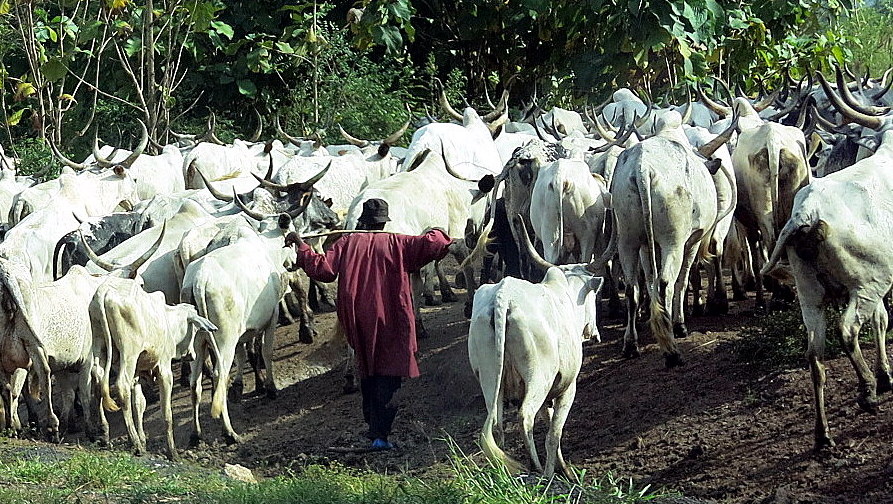
The base rate: sixty years, millions of bites, one case
The most reassuring evidence about Shamonda is not any statement — it is the arithmetic. The virus has circulated in African livestock regions since at least 1965, among herding communities whose members are bitten by Culicoides constantly, in an era when Japan and later South Africa also hosted it. If Shamonda infected people readily, or made healthy people seriously ill with any frequency, the prior probability that not one case would be documented in six decades is vanishingly small — severe unexplained illnesses in farmers do reach hospitals, and Africa's arbovirus surveillance, imperfect as it is, has characterised dozens of other viruses from exactly such cases. The sensible reading is that human infection requires an unusual conjunction: the right midge, the right viral dose, and — in the one case we have — a profoundly weakened immune system. Against that, the counterweight is also arithmetic: since July, the virus's animal range has expanded to at least twelve European countries and territories, multiplying the number of human-midge encounters with it by orders of magnitude in a single season. Rare events with a much larger number of trials stop being negligible. Both statements are true; together they define a risk that is small, real, and worth monitoring rather than fearing. The comparison with its relatives — one of which, Oropouche, has infected over half a million people in the Americas — is developed in Shamonda vs Schmallenberg vs bluetongue, and the mechanics of exposure are in How does Shamonda virus spread?
What would change the assessment
Risk assessments should say what would falsify them. For Shamonda, four findings would move the needle: a second human case, especially in an immunocompetent person; retrospective testing finding earlier infections in stored samples from immunocompromised patients; serological surveys showing substantial silent exposure in farming communities (which would paradoxically be reassuring about severity while alarming about frequency); or evidence of the virus adapting — higher viraemia in animals, expansion into new vector species, neurological disease in the European horses in Germany and Switzerland where an association is already under investigation. None of those has happened. Until one does, the calibrated position is the officials': isolated case, no general-population risk identified, investigation open. For readers who want the wider context of how single cases become surveillance priorities, see our coverage of the first Nigerian Ebola case in more than a decade — another story where the correct response to one confirmed infection was rigour without panic.
Why this matters
The Shamonda case is a test of public reasoning as much as of virology. Modern outbreak communication keeps failing the same way: a genuinely novel finding is announced with careful qualifiers; the qualifiers are stripped as the story travels; within hours the public is offered a choice between "deadly virus reaches Europe" and "officials dismiss concerns" — neither of which anyone in authority actually said. The truth here is unglamorous and completely knowable: a livestock virus infected one exceptionally vulnerable man, investigators believe it likely contributed to the brain complications that preceded his death, causation is unproven, the general public is not at identified risk, and the people with homework are scientists and surveillance agencies, not households. Holding that sentence intact — neither inflating nor deflating it — is what risk literacy looks like. Shamonda will almost certainly not be the last animal virus to make this jump once, in one patient, somewhere; the quality of a society's response is set by whether it can keep its head the first time, so that it still has credibility in reserve for a virus whose transmission route is less forgiving.
Sources
Reuters, "France reports first human case of livestock virus Shamonda after patient dies" (Oct 22, 2026), carrying the French agriculture ministry statement, the ECDC statement and the WHO statement; Dr Ben Brennan (MRC–University of Glasgow Centre for Virus Research) via the Science Media Centre (Oct 22, 2026); World Organisation for Animal Health, "Shamonda virus: what do we know about its effects on animals?" (Oct 2026) — woah.org; British Agriculture Bureau, "Novel Shamonda-like orthobunyavirus in Ireland" (2026) — britishagriculturebureau.co.uk; Steyn et al., Pathogens (2023) — pmc.ncbi.nlm.nih.gov.