War · Ukraine · Space
Ukraine’s military intelligence agency says Moscow has crossed a threshold it has chased for years: its own low-orbit broadband constellation, built as a sovereign answer to Starlink, is no longer a PowerPoint project. On Kyiv’s account, Rassvet satellites are already carrying Russian military traffic over the battlefield — intermittently, imperfectly, but operationally — and the prize is a generation of strike drones that can be watched, corrected and re-tasked in flight.
Track it live: Ukraine war map — Live Global Trackers
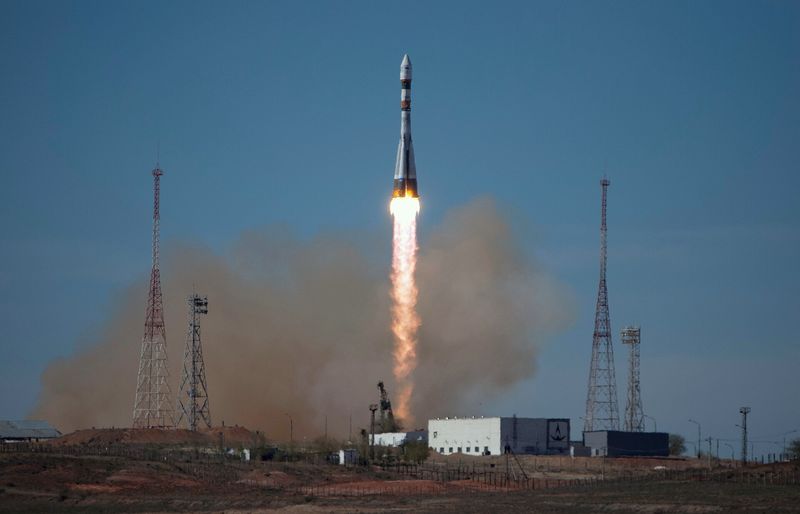
KYIV, November 6, 2026 — The Russia Rassvet satellite network, Moscow’s state-backed attempt to build a domestic equivalent of SpaceX’s Starlink system, is already being used for Russian military communications over Ukraine, according to Ukraine’s military intelligence agency, the GUR. In a written statement reported by Reuters on Friday, the agency said Russian forces are using the new low-Earth-orbit network for military purposes, with the aim of making strike drones more accurate and harder to jam. The claims, which all trace back to the GUR statement, have not been independently verified, and Russia’s defence ministry did not respond to a Reuters request for comment.
GUR spokesman Andrii Yusov said Russia is using Rassvet over Ukraine for military purposes, while acknowledging the constellation’s limits: with only 32 satellites in orbit so far, it is still too small to provide uninterrupted coverage, so connections are available only intermittently, as individual satellites pass over the battlefield. Even in that limited form, however, Kyiv says the shift matters. The Ukraine GUR Rassvet claim describes a network that could give Russian drones two-way data links — surveillance drones streaming real-time data back to operators, and attack-drone pilots adjusting their routes in mid-flight instead of relying entirely on routes programmed before launch.
What Kyiv says Rassvet is already doing
The GUR statement, as reported by Reuters and syndicated by Military Times and other outlets, puts hard numbers on a programme that has mostly been discussed in plans and prototypes. Thirty-two Rassvet satellites have been launched so far in 2026, in two batches — one in March and one in July. The agency published a list of 49 companies in Russia and Belarus that it says are involved in the project, and the disclosure arrived days after President Volodymyr Zelenskyy sanctioned 10 companies involved in developing Rassvet, including Bureau 1440, the state-backed company coordinating the project. Bureau 1440 satellites are ultimately meant to number more than 900 by 2035, a scale that would move Rassvet from demonstration to infrastructure.
Kyiv’s description of the military use is specific about the mechanism and candid about the gap. Because low-orbit satellites move fast relative to the ground, a small constellation produces windows: a drone or a ground terminal can connect when a satellite is overhead, then loses the link until the next pass. Yusov’s account, as reported, is that Russian units are already exploiting those windows for Russia military satellite communications — passing data in bursts rather than holding a permanent connection. That is a long way from the always-on broadband Starlink provides, but for some military tasks, bursts may be enough: a surveillance drone that can upload a fresh image or a target coordinate during a pass, or a strike drone that can receive a corrected route once or twice in flight, is a different weapon from one flying blind on a pre-loaded path.
Two-way links are the real prize
The detail in the GUR statement that should draw the closest attention is the two-way data exchange with unmanned aerial vehicles. One-way satellite navigation tells a drone where it is; a two-way link tells its operator what the drone sees and lets the operator change its mind. Applied to surveillance drones, that means real-time or near-real-time reporting instead of data recovered after landing. Applied to attack drones, it means a pilot can adjust a route around air defences or electronic-warfare zones mid-flight, or refine the aim point as the target picture changes. Russian strike drones satellite guidance of that kind would also be, as Kyiv puts it, harder to jam: a drone that can be re-tasked through a satellite link is less dependent on a single vulnerable radio channel and less predictable in its final approach. None of this has been independently confirmed, and the GUR has an obvious interest in drawing attention — and sanctions — to the programme. But the capability described is technically coherent, and it matches the direction Russia’s own space establishment is publicly urging.
Why this matters
Satellite communications have quietly become one of the decisive technologies of this war. The side that can keep its drones, artillery and headquarters connected under jamming holds an advantage that compounds daily: faster targeting, quicker correction, fewer wasted strikes. For most of the war, that advantage on the connectivity front was asymmetric in a strange way — Ukraine built its battlefield communications around Starlink, an American commercial system, while Russia, shut out of that system, relied on terrestrial radios, Chinese-supplied equipment and, paradoxically, smuggled Starlink terminals of its own. A working Russian constellation changes the structure of that contest. It would give Moscow a communications layer it fully controls, that no American company can switch off, geofence or throttle, and that is designed from the start for military users rather than adapted from a civilian service.
It also matters beyond Ukraine. Rassvet is the most advanced attempt by any state under sanctions to replicate the Starlink model — mass-produced satellites, launched in batches, run by a state-backed operator — and its progress is a test of how far Russia’s space industry can go while cut off from much of the world’s electronics supply chain. If even a partial constellation proves useful for drones, every military watching this war will draw the same conclusion: sovereign low-orbit broadband is no longer a luxury for superpowers with commercial champions, but a weapon system in its own right. That is why a claim about 32 satellites deserves scrutiny rather than dismissal — and also why the limits of those 32 satellites deserve equal weight.
From grey-market Starlink to a Russian alternative
The grey-market Starlink era
To understand why Moscow is spending heavily on a Russia Starlink alternative for drones, start with the humiliation Rassvet is meant to end. Starlink terminals became the nervous system of Ukraine’s war effort from 2022 onward — and Russian forces, lacking anything comparable, resorted to grey-market terminals bought through intermediaries and activated outside Russia. Those terminals reportedly served Russian units until Kyiv lobbied SpaceX to disable them earlier this year, closing a loophole that had blurred the line between the two sides’ infrastructure. A military that must smuggle its enemy’s patron’s hardware to talk to its own drones is a military with a structural problem, and Rassvet — billed from its inception as a Russia version of Starlink — is the structural answer: same orbital concept, Russian ownership, Russian ground stations, no off-switch in California.
Starshield Ukraine speed limits changed Kyiv’s own calculus
The dependency problem, notably, now cuts both ways. Last month, Ukrainian commanders reported unexpected speed limitations on Starshield, SpaceX’s military-grade Starlink service, which hampered their interception of Russian attack drones — a reminder that even Kyiv’s connectivity rests on decisions made inside a private American company. Signal Post News has reported on how exposed that leaves Ukraine as its Starshield contract runs toward a mid-2027 expiry with no successor arrangement yet announced. The Starshield Ukraine speed limits episode and the Rassvet deployment are, in that sense, the same story told from opposite capitals: both sides have learned that rented satellite capacity can be throttled, priced or withdrawn, and both are racing — Russia by building, Ukraine by negotiating — to make sure the lesson never decides a battle.
The numbers: 32 satellites against 10,000
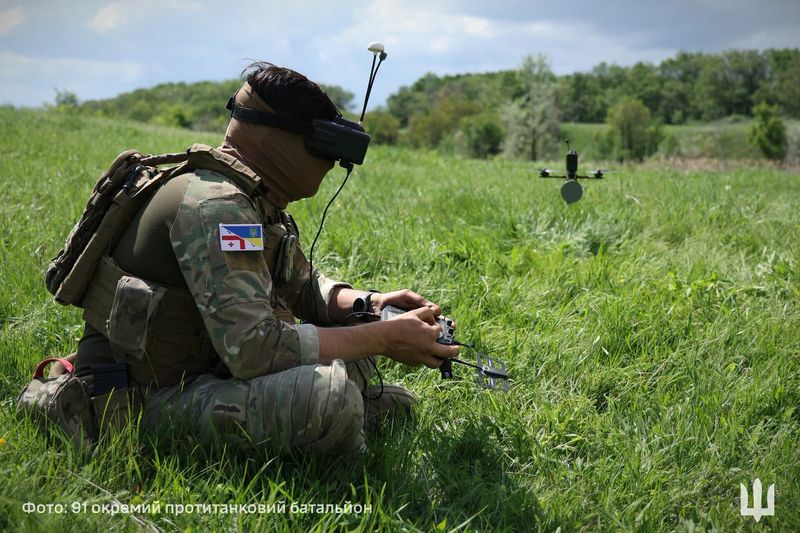
The arithmetic of constellations is unforgiving, and it is where scepticism about Rassvet’s present-day impact is best grounded. Starlink operates more than 10,000 satellites. Rassvet, on Kyiv’s own count, has 32. That is a ratio of more than 300 to one, and it shows up directly in the user experience Yusov described: continuous coverage requires enough satellites that one is always in view; 32 spacecraft in low orbit can offer passes, not presence. A useful way to frame Rassvet satellites Ukraine war coverage today is as a scheduled resource — units that can plan around predictable satellite windows can move meaningful data, but a force that needs a link at an unplanned moment will often find the sky empty.
Bureau 1440 satellites and the road to 900
The trajectory, however, is the point of concern in Kyiv. Bureau 1440’s plan for more than 900 satellites by 2035 implies a launch cadence far above the two batches seen this year, sustained for most of a decade, under sanctions. Each element of that plan can be questioned — Russia’s recent annual launch rates, the availability of radiation-hardened electronics and mass-produced satellite buses, and the funding available to a state fighting an expensive war. But the direction of travel is not in doubt, and Moscow is signalling urgency: Russia’s Scientific and Expert Council warned on Friday of the risks posed by Starlink and urged quicker deployment of Rassvet, and further Rassvet launches are planned before the end of 2026. If the end-of-year launches land on schedule, the gaps between passes over Ukraine will narrow measurably — not to Starlink’s density, but toward the point where burst communications become frequent enough to plan operations around.
Who gains, who loses — and who is sceptical
If the GUR account is broadly accurate, the immediate gainer is Russia’s drone force, which gets a sovereign data link that Ukraine cannot lobby an American company to disable. Bureau 1440 and the 49 companies on the GUR list gain a wartime mandate and state attention; Ukraine’s drone-interception units, already strained by the Starshield speed-limit episode, face a potential future in which incoming attack drones can be re-routed in flight. The losers, potentially, include SpaceX’s leverage: every satellite Russia adds reduces the coercive value of the off-switch that has hung over Moscow’s grey-market era. For civilians, the stakes are indirect but real — the same weeks that produced the Rassvet claim have seen Kyiv’s energy war deepen, with blackouts leaving millions in the capital in the dark, a campaign in which more accurate strike drones are the central instrument.
The sceptical case deserves equal space. Every material fact in this story comes from a single source: a written statement by one belligerent’s intelligence service, delivered in wartime, alongside a sanctions campaign aimed at the very programme it describes. Zelenskyy’s sanctions on 10 Rassvet-linked companies last week — following months in which Kyiv has pressed partners to target the network, as Signal Post News reported in September when Ukraine put Rassvet at the centre of its sanctions wish list — give the GUR a clear institutional interest in presenting Rassvet as both dangerous and sanctionable. Russia’s defence ministry offered no confirmation and no denial to Reuters, and no independent technical evidence — intercepted signals, recovered terminals, third-party tracking of drone behaviour — has been published to corroborate operational use. The honest summary is that Rassvet exists, is launching, and is designed for exactly the mission Kyiv describes; whether Russian drones over Ukraine are already flying on its links is a claim, sourced to Kyiv, that readers should hold as such.
What happens next: three scenarios
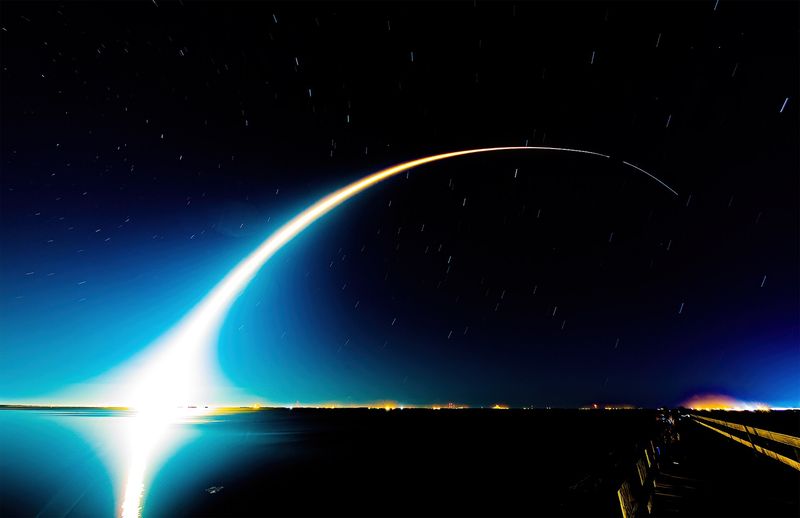
The gaps close. Moscow flies its planned end-2026 launches and sustains the cadence into 2027. Rassvet passes over Ukraine grow from occasional to frequent, Russian units integrate satellite windows into drone operations as a matter of routine, and the two-way guidance the GUR describes moves from experiment to doctrine. In this scenario the contest shifts to counter-measures: Ukrainian and allied electronic-warfare teams hunting Rassvet frequencies and terminals, and pressure for counter-space options — jamming uplinks, dazzling or disrupting satellites — that all sides have so far treated cautiously because of escalation and debris risks.
The constellation stalls. Sanctions bite where they are designed to: in the supply chain behind Bureau 1440 satellites. Zelenskyy’s 10 sanctioned companies and the GUR’s published list of 49 are an invitation to Western governments to widen that net, and mass satellite production is exactly the kind of industry that struggles without precision components. In this scenario Rassvet remains a real but thin capability — useful for demonstrations and selected units, never dense enough to change the drone war — and Russia’s Scientific and Expert Council keeps issuing the same warning it issued on Friday.
The claim outruns the capability — deliberately. A third possibility is that both capitals are talking past the present tense: Kyiv amplifying a nascent system to mobilise sanctions while it is still cheap to strangle, Moscow content to let the claim stand because the reputation of a Starlink rival is itself a deterrent and a recruiting tool for its space industry. Under this reading, the real Rassvet story of 2026 is not 32 satellites but the race they start — a race Ukraine has already joined from the other direction, pressing its partners for guaranteed, un-throttleable satellite capacity of its own.
What do you think — will a Russian Starlink rival change the drone war, or is 32 satellites too few to matter? Follow Signal Post News for continuing coverage of the war in Ukraine and the space race now flying above it.
Sources
Reuters, “Russia using own version of Starlink for military comms over Ukraine, Kyiv says” (Daniel Flynn, Kyiv, Nov 6, 2026), reporting the Ukraine GUR written statement and spokesman Andrii Yusov; Military Times syndication of the Reuters report (Nov 6, 2026); TBS News and Antikor reporting on the GUR statement (Nov 6, 2026). Russia’s defence ministry did not respond to Reuters’ request for comment; the GUR claims described in this article have not been independently verified. Photos: Wikimedia Commons, as credited in the captions.