World / Pakistan
Sulaiman Khan, the son of jailed former prime minister Imran Khan, warned on Saturday that his father's life is in danger, saying no one has seen or heard from the 74-year-old since August — the month Khan himself, by his son's account, said he was being tortured. Pakistan's government denies mistreatment and says Khan is a convicted prisoner serving court-imposed sentences.
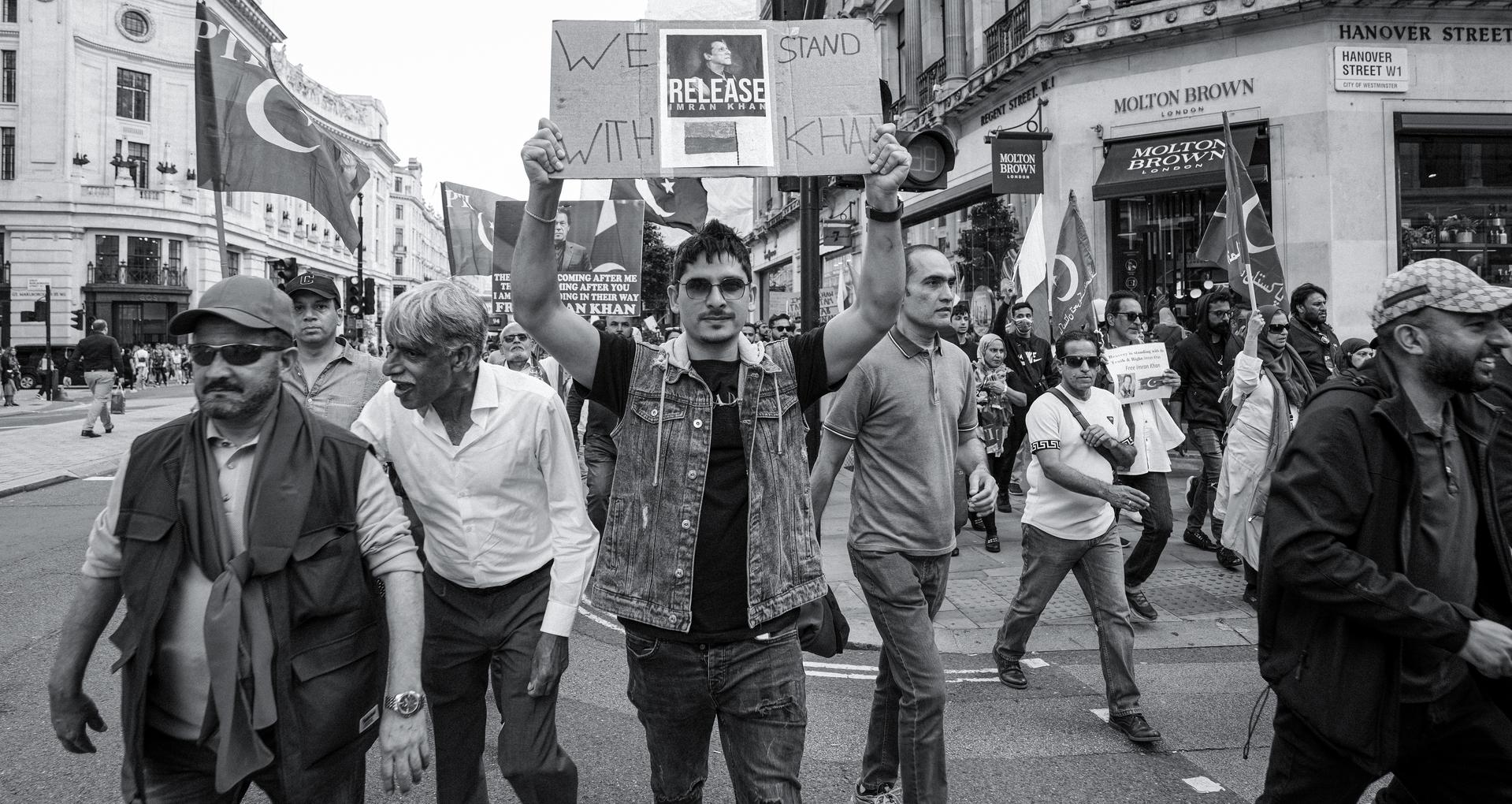
The Imran Khan son warning issued on Saturday, October 31, 2026, is the starkest statement yet from the family of Pakistan's imprisoned former prime minister. Sulaiman Khan — Khan's son by his former wife Jemima Goldsmith — said that no one has seen or heard from his father since August, and that he believes the authorities are trying to kill him. The statement, reported by The Independent with the Associated Press on October 31, lands after more than two months in which, according to the family, the former prime minister has had no contact with relatives, doctors or lawyers from his cell at Adiala Jail in Rawalpindi. Pakistan's government has previously denied that Khan is mistreated or held in solitary confinement, telling AP that he is a convicted prisoner serving sentences imposed by courts. Those two accounts — the family's and the state's — cannot both be complete, and nothing in Saturday's exchange independently resolved the question that now hangs over the story: the condition of a 74-year-old former head of government whom no outsider, on his family's telling, has laid eyes on since August.
What Sulaiman Khan said
Sulaiman Khan's Sulaiman Khan statement was direct, and it was written to be quoted. “No one has seen or heard from my father since August, when he explicitly said that he was being tortured and that the regime was trying to kill him like Egypt's government did Morsi,” he said. The reference is to Mohamed Morsi, the former Egyptian president who collapsed and died during a court hearing in Cairo in 2019, after years in detention that his family and human rights groups said had denied him adequate medical care. Sulaiman then assigned responsibility in advance: “It is clear that they are trying to kill him as he is by far the most popular political figure in the country, and they fear him. If the worst happens, no one should make any mistake who is responsible.”
Those are allegations, and they are presented here as exactly that — the claims of a son about a father he says he cannot reach. No independent medical examination, court filing or official inspection made public alongside Saturday's statement verifies the torture claim, and the government disputes the family's account of Khan's conditions, as set out below. What is not in dispute is the narrower, checkable core of the statement: the family says contact stopped in August, and no public appearance, verified family visit or lawyer's account since then has contradicted that claim.
The blame placed on the army chief
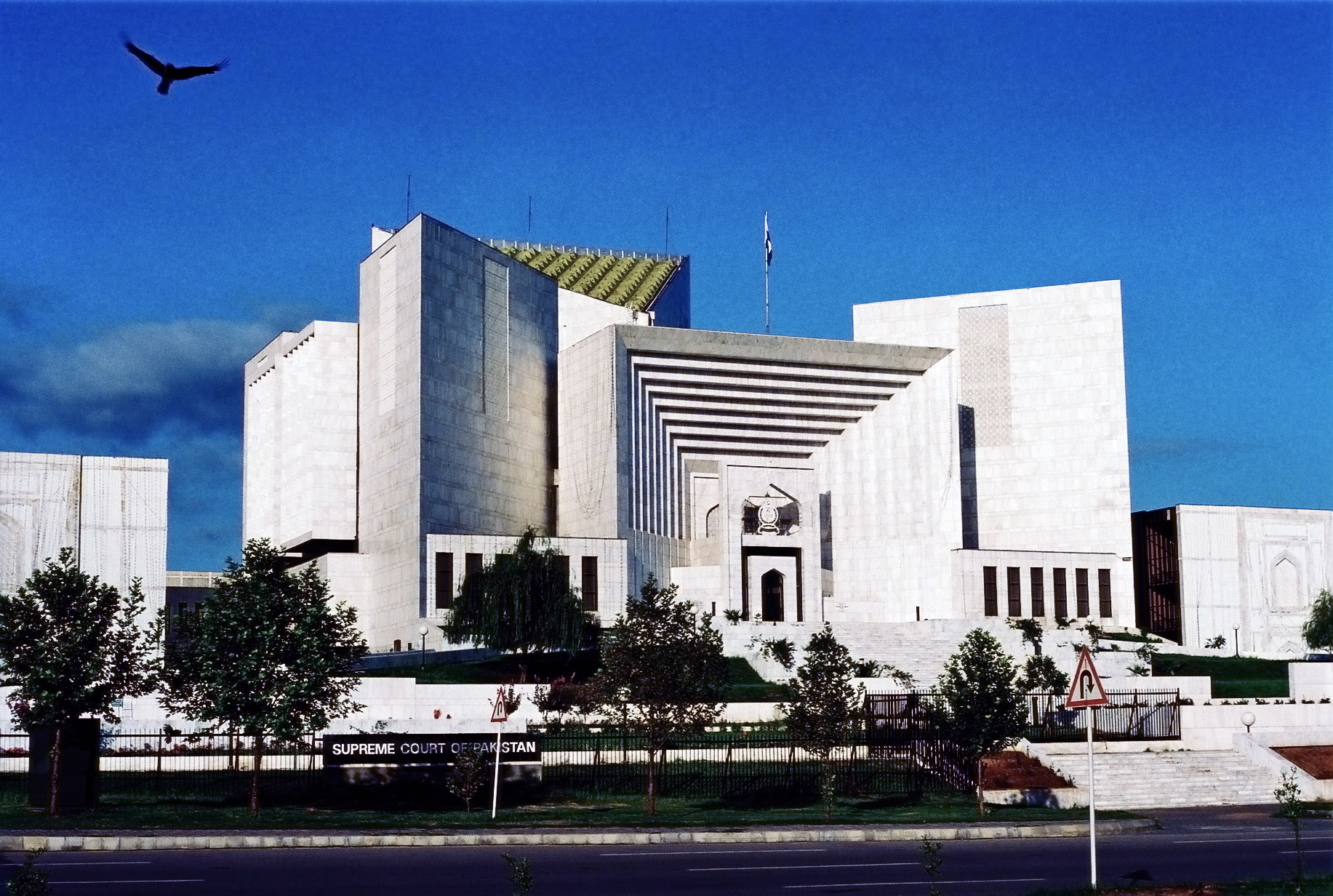
Sulaiman Khan aimed the accusation at a specific man: General Asim Munir, Pakistan's army chief. He blamed Munir for his father's continued incarceration and accused him of ignoring an August order of Pakistan's Supreme Court directing that Khan be assessed and treated at the private Shifa International Hospital in Islamabad and granted regular family visits and access to his lawyers. On the family's account, none of that has happened — no hospital assessment, no restored visiting routine, no regular legal access. The Pakistan army chief Asim Munir Imran Khan confrontation is not new, but Saturday's statement personalised it further than the family has gone before: not the government in general, not the courts, but the country's most powerful soldier, named by a son who says a Supreme Court order in his father's favour has simply been left unenforced.
Imran Khan health update: what is claimed, and what is known
Any honest Imran Khan health update has to separate three layers. The first is what the family claims: that Khan said in August he was being tortured, that he is held in Imran Khan solitary confinement, and that his life is now in danger. The second is what the government states: that he is not mistreated and not in solitary confinement. The third is what can be independently established from outside Adiala Jail — and on Khan's present physical condition, that third layer is, as of Saturday, essentially empty. He is 74 years old. He has been imprisoned since 2023. His family and party have raised health concerns repeatedly, and Amnesty International in August urged Pakistan to give Khan and his wife, Bushra Bibi, adequate medical care. Beyond that, readers searching “is Imran Khan alive” should understand the position precisely: there is no verified evidence of his death or of a specific medical emergency, and there is also no recent independent confirmation of his condition. The family's warning is alarming because the silence is real on the public record — not because the worst outcome it fears has been shown to have happened.
The government's answer
Pakistan's government rejects the family's characterisation, and its answer deserves to be stated in full rather than in summary. Responding to AP in a written statement in August, the Ministry of Information said Khan is not held under a government order but as a “convicted prisoner” serving sentences imposed by courts following judicial proceedings. The government denies that Khan is mistreated and denies that he is held in solitary confinement. On that account, his imprisonment is the ordinary consequence of convictions on corruption and bribery charges — charges Khan denies as politically motivated — and not an executive campaign against him.
Readers should weigh what each side's framing does and does not establish. The government's position answers the legal question — why is Khan in prison? — with court verdicts. It does not, in the response given to AP, walk through the family's specific claims about access: the alleged halt to family visits, lawyer meetings and medical assessment since August, or the status of the Supreme Court order Sulaiman cited. The family's position, for its part, asserts conditions inside Adiala Jail that outsiders cannot currently inspect. A dispute of that shape is not settled by statements. It is settled by access — a visit, a medical examination, a lawyer walking out of the jail and describing what he saw. That is precisely what the family says has not occurred since August, and it is why the argument keeps returning to the same locked door.
A family squeezed from every side
Saturday's warning did not arrive in isolation. It is the latest move in a pressure campaign that has closed around the whole family. Imran Khan sons Kasim and Sulaiman campaign from abroad: the brothers, who live outside Pakistan, have reportedly been advised against travelling to Pakistan to press for their father's release in person, after the arrests of other family members showed what could await them. Their advocacy is therefore conducted at a distance — interviews, statements and social media — which lends Saturday's words both their reach and their limitation. A son in London can make the world listen. He cannot knock on the gate at Adiala.
Inside Pakistan, the family's most visible advocates have been Khan's three sisters — Aleema Khan, Uzma Khan and Noreen Niazi — and the state has moved against them directly. The sisters were detained in September 2026 under the Punjab Maintenance of Public Order Ordinance, ahead of planned protests, and Punjab government officials said on Monday that their detention had been extended for another 30 days — a case Signal Post News examined in its reporting on the extension of the Khan sisters' detention in Punjab. Add Khan's wife, Bushra Bibi, who is also imprisoned, and the pattern the family describes is comprehensive: the leader in a cell in Rawalpindi, his wife in custody, his sisters detained under a public-order law, his sons warned off the country. The government's framing is that each of those steps has its own legal basis — convictions, court orders, preventive-detention law. PTI's framing is that the bases are beside the point, and the pattern is the point.
How Khan got here
The speed of the fall still startles. Imran Khan captained Pakistan to its only Cricket World Cup victory in 1992, built a cancer hospital and a political party, Pakistan Tehreek-e-Insaf (PTI), and in 2018 became prime minister — the insurgent who broke the two-party rotation that had governed Pakistan for decades. He was removed in April 2022 by a parliamentary no-confidence vote, the first Pakistani prime minister to fall that way, and he blamed the military establishment and the United States for his ouster, charges both denied. What followed was a confrontation without pause: mass rallies, an assassination attempt he survived in November 2022, and then, from August 2023, prison.
He has now been imprisoned for more than three years, convicted in cases centred on corruption and bribery, and he faces charges in more than 100 cases in total. He denies every charge and calls the entire docket politically motivated — an attempt, he says, to erase the country's most popular politician by process. The state answers that the cases were heard in courts and produced convictions, and that no politician is above them. Both of those sentences have been repeated so often that they have hardened into the two fixed positions of Pakistani politics. What changed in 2026 is the temperature around them: earlier this month thousands joined a PTI long march toward Islamabad demanding Khan's release, improved access and treatment by doctors of his choice; and on October 11, President Asif Ali Zardari declared a state of emergency in Khyber Pakhtunkhwa and suspended the PTI-led provincial government, citing Islamist militancy — a move PTI called “more of a coup disguised as an emergency,” as Signal Post News reported in its account of emergency rule in Khyber Pakhtunkhwa. A jailed man's party still runs — ran — a province. That is the anomaly at the centre of the crisis.
The silence in context: August to October
The timeline matters, because Saturday's statement is best understood as the point where a sequence of closed doors became a public alarm. In August 2026, Sulaiman and Kasim told CNN that the family, Khan's doctors and his lawyers had been denied access for seven months. The same month, Amnesty International urged Pakistan to restore Khan and Bushra Bibi's access to family and lawyers, provide adequate medical care and end solitary confinement — the family's description of his conditions, which the government disputes. Also in August, on the family's account, came the Supreme Court order for a hospital assessment at Shifa International and regular visits — and, by Sulaiman's telling, Khan's own statement that he was being tortured. Then the contact stopped altogether. September brought the sisters' detention. October brought the long march, the Khyber Pakhtunkhwa emergency, the sisters' 30-day extension — and, from Adiala, nothing. Three months of silence from a man who, for three decades, was among the most heard voices in Pakistan is itself a datum, whatever its cause.
The numbers frame the stalemate. More than 100 cases. More than three years in detention. Seven months, by the brothers' August account, without family, doctor or lawyer access even before the total silence they now describe. A detention extended 30 days at a time for his sisters. Each figure is contested by someone, but their accumulation describes a system that has learned to hold its most famous prisoner indefinitely, in increments too small to force a reckoning — until his son tried to force one with a single word: Morsi.
Why this matters
Start with the political arithmetic the son himself cited. Khan is, by his family's claim and by most independent readings of Pakistan's recent elections, the country's most popular political figure — the leader whose party, even with him in a cell and its symbols restricted, remained the central fact of the 2024 vote and governed Khyber Pakhtunkhwa until this month's emergency. An establishment that cannot beat a man at the ballot box, his supporters argue, has chosen to bury him in process instead. The government and military answer that popularity confers no immunity and that courts, not crowds, decide guilt. Pakistan has run versions of this argument about other leaders before. It has rarely run it about a prisoner no one outside the jail authorities claims to have seen for a quarter of a year.
The Morsi comparison is the deliberate escalation, and it should be read as strategy as much as grief. Morsi's death in an Egyptian courtroom in 2019 became the international shorthand for a state letting an imprisoned former president die in custody — slowly, deniably, without a single dramatic act. By invoking it, Sulaiman does three things at once: he warns foreign governments that they are watching a precedent they have seen before; he tells Pakistan's authorities that any death in that cell will be read worldwide as a killing, whatever its medical cause; and he pre-writes the attribution, in his own words, so that “no one should make any mistake who is responsible.” It is an attempt to raise the cost of the silence itself. Whether it works depends on whether anyone with leverage — in Islamabad, in Washington, in London — decides the cost of looking away has become higher.
And there is the silence. States that hold controversial prisoners normally manage their visibility: a photograph, a court appearance, a lawyer's briefing, some proof of life that keeps speculation inside bounds. The absence of any of that since August — again, on the family's unrebutted-in-detail account — is what converts a prison-conditions dispute into something darker in the public imagination. Silence from Adiala does not prove the family's worst claims. It guarantees they will be believed by millions who already distrust the institutions denying them, and it leaves the government in the position of asking to be trusted about a man it will not show.
What happens next
The tests from here are concrete, and the first is already written down. If the August Supreme Court order Sulaiman cited means what the family says it means — assessment and treatment at Shifa International Hospital, regular family visits, access to lawyers — then compliance with it is the cleanest available measure of the state's intentions. A Khan seen by his own doctors at a named hospital in Islamabad would not end the political crisis, but it would end the silence, and it would do so on the authority of Pakistan's own highest court rather than any foreign pressure.
The second signal to watch is smaller and may come first: any verified human contact. A family meeting at Adiala, a lawyer emerging with instructions, a court appearance in person rather than by video link — any one of these would puncture the claim that no one has heard from Khan since August, and the family would face the choice of confirming it or explaining it. Conversely, each further week without contact strengthens the sons' campaign and the international framing they are building around it, and raises the stakes of the next PTI mobilisation in a country where the Khyber Pakhtunkhwa emergency has already shown how quickly the confrontation can move from courtrooms to provinces.
The third variable is outside pressure. Amnesty International has already spoken; the brothers' campaign is aimed squarely at Western capitals where Khan, a former cricket star and a former husband in a famous British family, is a familiar figure rather than a distant one. Foreign governments have so far treated his imprisonment largely as Pakistan's internal affair. A death in custody — or even a credible medical emergency — would end that posture overnight, which is, of course, the future Saturday's statement was written to prevent. Sulaiman Khan cannot open the gate at Adiala Jail. What he did on Saturday was serve notice, in the plainest language a son can use, that the whole world will be watching what comes out of it — or what does not.
Sources
- The Independent — “Imran Khan's son issues urgent warning over father's life” (October 31, 2026): Sulaiman Khan's statement that no one has seen or heard from his father since August, the torture and Morsi remarks, the blame placed on army chief General Asim Munir, and the August Supreme Court order on treatment at Shifa International Hospital, family visits and lawyer access.
- Associated Press reporting, via Zark News — “Imran Khan son Sulaiman warning: no contact since August” (October 2026): the Pakistan Ministry of Information's written response that Khan is a “convicted prisoner” serving court-imposed sentences, the government's denial of mistreatment and solitary confinement, and background on the family's access claims and the sisters' detention.
This article is based on The Independent's reporting with the Associated Press, published October 31, 2026, and on the Pakistan government's written response to AP. All claims about Imran Khan's treatment, health and conditions in Adiala Jail are attributed in the text to the family members or officials who made them; no allegation of torture or mistreatment is stated as established fact, and the government's denial is reported in full. Analysis is by Signal Post News.