Developing · Pakistan
Primary keyword: PTI long march Islamabad
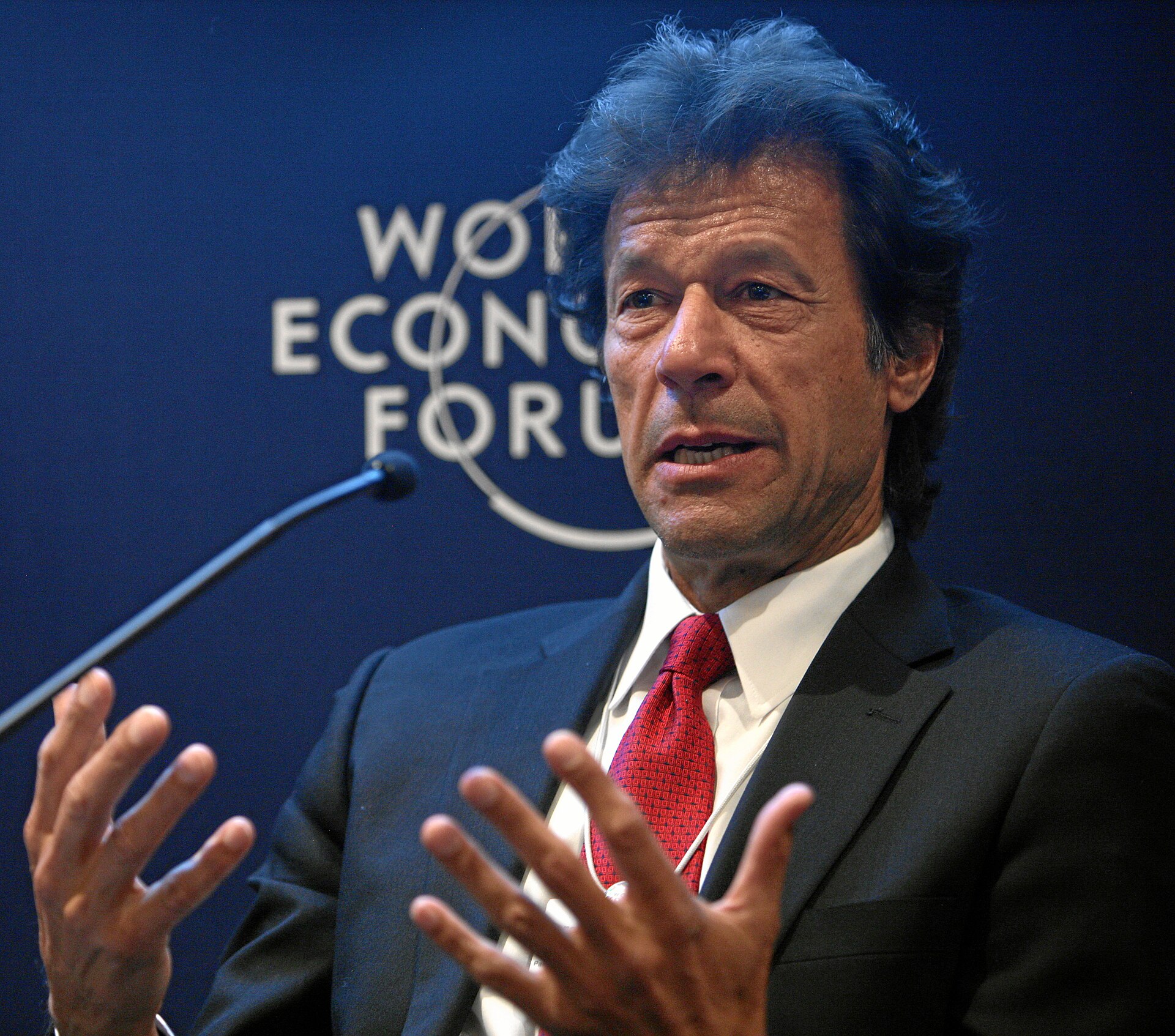
Imran Khan PTI march today: what happened and where it goes
LAKKI MARWAT, Pakistan — The PTI long march Islamabad campaign began Sunday at 1 p.m. from Gandi Chowk in Lakki Marwat, according to the route announced by Khyber Pakhtunkhwa Chief Minister Sohail Afridi. Its declared purpose is the release of former prime minister Imran Khan, who has been jailed since 2023 and says he is a political prisoner.
The opening phase is designed as a rolling provincial mobilization rather than a single sprint to the federal capital. Supporters from Tank, Dera Ismail Khan, South Waziristan, North Waziristan, Bannu and Lakki Marwat were called to join the first leg, which was scheduled to halt near Karak on Sunday night. That sequencing lets PTI accumulate people and political attention as it moves north, but it also gives authorities multiple opportunities to slow or contain the procession before it approaches Islamabad.
| Date | Announced Lakki Marwat march route |
|---|---|
| Oct. 4 | Start at Gandi Chowk, Lakki Marwat, at 1 p.m.; supporters from six southern districts join; night halt near Karak. |
| Oct. 5 | Karak supporters join at noon; departure is scheduled for 12:30 p.m.; night halt near Kohat. |
| Oct. 6 | Kohat, Hangu, Kurram and Orakzai supporters join at noon; the march leaves Kohat toward Peshawar and halts near Matni. |
| Oct. 7 | Departure from Budh Bair, Peshawar, at 12:30 p.m.; Khyber District joins; night halt near Charsadda Interchange. |
The schedule is a plan, not a guarantee. Marches of this scale are vulnerable to road closures, detentions, court orders, weather, negotiations and internal discipline. The important distinction is between PTI's announced timetable and confirmed movement on the ground; each day's progress will need to be verified separately.
Afridi urged broad participation and linked the protest to security grievances in his province. “Terrorism has been imposed on Khyber Pakhtunkhwa,” he said, adding that “stopping oppression is jihad.” That language raises the emotional stakes. It can energize PTI's base, but it also makes de-escalation harder if either side begins treating compromise as surrender.
Why this matters: PTI is testing both the street and the state
This is PTI's first large-scale mobilization since a protest two years ago ended in deadly clashes. That precedent makes Sunday's launch more than another opposition rally. PTI is testing whether it can still translate Khan's personal popularity into disciplined national pressure after years of arrests, legal battles and organizational disruption. The state is testing whether it can prevent disorder without turning containment into a fresh recruiting tool for the opposition.
The Imran Khan release demand protest also narrows the room for a face-saving settlement. PTI treats access to Khan, his medical care and ultimately his release as non-negotiable. The government wants the march cancelled before offering the concession PTI says would justify cancelling it. That is not merely a disagreement over sequence; it is a contest over who must demonstrate weakness first.
For PTI, reaching Islamabad would show that the party retains reach beyond online support and provincial office. For the government, allowing an unrestricted procession risks creating a prolonged encampment and the impression that pressure from the street can override institutions. Blocking it too forcefully, however, could revive memories of the 2024 violence and shift the public argument from Khan's legal position to the state's methods.
This is the state's familiar lockdown playbook: seal approach roads, control junctions, detain organizers and make participation costly before crowds can concentrate. It can work tactically. Strategically, it often postpones the underlying contest. Containers can redirect vehicles; they cannot settle whether Khan's imprisonment is understood as ordinary criminal accountability or political exclusion.
PTI government talks deadlock: access to Khan became the hinge
Talks at Parliament House on Saturday evening ended without agreement. PTI wanted its representatives to meet Khan and sought his transfer to a hospital where his personal doctors could examine him. The government insisted that the march be called off first. Senate Opposition Leader Allama Raja Nasir Abbas summarized the outcome in one word: “Deadlock.”
The sequence was decisive. PTI's position was that access should create the confidence required to stop the march. The government's position was that cancellation should create the conditions for access. Each side therefore asked the other to pay the political price in advance, with no mechanism described publicly that could guarantee the promised next step.
The two sides also disagreed about security responsibilities in Khyber Pakhtunkhwa. That dispute matters because the province is both PTI's political base and a region facing persistent militant violence. Afridi's rhetoric links the march to the province's broader grievance that it bears the burden of insecurity while being denied political voice. Islamabad can answer that provincial leaders have direct governing responsibilities. Both claims contain part of the truth, and neither resolves the immediate risk created when a provincial administration backs a march aimed at the federal capital.
Saturday's failure does not mean negotiation is over. It means the bargaining has moved from a parliamentary room to the road, where each mile covered, each detention and each closure becomes leverage. That is a more dangerous arena because misunderstandings are faster, crowds are less controllable and political leaders can become prisoners of their own slogans.
Islamabad security lockdown containers and the GT Road question
Reuters reported that the government blocked highways with shipping containers and deployed tens of thousands of security personnel. Such preparations are intended to prevent a mass gathering from reaching sensitive government areas, but they also impose costs on commuters, freight operators, patients and businesses long before a protest reaches the capital.
The widely searched phrase GT Road blocked PTI march captures public concern about access to Islamabad. At publication time, the verified reporting available to Signal Post News established highway blockades and container barriers but did not provide a complete, authoritative list of every GT Road segment affected. Travelers should treat individual closure claims as provisional unless confirmed by local authorities or current road information.
The policy dilemma is straightforward. A narrow, intelligence-led security operation can isolate genuine threats while preserving daily life. A blanket closure is simpler to enforce but may punish the very public whose support both sides claim. Every extra hour of disruption increases pressure on the government; every attempt to force a barricade increases the risk that PTI loses sympathy and hands officials a security justification.
What the numbers mean — and what they do not
Tens of thousands of security personnel indicate that authorities are planning for a national-level confrontation, not treating the march as a routine provincial procession. The figure signals capacity and deterrence, but it does not by itself reveal crowd size, rules of engagement or whether forces will be used to guide, stop or disperse participants.
Hundreds of activists detained show a pre-emptive strategy aimed at weakening organization before the march gathers momentum. Reuters also reported that authorities detained three of Khan's sisters. The phrase Imran Khan sisters detained carries unusual political weight because it personalizes the crackdown and reinforces PTI's argument that pressure extends beyond party officeholders.
Four announced days in Khyber Pakhtunkhwa give PTI time to build visibility, but they also expose the march to attrition. A movement that adds supporters at each stop can look inevitable. A procession repeatedly delayed or reduced can look contained. The route is therefore a political scoreboard as much as a logistical plan.
One postponed launch is already part of the story. PTI originally planned to begin on September 27 from Peshawar, then moved the date to October 4. Spokesperson Zulfi Bukhari told Reuters the party could launch “whenever we deem fit.” That flexibility preserved tactical surprise, but repeated changes can also test supporters' patience and give the government more time to prepare.
None of these figures proves how the confrontation will end. Force strength is not the same as legitimacy; detention totals are not a measure of popular support; an announced route is not confirmed attendance. The numbers are best read as evidence of the scale both sides attach to the contest.
Background: from Khan's 2022 ouster to the October 2026 march
Khan, now 73, was removed as prime minister in a parliamentary no-confidence vote in 2022. He has been jailed since 2023 and faces a series of legal cases. Khan says the cases make him a political prisoner; Pakistani authorities reject that characterization and present his detention as the product of judicial proceedings.
That unresolved legitimacy dispute has reorganized Pakistani politics. PTI's supporters see Khan's imprisonment as proof that electoral competition and legal process have been bent to exclude the country's most potent opposition figure. His opponents argue that popularity cannot place a former prime minister above the law. The march cannot adjudicate those claims. It can, however, change the political cost of refusing a negotiated route through them.
The postponed September 27 start and the failed Saturday talks show that both camps searched for tactical advantage before committing fully. PTI delayed without abandoning its demand. The government talked without accepting PTI's precondition. Sunday's launch means the period of ambiguity has ended: the pressure campaign is now visible, mobile and harder to contain within elite negotiations.
Who benefits, who loses: the Sohail Afridi long march calculation
PTI benefits if movement itself becomes momentum. A disciplined procession that grows district by district would demonstrate organization, keep Khan's detention at the center of national debate and elevate Afridi as the party's operational leader in Khyber Pakhtunkhwa. Even without entering Islamabad, PTI could claim success if it forces renewed access talks or exposes disproportionate restrictions.
PTI loses if the march becomes violent or visibly stalls. The party's strongest case is that peaceful political participation has been constrained. Clashes, property damage or an attempt to breach a security line would let the government replace a rights argument with a public-order argument. Leadership discipline will matter as much as turnout.
Prime Minister Shehbaz Sharif's government benefits if it contains disruption without creating martyrs. A controlled response could reassure institutions, protect the capital and deny PTI the dramatic confrontation it may seek. The government's risk is overreach: mass detentions, inaccessible roads and harsh crowd control can broaden a party grievance into a civil-liberties issue.
The public and businesses bear the immediate cost. Highway barriers interrupt deliveries, wages and medical access. Shops near flashpoints lose trade; transporters absorb delays; families alter travel. These costs do not fall neatly along party lines. A government that treats inconvenience as collateral damage and an opposition that treats disruption as proof of seriousness can both lose the middle.
Security institutions face the hardest operational test. They must distinguish between peaceful participants and actors seeking confrontation, enforce lawful restrictions proportionately and prevent local decisions from triggering national escalation. Tactical patience is not passivity; in a polarized environment, it is statecraft.
What happens next: four scenarios on the road to Islamabad
First, the march advances on schedule and the government reopens talks. This is the lowest-cost path. Limited access to Khan, independent medical assurances or a mutually sequenced pause could give both sides something to claim. The obstacle is trust: Saturday's deadlock showed that neither side wants to move first.
Second, authorities intercept the procession before it consolidates. Container barriers, preventive arrests and district-level restrictions could keep the march from becoming a single large column. That might protect Islamabad in the short term, but it would scatter confrontation across multiple places and extend the news cycle.
Third, PTI reaches the capital's approaches but not its center. A prolonged standoff outside Islamabad would test food, transport, communications and command discipline on both sides. It would also increase business disruption and invite legal challenges over assembly, movement and detention.
Fourth, a clash produces rapid escalation. The deadly precedent from two years ago is the central warning. A local breach, an aggressive arrest or disputed use of force could outrun national leaders' ability to control events. Images would travel instantly, international attention would sharpen and every subsequent decision would be made under public anger.
Foreign governments are likely to focus on restraint, due process and freedom of peaceful assembly rather than endorse either side's political program. International scrutiny will intensify if there are casualties, prolonged communication restrictions or credible concerns about Khan's medical access. But outside pressure cannot substitute for a domestic settlement.
The most important signal is not whether PTI can put a large number of people on a road. It is whether Pakistan's political system can turn mobilization back into negotiation before force decides the terms. The PTI Islamabad march October 2026 is a gamble for Khan's party, for Sharif's government and for institutions that have repeatedly been asked to manage political disputes as security emergencies.
Related Pakistan coverage
Sources and reporting notes
- Reuters, Sept. 25 — postponement, Khan background, government security preparations, detentions and the previous deadly protest
- DevDiscourse, Oct. 4 — start time, first-stage route and Sohail Afridi's appeal
- Daily Jagran, Oct. 3–4, citing Dawn — Parliament House talks, medical-access demand and deadlock
Verification note: The route and times above are PTI's announced schedule. Security-force and detention figures are attributed to Reuters. The photographs are dated file images used for context and do not depict Sunday's march or lockdown.