Judge blocks DOJ election workers case: a federal judge has barred the Justice Department from threatening the election workers who process America’s ballots, four days before the midterms.
Politics / U.S. Elections — a restraining order lands in the middle of the count, and the fight over who runs American elections moves from letters to a courtroom
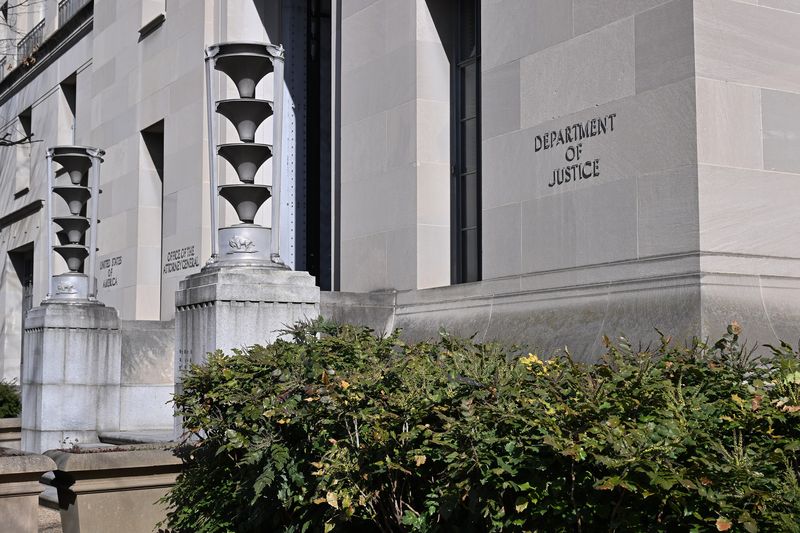
Thompson, who sits in the Northern District of California and was nominated by President Joe Biden, found that the plaintiffs — unions and civil-rights groups representing election workers — are likely to succeed on their claims. She concluded that the department’s threats likely violate federal law, including the Voting Rights Act’s prohibition on intimidating voters and those who administer elections, as well as the Constitution, and she described the threats as “interfering with the lawful administration of elections.” Her reasoning rested in part on timing. “Ballots have already been issued. Americans have already begun voting. Workers have already begun processing ballots,” she wrote. “One of the hallmarks of a fair election is the freedom to exercise the right to vote free from threat, fear, or intimidation.” The Justice Department, which says it is acting to stop unlawful noncitizen voting and protect election integrity, appealed to the Ninth Circuit on Saturday and called the ruling, through a spokesperson, “a two-track system of justice,” adding that it is evaluating all options.
What the order actually does
The restraining order is specific, and its specificity is the point. It does not rule on whether any of the flagged voters are eligible, and it does not order any ballot counted or discarded. What it does is remove four tools from the federal government’s hands for the duration of the order. First, the Justice Department and the Department of Homeland Security may not demand that election officials halt processing a registered voter’s ballot solely because the administration alleges that voter is ineligible. Processing — the opening, verifying, scanning and preparing of ballots that is already happening in counting centres across the country — continues under state law, not under a federal allegation.
Second, the departments may not demand that officials remove specific voters from the rolls, refuse to issue them ballots, or segregate their November 3 ballots and decline to count them, on the basis of that allegation alone. Third, they may not threaten prosecution of workers who refuse those demands, or who count ballots as state and federal law require. That third prohibition is the centre of the case: the plaintiffs argued that the threat of a criminal case, aimed at individual clerks and temporary count staff, was itself the mechanism of pressure, whether or not any prosecution ever followed. Fourth, the order reaches beyond the two defendant departments’ own words: Thompson ordered the Justice Department to notify every government that received its ballot letters that the threats are blocked, and to disclose pending search-warrant applications and grand-jury subpoenas tied to its voter lists — a transparency requirement that acknowledges the letters, once sent, keep working until someone formally withdraws them.
The order is temporary and time-stamped. It runs until 5 p.m. on November 16, 2026. The department must respond by noon on Monday, November 2, and a hearing on a longer preliminary injunction is set for November 13 — ten days after Election Day, but before certification fights conclude in close races. Other judges had previously insisted the department stop the threats; Thompson’s is the first order that legally bars them.
How we got here
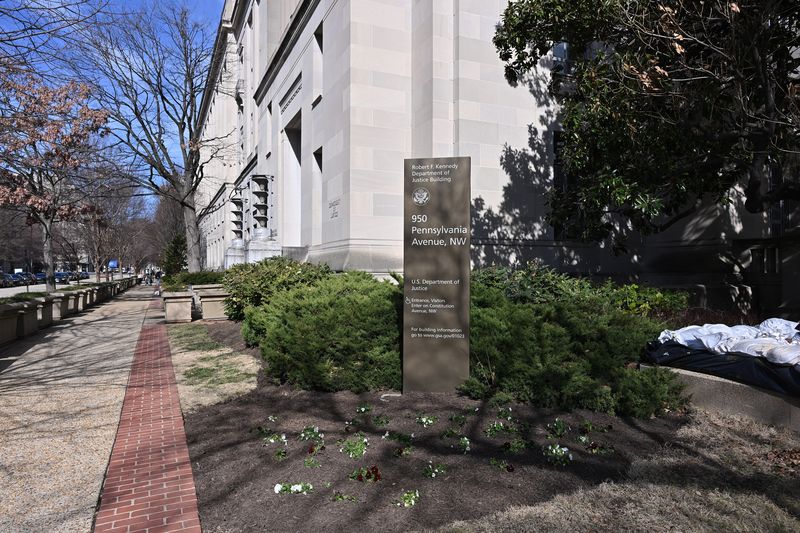
The chronology matters, because the judge was ruling on a sequence, not a single letter. On October 13, the Justice Department demanded that California and Los Angeles County set aside ballots tied to about 20,000 registered voters it alleged were likely noncitizens. On October 23, letters to county officials added the element that became the lawsuit: a threat of prosecution. On October 26, a similar letter went to Washington state, covering about 405 ballots. The department also subpoenaed Los Angeles County election workers to appear before a grand jury. Each step widened the circle of people who had to decide, personally and quickly, whether following state procedure or following a federal instruction was the safer course.
The courts were already moving before Thompson acted. On Wednesday, another federal judge rejected the department’s effort over the California ballots, and the Ninth Circuit refused its emergency request, by a reported 2–1 vote. The unions then filed suit on Thursday, October 29 — the Service Employees International Union, the American Federation of State, County and Municipal Employees, the League of United Latin American Citizens and the NAACP, organisations whose members staff the count. Thompson’s order followed a day later. The dispute also sits inside a wider pre-election confrontation between Washington and the states that Signal Post News has been tracking all autumn: states bracing for a surge of federal election monitors (states prepare for DOJ election monitors), the department declining to rule out blocking certification (Blanche won’t rule out blocking certification), and a state election board asking the department to declare its own voting machines unlawful (Georgia’s board asks the DOJ about its machines). The restraining order is the first of those fights to produce a direct prohibition.
Why this matters
The constitutional structure underneath the case is older than any of its participants. Under the U.S. system, states run elections: they keep the rolls, issue the ballots, hire the workers and count the votes, subject to federal law that sets a floor of protections — including the Voting Rights Act’s ban on intimidation — rather than a federal chain of command. The administration’s position is that enforcing the law against noncitizen voting, which is already illegal, is a federal duty that does not stop at a county line. The plaintiffs’ position is that there is a difference between enforcing the law against a voter and threatening the worker who processes that voter’s ballot under state rules. Thompson’s order is written to that distinction: it leaves every underlying eligibility question open and removes only the threat aimed at the administrator.
That is why the case turns on the idea of a chilling effect. Election work in the United States is done by a thin layer of permanent officials and a much larger layer of temporary and part-time workers, recruited county by county, who can simply not show up. A prosecution threat does not need to be carried out to change behaviour; it needs only to be credible enough that a worker, or a county counsel advising one, decides that segregating a stack of ballots is the personally safer choice. The plaintiffs argued that this is precisely what the October 23 letters were designed to do. The department’s defenders reply that lawful warnings about legal obligations are a normal part of enforcement, that officials who follow the law have nothing to fear, and that a court order shielding noncompliance invites exactly the unlawful counting the department says it is trying to prevent. The judge’s finding — likelihood of success, not a final verdict — resolves none of that permanently. It decides who bears the risk while the argument continues: for the next two weeks, not the worker.
Timing converts a legal dispute into an operational one. An order like this in March would have been a briefing fight. Issued on the Friday before a Tuesday election, with early voting at record volume, it lands on ballots that are already in envelopes, in transit and in counting rooms. Thompson’s own sentence — ballots issued, voting begun, processing under way — is the analytical core of the ruling. There is no version of segregating 20,000 California ballots on November 2 that is a paperwork exercise; it is a physical instruction to identifiable people in identifiable facilities, some of whom have already received a grand-jury subpoena. Whatever the Ninth Circuit does, it will be doing it inside that reality.
The numbers in context
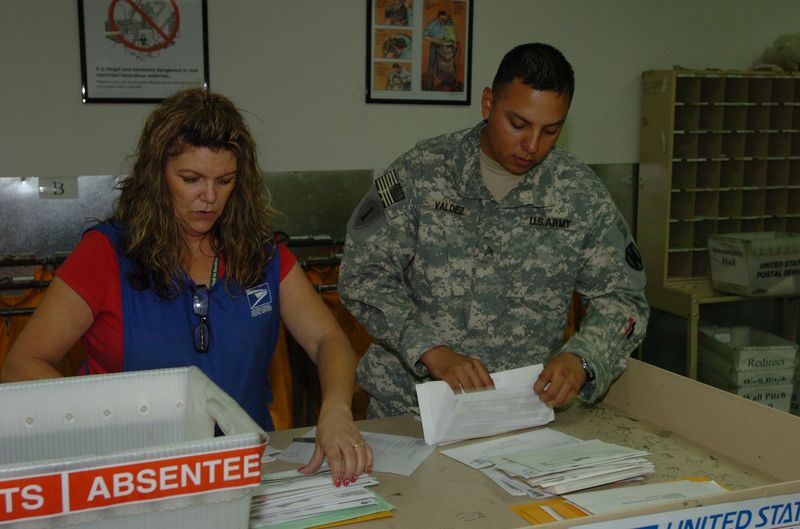
Set the disputed numbers against the undisputed ones. The department’s California demand concerned about 20,000 registered voters; its Washington letter, about 405 ballots. Against that, more than 51.3 million ballots had already been cast early by midday on Saturday, October 31, according to the University of Florida Election Lab — already more than the entire early vote of the 2022 midterms, which totalled 45.9 million. The flagged California names amount to roughly four-hundredths of one percent of the ballots already cast nationally. That proportion does not settle the legal question — a single unlawful vote is unlawful, as the department notes — but it frames the administrative one: the order protects a national process of tens of millions of ballots from a dispute about a list whose accuracy is itself contested.
The reliability dispute deserves to be stated in both directions, because both sides have a factual claim and neither has been fully tested in court. Administration officials say their lists identify likely noncitizens and that checking them is basic election integrity. Critics answer that list-matching of this kind produces false positives — citizens flagged by data errors, name matches and outdated records. As reported analysis cited in coverage of the case, UCLA data scientists reportedly found that more than 40 percent of the flagged California names were absent from state voter rolls at all, a figure the department has not accepted and which, if accurate, would suggest the list was built against a different dataset than the one counties actually use. Separately, one database of prosecutions counted 24 convictions for noncitizen voting between 2005 and 2025 — a number supporters of the department’s approach read as evidence of under-enforcement and critics read as evidence of rarity. Both readings are arguments, not measurements. What Thompson’s order actually decides is narrower than either: whatever the lists are worth, they may not be enforced by threatening the people who run the count.
Who gains, who loses
The immediate gainers are the workers and the counties. A clerk in Los Angeles County who was weighing a federal letter against state procedure now has a federal court order on the state-procedure side of the scale, and the department must affirmatively tell every government it wrote to that the threats are blocked. The plaintiffs — the unions and groups that brought the case a day after filing — gain a precedent with a short life but a long citation tail: the first order of its kind becomes the reference point for every similar letter in every future cycle. Voters whose ballots were flagged gain, for now, the ordinary treatment of their ballots under state law, without segregation.
The department loses the tool, not the argument. It retains its appeal, its underlying lawsuits over voter rolls, and its stated mission; what it cannot do until at least November 16 is use prosecution as leverage over processing. Politically, the ruling hands both parties a message they were already making: the administration’s allies describe a court protecting unlawful voting — the spokesperson’s “two-track system of justice” line — while its critics describe a court protecting the count itself. The honest ledger includes a cost to the court’s own position, too: an emergency order issued within a day of filing, on a likelihood standard, four days before an election, will be judged by whether the administration of November 3 looks calmer or more chaotic because of it. And the largest exposure remains where it was before anyone filed anything — with the temporary workforce of American elections, whose willingness to do the job in 2028 is being decided by how 2026 treats them.
What happens next
The calendar now runs the story. The department’s response is due by noon on Monday, November 2 — the day before Election Day, Tuesday, November 3, when all 435 House seats and 35 Senate seats are contested, Republicans defend a 53–47 Senate majority and a narrow House majority, and any administrative confusion lands directly on the closest count in a generation of midterms. Its appeal to the Ninth Circuit, filed Saturday, could narrow, pause or leave untouched Thompson’s order at any point; the same court refused the department an emergency request in the related California fight last week, reported as 2–1, which is a signal about the panel politics but not a guarantee about this order. The preliminary-injunction hearing on November 13 will decide whether the protections outlive the count and cover the certification period, when the losing side’s attention shifts from ballots cast to ballots counted. The restraining order itself expires at 5 p.m. on November 16 unless it is extended or converted.
Three scenarios describe Election Day itself. If the order simply holds, processing proceeds under state law, and the case becomes a post-election argument about certification and precedent. If the Ninth Circuit intervenes over the weekend, counties face instructions changing mid-count. And if the subpoena and warrant disclosures the order requires reveal a wider investigative footprint, the fight expands rather than ends. None of these changes how a single ballot is marked. All of them change who a ballot passes through, and under what fear, on its way to being counted — which is what a one-day-old lawsuit in San Francisco is now deciding for a national election: not who wins, but whether the people counting can work, in the judge’s words, free from threat, fear or intimidation.
Sources
Democracy Docket, “Judge Orders DOJ to Stop Threatening Election Officials” — democracydocket.com; Temporary restraining order, SEIU v. U.S. Department of Justice, No. 3:26-cv-12800-TLT (N.D. Cal., October 30, 2026); Zark News, “Judge Blocks DOJ Threatening Election Workers Ballots” — zarknews.com; Associated Press and CBS News reporting on the ruling, the department’s response and its Ninth Circuit appeal (October 30–31, 2026); University of Florida Election Lab early-vote totals (October 31, 2026). The department’s position is stated from its letters, its public statements and its spokesperson’s response to the ruling; figures attributed to reported analysis are identified as such in the text and remain disputed by the department.