Houthis capture al Turbah Yemen
War / Yemen / Red Sea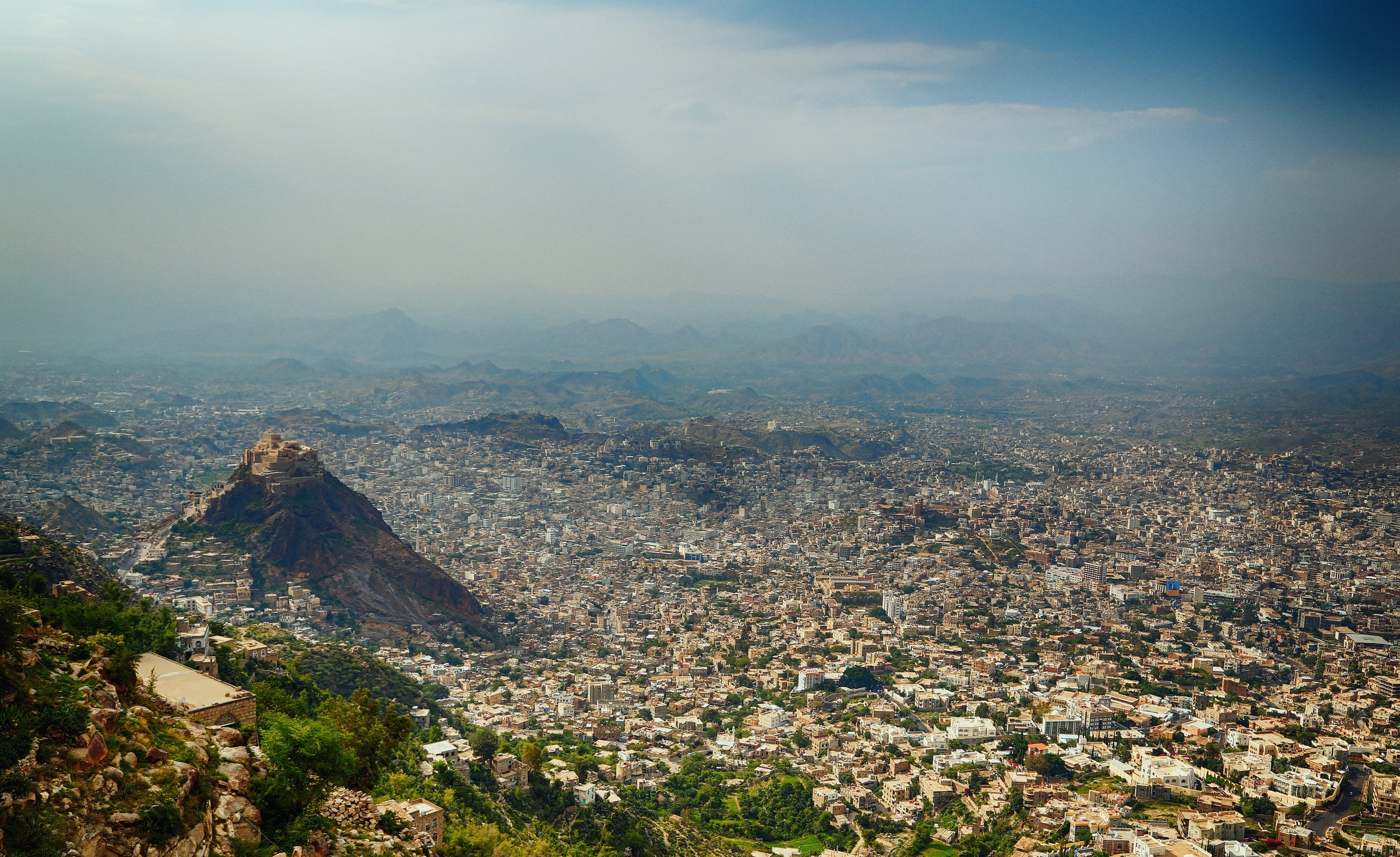
ADEN, YEMEN — The Houthis' capture of al Turbah in Yemen on Sunday, October 4, severed the main supply road linking the besieged city of Taiz with the government's interim capital in Aden, cutting the ground line of communication that government forces depend on to reinforce — and, if necessary, retreat from — the front lines of Taiz governorate. The advance, reported to have pushed eastward likely from the Bani Omar area, rolled through al Safiyah and al Mansora before reaching al Turbah, which sits at the junction of the two main roads connecting Taiz front-line positions to Aden.
The assessment comes from the Institute for the Study of War, which reported geolocated imagery consistent with a Houthi advance into the town, corroborated by Yemeni sources carried by the Emirati outlet Sky News Arabia. AFP quoted four security sources saying the Houthis had cut the vital supply route between Taiz and Aden; CNN reported the Houthi claim to have taken "a critical highway linking Taiz with the seat of the Yemeni government in Aden." What the evidence does not show is equally important: Taiz City — Yemen's third-largest city — has not fallen, and it is not yet clear whether the Houthis intend to hold the roads permanently or simply to deny them to their enemy.
Why this matters
Road junctions decide sieges, and Taiz has been living under one in various forms since 2015. The city's survival as a government-held urban center has depended on the roads running south and east toward Aden — the corridors along which food, fuel, ammunition, reinforcements, and medical evacuations move. Al Turbah is where two of those corridors meet. When one side holds the junction, the other side's convoys stop moving, and a garrison that cannot be resupplied is a garrison on a clock.
The timing compounds the significance. The capture landed hours before Presidential Leadership Council chairman Rashad al-Alimi announced a government counter-offensive to retake all Houthi-held territory. A commander declaring a nationwide offensive while losing a key junction is not a contradiction — it is a snapshot of a war whose momentum is being contested in real time: the Houthis seizing the initiative on the ground while the government reaches for the political initiative on television. Whichever narrative hardens first will shape how backers in Riyadh, and how the Houthis' own rank and file, read the weeks ahead.
There is a third audience for this road: the negotiators. Control of the junction gives the Houthis something tangible to hold, threaten, or trade. In a war where front lines have barely moved for years, a sudden severing of a major supply artery is the kind of leverage that gets discussed long after the shooting around it stops.
How the road became the prize
Taiz has been the hinge of Yemen's war for a decade. The Houthis swept south in 2014–2015, drove the internationally recognized government from Sanaa, and encircled Taiz — a commercial hub of more than 600,000 people (2005 figure) in a governorate of nearly 2.9 million — early in the conflict. A UN-brokered truce in 2022 cooled the front lines without resolving them; the siege never fully lifted, and the road to Aden remained the city's lifeline.
October 4 was not the first attempt on that lifeline. Houthi forces previously tried to capture or disrupt sections of the Taiz–Aden ground line of communication on September 23 and again on October 1. In September, the government said it had repelled the Houthi push on the Taiz–Aden road. The October 4 capture is the third attempt in eleven days — and the first to succeed. That tempo is itself the story: the Houthis kept returning to the same road because the road is the campaign.
The wider arc has been building all year. Houthi forces pushed down the Red Sea coast, seized the Bab al-Mandeb area, and traded strikes with Saudi-aligned forces — including the Saudi-backed Taiz and Bab al-Mandeb campaign taking shape in early October and the airstrikes that shook Houthi-held Sanaa on October 3. The al Turbah capture slots into that pattern: a landward move that protects the eastern flank of the coastal gains while opening a new axis of pressure toward Taiz City and, eventually, Aden.
What the capture changes on the map
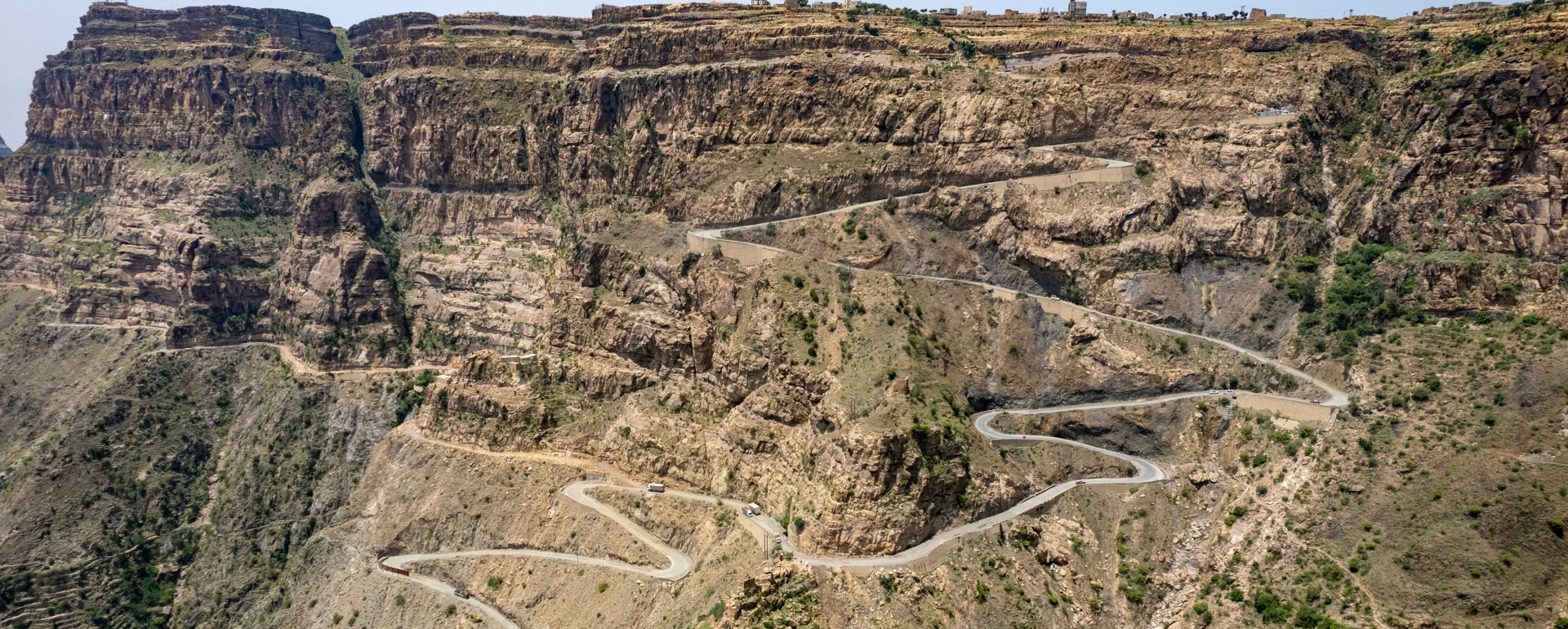
Geography first. Al Turbah's value is not its size but its position: the junction of the two main roads from Taiz governorate's front lines to Aden. Holding it does three things at once. It chokes the resupply of government units around Taiz City, where thousands of government troops are stationed. It blocks the most direct retreat route out of the city, which changes the risk calculus for every commander deciding whether to hold a position. And it puts Houthi forces astride the corridor the government would need for any counter-push north — meaning al-Alimi's newly announced offensive now has to begin by solving the problem of a severed supply line.
None of this means Taiz City has fallen, and the distinction matters. Capturing a junction severs movement; capturing a city requires entering it, clearing it, and holding it against a garrison that knows the terrain. The Houthis have achieved the first. The second is a different order of battle entirely, and ISW is explicit that it is unclear whether the Houthis will even seek permanent control of the roads into Taiz City, as opposed to denying them.
What ISW's assessment sees — and what it doesn't
The Institute for the Study of War reads the capture as an enabler of several downstream moves: further Houthi advances into Taiz City; protection for the eastern flank of the recent Houthi gains along the Red Sea coast; an enhanced ability to threaten Aden City itself; propaganda value in a governorate that has historically opposed Houthi rule; a strengthened negotiating position; and freed-up forces for the long-standing Houthi objective around Marib's oil infrastructure.
Each of those is plausible; none is automatic. The propaganda claim deserves a pause: Taiz governorate's population has resisted Houthi rule for a decade, and planting a flag at a road junction does not convert a hostile population. The Marib point is more structural — if the Taiz–Aden road stays cut, government forces tied down defending Taiz cannot be redeployed east, which is exactly the kind of economy-of-force arithmetic that makes a single junction worth more than its dot on the map.
The honest caveats, as ISW states them: it is unclear whether the Houthis intend to hold the roads permanently, and ISW-CTP has not yet observed any government offensive action despite al-Alimi's announcement. The announcement proves political authorization; the battlefield has not yet shown the operation.
The coalition's counter-narrative
Every Houthi territorial claim in this war arrives with a mirror-image denial, and this one is no exception. Coalition military spokesman Turki al-Maliki has in the past dismissed Houthi claims of advances as "misleading" and "illusory victories," and the Saudi-led coalition's public posture has consistently been to minimize Houthi gains while emphasizing air campaign results. Readers should weigh that history when evaluating both sides' communiqués.
That is why this article rests the capture on ISW's geolocated imagery and on AFP's four security sources and CNN's reporting — not on Houthi statements alone. The Houthis have a record of inflating claims; the government has its own incentives to downplay losses while announcing offensives. In Yemen's information environment, the verifiable middle — imagery plus multiple independent sources — is the only ground solid enough to stand on, and even that ground should be labeled as what it is: strong evidence of a capture, not proof of what happens next.
Who benefits, who loses — and what critics will question
The Houthis gain the initiative
The capture is the Houthis' most consequential ground gain in Taiz governorate in years. It hands them the initiative at the exact moment the government was preparing to announce its own campaign, it converts two failed September–October attempts into a success story for internal morale, and it gives their negotiators a road to bargain with. The risk for them is overextension: a junction must be garrisoned to be held, and every fighter posted at al Turbah is a fighter not available for the coastal front or Marib.
The government faces a supply crisis
For the Presidential Leadership Council, the loss is operational before it is political. Thousands of troops around Taiz City now sit at the end of a severed supply line, and al-Alimi's counter-offensive — announced within hours of the capture — must open by restoring the very road the Houthis just took. If the government cannot reopen the junction quickly, the announcement risks reading as aspiration rather than action, which is precisely the gap ISW flagged in noting that no government offensive action has yet been observed.
Saudi Arabia's planned campaign gets harder
Riyadh's interest is straightforward: the Saudi-backed campaign was designed to reverse Houthi gains, not to begin by digging government forces out of a supply crisis. The coalition's airpower can punish the junction and interdict Houthi movement, but aircraft cannot hold a road — only ground forces can, and those forces are the ones now cut off. The capture raises the cost and complexity of every option on the Saudi planning table.
Civilians and aid corridors pay first
The people who lose immediately are the ones who always lose first in Yemen: civilians. Combat over roads interrupts the same networks that move flour, fuel, medicine, and humanitarian staff. Taiz's population has endured siege conditions for a decade; a severed supply route tightens the vise further, and even a successful government counter-push would run its convoys through contested ground. Whoever holds al Turbah in a month, the city's residents will have paid for the fighting in the meantime.
What the skeptics will ask
Skeptics will ask whether the capture is as decisive as it looks — whether the Houthis can hold the junction under coalition airpower, whether alternative tracks and mountain routes can keep a reduced flow of supplies moving, and whether the government's counter-offensive, once it materializes, treats the road as its first objective. All fair questions. The answers will come from the next 72 hours of geolocated evidence, not from either side's press releases.
What the numbers actually imply
Start with the scale of the war this road sits inside. The United Nations estimated 377,000 deaths by the end of 2021 — a figure that already made Yemen one of the deadliest conflicts of the century, and the fighting since has only added to it. Against that background, a single road junction can look small. It isn't: in siege warfare, logistics is the battle, and the side that controls movement controls time.
Taiz's numbers explain why. The city counted over 600,000 residents in 2005, making it Yemen's third-largest city after Sanaa and Aden; the governorate held nearly 2.9 million people in 2011. A siege that bites into a population that size is a humanitarian event as much as a military one — and a severed supply line does not distinguish between a military convoy and a flour truck.
The tempo number is three: three Houthi attempts on the Taiz–Aden ground line of communication in eleven days (September 23, October 1, October 4). That is not probing; it is a campaign rhythm, and it suggests the Houthis identified the road as the decisive point before the government fully acted to protect it. The historical parallel is straightforward — from Stalingrad's airlift to Sarajevo's tunnel, besieged cities live or die on their supply corridors, and the attacker who severs the corridor first usually dictates the terms of everything after.
What happens next: three scenarios
One: the push continues toward Taiz City. The junction becomes a springboard, and Houthi forces press toward the city itself, aiming to convert a severed road into a full encirclement. This is the ISW-flagged scenario and the most dangerous for civilians. It would require the Houthis to sustain an offensive under coalition airpower and against a garrison fighting on home ground — a much harder proposition than seizing a junction.
Two: a government counter-move reopens the road. The October 3 airstrikes on Sanaa showed the air war is back in earnest; a concentrated air-and-ground effort could try to retake al Turbah before Houthi defenses harden. The obstacles are the ones the capture created: the counterattack would advance along the very corridor the Houthis now control, and ISW has not yet observed the government offensive al-Alimi announced. Watch for whether the first verifiable government ground action targets the junction — if it doesn't, the announcement is still mostly words.
Three: a roadside stalemate becomes leverage. The Houthis hold or contest the junction without pushing further, using the severed road as a bargaining chip while freeing forces for the Marib oil objectives. This is the quietest scenario and possibly the most consequential: it would confirm that the capture was about negotiation arithmetic as much as battlefield geometry.
What to watch in the next 72 hours: fresh geolocated imagery showing who actually holds the junction; any verifiable government ground movement toward al Turbah; Saudi coalition air targeting around the road; and humanitarian warnings about supply flows into Taiz City. The road will tell the story before the communiqués do.
Sources
- Institute for the Study of War: Iran Update, October 4, 2026
- AFP via live blog, October 4, 2026 (17:13 GMT): Houthis cut Taiz–Aden supply route, per four security sources
- CNN, October 4, 2026: Houthis claim critical Taiz–Aden highway
- AFP republication: Yemeni government launches offensive to seize all areas from Iran-backed Houthis