War · UK · Nuclear Deterrent
The HMS Vengeance 217 day patrol is, by the BBC’s reporting, the longest deployment at sea for a British vessel: 217 days submerged, from April 12 to Sunday, November 15, for the 140 submariners of a Vanguard-class boat carrying Trident nuclear missiles. Defence Secretary Wes Streeting was at HM Naval Base Clyde to welcome them home. The record is a triumph of endurance. It is also an admission, written in barnacles on a stealth-coated hull, about how few seaworthy deterrent submarines Britain currently has.
Track it live: Live war and conflict tracker
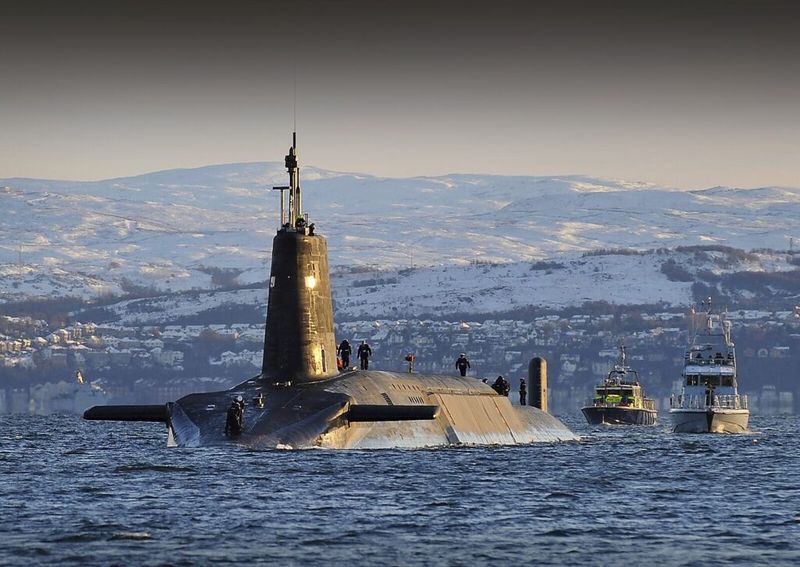
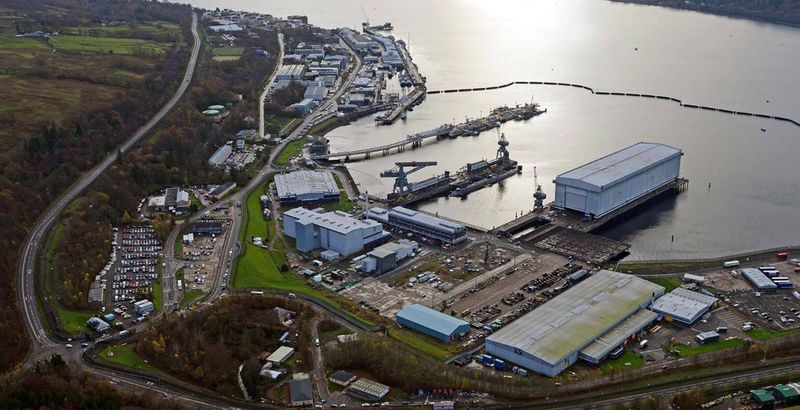
FASLANE, November 16, 2026 — The submarine that came up the Gare Loch on Sunday had been gone so long that the country it left was, in one small respect, a different one: HMS Vengeance sailed on April 12, when Sir Keir Starmer was still prime minister, as The Guardian noted in its account of the homecoming. Two hundred and seventeen days later, per the BBC’s reporting, the 15,000-tonne boat returned to HM Naval Base Clyde at Faslane, near Helensburgh in Argyll and Bute, its stealth plating coated in barnacles, rust and algae, its crew of about 140 emerging from almost total isolation into the custody of families, fresh food and a defence secretary. Wes Streeting was on the Clyde to welcome them, and the Ministry of Defence’s official release confirms the homecoming, the roughly 140 submariners, the 15,000 tonnes and the mission — Operation Relentless, the continuous at-sea deterrence that has kept at least one British ballistic-missile submarine on patrol at all times since 1969. One discipline must be stated at the outset, because this article will observe it throughout: the MoD release does not name the boat or state the patrol’s length. The name Vengeance, the 217 days and the record come from the reporting of the BBC, The Guardian and The Times, and they are attributed to those outlets wherever they appear here. What the government confirms is that a deterrent patrol came home on Sunday, that Streeting and First Secretary of State Louise Haigh thanked its crew in person, and that the deterrent, in Haigh’s words, has been a cornerstone of national defence for 57 years.
The record, as reported, is specific. The previous mark for a Royal Navy continuous undersea patrol is reported to have been set by HMS Vanguard in April, when it returned after 205 days away; Vanguard had set an earlier 204-day record the year before. Vengeance’s 217 days clears that by twelve. Navy Lookout, the specialist outlet that tracks the fleet, called it the longest ever publicly reported Royal Navy nuclear deterrent patrol. That qualifier — publicly reported — is the honest frame, and the BBC supplied the reason: the patrol lengths of Russian and Chinese submarines are not known. This article therefore claims a British record and the longest publicly reported patrol of its kind, not a world record, because no one outside Moscow and Beijing can know whether it is one, and deterrence reporting that invents certainty is just propaganda with better manners.
What happened on Sunday
The homecoming was itself delayed, which is the patrol’s last fact and its most telling one. Vengeance had been expected back the previous weekend. Its return slipped, the BBC reported, because the submarine sent to relieve it had to return to base to fix a technical fault. The Times’ account names the relief boat as HMS Vanguard, brought back to Faslane for spare parts, repaired during the week and sent to sea again on Tuesday to take over Operation Relentless. The two accounts are compatible in outline and different in detail — the BBC does not name the relief boat; The Times does — and this article presents them as what they are: two reports of a handover that did not go to plan, not a single confirmed account. What is not in dispute is the consequence. A patrol already measured in seasons was extended at least a week beyond its plan, past the seven-month mark it reached on Thursday, because the rotation behind it broke — and the deterrent held anyway, because the crew at sea absorbed the failure of the system ashore. That is the whole Vengeance story in one sentence, and the rest of this article is its elaboration.
At the base, the official welcome was warm and deliberately public. Streeting and Haigh thanked around 140 submariners personally, the MoD said. Streeting said the deterrent is in place “every minute of every day” and conceded, in the BBC’s reporting, that the length of time crews are now asked to serve “doesn’t sit lightly” with him. The human arithmetic behind that concession is worth dwelling on. Two hundred and seventeen days is thirty-one weeks inside a 150-metre hull: no daylight, no fresh air, rolling shifts, communication with home reduced to the brief family messages the BBC described as limited — other reporting puts the allowance at 120 words a week, attributed here as reporting rather than regulation. Submariners coming off long patrols are advised not to drive for a few days, the BBC’s explainer noted, while their distance perception readjusts to a world that is no longer twenty feet wide. The crew that surfaced on Sunday had missed, in sequence, a spring, a summer, an autumn, a change of prime minister and roughly half the year. The deterrent’s continuity is usually described as a property of missiles and hulls. On Sunday it was visibly a property of people.
The Russia angle: a demand, and an answer
The homecoming acquired its second headline from timing. Hours before Vengeance sailed in, The Times reported, Kremlin negotiators had said Britain must stop providing a nuclear umbrella for its European allies, as part of a list of requirements for a ceasefire in Ukraine. Streeting’s response, given to The Times as the boat returned, was the day’s most quoted passage: Britain’s nuclear weapons are “not up for negotiation”; President Putin’s demand was “delusional”; “the fact that Putin has made these demands demonstrates what the nuclear deterrent is, and the deterrence effect it is having in the Kremlin”; and the United Kingdom — the only European country that commits its nuclear arsenal to the defence of NATO — holds an “unwavering, unshakable” position: “our nuclear deterrent is not up for negotiation, and we will not abandon our allies in Nato.” The attribution discipline matters here as much as the rhetoric. The Kremlin demand is The Times’ reporting of negotiators’ ceasefire requirements, not a confirmed Kremlin statement, and it is presented as such. But the political exchange it produced is a matter of record on the British side, and its logic is worth examining rather than merely repeating: Streeting read the demand itself as the deterrent’s performance review. A weapon system your adversary formally asks you to withdraw, at a negotiating table, is a weapon system he is pricing into his plans. The demand, in London’s telling, is the receipt.
The exchange also lands in a wider argument this site has tracked through the autumn — over whether Europe’s nuclear guarantees, long underwritten from Washington, can be supplemented or replaced from within the continent, the argument that ran through NATO’s Steadfast Noon nuclear exercise and through the warnings about Russian hybrid pressure in the Merz–Rutte interventions. Britain’s position in that argument is singular: it is the only European state that assigns its deterrent to NATO’s defence, and the Vengeance homecoming was stage-managed, quotes and all, to say that the assignment is permanent. Whether a fleet that needs 217-day patrols to sustain the promise can keep making it credibly is the question the celebration was designed not to ask. It is asked below.
Why this matters: a record that is also a symptom
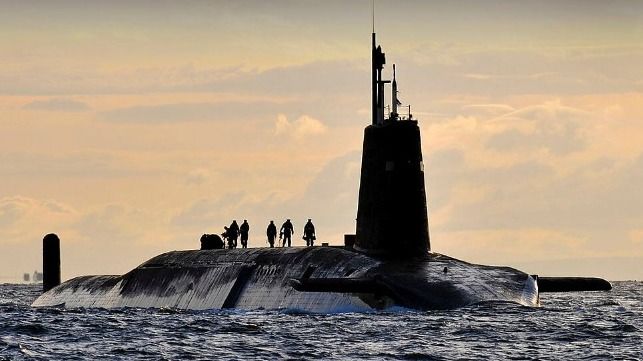
Here is the patrol-length curve, and it is the most important data in this article. The Vanguard-class boats — four hulls, 492 feet and 150 metres long, 15,000 tonnes, each able to carry up to 16 Trident missiles — were designed around patrol cycles of about three months. In recent years, the BBC reported, typical patrol length has more than doubled; six-month durations are now routine. The Times put it more starkly: six of the previous seven patrols have lasted more than 200 days. The cause is not strategy but availability — a shortage of seaworthy vessels. The class was commissioned in the 1990s for a 25-year life and is now expected to serve up to 40 years. HMS Victorious sits in deep maintenance, in a refit reported at £560 million in secondary reporting. The relief boat for this patrol came home for spare parts. And the replacement class, Dreadnought, procured in 2016 as part of a £31 billion programme, does not arrive until the early 2030s. Between now and then, the continuous deterrent is continuous for one reason: the crews keep not coming home.
The expert verdict, in the BBC and Guardian reporting, was unusually blunt for a homecoming weekend. David Cullen, a nuclear expert with the BASIC think tank, observed that “patrols are getting longer and longer” — a trend line, not an event. The First Sea Lord, General Sir Gwyn Jenkins, praised the submariners’ dedication at a conference in Oslo last week while saying, in the same breath, that Britain must do better at maintaining the fleet and improve its submarine maintenance. Streeting, for the government, said the Dreadnought programme is “on track” and pointed to the money: the government has committed £63 billion over the next four years to the Defence Nuclear Enterprise, including around £47 billion for submarines, maintenance and infrastructure, an enterprise the MoD says supports over 47,000 jobs and a supply chain of more than 6,000 British companies. All of that may be true, and none of it shortens the next patrol. Money committed in 2026 becomes dockyard capacity in years, and hulls in a decade. The gap between the deterrent Britain promises and the fleet Britain floats is, for now, bridged by the only component that can be stretched on demand: the 140 people inside the boat. Every record patrol is therefore two stories filed under one hull number — a deterrence success, and a maintenance failure that the success is concealing. Vengeance’s 217 days is the longest version of both.
The numbers in context
Set the record in its frame. Two hundred and seventeen days at sea, against 205 for Vanguard’s reported record in April, 204 for the mark before that, and roughly 90 for the patrol the class was designed to sail — the current norm is about two and a half times the design assumption. Fifty-seven years of unbroken continuous at-sea deterrence since 1969, through four classes of boat and thirteen prime ministers. One hundred and forty crew; 15,000 tonnes; up to 16 Trident missiles per boat; four boats in the class, of which, at any given moment in recent years, effectively one has been at sea, one recovering or preparing, and the remainder in the maintenance system that everyone quoted this weekend agrees is too slow. Sixty-three billion pounds committed over four years; £47 billion of it for the submarine enterprise; £31 billion for the Dreadnought programme that replaces these hulls in the early 2030s. And one number that belongs to no spreadsheet: 120 words a week, by the reported allowance, between a submariner and the family counting the same days from the other side. Deterrence is usually accounted in megatons and budgets. Sunday’s homecoming suggests it should also be accounted in words home per week, and in the barnacles on a hull that stayed down longer than any British boat before it — not because the mission required 217 days, but because the rotation did.
What happens next
The rotation, as ever, has already moved. HMS Vanguard — on The Times’ account, the boat repaired at Faslane last week — returned to sea on Tuesday to take over Operation Relentless, which means the deterrent’s next patrol is already ageing toward the same arithmetic; on the recent pattern, Navy Lookout reasoned, it could run into the spring of 2027, a projection this article attributes to that outlet’s reasoning rather than to any official schedule, since patrol schedules are secret. Vengeance enters the other end of the cycle: maintenance, refit assessment, and the turnaround on which the whole rotation’s credibility now rests. The political sequence runs in parallel. Streeting’s “not up for negotiation” will be tested at whatever table the Ukraine ceasefire diplomacy eventually produces, where the demand The Times reported will either reappear in writing or quietly be dropped — and Britain’s answer, given on a Sunday at Faslane with a record-breaking crew standing behind the minister, has been pre-committed in the strongest available terms. The industrial question is slower and harder: whether the £63 billion enterprise programme can compress maintenance timelines before the Vanguard class reaches the end of its extended life, and whether patrol lengths bend back toward the three-month design cycle before the Dreadnoughts arrive to make the question moot. Until one of those things happens, the pattern of this weekend will repeat at lengthening intervals: a boat will sail, a relief will falter or a refit will slip, the patrol will stretch past another round number, and a defence secretary will stand on the Clyde to welcome home a crew that has broken a record nobody set out to break. The deterrent will have held. That it held is the triumph. How it held is the warning.
Sources
BBC Scotland, Steven Godden and Calum Watson, November 15, 2026: HMS Vengeance returned to Faslane after a record-breaking 217 days submerged on patrol, the longest deployment at sea for a British vessel; the 140-strong crew sailed on April 12; Defence Secretary Wes Streeting welcomed the crew at HM Naval Base Clyde; typical Vanguard-class patrol lengths have more than doubled, with six-month patrols now routine due to a shortage of seaworthy vessels; the return was delayed when the relieving submarine returned to base with a technical fault; the previous record is reported as HMS Vanguard’s 205 days, returned in April; continuous at-sea deterrence since 1969; the four 492ft (150m) boats can carry up to 16 Trident missiles; Russian and Chinese patrol lengths are unknown; David Cullen of BASIC and First Sea Lord General Sir Gwyn Jenkins as quoted. GOV.UK / Ministry of Defence release, November 15, 2026: the homecoming to HM Naval Base Clyde; Streeting and First Secretary of State Louise Haigh thanking around 140 submariners aboard the 15,000-tonne submarine; Operation Relentless; £63 billion committed over four years to the Defence Nuclear Enterprise including around £47 billion for submarines, maintenance and infrastructure, supporting over 47,000 jobs and more than 6,000 UK companies; Haigh’s “57 years” line. The MoD release does not name the boat or state 217 days; the name, length and record are attributed to BBC, Guardian and Times reporting throughout. The Times, November 15, 2026: Streeting’s “not up for negotiation” response and the reported Kremlin negotiators’ demand that Britain stop providing a nuclear umbrella to NATO allies as a ceasefire requirement (The Times’ reporting, not a confirmed Kremlin statement); the relief boat named as HMS Vanguard, returned for spare parts and back at sea on Tuesday; six of the previous seven patrols over 200 days; the £31 billion Dreadnought programme. The Guardian, November 15, 2026: maintenance pace and crew-impact questions; the patrol beginning under Prime Minister Starmer. Navy Lookout, November 15, 2026: the longest ever publicly reported RN deterrent patrol. Photographs are file photos of Vanguard-class submarines and Faslane and do not depict HMS Vengeance’s return.