NATO Steadfast Noon nuclear drill
NATO Steadfast Noon nuclear drillSteadfast Noon 2026 datesNATO Italy nuclear exercise October 2026Russia Kaliningrad nuclear warning NATONATO nuclear deterrence exerciseB61 nuclear bombs Italynuclear sharing NATO explainedMark Rutte NATO nuclear warningAviano Ghedi air baseswhat is Steadfast Noon exercise
Italy will host the NATO Steadfast Noon nuclear drill starting Tuesday, October 13, the country's defence ministry announced Thursday — putting the alliance's annual nuclear-deterrence exercise on the calendar just days after Russia warned in writing that it would use nuclear weapons against any NATO move to cut off Kaliningrad. The drill rehearses the procedures behind NATO's nuclear-sharing arrangements, with no live weaponry involved, and is officially described as routine annual training to maintain the readiness of the alliance's deterrence capabilities. But routine is doing a lot of work in that sentence: this year's edition opens at the most volatile moment for nuclear signaling in Europe in years, and Moscow is watching.
What was announced
Italy will host the rotating annual exercise from October 13
Italy's defence ministry said Thursday, October 8, that the country will host Steadfast Noon when the exercise begins on Tuesday, October 13. Officials described the event as scheduled annual training rather than a response to a particular crisis. It is expected to run for about a week, although some accounts place the full activity window at roughly 10 days.
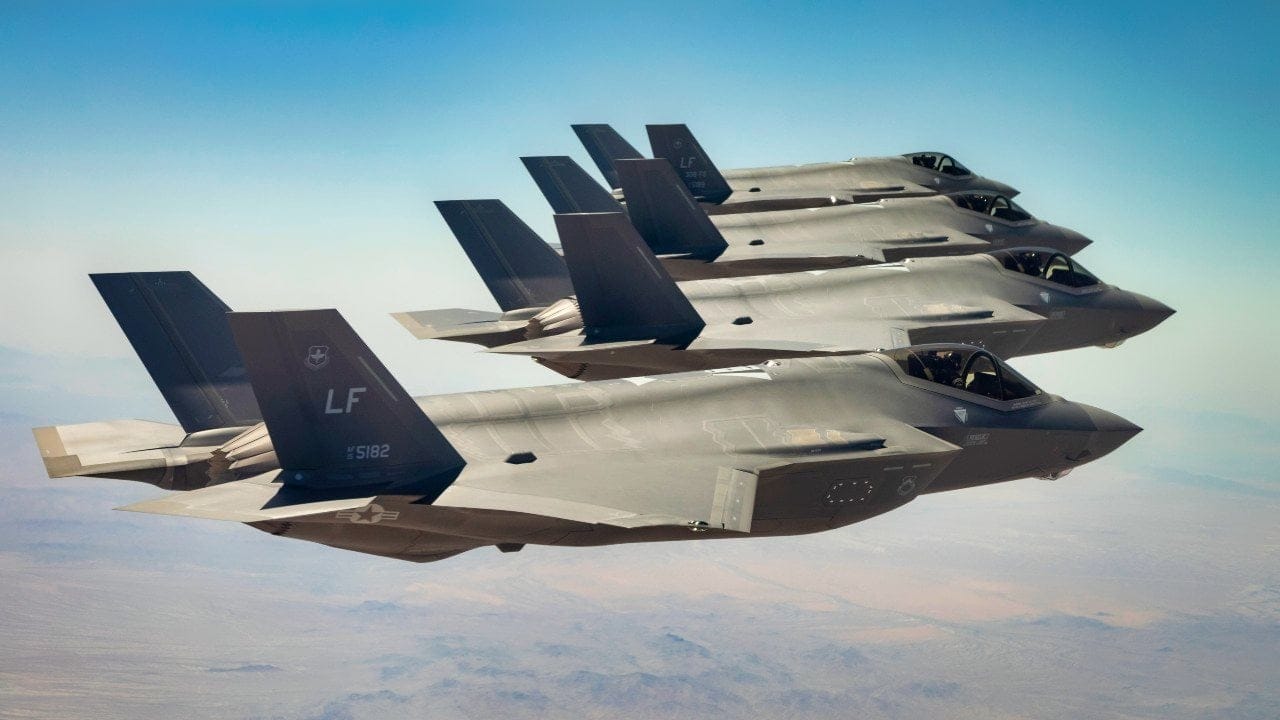
No live nuclear weapon will be used. The purpose is to check the procedures, command links, coordination and safety standards that allied forces would need if NATO's nuclear-deterrence arrangements were activated. Participating aircraft rehearse tasks connected to securing and handling weapons and flying assigned missions, but the training flights do not carry real bombs.
Seventeen of NATO's 32 members are participating this year, with dozens of aircraft expected. Italy has hosted the exercise six times before. The host changes among allies, making the Italian setting part of a long-running rotation rather than a permanent move of the drill to one country.
Why this matters
Proceeding on schedule is part of deterrence — and part of the risk
Deterrence depends not only on capability but on an adversary believing that the capability can be used if political leaders decide it must be. That makes visibility important. Canceling or delaying a planned exercise immediately after Moscow's warning would allow Russia to claim an effective veto over an alliance routine. By proceeding on schedule, NATO signals that a threat will not dictate its training calendar.
The counter-risk is miscalculation. Both sides are making nuclear references at the same time, and exercises compress uncertainty: a radar return, a fighter approaching contested airspace or a routine mobilization can be interpreted through the worst-case assumptions of the moment. The roughly 10-day window therefore deserves attention not because either side has announced an intent to use nuclear weapons, but because ordinary incidents can be assigned extraordinary meaning during heightened signaling.
Steadfast Noon also makes the normally concealed machinery of nuclear sharing briefly visible. The personnel, air bases, aircraft, security procedures and political permissions behind the arrangement move from abstract doctrine into observable activity. That is why the exercise draws scrutiny from Moscow and from voters in the countries that host U.S. weapons.
How we got here
A recurring drill built around NATO nuclear sharing
Steadfast Noon is a long-running annual exercise with a rotating host. Last year's edition at Volkel Air Base in the Netherlands involved 71 aircraft from 14 nations and about 2,000 personnel. That baseline shows that the exercise is both operationally substantial and familiar: large enough to test a real multinational system, but regular enough to be planned well in advance.
NATO's nuclear-sharing arrangement places U.S. B61 bombs in five allied countries: Italy, Germany, Belgium, the Netherlands and Turkey. In a conflict, and only after the required political decisions, approved host-nation fighter aircraft could deliver the weapons. In peacetime training, crews practice protection, handling, coordination and flight procedures without carrying live nuclear bombs.
Aviano and Ghedi air bases are widely reported as the Italian storage sites. The United States and Italy maintain a neither-confirm-nor-deny policy on specific locations. That deliberate ambiguity is meant to protect operational security, but it also shapes Italy's domestic debate by placing a consequential defence commitment outside ordinary official confirmation.
The Kaliningrad warning raised the temperature
On September 30, Russia sent NATO a written note, seen by Reuters, warning that Moscow would use its full arsenal, including nuclear weapons, to stop any NATO move to cut off Kaliningrad. The note accused the alliance of following a “dangerous and reckless course” carrying “high risks of the outbreak of a direct armed conflict.” Russian embassies in at least three European countries published near-identical warnings, while Kremlin spokesman Dmitry Peskov said they were reminders for “hotheads in Europe.”
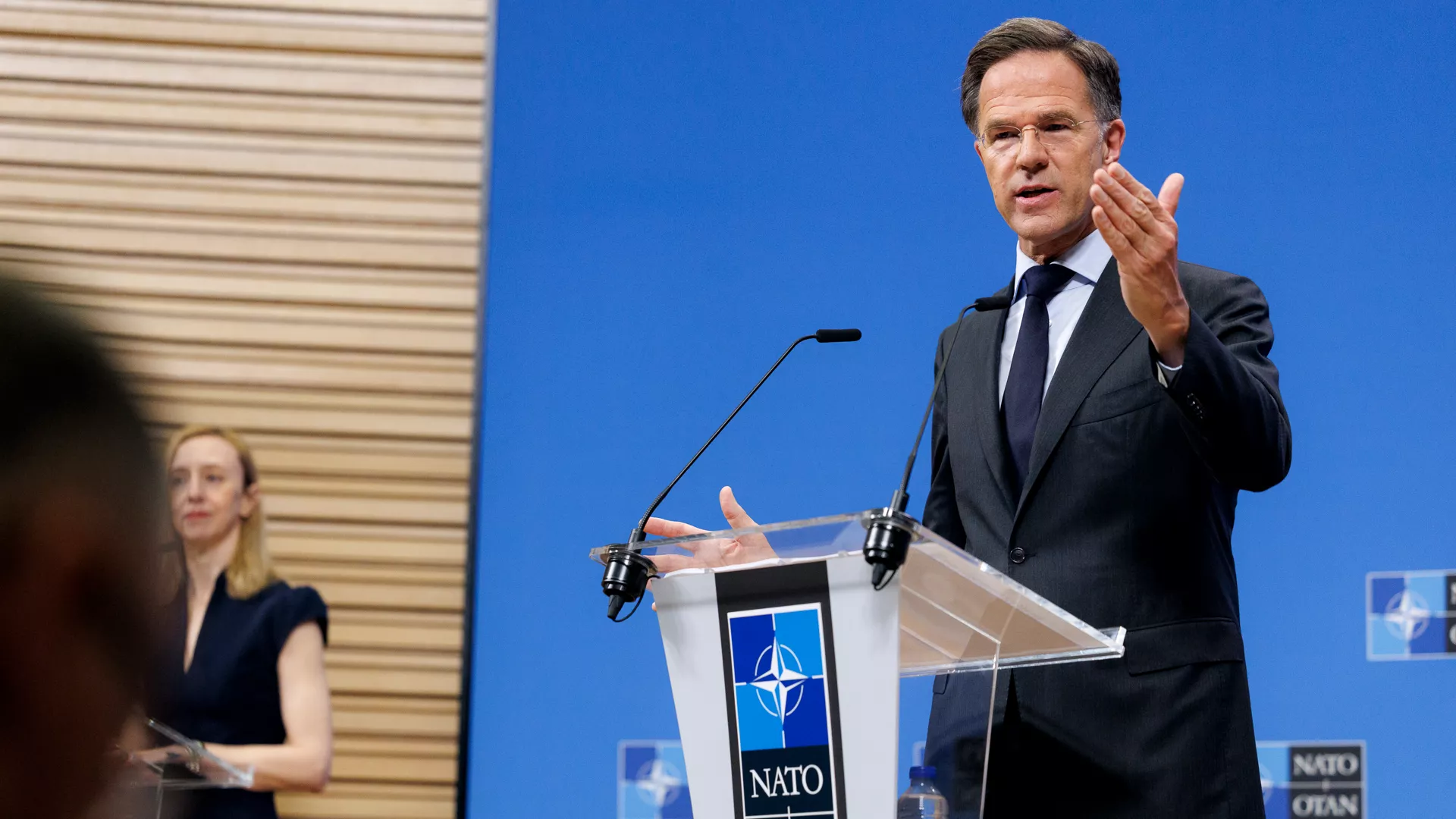
NATO spokesperson Allison Hart confirmed that the alliance received Russia's written warning over Kaliningrad and answered it in writing. NATO's reply denounced what it called “irresponsible nuclear rhetoric.” Secretary-General Mark Rutte dismissed the warning publicly. Those reactions preserve NATO's position that its defensive planning is legitimate while rejecting Moscow's attempt to frame a hypothetical Kaliningrad isolation as grounds for nuclear use.
The October 8 announcement therefore came eight days after the Russian note. The drill was not created in that interval, but its timing gives a routine exercise a sharper political meaning. It also lands against the continuing war in Ukraine, repeated Russian nuclear messaging and debate over Russia's nuclear doctrine.
The arms-control background is equally unsettled. New START carried a stated February 2026 expiry, and President Vladimir Putin offered to keep its deployed-weapon limits for one additional year. With no broader settlement attached, that offer functions as a temporary restraint proposal rather than a replacement treaty.
The numbers behind the drill
More than half the alliance is participating
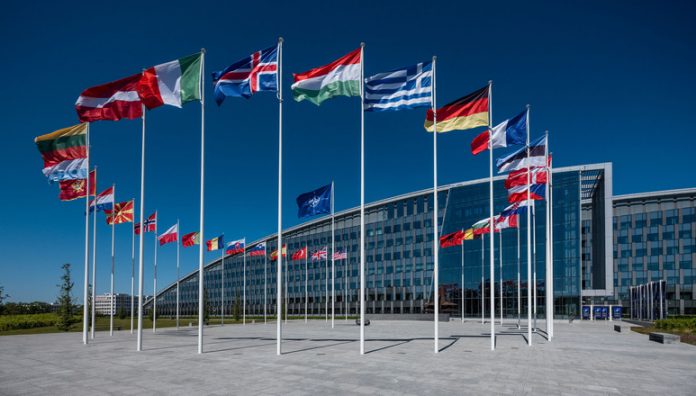
The timetable starts on October 13 and runs for about a week, with some reporting describing a roughly 10-day window. Seventeen of 32 member states are participating — just over half of NATO and three more nations than the 14 involved last year. Officials say dozens of aircraft will take part; last year's total of 71 provides a recent benchmark rather than a confirmed count for 2026.
Last year's roughly 2,000 personnel show the exercise's logistics footprint. Air crews are only one part of the system: security units, ground handlers, planners, command staff and safety teams must coordinate across national procedures. Italy's six previous hostings add another measure of continuity, while the B61 footprint across five countries shows how widely the alliance's nuclear-sharing responsibilities are distributed.
A recurring air exercise involving more than half the alliance belongs among NATO's largest routine multinational aviation events. Participation has broadened from last year's 14 nations to 17 this year as tensions with Moscow have risen. That does not establish a direct causal link, but it does make the scale politically consequential.
Who gains, who worries
NATO points to credibility and reassurance
For NATO, the immediate gain is deterrence credibility. Allies on the eastern flank can see that the procedures behind the alliance's nuclear guarantee are exercised rather than left on paper. Italy also reinforces its status as a central alliance member by hosting a complex multinational operation for a seventh time.
Russia states the opposite case. Moscow portrays nuclear-related NATO activity near its borders as provocative, particularly after its warning about Kaliningrad. From that perspective, the exercise is not neutral calendar maintenance but evidence that the alliance is normalizing preparations for nuclear missions. NATO rejects that interpretation and says routine readiness is meant to prevent conflict by making deterrence credible.
The central concern is a mistake, not an announced plan for war
Arms-control specialists' concern centers on miscalculation rather than evidence of a deliberate decision to use nuclear weapons. Parallel signaling can create a feedback loop: one side raises readiness to demonstrate caution and resolve; the other reads the movement as preparation; both then add activity to avoid appearing vulnerable. The danger lies in a misread incident under compressed decision time.
Italy also carries a domestic political cost. Hosting strengthens its alliance credentials, but nuclear weapons have long generated public opposition and parliamentary argument. The neither-confirm-nor-deny policy limits official discussion of Aviano and Ghedi, helping governments manage operational secrecy while leaving critics to argue that voters lack a full account of what is stationed on Italian territory.
What to watch next
The October 13 opening will show how directly NATO addresses the timing
The first test comes at the kickoff: whether NATO treats the Russian warning as a central part of its public explanation or emphasizes that Steadfast Noon was scheduled long before the exchange. A direct answer could clarify boundaries but amplify the confrontation. A strictly procedural message could lower the temperature but leave competing interpretations intact.
Moscow's likely responses, based on past patterns, include sharp public statements, increased air activity around the Baltic and Kaliningrad, or an overlapping snap exercise. Those actions would primarily be signaling, not proof of imminent escalation. The line between the two is thinnest during the active window, so airspace encounters, unusual alerts and changes in force posture during the roughly 10 days will matter more than rhetorical volume alone.
The longer clock runs through the unresolved arms-control question created by New START's February 2026 expiry and Putin's offer to preserve deployed-weapon limits for one more year. Putin's Valdai remarks fit the same pattern: Moscow combines warnings with proposals for selective restraint, while NATO members judge whether those proposals reduce risk or simply manage it on Russian terms.
The balanced conclusion is that Steadfast Noon is both routine and unusually consequential. NATO can accurately call it scheduled readiness training without live weapons. Russia can accurately point to a real multinational exercise involving nuclear-delivery procedures. What neither description resolves is the danger created when familiar military activity is conducted in an environment where every signal is being read for evidence of escalation.
Sources and verification
Dates, participation figures, official statements and quoted language are attributed to the sources below. Analysis of deterrence, signaling and miscalculation is identified as interpretation.