World — Two gunmen opened fire near Yehuda Junction outside Hebron in the southern West Bank on Friday morning, October 23, 2026, killing two Israeli soldiers and wounding three others, before troops killed both gunmen in a firefight an AFP journalist witnessed. Within hours, Prime Minister Benjamin Netanyahu had ordered Hebron sealed and the military readied for a full closure of the West Bank — four days before an Israeli election his government is fighting to survive.
Track it live: Israel–Gaza war map, live — Signal Post News tracker
HEBRON, West Bank — The Israeli military said on Friday it had killed two suspected attackers following a shooting attack in the Judea Junction area, imposed a cordon and was continuing searches in the area, Reuters reported in the first wire account of the morning. As the day unfolded, the fuller picture assembled by Israeli emergency services, the military and an AFP journalist at the scene was this: two armed men drove up to a junction on Route 35 near Hebron at about 7:30 a.m., opened fire, and fought soldiers for roughly 20 minutes before both were shot dead. Five people were wounded. Israel’s emergency service Magen David Adom said two of the wounded were in critical condition, and the casualties were evacuated to Shaare Zedek and Hadassah Ein Kerem hospitals in Jerusalem.
An AFP journalist witnessed the two gunmen exchanging fire with Israeli forces before troops shot and killed them, according to AFP reporting carried by News Central — an independent eyewitness account that goes beyond the military’s own statement. The Israel Defense Forces said a large quantity of ammunition was found in the attackers’ vehicle. IDF Chief of Staff Lt. Gen. Eyal Zamir said the soldiers’ rapid response had prevented a larger attack: “This was a serious terrorist attack. The soldiers’ rapid response prevented an even more serious attack and further harm to civilians and security forces,” he said, in remarks reported by the New York Post.
What Happened at the Junction
The sequence, as reconstructed from the military, medics and witnesses, is short and brutal. The two men arrived at the junction in a vehicle carrying an M16 rifle, a handgun and what Zamir described as a large quantity of ammunition — a load-out the military reads as evidence the pair intended a bigger attack than the one they carried out. When the first Magen David Adom crews reached the scene, shooting was still under way. Responders described two men in their twenties with gunshot wounds to their lower limbs, one of them unconscious. The gunmen were killed by soldiers of the Home Front Command’s Ari Battalion who rushed to the junction, according to the IDF account carried by ANI. Israeli police said the investigation had established a nationalistic motive, and searches and arrests continued in the Hebron area through the day.
Israeli security officials named the two dead men as Mohammad Jaaba and Firas Jaaba, both 27 and both residents of Hebron, according to The Sun’s account of the official briefings; one of the two was believed to be affiliated with Hamas, the Israeli broadcaster Kan 11 reported. Those identifications and the affiliation claim come from Israeli officials and had not been independently confirmed by Palestinian sources in the reporting available on Friday. No Palestinian faction had claimed the attack in the reports published by Friday morning, and no Palestinian official response had been reported by the wires at the time of writing — a silence this article records rather than fills in.
The two soldiers killed were later named by the IDF as Staff Sgt. Ron Yonatan Roytman, 23, of Ashkelon, a squad commander, and Sgt. Yuval Shai Svilem, 20, of Hod Hasharon — both of the 775th “Ari” Battalion of the Home Front Command’s Search and Rescue Brigade, the BBC and AP reported. Three other soldiers were wounded. The gunmen were named by Israeli security officials as Mohammad Jaaba and Firas Jaaba, both 27 and from Hebron; they arrived in a car with Israeli plates carrying an M16 rifle, a pistol and a large quantity of ammunition, and the firefight lasted about 20 minutes. Magen David Adom’s early report of five wounded, two of them critical, appears to have included the two soldiers who later died, The Guardian reported.
The Closure Order
The political response came within hours, and it was sweeping. After a situation assessment with Defense Minister Israel Katz, Zamir, the head of the Shin Bet, the head of the National Security Council and the commander of Central Command, Netanyahu ordered an immediate closure on the city of Hebron and instructed the security forces to prepare a full lockdown across all of Judea and Samaria — the Israeli government’s term for the West Bank — starting Friday. The closure is to remain in place at least until after Tuesday’s October 27 election. Netanyahu cancelled his political meetings for the day. “I commend our heroic fighters who acted with determination and prevented a major terrorist attack, and I wish a speedy recovery to our wounded,” he said. “Our forces are operating with enhanced strength to thwart terrorism and are carrying out extensive waves of arrests. We will pursue Hamas terrorists and their dispatchers everywhere and at all times. You have no safe haven.”
The closure lands on a territory that was already braced. The military had gone on heightened alert ahead of the October 27 vote and had reinforced its forces in Judea and Samaria with an additional regular brigade for the election period. National Security Minister Itamar Ben Gvir went further than the prime minister, demanding the complete dismantling of the Palestinian Authority following the shooting — though, as News Central noted, officials presented no evidence linking the West Bank leadership to the attack. That gap between the demand and the evidence is the first crack in the government’s own response, and it is where the argument over the next four days will be fought.
By Friday afternoon, Israeli forces had begun demolitions in the attackers’ home area of Farsh al-Hawa in Hebron, forcing residents to evacuate; CNN aired video in which residents are told: “You have five minutes to evacuate.” Netanyahu said Israel would evacuate the attackers’ neighbourhood, search it house to house and destroy what he called terrorist infrastructure, on the model used in Jenin, Tulkarm, Nur Shams and Al-Far’a. On the closure itself, the sequence matters: Netanyahu first ordered a full closure of the West Bank, described as a “full siege” of Hebron, then appeared to scale that back to considering “a cordon” around Hebron and Halhul, while the Wall Street Journal reported preparations for a “full lockdown” — the full closure has not been confirmed in force. CNN noted it is unclear when a full closure would begin or how long it would last, that enforcing one across more than 900 checkpoints, gates and barriers would be difficult, and that it would also bar Palestinians holding Israeli ID or work permits. Hamas praised the attack as a “message” but did not directly claim responsibility, the Journal reported — distinct from Netanyahu’s statement on X that the gunmen “were planning a major attack aimed at murdering innocent civilians”.
Why This Matters
A junction shooting in the West Bank is, on its own grim terms, a known category of event in this conflict. What makes Friday’s attack different is the calendar and the response. Israel votes on Tuesday, October 27, in the first election since the Hamas-led October 7 attack reshaped the country’s politics, and the incumbent prime minister has responded to a two-man shooting not with a localised manhunt but with the closure of an entire territory of some three million Palestinians for a minimum of four days. The closure is simultaneously a security measure, an election act and a signal. As a security measure, its logic is the one Zamir stated: a vehicle full of ammunition suggests a cell, and a cell suggests accomplices, and sealing movement while arrests proceed is the standard Israeli playbook for exactly that fear. As an election act, it places security — the ground on which Netanyahu has always preferred to campaign — at the centre of the final weekend before voting, with the opposition forced to respond to events rather than set them. And as a signal, it tells both Palestinian factions and the Israeli public that the government prices deterrence by visibility: the response is meant to be seen.
The harder question is what a closure can actually achieve in four days, and the honest answer is: arrests, not answers. Closures interrupt movement, commerce and medical travel for an entire population; they rarely interrupt the kind of small, locally rooted attack Friday’s appears to have been, planned inside the territory being sealed. The two gunmen were Hebron residents attacking a junction outside their own city. A closure of the West Bank does not separate such attackers from their targets — it separates everyone else from their jobs, hospitals and families, in the final days before an election in which most of them cannot vote. Critics of closure policy make exactly that argument, and they will make it loudly this weekend: that the measure is collective punishment dressed as prevention. The government’s counter-argument is equally predictable and not empty: that with an ammunition-laden vehicle and searches still running, an open territory is an invitation to a copycat or a follow-up attack during the most politically sensitive week in years. Both arguments were already audible by Friday afternoon, and neither side produced new evidence for its side of the case.
Context: A West Bank Already Under Strain
The shooting did not happen in a quiet territory. The West Bank has lived for two years in the shadow of the Gaza war and its fragile, repeatedly violated ceasefire — under which, as our reporting on Thursday’s Israeli fire that killed four people in Gaza shows, the killing has slowed without stopping. Inside the West Bank itself, settler violence, military raids and movement restrictions have been running stories on this site all autumn: a Palestinian man killed by settlers in Yasuf, European diplomats attacked at Taybeh, and an American politician detained by the IDF during the olive harvest, in the incident we covered as the Brad Lander detention. Israel has reached for the closure tool before at moments of maximum tension — see our coverage of the crossing closures around the October 7 anniversary — and each time the same argument followed: security necessity on one side, collective cost on the other. Friday’s order is broader than those: not crossings, but the territory itself, and not for a day, but across an election.
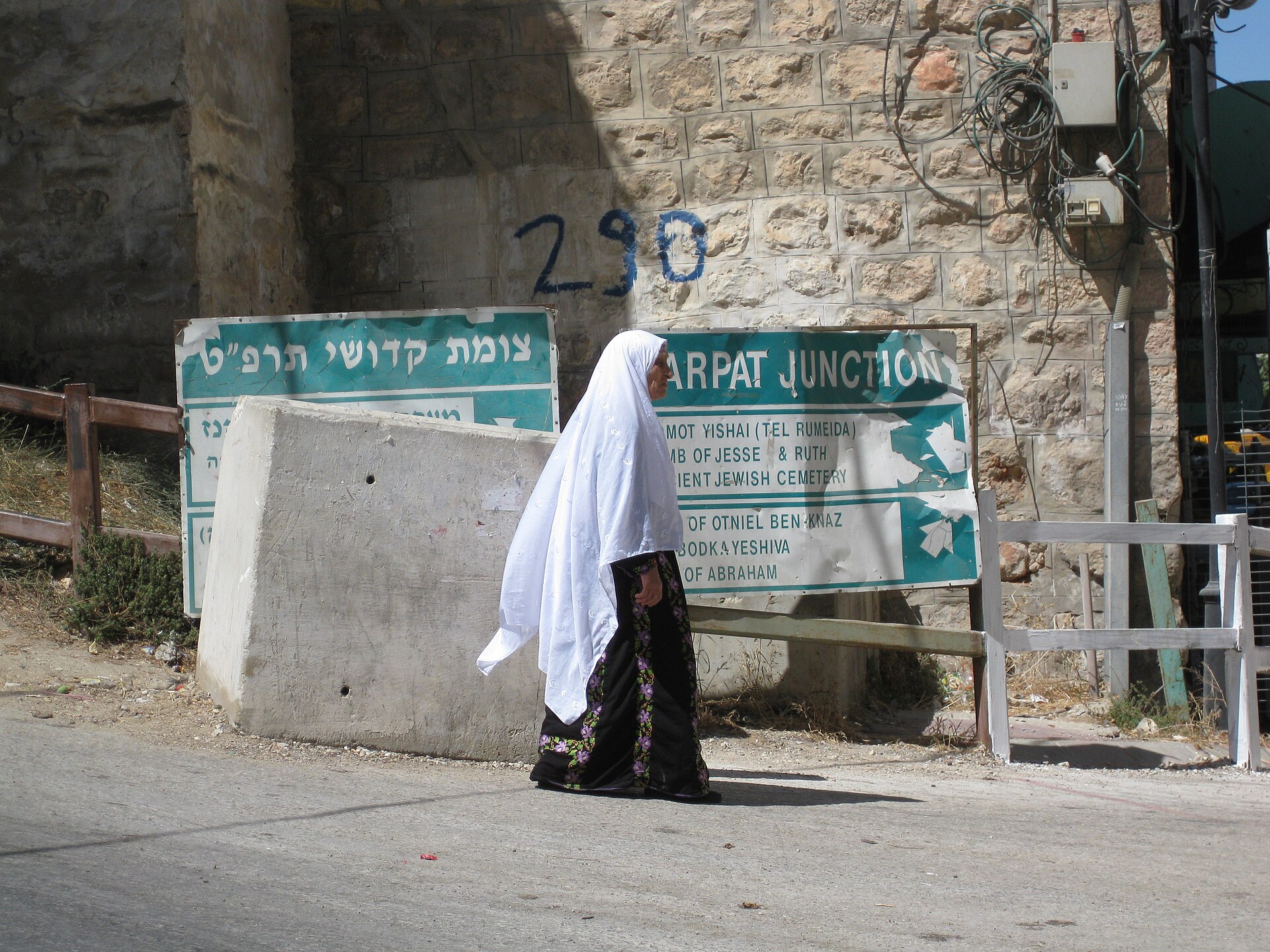
Hebron carries its own weight in this conflict. The largest Palestinian city in the West Bank, it is also the one major Palestinian city with an Israeli settler presence inside it, divided since the 1997 Hebron Protocol into Palestinian-administered and Israeli-controlled zones, with the Cave of the Patriarchs — sacred to both faiths — at its contested centre. Junctions on the roads around it, where settlers, soldiers and Palestinians share the same tarmac under military control, have been flashpoints for decades. Friday’s attack fits that geography precisely, which is one reason the military’s response reached so quickly for the cordon: Hebron is the city Israeli security planners war-game first.
What the Numbers Say
The verified figures from Friday are small and should be kept exact: two soldiers killed and three wounded; two attackers killed; one vehicle; two firearms and a large quantity of ammunition; a firefight of roughly 20 minutes; one city cordoned within hours; one territory ordered closed for at least four days, until after October 27. Set against the scale of the response, the ratio is the story. A closure affects, at a minimum, every Palestinian who works, trades, studies or seeks treatment across a checkpoint line — historically, on the order of a hundred thousand permit-holding workers alone in normal times, plus the internal commerce of the territory’s cities. None of that proves the closure wrong; it proves it is a blunt instrument, and that blunt instruments in election weeks deserve the scrutiny this one will get. The other number to watch is the arrest count from the “extensive waves of arrests” Netanyahu announced: if the sweeps produce a named cell, weapons caches and charges, the security case for the closure strengthens retroactively. If they produce a long list of detainees released without charge, the collective-punishment case does.
What Happens Next
Three clocks are now running. The first is operational: the searches and arrests around Hebron, and the question of whether the two dead men had accomplices, a dispatcher, or neither. A lone pair with a car full of ammunition is one kind of threat; a directed cell is another, and the government’s rhetoric on Friday — pursuing “dispatchers” — assumes the second before the evidence has been shown. The second clock is the closure itself: whether it is implemented in full from Friday, how long it actually lasts past election day, and what it does to a West Bank economy and hospital system that enter every closure already depleted. The third clock is electoral. Israel votes on Tuesday. An attack in the final days of a campaign fought in the shadow of October 7 will be read by voters through that shadow, whatever any campaign says, and both the government’s show of force and the opposition’s answer to it will be priced accordingly. The fairest test available by Tuesday is a factual one: whether the wounded survive, whether the investigation names anyone beyond the two dead men, and whether the closure lifts on schedule when the votes are counted — or quietly becomes the territory’s new normal.
Sources: Reuters (Oct 23, 2026); AFP reporting via News Central (Oct 23, 2026); New York Post (Oct 23, 2026); ANI via Devdiscourse (Oct 23, 2026); The Sun (Oct 23, 2026). Casualty figures are Magen David Adom’s as reported by those outlets (initially five wounded, two critically; the IDF later confirmed two of the wounded soldiers had died); the attackers’ names and the reported Hamas affiliation of one of them are Israeli officials’ claims as cited, not independently confirmed by Palestinian sources in Friday’s reporting; no Palestinian faction claim or Palestinian official response had been reported at the time of publication. IDF identification of the two soldiers killed, and CNN, Wall Street Journal and BBC reporting on the Farsh al-Hawa demolitions and the closure sequence (Oct 23, 2026).