Israeli fire kills four in Gaza: an airstrike on a Gaza City apartment and gunfire in Khan Younis and Zeitoun killed at least four Palestinians on Tuesday, health officials said — a year into a US-brokered ceasefire that both sides accuse the other of breaking.
World / A couple dead in their Gaza City apartment, a teenager shot near Khan Younis, another man killed in Zeitoun — on a single Tuesday, a year after the guns were supposed to fall silent.
Track it live: Israel–Gaza war tracker — live map and latest developments
Update — late Tuesday: the full-day toll reaches seven
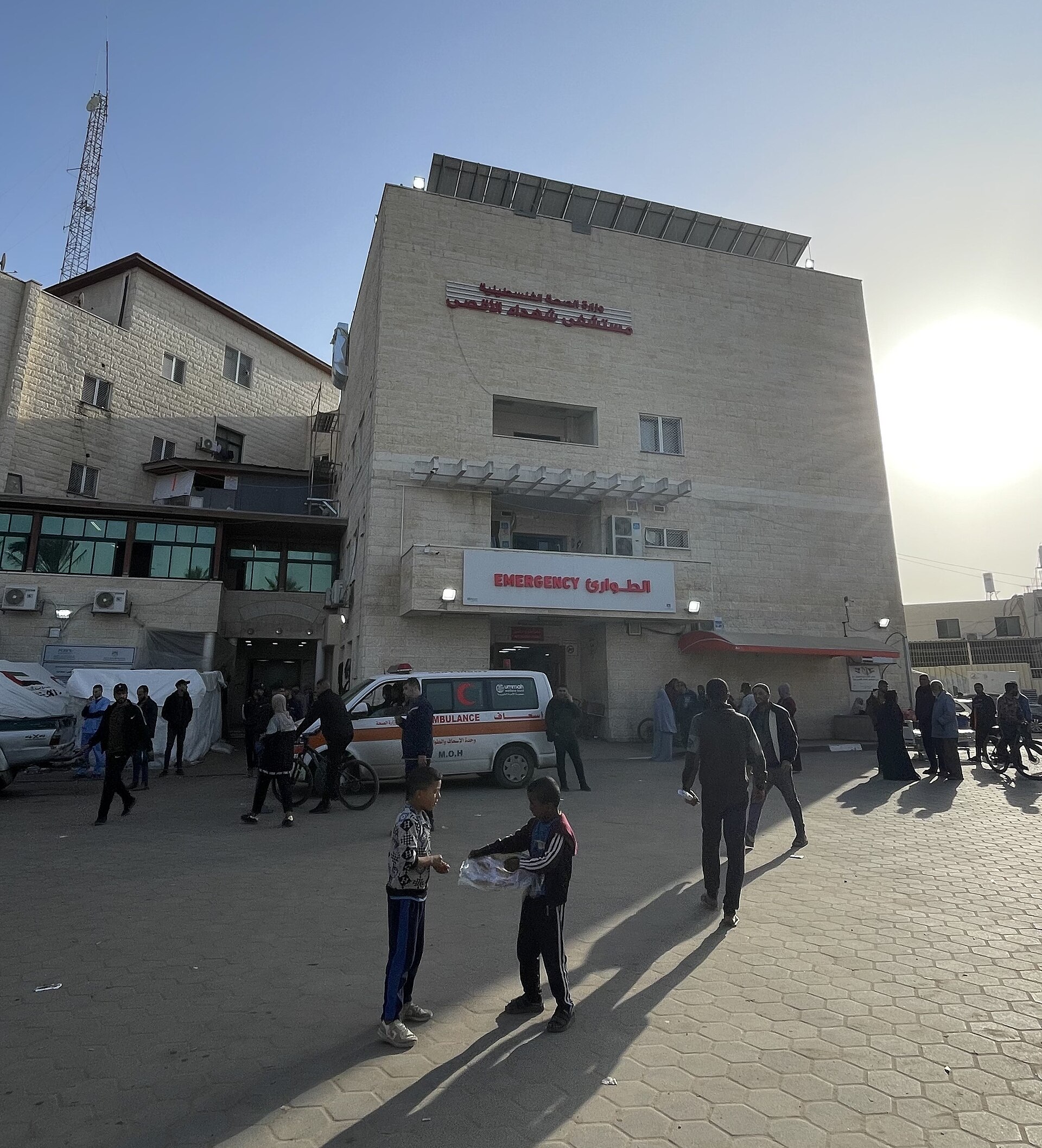
Later on Tuesday, Gaza's civil defence rescue service and several hospitals put the day's toll higher than the first reports. Agence France-Presse reported that Israeli strikes on separate locations killed seven Palestinians on Tuesday — a full-day tally that includes the four deaths Reuters reported earlier in the day (the couple in the Gaza City apartment, the teenager near Khan Younis and the person in Zeitoun), rather than adding to them. The further deaths in AFP's count were two men killed in strikes in Al-Zawaida town and the Wadi Gaza area in central Gaza, reported by civil defence spokesperson Mahmoud Bassal and Al-Aqsa Martyrs' Hospital, and one person killed in a strike in Jabalia al-Balad in northern Gaza, reported by Bassal and Al-Shifa Hospital, which also received the Zeitoun victim. Anadolu Agency's own count for the day was six killed, including two children, with a partly different breakdown of locations; the two agency tallies are successive counts of the same day's incidents, compiled differently, and are carried here separately rather than merged.
The Israeli military also later identified the man killed in the Gaza City apartment strike, superseding its earlier statement, reported above, that it had struck a militant in the area without giving further details: it said it had killed "Akram Bassam Shaaban Yassin, a senior official in the general security apparatus of the terrorist organisation Hamas in the Gaza Strip," as Agence France-Presse quoted it. His wife Dina, killed alongside him, is named as in the reports above — the agencies give her different surnames, and neither has been independently confirmed. Separately, the military said it had earlier "eliminated a Hamas terrorist who had taken part in the abduction of Shani Louk during the October 7 massacre" in a strike in the Jabalia area — an Israeli claim for which AFP named no person and which has not been independently confirmed. Asked by AFP about the other reports, the military said it was verifying them. Prime Minister Benjamin Netanyahu, campaigning for re-election in this month's general election, has vowed to continue targeting Hamas despite the ceasefire, AFP reported.
What happened on Tuesday
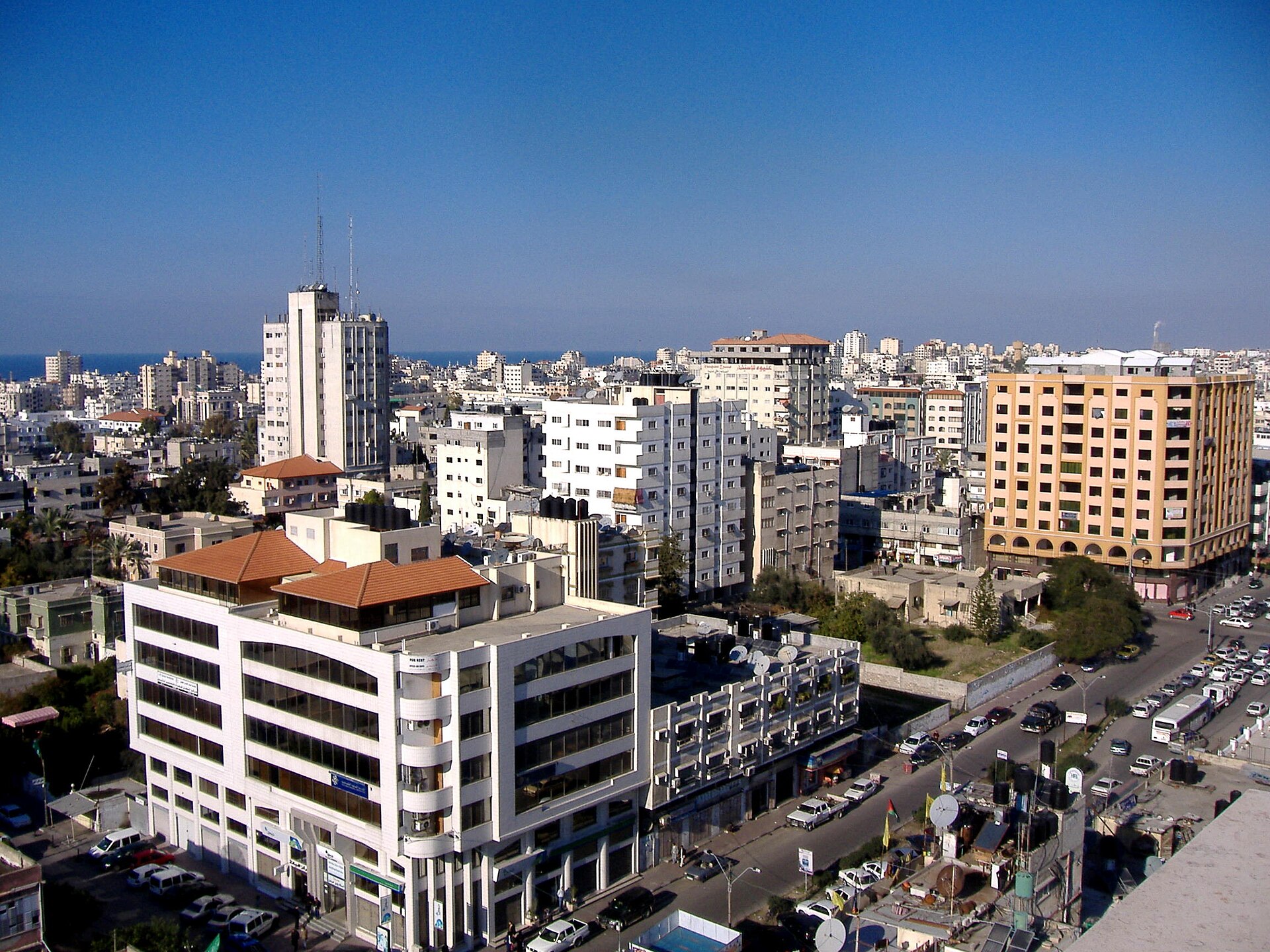
The deadliest single incident was the first one reported. Early on Tuesday, an Israeli strike hit a residential apartment near the Al-Shifa Medical Complex in western Gaza City, according to medical sources cited by Anadolu Agency, which reported that a man and his wife were killed and several others injured. Reuters, reporting the same strike, identified the couple as Akram Yassin and his wife Dina Abu Baker; Anadolu's medical sources named the wife as Dina Yassin. The two reports agree that a married couple died in the apartment, but they give the wife different surnames — she is referred to here as his wife Dina, because neither version could be independently confirmed by publication time. The Israeli military, asked about the strike, said it had struck a militant in the area, without providing further details. Reuters reported that Palestinians inspected the aftermath during the day and gathered for the couple's funeral. No further official Israeli account of who was targeted, or on what basis, had been published by Tuesday evening.
The other two deaths came by gunfire, in two different parts of the enclave, and on those the Israeli military had not commented at all by the time of reporting. In Khan Younis, in the south, medics said a 17-year-old boy was killed by Israeli gunfire near the Qizan Al-Najar neighbourhood. In Zeitoun, east of Gaza City, another person was killed by Israeli gunfire, health officials said. No names were released for either victim in the initial reports, and neither Reuters nor Anadolu reported an exchange of fire or any other immediate context for the shootings. What is established is narrow: two people, one of them a minor, were shot dead in two neighbourhoods several miles apart on the same day, and the army offered no explanation for either incident — a silence that is itself part of the record, a year into a ceasefire.
Tuesday did not begin with the apartment strike. Anadolu reported that Israeli artillery also shelled areas east of the Bureij refugee camp in central Gaza on Tuesday, with no immediate reports of casualties from that shelling. And Tuesday followed a violent Monday: Anadolu reported that one Palestinian was killed and three others injured on Monday in separate attacks — a drone strike in the Sheikh Radwan neighbourhood of Gaza City, and fire directed toward tents southwest of Khan Younis. Those Monday details are recorded here as Anadolu reported them. Taken together, the two days describe a pattern rather than an episode: a strike here, a shooting there, artillery on a camp's edge — small numbers on any single day, accumulating steadily across a ceasefire that has never fully taken hold.
Why this matters
Four deaths in Gaza would once have been a footnote in a war that has killed tens of thousands. What makes Tuesday matter is the date: these killings happened not during the war, but a full year into the ceasefire that was supposed to end it. The US-brokered agreement was built as a sequence — stop the fighting, then reconstruct Gaza, disarm Hamas and withdraw Israeli troops. A year on, Reuters reports, there has been little progress on any of the later steps, and the first step itself has become a matter of definition. Israel says Hamas has been rearming and launching attacks in violation of the ceasefire, and that it has stepped up its strikes in recent weeks in response. Hamas denies trying to carry out attacks or rebuild its arsenal, and accuses Israel of undermining the Gaza peace deal. Both positions cannot be fully true, and the public evidence — incident reports like Tuesday's — cannot settle the argument. There is no neutral monitoring force publishing a ledger of violations both sides accept. There are only the two narratives, and a rising count of the dead.
That is the deeper significance of a day like Tuesday. A ceasefire that cannot define its own violations becomes a framework in which each side's violence is, in its own telling, enforcement — and the other side's is aggression. The Gaza City apartment strike is the clearest example: Israel's military says it struck a militant; Gaza's health officials and the dead man's family describe a couple killed at home in a period that was supposed to be peaceful. Without evidence or an inquiry that either side's public can inspect, both descriptions simply coexist, and the next strike will be justified, by someone, as a reply to this one. Meanwhile the ceasefire's other promises — reconstruction for a devastated territory, a political future for two million people — wait on a stability that days like Tuesday keep deferring. Every week at this tempo makes the agreement look less like a bridge to a settlement and more like a slower setting of the same war.
The ceasefire, a year on
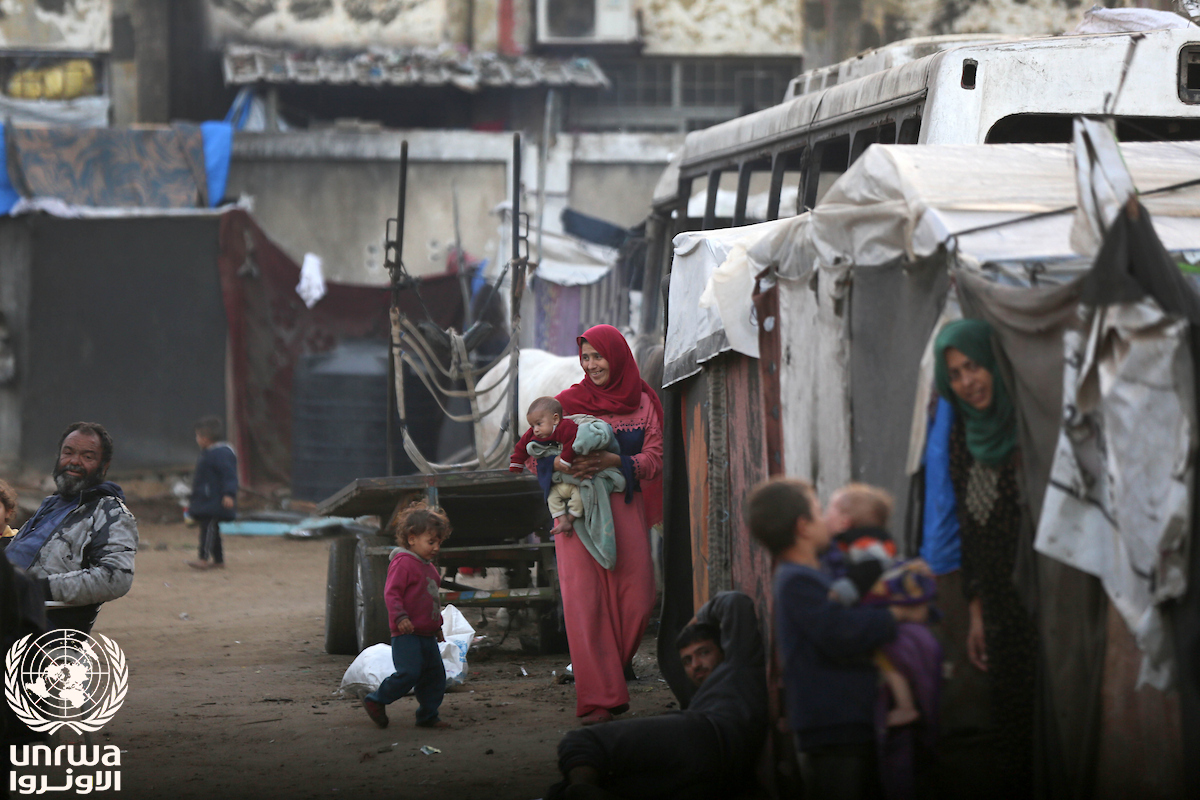
The agreement whose anniversary these deaths mark was brokered by the United States and took hold a year ago, ending the most intense phase of a war that began in October 2023. Its stated end-state was ambitious: eventual reconstruction of Gaza, the disarmament of Hamas, and the withdrawal of Israeli troops. In practice, the year since has produced a frozen geography and a frozen politics. Israeli forces remain deployed inside Gaza along lines the ceasefire established — the so-called yellow line — Palestinian armed groups remain armed, and reconstruction has barely begun in a territory where, by the Gaza Health Ministry figures Anadolu cites, some 90 percent of civilian infrastructure has been destroyed. The ceasefire's daily reality is managed at its edges — in questions like whether goods move. Just on Monday, commercial shipments into Gaza resumed after a halt that had set merchants, Hamas and Israel blaming one another. Against that backdrop, the argument between the two sides has narrowed to a single loop: Israel says its stepped-up strikes answer Hamas rearmament and attacks; Hamas says there are no such attacks and no rearmament, and that Israel is the party hollowing out the deal. Tuesday's four deaths will be filed by each side as evidence for its half of that loop.
What the numbers actually say
The figures, kept separate and attributed as the sources give them, are these. For Tuesday itself, Reuters reported at least four Palestinians killed by Israeli strikes and gunfire across the three incidents — the couple in Gaza City, the teenager in Khan Younis and the person in Zeitoun. Anadolu's reporting of the apartment strike specifically counted two killed — the same couple — and several others injured; it did not present a competing Tuesday total. For the ceasefire period as a whole, Gaza health officials say at least 1,500 Palestinians have been killed by Israeli fire since the ceasefire took effect, according to Reuters; Anadolu, citing the Gaza Health Ministry, puts the ministry's ceasefire-violation toll at 1,522 killed and 5,421 injured. Those two numbers are close but not identical — they come from the same ministry's counting at different moments and through different reports, and they should be read as one source family's running toll rather than two independent confirmations of each other. On the Israeli side, Israel says four of its soldiers have been killed by militants in Gaza over the same period — a figure that frames the asymmetry of the ceasefire year in a single comparison: roughly 1,500 Palestinian deaths against four Israeli military deaths since the deal, by the two sides' own counts. For the wider war, Anadolu cites ministry totals of more than 74,000 killed and 175,000 injured since October 2023. None of these figures is independently verified in full — wartime counting in Gaza is done by a health ministry operating in the territory Hamas governs, and Israel disputes aspects of its methodology — but the trend they describe, a ceasefire-period toll climbing past 1,500, is not disputed by any party's account of Tuesday.
Both sides' stated positions
Israel's stated position, as Reuters reports it, is that Hamas has been rearming and launching attacks in violation of the ceasefire, and that Israeli strikes in recent weeks have been stepped up in response. Applied to Tuesday, the military's only specific comment was its statement that it struck a militant in the area of the Gaza City apartment; it did not name the militant, describe an attack the strike answered, or comment on the gunfire deaths in Khan Younis and Zeitoun. Hamas's stated position is the mirror image: it denies trying to carry out attacks or rebuild its arsenal, and accuses Israel of undermining the Gaza peace deal. And between those two official positions stands the voice Reuters recorded at the funeral — Mahmoud Yassin, burying his brother Akram and Akram's wife, saying the family was "supposed to be in a ceasefire period" and was seeing no ceasefire at all. That sequence — an army's one-line justification, a movement's blanket denial, and a family's testimony — is the whole of the public record for Tuesday. The strike and the deaths are facts; the military's militant claim is an assertion it has not yet supported in public, and Hamas's denial is likewise an assertion. What would change the weight of either is evidence, and none was published on Tuesday.
What happens next
Three paths run from here, and the recent past supplies evidence for each. The first is continuation: the ceasefire holds on paper, as it has for a year, while strikes and shootings continue at a tempo of ones and fours — a managed, grinding erosion in which the agreement survives because neither side wants to own its collapse, and in which the ceasefire-period toll keeps climbing by increments too small, individually, to force a reckoning. Tuesday, following Monday's attacks and the stepped-up strikes of recent weeks, fits this path precisely, and it remains the most likely near-term course. The second path is rupture: a single incident with a toll large enough — a strike on a crowded shelter, an attack that kills Israeli soldiers in numbers — collapses the pretence and returns Gaza to open war. The raw materials for such an incident are present every day that armed men and a deployed army share a small territory with rules neither side believes the other is keeping. The third path is repair: the ceasefire's sponsors, above all the United States, convert the agreement's stalled later stages — reconstruction, disarmament, withdrawal — from aspirations into a supervised sequence with verification both sides can be held to. Nothing in Tuesday's reporting suggests that path is being taken; the anniversary of the deal has passed with little progress, by Reuters' assessment, on any of it.
The indicators to watch are concrete. Whether the Israeli military says anything further about the Khan Younis and Zeitoun shootings — in particular about the killing of a 17-year-old — will say much about how much accounting the ceasefire era requires. Whether Hamas or other armed groups claim or carry out a retaliation will test Israel's account of why its strikes have intensified. Whether the resumed commercial shipments keep moving will test the deal's other half. And the figure keeping score of all of it is the one Gaza's health officials update after days like Tuesday: a ceasefire toll that has passed 1,500 and, on this week's evidence, is still rising — four names at a time, in a war that was supposed to have ended a year ago.
Related coverage: Gaza Ceasefire at One Year: A Truce in Name Only · Gaza Commercial Goods Halt: Trucks Stop as Israel, Hamas and Merchants Trade Blame · Gaza ceasefire "in name only": 100+ NGOs sound alarm
Sources
Reuters (October 20, 2026): Israeli strikes and gunfire killed at least four Palestinians in Gaza on Tuesday, health officials said — the Gaza City apartment strike killing Akram Yassin and his wife Dina Abu Baker (named as Reuters reported her), the Israeli military's statement that it struck a militant in the area, the 17-year-old killed by gunfire near Qizan Al-Najar in Khan Younis, the person killed by gunfire in Zeitoun, the military's lack of comment on the gunfire incidents, the funeral and Mahmoud Yassin's statement, the ceasefire-period tolls (at least 1,500 Palestinians killed by Israeli fire since the ceasefire, per Gaza health officials; four Israeli soldiers killed by militants in the same period, per Israel), the two sides' positions, and the assessment of little progress on the ceasefire's reconstruction, disarmament and withdrawal terms. Full report: https://www.reuters.com/world/middle-east/israeli-fire-kills-four-people-gaza-medics-say-2026-10-20/ Anadolu Agency (October 20, 2026, via operativmm.az): a man and his wife killed and several others injured in an Israeli strike on a residential apartment near Al-Shifa Medical Complex in western Gaza City, the couple identified by medical sources as Akram Yassin and his wife Dina Yassin (surname as Anadolu reported it); Israeli artillery shelling east of the Bureij refugee camp with no immediate casualty reports; Monday's attacks (one Palestinian killed and three injured — a drone strike in Sheikh Radwan, Gaza City, and fire toward tents southwest of Khan Younis); and Gaza Health Ministry figures cited by Anadolu of 1,522 killed and 5,421 injured in ceasefire violations, and more than 74,000 killed and 175,000 injured since October 2023, with around 90 percent of civilian infrastructure destroyed.