Netanyahu October 7 warning report
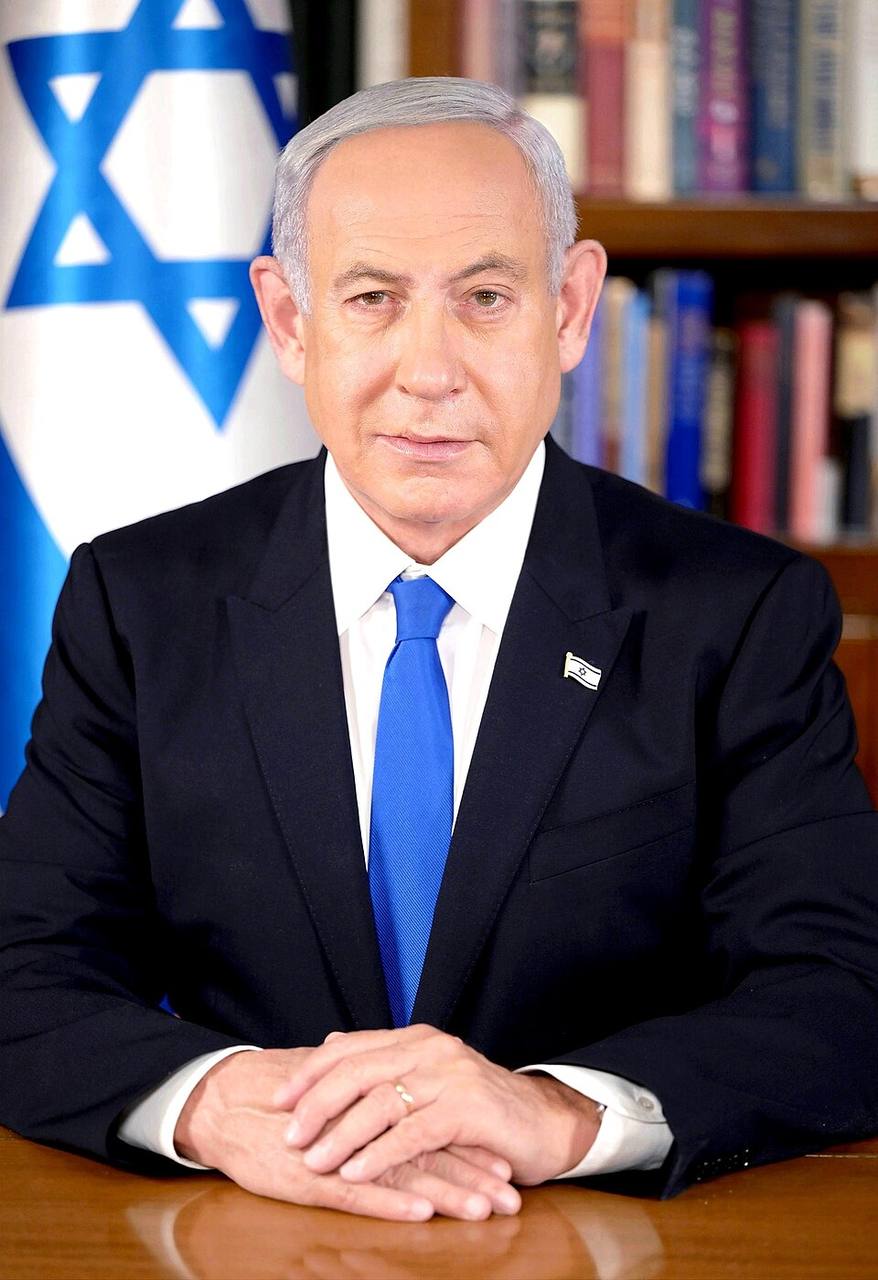
Three years after the Hamas-led assault of October 7, 2023, the most consequential unanswered question of the Gaza war is back at the center of Israeli public life — and it has arrived with documentary weight. On September 25, 2026, The New York Times reported that it had reviewed minutes of an October 1, 2023 meeting at which Prime Minister Benjamin Netanyahu gathered Israel's senior security chiefs, said nothing about the alleged Netanyahu October 7 warning he is said to have received from the president of the United Arab Emirates days earlier, and instead steered the discussion toward keeping Gaza calm.
The report, by Adam Rasgon, Mark Mazzetti and Ronen Bergman, lands five weeks before Israel's October 27 general election. It turns a contested newspaper allegation into a documented absence: in the official record of the last senior security meeting held before the attack, the warning — if it existed — appears nowhere.
What the Times says the October 1 minutes contain
According to the Times, which says it reviewed the minutes, Netanyahu convened his security chiefs on October 1, 2023 — six days before the Hamas-led attack — for a session devoted to the situation in the Gaza Strip. The minutes show him telling the room that the goal should be to maintain calm in Gaza. When some security officials suggested that Israel should consider military strikes against senior Hamas figures involved in attacks on Israelis in the West Bank, Netanyahu pushed back. He argued that Israeli military action in Gaza could damage the prospects of Saudi Arabia establishing diplomatic relations with Israel, a deal he believed was close to being finalized. What the minutes do not show, the paper reports, is any mention of a warning attributed to UAE President Mohammed bin Zayed.
The Times says five former senior Israeli security officials told it they were unaware of any such warning reaching the upper levels of Israel's security establishment. Two people cited by the paper said they had either spoken directly with Sheikh Mohammed or been briefed by someone who took part in the conversation between the Emirati and Israeli leaders, and confirmed that the UAE leader warned Netanyahu of a "major attack" by Hamas. The paper adds that the intelligence did not make clear whether Hamas was contemplating a major rocket barrage or a ground invasion, and that it remains unclear where the Emirati leader obtained the information and what else was discussed. Netanyahu's office did not respond to the Times.
The Haaretz investigation that lit the fuse — and the flat denial
The warning allegation originated on September 8, 2026, when the Israeli newspaper Haaretz published an investigation by Shlomi Eldar and Ruth Yuval, drawn from their book Hostages: 843 Days of Abandonment and based on what the reporters describe as dozens of sources, documents and correspondence. Their account: about ten days before October 7, Mohammed bin Zayed called Netanyahu from the presidential palace in Abu Dhabi and spoke with him for roughly forty-five minutes. The Emirati president, the reporters wrote, warned that then-Hamas Gaza leader Yahya Sinwar was preparing a major operation — described to a former Palestinian official, a Fatah-linked intermediary, as a "zilzal" (earthquake), a "terrifying operation," the "mother of all surprises." The intermediary passed the message to an Emirati adviser, who conveyed it to bin Zayed. Bin Zayed, worried the attack would cause heavy bloodshed, destabilize the region and damage the Abraham Accords, urged Netanyahu to take the matter seriously.
According to Haaretz, Netanyahu responded calmly, said Israel was prepared in Gaza, and assessed that Hamas was more likely to act in the West Bank. The paper further alleged that Netanyahu did not relay the purported conversation to then-Shin Bet chief Ronen Bar, then-IDF Chief of Staff Herzi Halevi or Mossad director David Barnea. Bar and Halevi later told Haaretz they had not been informed, and a senior Shin Bet official said that knowing about the warning "could have changed our entire assessment picture."
Netanyahu's office has issued an unequivocal denial. It says there was no call and no warning; that the Prime Minister's Office, the National Security Council and the military secretary reviewed his communications records from the beginning of September through October 7, 2023 and found no trace of a conversation with bin Zayed; and that official conversations with the UAE president are ordinarily conducted through an Emirati representative who physically arrives at the Prime Minister's Office with a special encrypted communications device — with entry records for the period showing no such visit. The office called the report a "malicious fabrication," said its timing was politically motivated, and instructed attorneys to file defamation lawsuits against Haaretz, Eldar and Yuval. The Times of Israel reported on September 25 that he had yet to file. Eldar, in a direct CNN interview, rejected the denial and said he possesses documents, records and confidential-source evidence supporting the alleged call; those underlying materials were not displayed or independently authenticated in the segment. The Likud party, meanwhile, has blamed the Palestinian official Mohammed Dahlan — who is based in the Emirates — for the publication, calling it "blatant foreign interference in Israel's elections."
What Abu Dhabi itself has said — a study in strategic ambiguity
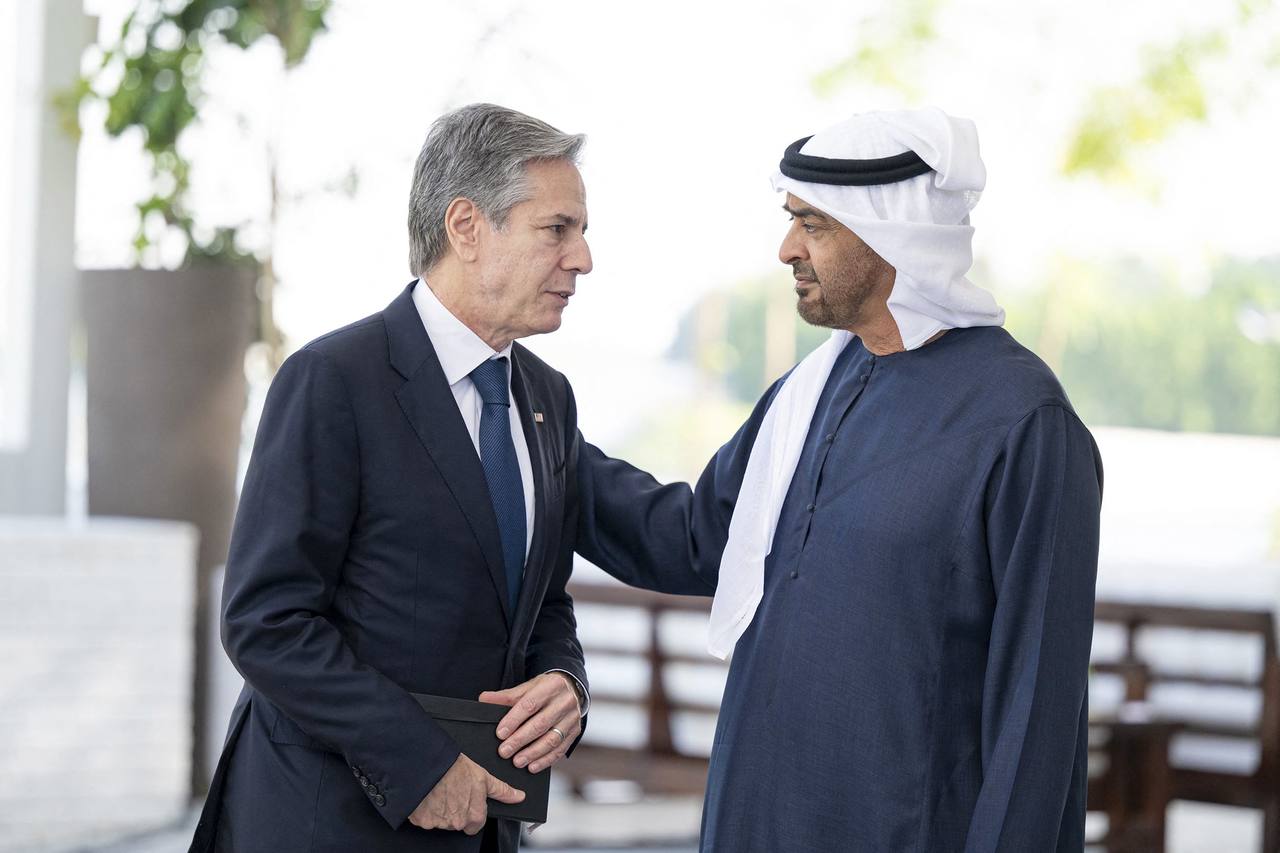
The UAE government has declined to confirm or deny the alleged conversation. Its Foreign Ministry said it "does not comment on media stories or speculation regarding conversations between government leaders," adding that the UAE's engagement since October 7 had been "consistently directed toward de-escalation, regional stability and preventing violence." Separately, an unnamed Emirati official told The National that the UAE discusses security matters "through the relevant bodies" and does not discuss such details at the level of state leaders — a statement that reads as a denial of a leader-to-leader channel without ruling out an intelligence transfer through other routes.
Other Emirati-linked sourcing points in different directions. The Times of Israel reported on September 8 that an unnamed Emirati source had confirmed the conversation. Channel 12 reported on September 22, citing three unnamed senior Emirati sources, that UAE intelligence had first warned the Shin Bet and that bin Zayed then called Netanyahu to check that the information had reached him. And i24NEWS reported on September 9 that a senior, unnamed Middle East intelligence source said the UAE had passed Israel a warning of significant and imminent Hamas action — without confirming a direct call, the transmission route, or what Netanyahu personally received. Taken together, the Emirati side of the record both confirms and undercuts elements of the Haaretz account: a pattern consistent with a government hedging between its Abraham Accords partnership and its regional credibility.
Why this matters: the anatomy of a warning that went nowhere
Strip away the political theater and the Times report is significant for a structural reason. A leader-to-leader alert is the rarest and highest-signal class of intelligence warning — it cannot be dismissed as a low-level field report lost in the daily cable traffic. And yet the minutes of October 1 show it shaped nothing: not the threat assessment, not the force posture, not even the agenda. That leaves three readings, and each indicts someone different. If the warning was real and reached the top, the failure is one of leadership judgment. If it was real but never climbed the chain, the failure is systemic — a distribution breakdown of the kind that has haunted intelligence services from Pearl Harbor to the Yom Kippur War. And if it never existed, the failure belongs to the press that published it. One of these is true, and Israeli voters will decide on October 27 with only partial evidence in hand.
The minutes also place Israel's hoped-for normalization with Saudi Arabia inside the pre-October-7 decision room. Netanyahu's reported argument — that striking Gaza could endanger the Saudi deal — is a documented instance of diplomacy weighing on threat assessment. This is analysis, not accusation: leaders routinely weigh second-order effects, and keeping Gaza calm was also the IDF's standing preference. But the paper trail now shows the normalization project operating as a reason for restraint days before the worst security failure in the country's history, and that will shape how historians — and prosecutors of the public debate — apportion responsibility.
There is a final, sobering caveat that applies whichever account is true. Even in the denial version, Israel's own post-October-7 record contains warnings that were collected and never escalated: the "Jericho Wall" battle plan, signals intelligence on Hamas preparations, the Nova festival intelligence picture. The structural lesson of October 7 does not depend on the UAE call being real. Warnings in 2023 failed more often in distribution than in collection — and no one has yet produced a full, subpoena-powered accounting of why.
The dispute in numbers
The figures anchor what is at stake. On October 7, 2023, Hamas-led fighters killed about 1,200 people in southern Israel, wounded roughly 3,000 and took 251 hostages, according to Israeli tallies. The alleged warning call came about ten days before the attack; the security meeting six days before; the alleged conversation itself lasted about forty-five minutes. Since the war began, Gaza's health authorities say more than 73,000 Palestinians have been killed. Under the U.S.-brokered ceasefire agreed last year, at least 1,400 Palestinians have been killed in continued Israeli strikes, according to Gaza health officials, while Israel's military says four of its soldiers have been killed in the same period. On the evidentiary side, the scorecard reads: five former senior Israeli security officials unaware of the warning; two people confirming it via the Emirati leader; dozens of sources claimed behind the book; zero public documents from either camp. And the calendar: thirty-one days from September 26 to the October 27 election.
Winners, losers, and the election shadow
Netanyahu has chosen maximal denial, which maximizes both the upside and the risk. If call records and logbooks conclusively rule out the conversation, the Haaretz story collapses and he converts it into a campaign asset about media persecution. But the threatened libel suit is a double-edged instrument: discovery cuts both ways, and a courtroom is the one forum where Eldar's claimed documents would have to surface or fail. The opposition, led by figures like Naftali Bennett — who says he knows the report is true without publicly explaining the basis of that knowledge — gains powerful accountability ammunition, but risks overreach if the evidence stays thin. The UAE's ambiguity protects its options: confirmation would rupture the Abraham Accords channel it prizes; a full denial would forfeit credit for having tried to warn. Haaretz and its reporters are reputationally all-in; publishing the underlying documents would end the dispute, while withholding them keeps it alive and invites the charge of electioneering. And the Israeli public, still traumatized three years on, is left with two irreconcilable histories of the worst intelligence failure in the country's history — each camp certain, neither camp proved.
What happens next: three scenarios
Corroboration. Documents surface — through libel discovery, a leak, or a post-election state commission of inquiry with subpoena power — and the warning is proven real. That would be a political earthquake: it would reopen the entire October 7 accountability reckoning and likely end Netanyahu's career.
Stalemate. The suit is filed or quietly dropped, no documents emerge, and the election decides the narrative by ballot rather than by evidence. The dispute joins the long list of contested October 7 history — weaponized by all sides, resolved by none.
Vindication of the denial. Records conclusively rule out the call; Haaretz pays damages; Netanyahu turns the episode into proof of a hostile press. In this scenario the deeper structural failures of October 7 remain unexamined, buried under a won libel case.
The most likely near-term forums are the courts, if the suit is filed, and the ballot box on October 27. The mechanism that could actually settle the record — a full state commission of inquiry empowered to compel testimony and documents — remains hostage to the election's outcome. Until then, Israel has minutes that show what was said in the room, denials about what was said on the phone, and a country that must vote on which absence to believe.
Sources
- The New York Times, “Netanyahu Is Said to Have Been Warned About Hamas Attack Before Oct. 7” (Sept. 25, 2026)
- The Dispute Index, overview of the Netanyahu-UAE warning case
- The Focal Points, summary of the Haaretz report (Sept. 8, 2026)
- Le Monde, “Report that Netanyahu was warned before October 7 triggers political earthquake in Israel” (Sept. 9, 2026)
- New York Post / JNS, “Netanyahu to sue Haaretz for defamation over claim UAE warned him prior to Oct. 7 massacre” (Sept. 9, 2026)
- The News (AFP), “NYT adds weight to Israeli media report that UAE alerted Netanyahu before Oct 7 attack” (Sept. 26, 2026)