World · Latin America · Guatemala
The Guatemala state of emergency decreed on Saturday is the most far-reaching security measure of Bernardo Arévalo’s presidency: a 30-day estado de sitio across Zacapa and Izabal that suspends freedom of movement and assembly, bans or restricts outdoor gatherings, and lets security forces arrest people and enter homes without a warrant. It follows seven weeks of attacks in Zacapa that culminated in the ambush killing of a sitting congressman — and it puts a president elected to dismantle Guatemala’s old order in the position of governing two departments by decree.
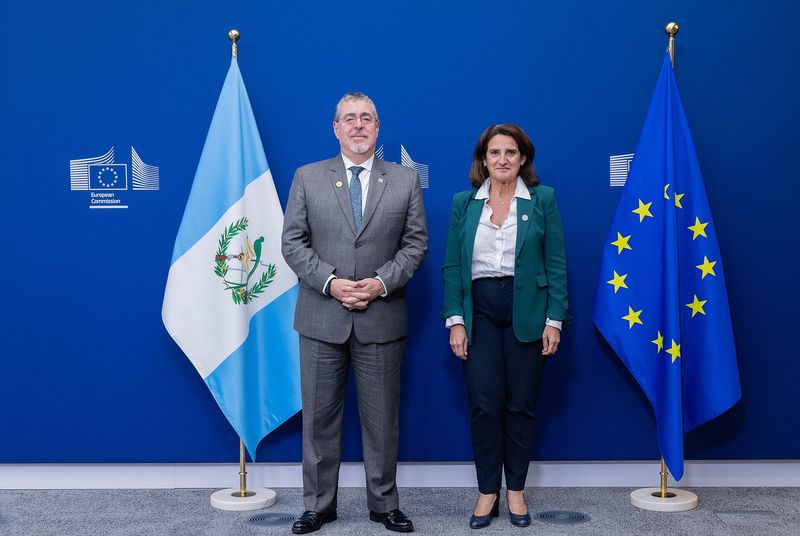
GUATEMALA CITY, November 15, 2026 — The Guatemala state of emergency announced on Saturday, November 14, places the eastern departments of Zacapa and Izabal under a 30-day estado de sitio, effective immediately, after a wave of armed attacks that has killed at least 19 people since late September — among them a member of Congress and three of the police officers assigned to protect him. The decree, issued by the government of President Bernardo Arévalo, suspends freedom of movement and assembly across the two departments, and the army moved several hundred troops into the region the same day, with Europa Press reporting a deployment of roughly 400 to 600 soldiers.
The measure did not come out of nowhere, and the government did not pretend otherwise. In its decree, the administration cited security reports of drug-trafficking-linked activity by what it called “transnational criminal and terrorist organizations” operating in the east. That language landed the same week Washington designated several crime groups operating in Zacapa as terrorist organizations, accusing them of ties to Mexican drug-trafficking cartels, according to Reuters. Who actually carried out the attacks that forced the government’s hand, however, remains officially unknown: Guatemalan authorities have not identified those responsible for the killings, and the most sensitive of the investigations is sealed under judicial reserve.
What the estado de sitio does
An estado de sitio is the heaviest instrument in Guatemala’s constitutional emergency toolkit, and Saturday’s decree uses most of it. Under the measure, as reported by EFE, outdoor gatherings are banned or limited; security forces may disperse groups by force; and police and soldiers may arrest suspects and enter residences without a judicial warrant. Freedom of movement and freedom of assembly — the rights that structure ordinary public life, from markets to funerals to football matches — are suspended for the duration in the two departments.
The decree is sweeping in kind but bounded in scope, and both halves of that sentence matter. It runs for 30 days, not indefinitely. It covers two of Guatemala’s 22 departments, not the whole country. And it is not self-executing in the long run: Congress has received the decree and now has three days to approve it, modify it or reject it outright, a vote expected to be taken up on Tuesday. That congressional check is the structural difference between this and the open-ended emergency rule that has become the region’s cautionary tale — a point this article returns to below.
Even so, the clause most likely to define the next 30 days is warrantless entry. Checkpoints and patrols are visible and, to many residents of a violent region, reassuring. Soldiers and police entering homes without a judge’s order are something else: the power most easily abused, the hardest to supervise, and the one that converts a security operation into a test of the state’s discipline. How it is used — how often, against whom, with what paper trail — will determine whether the decree is remembered as a surgical response to an exceptional killing spree or as the moment the Arévalo government normalized the methods it was elected to repudiate.
Seven weeks of attacks
The sequence that forced the decree began on September 27 in Huité, in the department of Zacapa, where an armed group executed eight people, among them three women and a minor. It was a massacre in the strict sense — victims selected and killed, not bystanders caught in crossfire — and it was handled from the start as something more than an ordinary homicide case: the investigation was placed under judicial reserve, sealing its details from public view. Whatever investigators have learned since, they have not said.
The second attack changed the political arithmetic. On November 6, Deputy Julio César Portillo Paz, 36, a congressman of the National Unity of Hope (UNE) party, was shot in an ambush at Río Hondo, at kilometer 137 of the Atlantic route — the highway that carries traffic from the capital toward the Caribbean. Portillo died in hospital. Three officers of the National Civil Police who were escorting him were also killed. The assassination of a sitting deputy, announced by the president himself, is the kind of event that collapses the distance between a regional security problem and a national crisis: if a congressman traveling with a police escort can be ambushed on the country’s main Atlantic highway, the state’s claim to control that corridor is in question.
Then came Friday. Two further attacks left seven more people dead, EFE reported, including five who were executed in La Majada, in Zacapa — where, according to the agency’s account, camouflaged men executed five people, among them a mother and two of her children. Read the three episodes together and the pattern the government saw is plain: nineteen dead in seven weeks, killings with the signature of organized armed groups rather than common crime, and a tempo that was accelerating rather than fading. By Saturday, the decree was signed.
| Date | Place | What happened |
|---|---|---|
| September 27 | Huité, Zacapa | An armed group executed 8 people, including 3 women and a minor; case placed under judicial reserve |
| November 6 | Río Hondo, km 137, Atlantic route | Deputy Julio César Portillo Paz, 36 (UNE), shot in an ambush, died in hospital; 3 National Civil Police escort officers also killed |
| Friday, November 13 | La Majada, Zacapa, and a second location | Two attacks left 7 dead, including 5 executed in La Majada |
| November 14 | Zacapa and Izabal | Government decrees a 30-day estado de sitio; army deploys roughly 400–600 troops |
What the timeline cannot show is authorship. No armed group has been officially named as responsible for Huité, for the Portillo ambush or for Friday’s killings, and no arrests have been announced that would tie the episodes together. The government’s decree speaks of transnational criminal and terrorist organizations; Washington’s designation speaks of Zacapa crime groups tied to Mexican cartels. Those are frames, not findings. The distinction matters, because emergency powers justified by an unnamed enemy are precisely the powers hardest to hold to account when the emergency ends.
Why this matters
Analysis. Start with the man who signed the decree. Bernardo Arévalo won the presidency as an anti-corruption reformer, the candidate of a movement built on the promise that Guatemala’s institutions could be made to work lawfully — that the country’s crisis was not a shortage of force but a surplus of impunity. He has criticized heavy-handed security politics in the region and built his authority on procedure, evidence and courts. A 30-day estado de sitio, with warrantless home entry at its center, is the governing tool of the tradition he ran against. That he reached for it anyway is the story inside the story, and it cuts two ways.
The charitable reading is that the facts left no gentler option. A murdered congressman, a massacred family, a sealed investigation and a police force that could not protect its own escort detail on the main highway: a president who declined to act after that sequence would be accused of letting the east go. Emergency powers exist in constitutions precisely for the week when ordinary policing demonstrably fails, and Zacapa’s week came in November. On this reading, the decree is not a betrayal of the reform project but a test of whether a reformist government can use emergency tools lawfully — narrowly scoped, time-limited, submitted to Congress, and wound down on schedule.
The harder reading is about precedent and ratchet. Emergency powers are easy to decree and difficult to retire, because the conditions used to justify them — armed groups, trafficking corridors, frightened communities — rarely resolve inside 30 days. Each renewal lowers the political cost of the next. And the civil-liberties costs are not evenly shared: they fall on the residents of Zacapa and Izabal, whose homes can now be entered without a warrant, while the political benefit of “doing something” accrues in the capital. Both readings are available in the same decree. Which one history uses will be decided by conduct in the next month — and by whether the measure actually ends on day 30.
Washington’s terrorist designation
The decree did not arrive alone. This week, according to Reuters, Washington designated several crime groups operating in Zacapa as terrorist organizations, accusing them of ties to Mexican drug-trafficking cartels. The Guatemalan decree’s own language — “transnational criminal and terrorist organizations” — mirrors the framing, and the overlap is unlikely to be coincidental: the designation gives Guatemala City an external vocabulary for its emergency, and gives Washington a partner acting on it.
A terrorist designation is not merely a label. In the American system it unlocks concrete instruments: asset freezes and sanctions against the designated groups and anyone who materially supports them, expanded intelligence sharing, and a legal architecture that makes military and security assistance easier to justify and harder to oppose. For a Guatemalan government confronting armed groups it cannot yet publicly name, the designation offers both resources and cover. But it also imports risks that Guatemala will own long after the headlines move on. Terrorism framing militarizes what is partly a policing and judicial problem; it raises the legal exposure of anyone in the designated groups’ orbit, including people coerced by them; and it can freeze the financial plumbing of entire communities if banks decide the region is too dangerous to serve. Above all, a designation is a claim about who the enemy is — made, in this case, while Guatemala’s own investigators are still working under judicial reserve and its interior minister is still saying, on the record, that key questions about the central killing are unanswered.
The corridor: why Zacapa and Izabal, together
The geography of the decree is its logic. Zacapa sits about 150 kilometers east of Guatemala City; Izabal stretches some 300 kilometers northeast to the Caribbean coast. Together the two departments cover an area roughly the size of Qatar, Reuters noted — and together they form a single strategic unit: the country’s Atlantic corridor. The highway that runs through Río Hondo, where Portillo was ambushed at kilometer 137, is the same road that carries the capital’s trade to Puerto Barrios, Guatemala’s principal Caribbean port, in Izabal. The Motagua river valley, the rail line, the border crossings toward Honduras: the legal economy of the east and its illegal economy move along the same arteries.
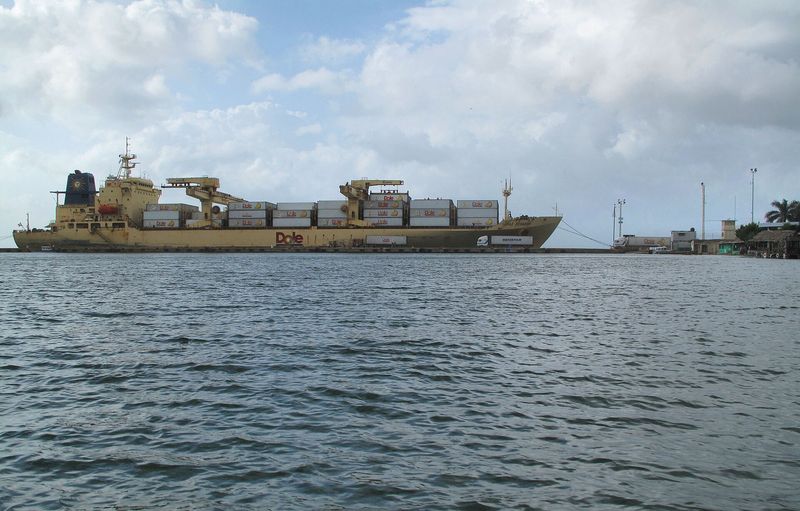
That is why a killing spree in Zacapa produced an emergency in Izabal too. Trafficking geography does not respect departmental boundaries, and neither, the government is betting, can the response. Cocaine moving toward Caribbean routes, contraband moving inland, money moving in both directions: the corridor is a system, and a crackdown in one department that leaves the other untouched mostly succeeds in moving the problem down the road. The countervailing arithmetic is less comforting. Four hundred to six hundred troops across a Qatar-sized territory is roughly one soldier for every twenty to thirty square kilometers — a presence, not a blanket. That force can hold the corridor’s chokepoints: the highway, the bridges, the port approaches. It cannot be everywhere at once, which is why the decree’s legal powers matter as much to the operation as the troop count.
The numbers behind the decree
Zacapa’s homicide rate over the twelve months to September 2026 was 31.5 per 100,000 inhabitants, according to the Diálogos Violence Observatory — the fourth-highest rate of any department in Guatemala. Two things are worth doing with that number. The first is to locate it: it is the rate of a department already living at an elevated level of lethal violence before the September massacre, which is part of why a series of spectacular attacks there landed on such dry ground. Chronic violence is the kindling; the Huité and La Majada executions and the Portillo ambush were the sparks.
The second is to resist letting the rate do more work than it can. A homicide rate describes a year, not a week, and it cannot say who is killing or why. Guatemala’s eastern violence sits at the intersection of trafficking routes, local land and business disputes, and the long aftermath of a civil-war-era security state whose habits never entirely left the region. The government’s decree answers the “what now” question with force; the “who and why” questions remain with investigators, under reserve. Interior Minister Marco Antonio Villeda was candid about the limits of official knowledge when he addressed Congress on November 11: the emergency measure was under evaluation, he said, and there was as yet no evidence on whether the killing of Deputy Portillo was politically motivated. That sentence deserves to be quoted whenever the decree is described, because it is the government’s own acknowledgment that it acted before it knew.
The comparison everyone is making: El Salvador
No discussion of a Central American emergency decree escapes the shadow of El Salvador, and this one should not try. Since March 2022, President Nayib Bukele’s régimen de excepción has suspended constitutional guarantees across El Salvador, enabling mass arrests that have swept tens of thousands of people into prison. The results on its own terms are undeniable: a homicide rate that was among the world’s worst collapsed, and gangs that once taxed whole neighborhoods were dismantled as territorial powers. The costs are also undeniable, and documented by Salvadoran and international monitors alike: people detained on anonymous denunciations or appearance, deaths in custody, and a due-process deficit that will take a generation of litigation to untangle — under an emergency renewed month after month until the exception became the system.
Guatemala’s measure is not that, and precision here is a form of respect for both countries’ realities. The Zacapa–Izabal decree is 30 days rather than open-ended, two departments rather than a nation, and it goes immediately to a Congress that can amend or kill it — a legislature, it is worth noting, that Arévalo does not control. Nothing in the Guatemalan decree contemplates mass incarceration, and Guatemala’s courts and prosecutors retain roles that El Salvador’s emergency deliberately sidelined. If the comparison is used to predict that Guatemala is becoming Bukele’s El Salvador, it is being used lazily.
But the comparison earns its place in a narrower way: as a study in how the first month goes. El Salvador’s regime also began as a response to a specific atrocity — a single weekend of gang killings — and as a measure its supporters described as temporary and necessary. The mechanism that turned it permanent was not ideology but incentives: the emergency worked politically, the killings fell, and no governing coalition anywhere finds it easy to hand back powers that are popular. Guatemala’s version of that test arrives quickly. If homicides in the east fall during the 30 days — and the government will be able to claim the decree did it, whether or not the claim is provable — the pressure to extend, expand or repeat the measure will be immediate and bipartisan. The warrantless-entry clause is where the two stories could converge: it is the provision most prone to abuse, the hardest to audit, and the one rights monitors in Guatemala are already watching. The honest summary is that Arévalo has borrowed a page from the regional playbook while writing in safeguards the playbook usually omits. Whether the safeguards bind is a question about institutions, and Guatemala’s institutions are exactly what his presidency was supposed to be rebuilding.
What happens next
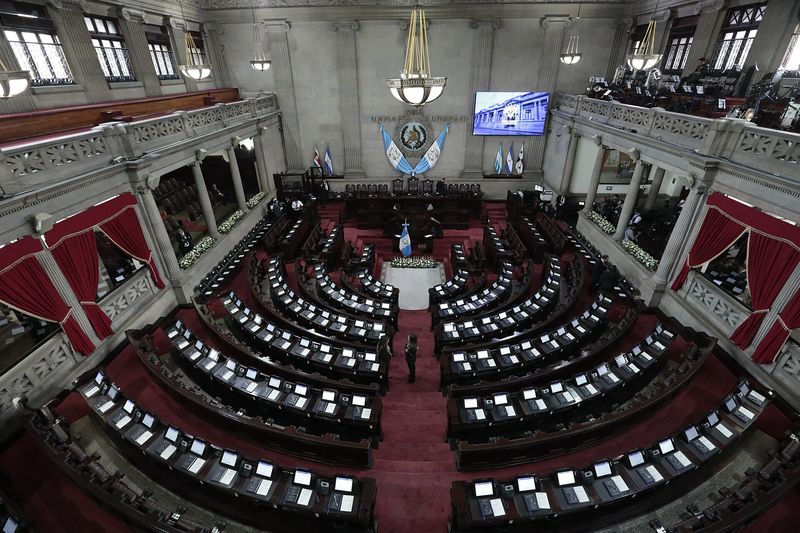
The first deadline is legislative. Congress has the decree, the constitutional clock gives it three days, and the question is expected to reach the floor on Tuesday. The vote is a genuine fork, not a formality: approval ratifies the full package including warrantless entry; modification could strip or fence the most contested powers while keeping the deployment; rejection would force the government to withdraw troops it sent in on Saturday and rethink in public. Arévalo’s movement does not command the chamber, so the decree’s fate will be decided by legislators calculating the same trade the president did — the fear of being blamed for the next massacre against the fear of owning the next abuse. Deputy Portillo’s own party, UNE, will be central to that arithmetic: the emergency exists because one of its deputies was murdered, and its votes may decide whether the response bears his name or becomes a partisan fight.
The second question is empirical, and it will take longer than 30 days to answer honestly. Emergency deployments reliably suppress visible violence in the short term; armed groups under pressure go quiet, move, or both. The metrics that matter are therefore not only whether killings fall in Zacapa and Izabal during the decree, but where violence reappears — in neighboring departments along the same corridor, across the Honduran border, or back in Zacapa the week the troops leave. Displacement is the oldest result in the literature of corridor crackdowns, and a Qatar-sized theater with a few hundred soldiers is an invitation to it. Serious evaluation also requires the numbers the emergency itself makes harder to gather: complaints of abuse, warrantless entries conducted, arrests made and how many of them survive contact with a prosecutor.
The third thread is the investigation, and it may prove the most consequential of all. The Huité case sits under judicial reserve. The Portillo ambush has a minister on record saying its motive is unknown. Friday’s executions in La Majada are days old. If Guatemalan investigators can convert the emergency’s intelligence harvest into named suspects, evidence and prosecutions that hold up in court, the decree will have purchased something durable: a demonstrated capacity to answer organized killing with law. If the 30 days end with checkpoints dismantled, no authorship established and the reserve still sealed, the precedent left behind will be the powers themselves — available to the next government, for the next crisis, with the reformist signature already on the template. That, more than the troop count or the congressional vote, is what makes this weekend in Guatemala a story about the region’s future and not only its present.
Related coverage: UN Renews Haiti Gang Suppression Force Mandate for Six More Months · Wife and Daughter of Ecuador Drug Kingpin ‘Fito’ Arrested in Colombia · Drone Attack on Colombian Army Base in Santa Rosa del Sur Kills Three Soldiers, Seriously Wounds 16
Sources
Reuters (reuters.com) — Guatemala decrees a state of emergency in two departments after a lawmaker was killed: the 30-day estado de sitio in Zacapa and Izabal, the combined area of the two departments compared to the size of Qatar, and Washington’s designation this week of several crime groups operating in Zacapa as terrorist organizations, accused of ties to Mexican drug-trafficking cartels. EFE, via Lado.mx (lado.mx/noticia/22315080) — the decree’s powers (limits on outdoor gatherings, dispersal of groups by force, arrest and entry into residences without a warrant, suspension of freedom of movement and assembly); the September 27 Huité executions of eight people including three women and a minor, under judicial reserve; the November 6 ambush in Río Hondo that killed Deputy Julio César Portillo Paz and three National Civil Police escorts; and Friday’s two attacks leaving seven dead, including five executed in La Majada, Zacapa. Europa Press, via Demócrata (democrata.es) — the army’s deployment of roughly 400 to 600 troops to the two departments on Saturday. La Tronadora (latronadora.com) — Congress’s receipt of the decree and the three-day period to approve, modify or reject it, with the matter likely taken up Tuesday, per Congress’s fourth secretary Orlando Blanco. Diálogos Violence Observatory, via Lado.mx — Zacapa’s homicide rate of 31.5 per 100,000 over the twelve months to September 2026, the fourth-highest nationally. Interior Minister Marco Antonio Villeda’s November 11 remarks to Congress — that the measure was under evaluation and that there was no evidence yet on whether the Portillo killing was politically motivated — are as reported by the wires above. Guatemalan authorities have not identified those responsible for the attacks; no claim in this report names a culprit. Photographs: European Commission Audiovisual Service (CC BY 4.0), Fernando Reyes Palencia (CC BY-SA 2.0), Francisco Anzola (CC BY 2.0) and the Government of Guatemala (public domain), all via Wikimedia Commons.