UN renews Haiti force mandate
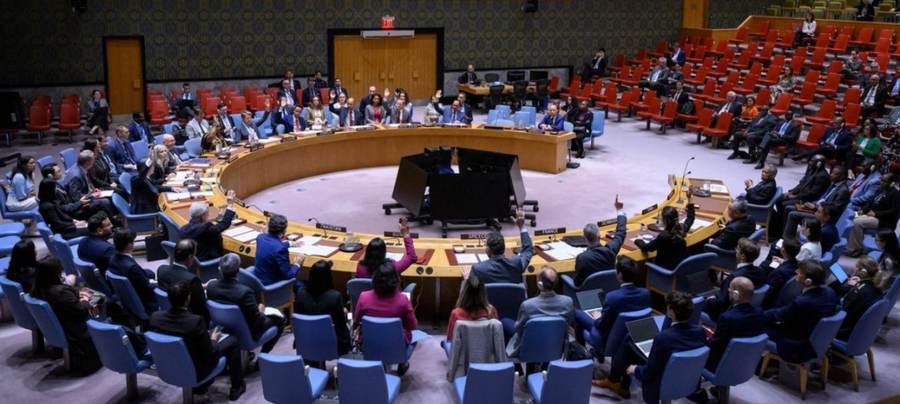
UNITED NATIONS — UN renews Haiti force mandate: The Security Council voted Tuesday to keep the Gang Suppression Force in Haiti for another six months, through March 31, 2027, as a new attack exposed how far the international mission remains from restoring security. The resolution passed 12–0, with China, Russia and Pakistan abstaining, according to Reuters.
The United States- and Panama-led resolution extends a force designed to confront gangs that control large parts of Haiti and to create conditions for elections scheduled for December 13. U.S. Ambassador to the UN Mike Waltz, a co-sponsor, said roughly 1,500 troops are deployed and the remaining 4,000 are expected in the coming months. That leaves the mission at less than 30% of its intended 5,500 personnel, plus 50 civilian staff.
The security emergency did not wait for the diplomats. Hours before the vote, armed gang members burned homes and killed at least 11 people in Haiti's Artibonite breadbasket region. A local mayor said the assault was retaliation after a Gang Suppression Force unit killed three gang members during an operation against illegal toll booths. One month earlier, at least 47 people were killed and about 50 kidnapped in Kenscoff, a hillside town near Port-au-Prince.
Why this matters
This is the first hard test of whether the Haiti Gang Suppression Force is a genuinely stronger model or simply the latest name for an international deployment that lacks the people and resources to match its promise. The mandate now reaches beyond Haiti's planned December 13 vote, but a date on a UN document cannot secure polling places, roads or communities. The operational question is whether the force can grow fast enough to change conditions before Haitians are asked to vote.
The Artibonite attack sharpened that question at the precise moment the council was debating an extension. The mayor described it as retaliation for a GSF operation, not as an attack ordered around the UN calendar. Even so, the timing delivered a message of its own: gangs can answer a tactical setback with collective punishment while the international response remains understrength. For residents, the distinction between deliberate signaling and opportunistic violence matters less than the result — burned homes, more deaths and another reason to doubt that outside commitments translate into protection.
The December ballot would be Haiti's first presidential and legislative election since 2016, alongside a constitutional referendum. A credible vote requires more than opening polling stations. Candidates must be able to campaign, officials must move materials, voters must travel without coercion, and results must be protected. A security force that cannot reliably hold major routes or prevent retaliatory raids risks turning a national election into a patchwork of access and intimidation.
How Haiti reached another international mission
From Haiti's 2022 plea to the Kenya Haiti mission withdrawal
Haiti first appealed for international security support in 2022 as armed groups expanded their control and state institutions struggled to contain them. The Kenya-led Multinational Security Support mission followed, but it became a warning about the distance between diplomatic authorization and field capability. It was widely regarded as under-equipped and underfunded, and Kenyan troops withdrew early this year.
The Gang Suppression Force replaced that mission a year ago with a more robust mandate. Yet its numbers reveal the continuity beneath the rebrand. AFP reported that as recently as July the force had fewer than 1,000 personnel, drawn from Chad, Mongolia, Jamaica, Guatemala, El Salvador and Sri Lanka. It has since reached about 1,500, but the target is 5,500 personnel and 50 civilian staff. The gap is not marginal; it is the central fact of the mission.
Seven prior missions and the burden of proof
Waltz acknowledged the history directly: "Seven missions have been dedicated to Haiti over the previous decades and obviously to limited success. We're trying to do something genuinely different." That is both the argument for the extension and the standard by which it will be judged. Every previous mission created its own logic for staying: more time to train, more time to stabilize, more time to hand responsibility back. The test of the GSF is whether it can convert six additional months into a measurable transfer of security capacity rather than another extension request.
The U.S. ambassador also drew a line against permanence. "The entire effort... is designed around the ultimate objective that Haitians themselves take back control of their own security and their own future, and this cannot and will not become an endless mission," Waltz said. The promise is clear. The pathway is not. A force operating at less than one-third strength cannot both suppress heavily armed gangs and build an exit strategy unless the reinforcement schedule changes quickly.
What the UN Security Council Haiti vote says
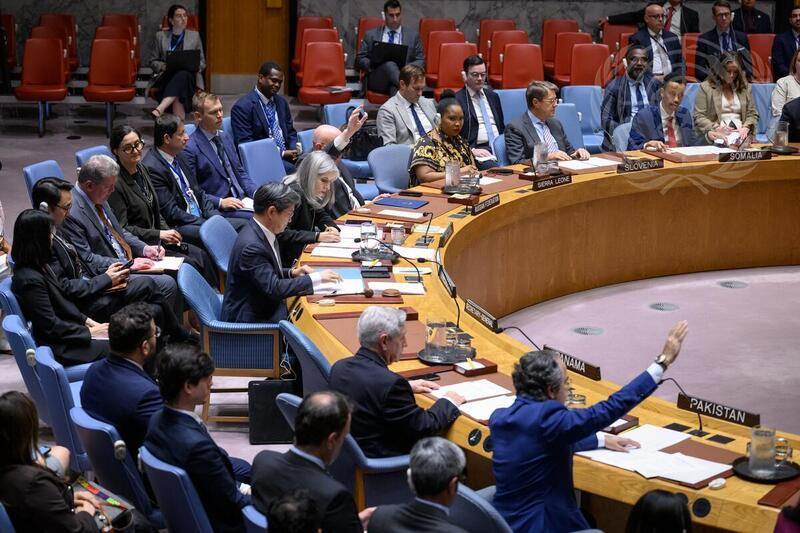
China, Russia and Pakistan abstain on the Haiti vote
The 12–0–3 result gave the resolution a wide majority without producing consensus. China, Russia and Pakistan cited insufficient funding, personnel and efficacy. Their abstentions were a hedge: none used a veto to end the mission, but none was willing to own its current design. That matters because the same concerns will return in March if deployments still lag and violence remains high.
The tally also resolves a discrepancy in wire reports. Reuters reported 12 votes in favor, none against and three abstentions; one outlet carrying AFP listed 13 in favor. With 15 council members and three named abstentions, Signal Post News is using Reuters' 12–0–3 count.
For Washington, the extension is a multilateral win. The United States and Panama kept the mission alive without a veto fight and secured language linking security to free and fair elections. For Haiti's transitional authorities, it buys time and preserves an international framework that would be difficult to replace quickly. For troop-contributing countries, however, the mandate also preserves exposure: their personnel carry the operational risk while promises of money and reinforcements remain tests of future delivery.
Britain backs the mission — and its guardrails
The United Kingdom voted yes. In its explanation of vote, Minister Counsellor Jennifer MacNaughtan said London hoped the force could bring Haitians the security and stability they deserve. The UK pledged $7.5 million to the mission's human-rights compliance framework and condemned gangs' use of civilians as human shields, hostage-taking, sexual violence and attacks on vulnerable communities.
That funding highlights a second measure of success. A force built to confront gangs using sophisticated tactics, heavy weaponry and children cannot be judged only by arrests, territory or casualties. It must also show that more aggressive operations do not reproduce the abuses that have damaged trust in past interventions. Human-rights monitoring is therefore not an accessory to the mission; it is part of whether the model can retain legitimacy.
The numbers behind the decision
Haiti security force: 1,500 troops deployed, 4,000 still expected
The arithmetic is unforgiving. About 1,500 deployed troops represent roughly 27% of the intended 5,500-person force. To reach the planned strength, approximately 4,000 more personnel must arrive. The council has provided six months of legal runway, but the election is only weeks away. The mission therefore faces two clocks: the March 31 mandate deadline and the much nearer December 13 political deadline.
The casualty figures frame those clocks. At least 47 dead and about 50 kidnapped in Kenscoff, followed a month later by at least 11 killed in Artibonite, are not abstract indicators. They show armed groups retaining the ability to stage mass-casualty attacks in different areas even as the international force expands. A larger headcount will matter only if it creates durable control: routes that stay open after an operation, communities that do not face retaliation after troops leave, and Haitian institutions able to hold ground.
Gangs also have structural advantages. They control substantial territory, use sophisticated tactics and weaponry, and extensively recruit or use children, according to AFP. That means the mission is not confronting a single organization with a fixed front line. It is confronting networks able to disperse, re-form and punish civilians. Deployment speed matters, but intelligence, mobility, logistics and disciplined coordination with Haitian authorities may matter just as much.
Who benefits, who loses and what critics are watching
The immediate beneficiaries are Haiti's transitional government and international partners that need a security architecture in place before elections. The vote prevents a vacuum and gives planners a defined period to move troops and resources. It also interrupts the gangs' political narrative that international support will fade faster than their coercive power.
The likely losers, if the reinforcement succeeds, are armed groups that profit from illegal tolls, territorial control and fear. The Artibonite sequence shows why: a GSF push against toll booths killed three gang members, and the subsequent retaliation demonstrated both the economic stakes and the civilian cost. Suppressing the revenue system behind violence may be strategically necessary, but doing it without protecting nearby communities can turn tactical gains into strategic losses.
The abstainers' critique remains potent because it is measurable. If funding stays uncertain, troop arrivals slip or the force remains below half strength, China, Russia and Pakistan can say they warned the council. If deployment accelerates and violence falls, the United States and Panama can argue that the stronger model worked. The next six months will therefore be judged less by speeches than by a short list of facts: personnel on the ground, protected population centers, reopened routes, and whether voting can happen without systematic coercion.
What happens next
Can reinforcements arrive before Haiti's December 2026 elections?
The first scenario is the one the resolution assumes: substantial reinforcements arrive before December 13, the force secures priority corridors and polling areas, and the election proceeds with enough national reach to claim legitimacy. The Kenya-led mission's experience argues against assuming that outcome. Promised deployments can be slowed by funding, equipment, training and political approvals long after diplomats announce them.
The second scenario is delay. If security conditions make free and fair voting impossible, authorities may postpone the election. That could prevent a dangerously uneven poll, but it would also extend Haiti's transition and deepen public skepticism about whether deadlines carry meaning. A delay without a credible security timetable would look less like prudence than drift.
The third scenario is mission creep. The GSF could remain understrength yet indispensable, prompting another extension in 2027 while its objectives expand from election security to long-term territorial control. That is exactly the "endless mission" Waltz said the United States would not accept. If the force still cannot meet its design strength, a third rebrand may follow instead — new terminology around the same unresolved constraints.
The six-month renewal prevents immediate collapse. It does not solve the problem the council itself identified. Haiti's election timetable, the force's troop shortfall and the gangs' capacity for retaliation are now on a collision course. The mandate's success will be decided not in New York, but in whether the next operation in Artibonite leaves civilians safer after the troops move on.
Sources
- Reuters — "UN renews Haiti force mandate six months after fresh gang killings," September 29, 2026.
- AFP via The Peninsula Times — Security Council extension, intended force strength and Haiti election timetable, September 29, 2026.
- UK Government — Jennifer MacNaughtan's explanation of vote and UK human-rights compliance pledge, September 29, 2026.