Europe · Germany · Protests · Halloween
More than 160,000 people were expected at youth-led rallies across Germany on Saturday — against high living costs, underfunded schools and universities, environmental neglect and a possible return of compulsory military service — as the protest wave that began in France crossed the Rhine.
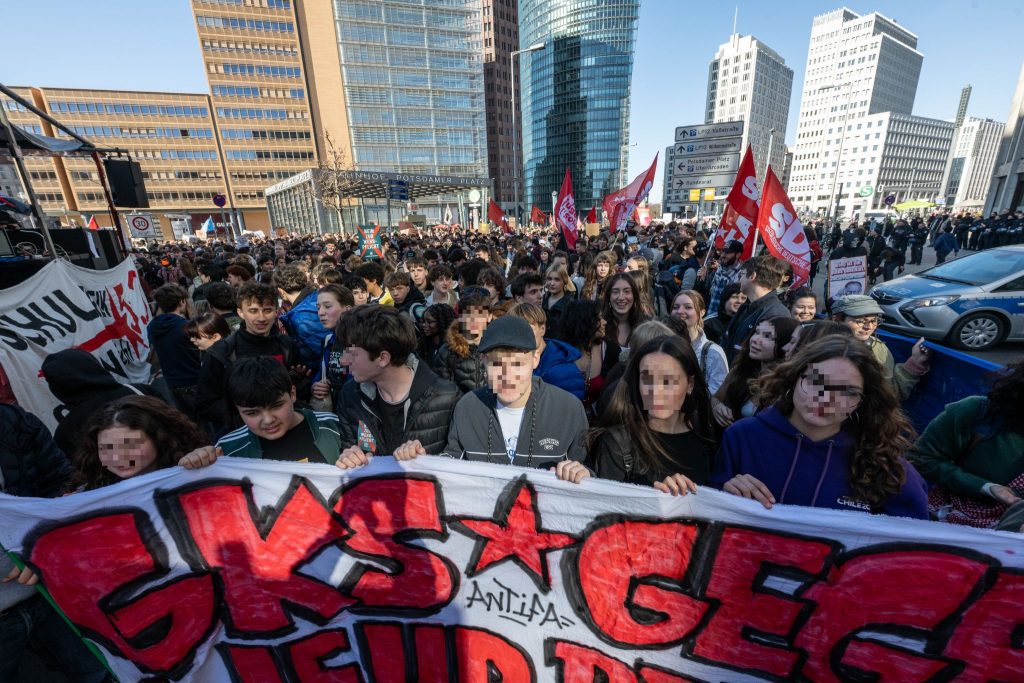
BERLIN, October 31, 2026 — The Germany Halloween cost of living protests that took to the streets on Saturday are the newest national chapter of a European story that began in France: a youth-led movement, organised under the name Gen Z regelt — rendered by CNN as “Gen Z has got this!” — protesting the high cost of living, underfunded schools and universities, environmental concerns and the possible return of mandatory military service. Organisers planned actions in 34 cities including Berlin, Frankfurt, Cologne and Munich and said they expected more than 160,000 people to take part, according to Reuters. The day of action was deliberately set for Halloween to maximise turnout and visibility. Extra police officers were deployed nationwide, and luxury shops along Berlin's upmarket Kurfürstendamm boarded up their windows as a precaution. CNN reported German authorities expected the demonstrations to be largely peaceful, while warning — as Reuters also reported — of attempts by extremist groups to exploit the movement.
The grievances, in the movement's own order
The platform is a generation's balance sheet. Housing and everyday costs top it: young Germans face rents and living expenses that have outrun entry-level incomes for years. Education follows — underfunded schools and universities are a literal daily experience for a movement whose base is students. The environmental strand connects the German marches to the school-strike tradition that made German youth protest globally visible in the Fridays for Future years. And the military-service strand gives the movement its sharpest edge: the possible reintroduction of compulsory service asks the same generation to underwrite, with their own years, a defence expansion debated by older voters. “The government has offered no response to our concerns other than to continue making cuts and piling further burdens upon us,” said Steve, an 18-year-old due to speak at the Munich rally, addressing Chancellor Friedrich Merz, in Reuters' reporting. The movement is not unanimous even among student organisations: Germany's national school student umbrella organisation, the BSK, distanced itself from the initiative and plans its own separate day of protest on November 20 — a split that underlines both the movement's reach and its contested mandate.
The French wave it rode in on
Germany's Saturday was the second front of a weekend that began across the Rhine. France, where the cost-of-living unrest began, braced for fresh rallies the same day: Yellow Vest actions billed as a third act after the October 17 and 24 rounds, 27 detentions by mid-afternoon by an Interior Ministry count given to CNN, and Interior Minister Laurent Nuñez restricting authorised demonstrations to outside town centres with 70,000 officers deployed nationwide — the deployment this newsroom detailed in its coverage of France's Halloween protest lockdown. The German movement explicitly follows the wave of Gen Z-led demonstrations across Europe this year — the same current that has put students on the streets from Paris to, in a different register, Tirana's student protests. What travels is not an organisation but a template: a named generation, a list of material grievances, a date chosen for spectacle, and social media as the organising committee.
Why this matters
Germany is Europe's economic centre of gravity, and its politics run on a demographic bargain that is visibly fraying: baby boomers retiring, the working-age population shrinking, pension and public-service costs rising, and growth too weak to paper over the transfers. A youth movement that names that bargain — you are cutting our schools, raising our rents, debating our conscription, and borrowing against our future to protect pensions — is making an intergenerational argument that mainstream parties have mostly made in euphemism. That is why the government's response matters beyond Saturday's crowd counts. Movements like this historically resolve three ways: absorption (a party adopts the programme), concession (a policy changes — a rent measure, an education package, a service model softened), or dissipation after a spectacular season. The Halloween timing is a clue to the organisers' own theory: spectacle first, scale as proof of concept, programme after. The police warnings about extremist exploitation point at the movement's structural vulnerability — leaderless, brand-driven protests are easy to join and easy to hijack, and one night of televised disorder can replace a policy list with a law-and-order story, as France's weekend has already shown in miniature.
Multiple angles: order, sympathy and the sceptics
The authorities' position is precaution without prohibition: extra officers, boarded windows on the Kurfürstendamm, expectations of peace. Business voices worry about Halloween-night disorder in shopping districts; educators and many parents are plainly sympathetic to the schools argument; the governing coalition hears in the protests a referendum on its consolidation budget. Sceptics make three fair points: expected crowds are organisers' numbers, not counts; a movement spanning rent, climate, education and conscription can struggle to say what winning looks like; and the BSK's November 20 split suggests the student base is not monolithically behind this vehicle. Supporters answer that breadth is the point — these are the conditions of being young in Germany in 2026, and they arrive as a package. Both readings will be tested by the same evidence: the actual turnout, the night's conduct, and whether November 20 looks like a rival or a second wave.
What happens next
Watch the government's first substantive response — Chancellor Merz's government can offer a meeting, a policy signal on service or education funding, or silence, and each choice prices the movement's future. Watch whether Gen Z regelt converts a Halloween peak into an organisation: named demands, local chapters, a second date that is not a festival. And watch France, where the template was set and where Saturday's third act will show whether the wave is building or cresting. Europe's autumn of youth protest now has its German chapter; whether it becomes a season or a movement is the story of the next month.
Related coverage: France Deploys 70,000 Police for Halloween Protests as Paris March Is Pushed to the City's Edge · Albania Student Protests as Edi Rama Refuses to Resign
Sources
- CNN (October 31, 2026) — Cost-of-living protests spread to Germany on Halloween as France braces for fresh unrest — the 'Gen Z has got this!' movement's grievances, the Berlin, Frankfurt, Cologne and Munich actions, extra police deployment and the boarded-up Kurfürstendamm.
- Reuters (October 31, 2026) — Gen Z protests reach Germany as over 160,000 expected at Halloween rallies — 34 cities, the Gen Z regelt campaign, opposition to compulsory military service, the Munich speaker's statement, and the BSK's separate November 20 protest.