Albania student protests: a third day of clashes in Tirana has put Prime Minister Edi Rama's 13-year government under its sharpest street pressure yet — students in the streets, water cannon answering them, parliament suspending its work, and a prime minister telling Reuters, in terms, that he will not resign.
Tirana Burns, Rama Stands Firm: Albania's Students Want Him Gone
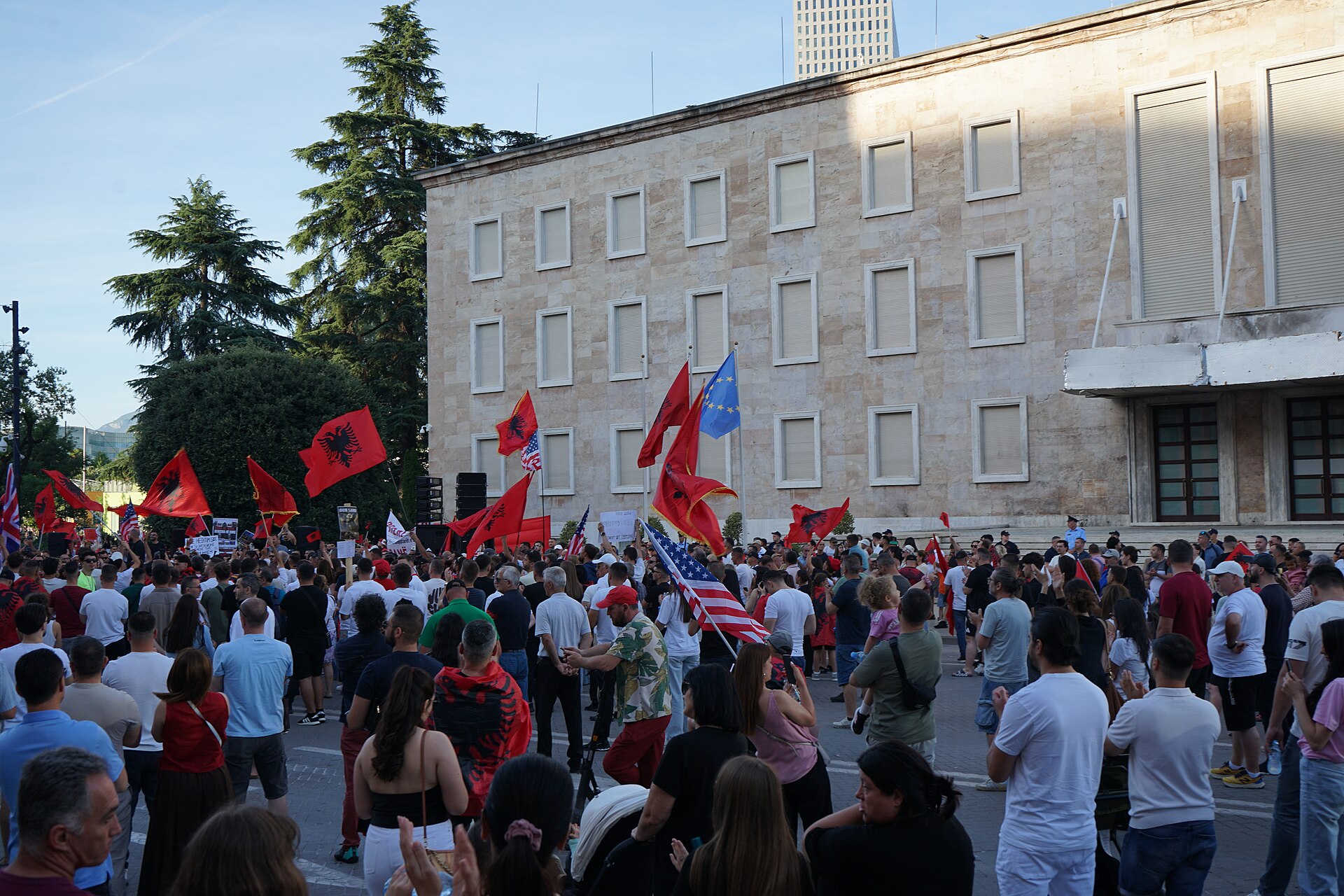
The third day was the loudest. Student-led protests that had already produced two days of clashes in Tirana rolled into Thursday with no sign of the de-escalation the government had reason to hope for: police again turned water cannon on demonstrators, protesters smashed windows and damaged property in the capital, and parliament cancelled its session rather than sit above the noise. By the time Edi Rama spoke to Reuters, the unrest was no longer only a Tirana story — protests had spread to several smaller cities, and students were joining university boycotts, converting a street confrontation into an institutional one.
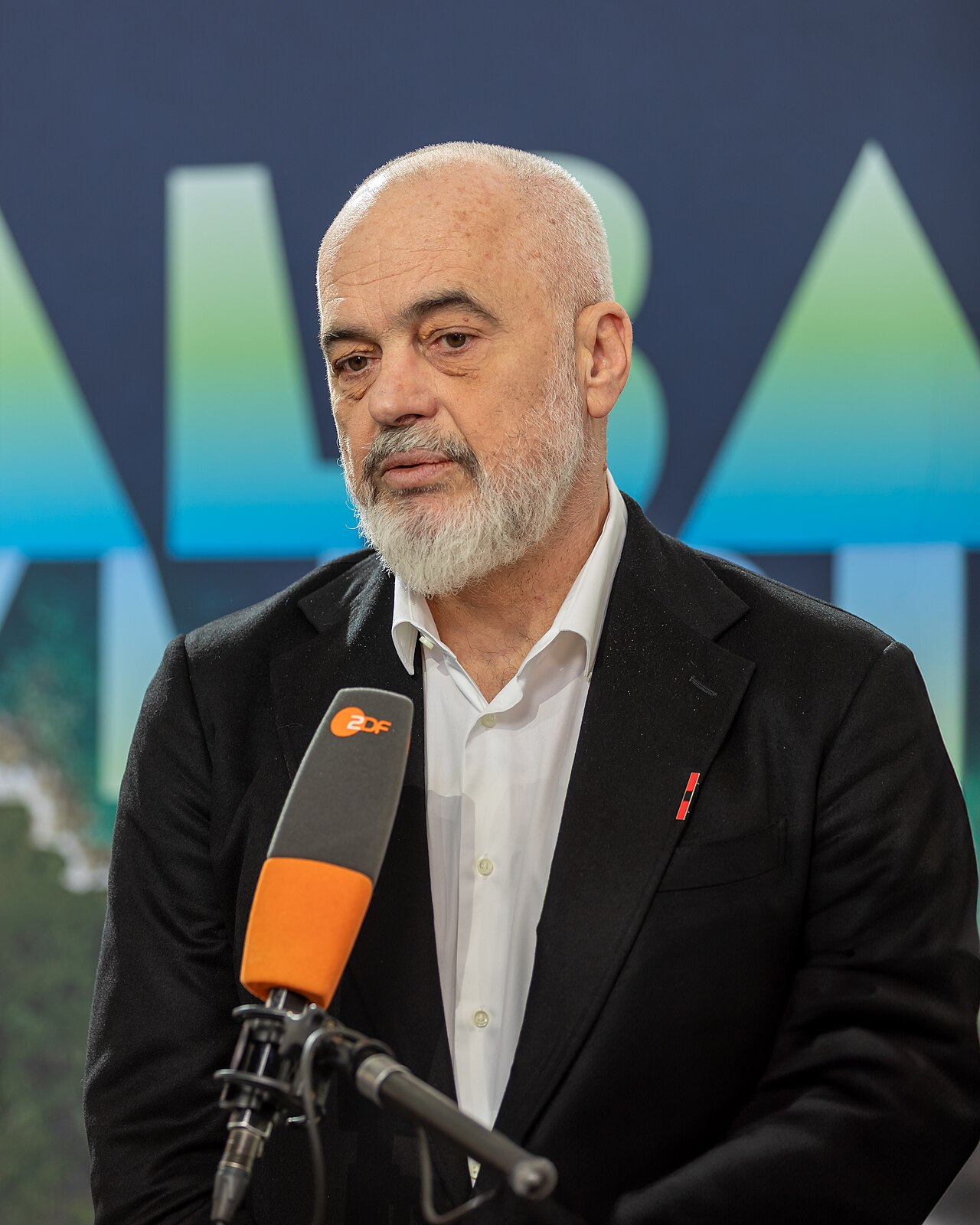
Rama's answer, given to Reuters on Thursday, was a refusal stated as a principle. He will not resign. Governments, he said, change through democratic elections — and Albania held one last year, returning his Socialists for a fourth term. He presented his mandate in specific terms: to complete Albania's EU accession negotiations. On the grievance at the centre of the student mobilisation he left a door open — he is ready to discuss education costs. On the methods of the past three days he closed one: violence and property damage, in his framing, are not legitimate protest. It is a carefully partitioned response — negotiate the fees, concede nothing on the office, contest the tactics — and it tells the protesters exactly which of their demands is discussable and which is not.
Two movements became one
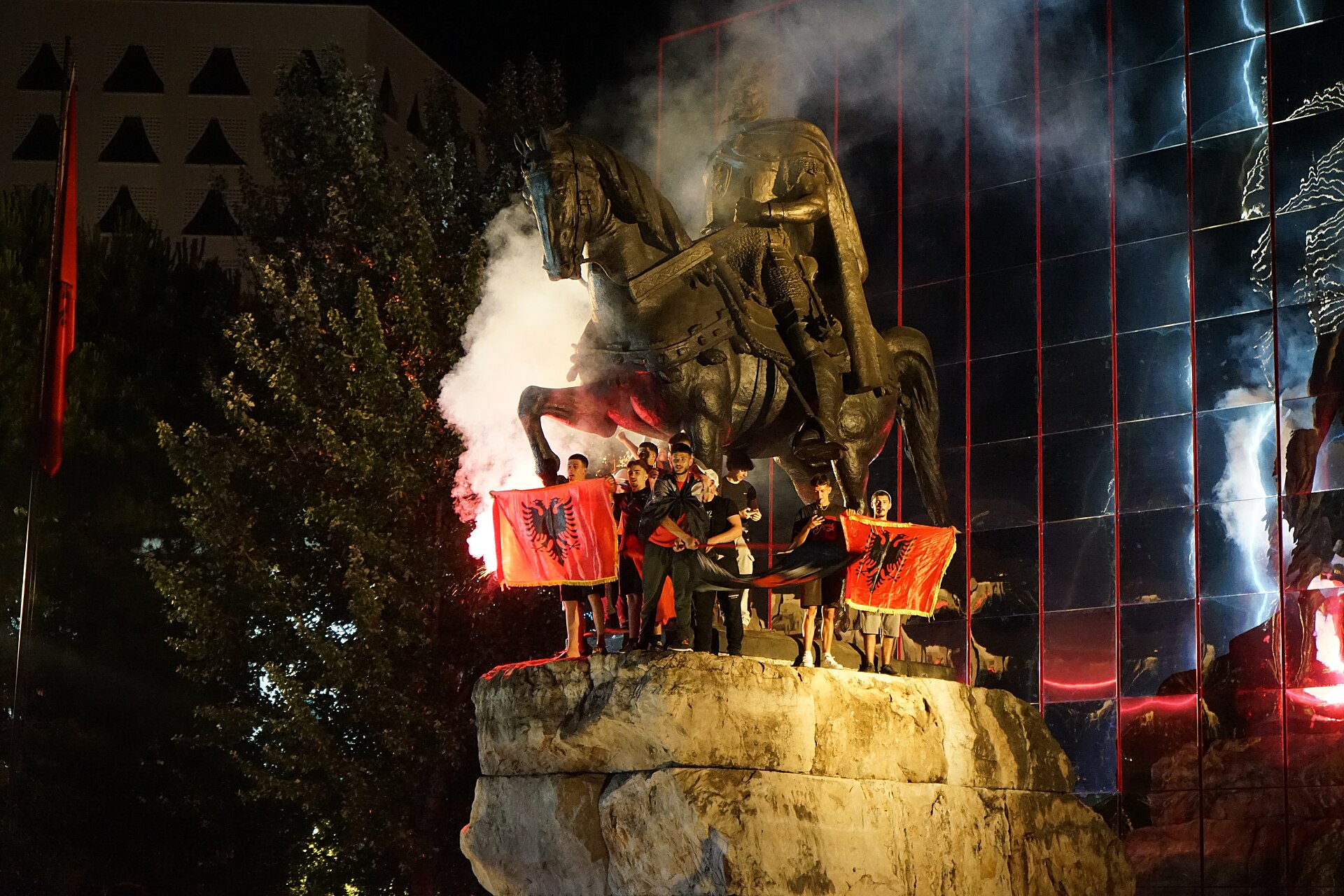
The students did not start this. For months, Albania's "Flamingo" movement had staged mostly peaceful demonstrations against a planned luxury resort on the country's protected southern coast — a development backed by Jared Kushner, President Trump's son-in-law, which has drawn legal challenges as well as crowds. The flamingo, the bird of the coastal lagoons the resort would neighbour, became the emblem of an argument about who Albania's coastline is for: its ecology and its public, or the connected capital that can build on it.
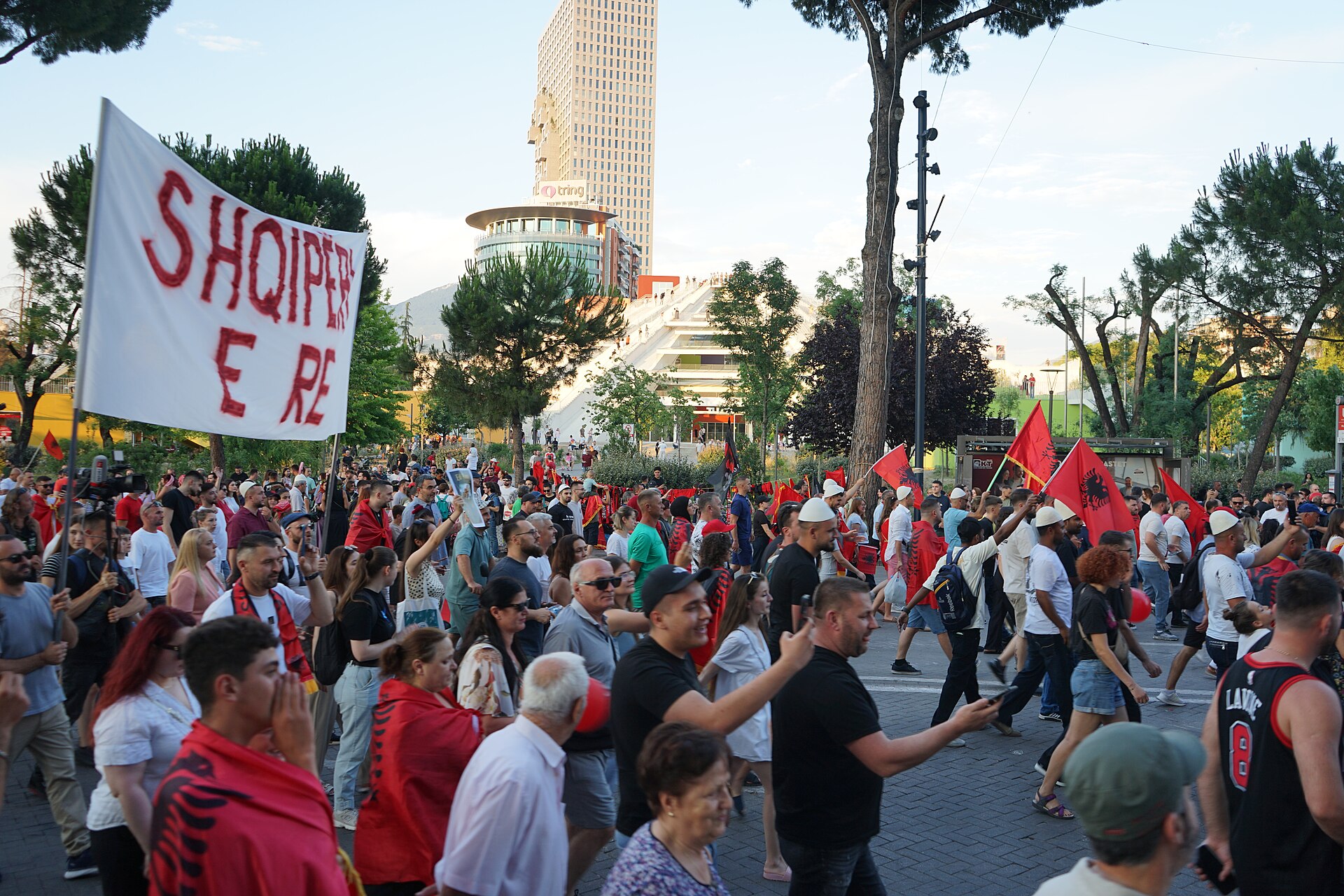
This week the students joined, and the movement changed character. What students brought was a second ledger of grievances: rising education costs, and allegations of corruption — claims the government denies — that reach well beyond one resort. Where the Flamingo protests asked whether a particular project should exist, the merged movement asks whether the state itself is run for its citizens or for a network. The demand that crystallised that shift was the one now painted on the placards: Rama must go. A movement that began by defending a lagoon is now contesting a government — and a government that could wait out an environmental campaign is discovering that students, with boycotts in their hands and no lectures to lose, are harder to wait out.
The numbers are contested, like everything else
What the clashes have cost, in bodies and liberty, depends on the day and the source — and the uncertainty is part of the record, not a gap in it. The Associated Press reported that in the Tuesday–Wednesday clashes, 23 demonstrators were detained overnight, and six police officers and a journalist were injured. Those figures are reported tallies, not settled findings. Footage circulating from the clashes has produced allegations of excessive force by police; those allegations are disputed, and individual incidents remain under investigation. The government reads the same three days as a public-order story — smashed windows, damaged property, injured officers. The protesters read them as a state answering tuition grievances with water cannon and overnight cells. Both readings are available in the same footage, which is precisely why the footage has become the argument.
What is not contested is the trajectory. A protest cycle that begins with detentions in the dozens and injuries on both sides, and then spreads geographically while acquiring a boycott weapon, is not dissipating — it is organising. Thursday's spread to smaller cities matters more than any single clash in the capital: movements confined to a capital can be policed as events; movements that replicate in provincial cities and emptied lecture halls have to be answered as politics.
Rama's answer: elections, Europe — and talks about fees
To understand the refusal, start with the mandate Rama believes he holds. He has led Albania's Socialist government for 13 years and won a fourth term at last year's elections. His self-presentation — repeated to Reuters — is of a prime minister mid-task: Albania, with Montenegro, leads the Balkan EU accession process and aims for entry as early as 2028, and his stated mandate is to finish those negotiations. The accession machinery he invokes is real and moving; as this site reported when the EU opened accession clusters for Ukraine over Hungary's resistance, Brussels is simultaneously widening the door and demonstrating how political the doorway remains. For Rama, the argument writes itself: a country negotiating its European future cannot swap governments by street ultimatum without telling Brussels something damaging about its stability.
The protesters hear the same facts in the opposite order. A government 13 years in office, returned for a fourth term, controls — in their account — the appointments, the contracts and the coastline; elections held under those conditions ratify the network rather than check it. When Rama says he is ready to discuss education costs, students answer that the costs are a symptom. When he says violence is not legitimate protest, they answer that the property damage followed the water cannon, not the other way round. Neither side is arguing about the events of this week any longer. They are arguing about whether Albania's institutions are a route to change or a wall against it — an argument that, in the Balkans, is rarely settled quietly. Neighbouring Kosovo has spent this autumn having its own version of it, as protests in Pristina over the war-crimes court showed: across the region, the street has become the appeals chamber for decisions citizens believe their institutions got wrong.
Why this matters
Albania is the European Union's frontrunner, and frontrunners are exhibits. Together with Montenegro, it leads the Balkan accession queue; its file is the one Brussels points to when it argues that enlargement is alive. That status cuts both ways in a crisis. A candidate country whose capital is being water-cannoned over corruption allegations hands every enlargement sceptic in the Union a photograph. A government that fell to a street movement mid-negotiation would hand them something worse — evidence that the region's politics remain extra-institutional. Rama knows this, and his refusal is partly addressed to an audience in Brussels: the institutions hold, the mandate stands, the talks continue. The protesters know it too, which is why so many of their flags are European: the blue flag in the crowd is not decoration, it is a claim that they, not the government, are the European side of this argument — that accession should mean the rule-of-law standards the government is accused of failing, not merely the negotiations it is conducting.
The deeper engine is demographic. Young Albanians cite a labour market in which jobs run through connections, and emigration as the rational response — Albania has spent three decades exporting its graduates. A protest generation that believes the domestic game is rigged and the exit door is the honest option is not, at bottom, protesting tuition. It is protesting the terms on which a young person can build a life at home. That is why the education-costs concession Rama has offered, however genuine, may miss the movement's centre: fees are the itemised bill for a system the students are rejecting whole. Europe has seen this chemistry before — most recently in France, where school protests forced an emergency response from President Macron — and the lesson of those episodes is consistent: movements powered by the young do not demobilise for the concession that addresses their smallest grievance.
Who gains, who loses
Rama's defenders make a case that deserves stating in its strong form. Albania voted last year; a fourth term, however much the opposition dislikes it, is a democratic fact, and resignations extracted by street pressure would set the precedent that any sufficiently angry crowd outranks the electorate. The government's economic story — growth, tourism, an accession process ahead of every regional rival — is not nothing. On the corruption allegations, the government's position is denial, and its supporters add that the opposition, including figures who have themselves faced corruption proceedings, is working to convert student anger into a vehicle for its own return. On the resort, the government's defenders argue the development brings investment and jobs to a poor coast, and that its legal challenges are being heard in the courts, which is where such questions belong.
The protesters' case, in its strong form, answers each point. Elections in a state where the governing party has held power for 13 years do not, by themselves, answer allegations of captured institutions. Growth that flows through connected networks is experienced by the young not as prosperity but as proof of the rigging. A resort on protected coastland, backed by the American president's son-in-law, is — whatever its legal merits — a near-perfect emblem of the claim that Albania's assets are allocated by access. And a government confident of its mandate, they argue, would not need water cannon to protect a parliament session from students. The opposition parties gain if the movement holds; they also risk owning it if it turns destructive. Brussels loses either way in the short term — instability in its model candidate, or a candidate whose stability is maintained by force. The clearest losers so far are the detained and the injured on both sides, and the students whose semester is becoming a siege.
What happens next
Three paths are open, and the next week will sort them. The first is the negotiated deflation: the government converts Rama's offer into a concrete package on education costs — fee relief, funding commitments, a student seat at the table — and the movement, its original Flamingo wing never having demanded a resignation, splits between those who take the deal and those who will not leave without one. This is the ending governments aim for, and the boycott is the obstacle: every empty lecture hall is a daily referendum the government keeps losing quietly.
The second path is escalation into attrition. Protests settle into a rhythm — marches, clashes, detentions, investigations — that consumes the autumn. In that version the accession calendar becomes the pressure gauge: every negotiating round Albania attends will be read against footage from its own streets, and every EU statement of concern will land in Tirana as ammunition for one side or the other. Governments with 13 years of practice rarely lose wars of attrition against students, whose coalition must survive exams, holidays and weather. But attrition has a price, and Albania's price is denominated in the emigration statistics the protests are about: each month of stalemate is another cohort booking the flight out.
The third path is the rupture — a single incident, an injury too many or a death, that converts a protest movement into a national crisis no concession can price. Nothing in the reporting so far says Albania is there; the casualty figures, contested as they are, remain in the range of injuries and overnight detentions. But every participant in Balkan politics knows how quickly that arithmetic changes, and how completely it changes the questions asked afterwards. What to watch: whether the boycotts hold into a second week; whether the smaller-city protests grow their own organisation rather than echoing Tirana; whether the government moves from offering discussion to publishing a package; and whether Brussels says anything at all — because in an accession country, silence from the Union is also a message, and both sides will read it.
Rama has been Albania's prime minister for 13 years by being, repeatedly, the last man standing in arguments like this one. The students in Tirana's streets have made the oldest counter-argument there is: that a mandate is not a possession, and that a government which can only be changed on its own schedule has already answered the question the protesters are asking. Between the water cannon and the boycott, Albania now has to decide which argument it believes — before the fourth day becomes the fourteenth.
Sources: Reuters reporting of October 15, 2026 (Prime Minister Edi Rama's refusal to resign, the third day of clashes, water cannon use, property damage, the cancelled parliament session, protests spreading to other cities and university boycotts); Associated Press reporting of October 14, 2026 (the Tuesday–Wednesday clashes, 23 demonstrators detained overnight, six police officers and a journalist injured); Al Jazeera reporting of October 15, 2026 (spread of protests and boycotts; the government's position). Injury and detention figures are as reported by AP; allegations of excessive force are disputed, with individual incidents under investigation, and are presented as reported rather than settled. Photographs are Flamingo movement file photographs from June 2026, as captioned.