World · Europe · Germany · France · Protests
World / Europe — The protest wave that has filled French streets for three weekends reached Germany on Saturday, as the youth alliance Gen Z regelt marched in 34 cities for education funding, cheaper living and against a return to conscription. The day stayed peaceful in most places — then, after dark, came water cannon in Cologne, Hamburg and Frankfurt, burning barricades in Hamburg and injured police officers in Frankfurt, while France put 70,000 police on the streets for a third straight Saturday.
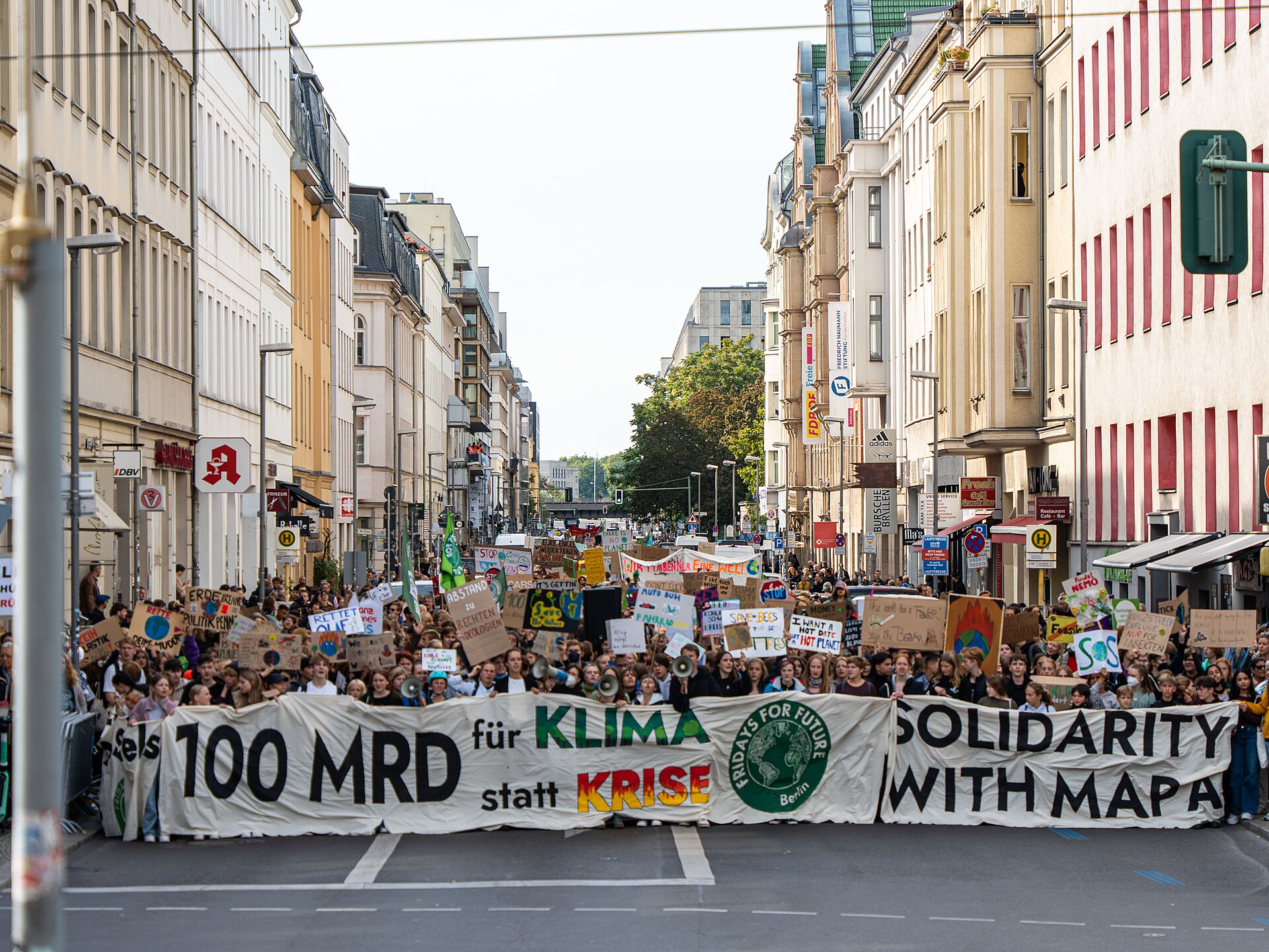
BERLIN — It began the way it has begun in France for three weekends now: with school students in the streets in daylight, carrying hand-painted signs about school funding, rents and a future they say is being spent without them. By Saturday night, in several German cities, it had become the other thing the French autumn has made familiar — water cannon in the dark, barricades burning in Hamburg, police officers injured in Frankfurt, and a movement insisting that the violence was not theirs.
The German debut of Europe’s youth protest wave was organised by Gen Z regelt — roughly, “Gen Z takes charge” — an alliance that called rallies in 34 cities on Saturday, October 31, coinciding with Halloween. Its demands braid together the grievances that have driven young people onto the streets of Italy, Spain, Portugal, Albania and France since mid-September: more spending on schools and education, action on climate, cheaper housing and lower living costs. Germany adds one trigger that is entirely its own: fury at proposals to bring back mandatory military service, suspended in 2011 and now debated again as Berlin rebuilds its armed forces.
Germany joins the wave
The organisers said more than 160,000 people had registered or were expected across the 34 cities — a figure that describes sign-ups and hopes, not counted crowds, and one that should be read the way France’s early movement numbers had to be read: as a claim. The counted crowds, where police gave them, were smaller and still substantial for a first day. Hamburg police counted more than 10,000 marchers. Frankfurt drew about 8,000 before police dissolved the march there. Berlin police counted roughly 5,000 at the Brandenburg Gate rally, half the 10,000 the organisers had expected, and Munich about 1,800. By the afternoon, the organisers were reporting more than 68,000 participants from the first 12 cities to finish, and later claimed around 120,000 nationwide — a number no authority has confirmed, in a country where no official nationwide count exists.
Berlin had prepared without panicking. Police chief Barbara Slowik Meisel deployed an additional 1,500 officers and said she had little reason to fear attacks and no concrete evidence of any coordinated looting operations of the kind that scarred the first French weekend. German authorities said they expected the day to be largely peaceful, while warning that extremist groups might try to exploit it — a warning that reads, after Saturday night, less like boilerplate than it did on Friday.
The politics arrived before the marches did. Alexander Throm, a CDU member of parliament, told Handelsblatt that “scenes like those in France must be prevented at all costs.” Felix Banaszak, co-leader of the Greens, cautioned against placing youth protests under general suspicion in advance. And the movement showed its first German crack before it had marched a step: the national school-student umbrella organisation, the BSK, distanced itself from Gen Z regelt — pointedly, not from the students — and announced its own protest day for November 20, in an argument its secretary-general Amy Kirchhoff set out on Thursday. Whether that split defuses the wave or legitimises it is one of the open questions of the German autumn.
After dark: water cannon in three cities
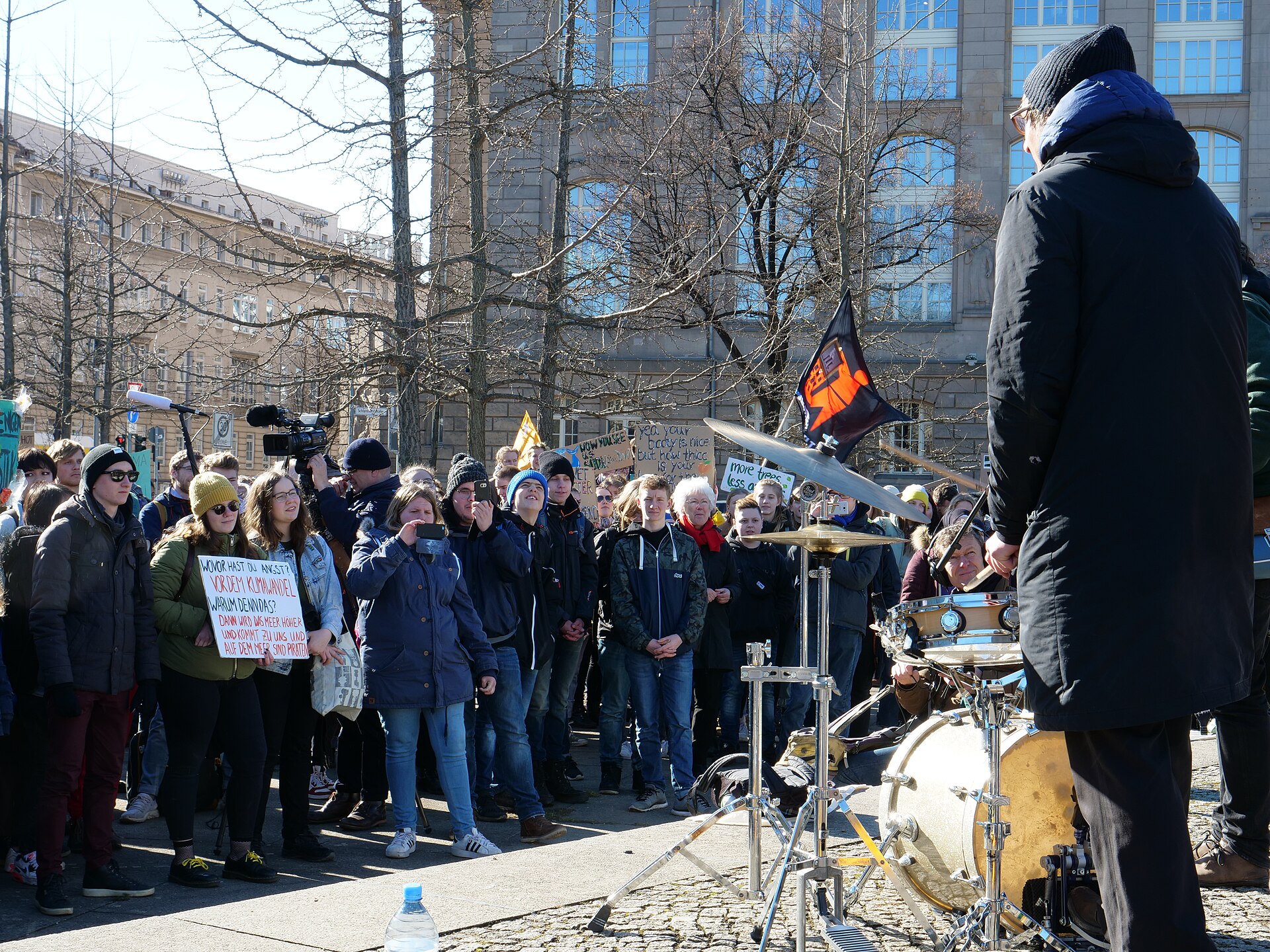
The day, in most of the 34 cities, was what the organisers had promised: young, loud and peaceful. The night was not. In Cologne, the planned march had been called off before it began; crowds that gathered in the evening anyway were met with water cannon. Hamburg, which had produced the day’s largest counted march, saw barricades set on fire and water cannon deployed as darkness fell. In Frankfurt, where police had dissolved the daytime march, clashes after dark left several police officers injured, according to Hesse’s interior minister, Roman Poseck — and Frankfurt, too, saw water cannon turned on crowds. In Berlin, bottles and eggs were thrown at police. In Leipzig, officers used pepper spray.
The pattern is now a European one, and it is the same pattern France’s interior ministry has been describing for a fortnight: a mainstream demonstration in daylight, organised and largely peaceful, and a second, smaller, harder gathering after dark that the organisers do not control. Gen Z regelt’s organisers distanced themselves from the violence, as their French counterparts have done after each of the last three Saturdays. The distinction matters, and it is also, from a policing point of view, nearly useless: the same streets, the same night, the same Halloween crowds in masks that make identification harder and that France’s interior minister had singled out in advance as a specific risk.
France braces again — and marches a third time
Across the Rhine, Saturday was the third act of a drama now running on a weekly schedule. Interior Minister Laurent Nuñez had called October 31 “a very high risk” day and deployed 70,000 police and gendarmes, including elite units, for the second weekend running at that scale — warning that radical groups on the far left, in the labour movement and around radicalised Yellow Vest networks were calling for gatherings from 8 p.m., after the mainstream demonstrations end, and that face coverings could be banned where public order was at risk.
France’s day, as Signal Post News reported separately on Saturday, drew an Interior Ministry count of 320,000 marchers nationwide and 70,000 in Paris, with about 300 arrests and the now-familiar dusk clashes in the capital — down from the 410,000 who marched last Saturday, when the same 70,000-strong deployment was credited with averting a repeat of the looting and vandalism of October 17. The bill for that first weekend and the wider wave has been put at more than €1 billion in retail losses by the Chamber of Commerce. The US Embassy advised travellers to avoid demonstration areas. Labour leaders and students have called further protests and a nationwide strike for November 5.
Why this matters
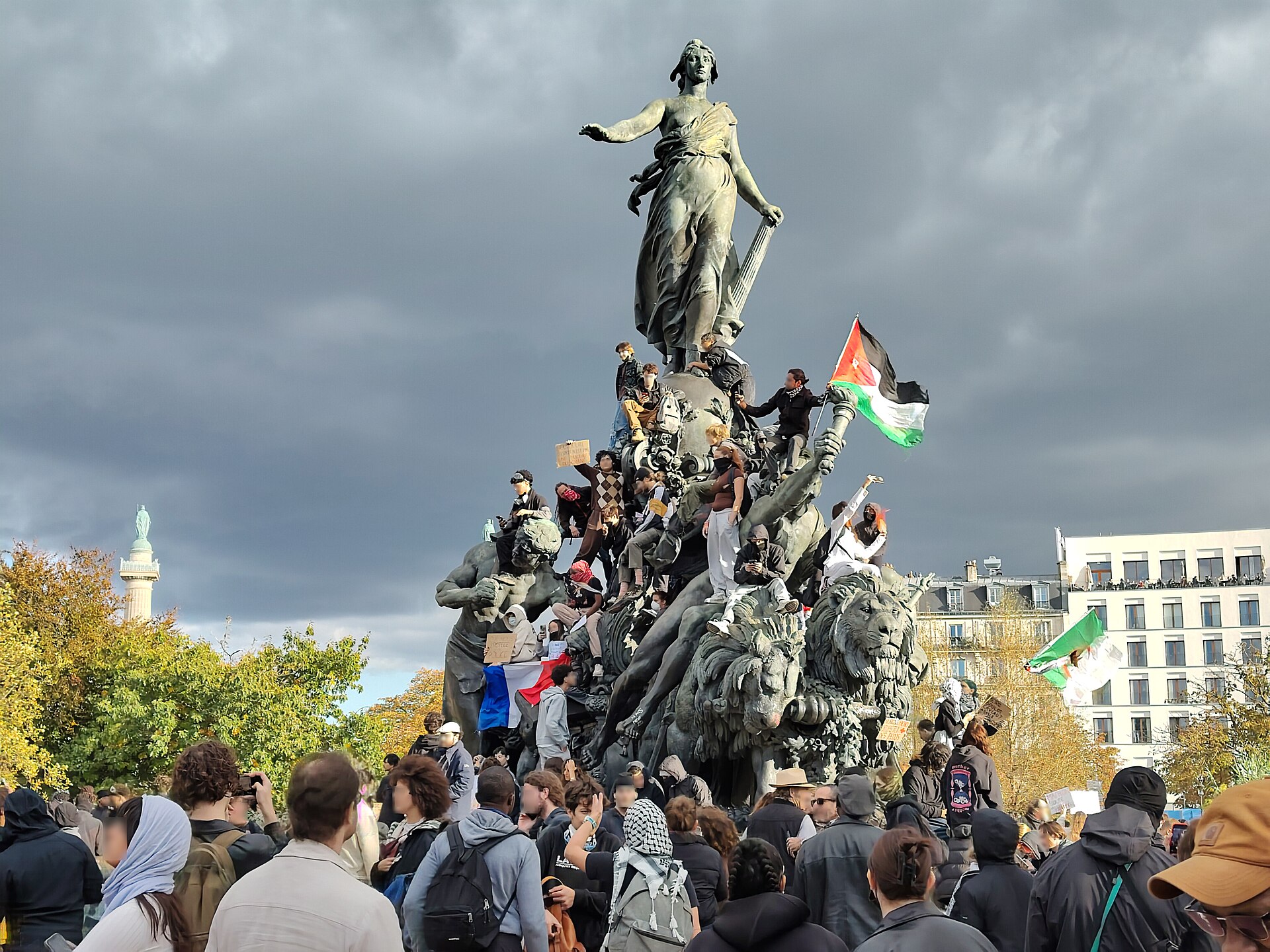
What crossed the Rhine on Saturday was not an organisation. No party built Gen Z regelt, no union chartered it, and no French group exported it in any formal sense. What crossed was a repertoire: the school-student march, the social-media call-out, the Saturday rhythm, the demands translated into local grievances. In France the trigger is the cost of living and a budget fight under a minority government; in Germany, living costs and schools come with conscription attached, an issue that reaches into every family with a teenage son in a way French politics does not. A protest form that can be re-skinned that easily is not a French story or a German story. It is a European one, and governments are now planning for it as such — Berlin’s 1,500 extra officers and Paris’s 70,000 are the same decision at different scales.
The second significance is the split day itself. Both movements now have the same structure: a large, peaceful, genuinely popular daytime protest, and a violent fringe after dark that dominates the images and the politics. The fringe hands governing parties their argument — Throm’s “scenes like those in France” line was written before a single German barricade burned — and it hands the far right, in France Marine Le Pen’s National Rally above all, a law-and-order platform that polls suggest is already valuable. The movements’ answer, that the violence is not theirs, is true and insufficient: a repertoire that anyone can join after dark is a repertoire whose worst hour defines it. The argument inside Gen Z regelt — the BSK walking away to hold its own day on November 20 — is, at bottom, an argument about exactly that.
The numbers in context
Saturday’s arithmetic needs care, because the German movement’s numbers and France’s numbers are not measured the same way. The 160,000 German figure was a registration and expectation number published before the marches; the organisers’ later claims — 68,000 from the first 12 cities, around 120,000 nationwide — are claims, and the police counts that do exist (Hamburg above 10,000, Frankfurt about 8,000, Berlin about 5,000, Munich about 1,800) describe a strong first day, not a counted national total. France, by contrast, now publishes an official count each Saturday: 550,000 on October 17, 410,000 on October 24, 320,000 on October 31 — a movement shrinking by the ministry’s measure even as it spreads geographically, policed each time by 70,000 officers, a deployment roughly fourteen times Berlin’s additional contingent and one that no French government can sustain every weekend indefinitely. Underneath both stories sits the same ledger: retail losses above €1 billion in France, French public debt approaching 120 percent of GDP, and a French economy that contracted in the third quarter — the figures that turned a school protest into a governing crisis.
What happens next
Three dates will tell whether Saturday was a debut or a one-off. On November 5, France’s unions and students have called a nationwide strike that will test whether the Saturday wave can move into the working week. On November 20, the BSK’s rival protest day will test whether Germany’s students prefer the umbrella’s discipline to Gen Z regelt’s energy. And every Saturday between now and then will test the prediction Berlin’s police made on Friday — that Germany would stay largely peaceful — against the evidence of Saturday night. France’s experience says waves like this either institutionalise or exhaust themselves; it also says the fourth weekend is harder to police than the first. Germany has now had its first.
Related coverage: 320,000 march in France’s third weekend as Paris clashes erupt at dusk · France mobilises 70,000 security forces for last Saturday’s protests · France’s economy contracts in the third quarter
Sources: Reuters, “Gen Z protests reach Germany as over 160,000 expected at Halloween rallies,” October 31, 2026 (Berlin); Reuters, October 29 and October 31, 2026 (Paris) on Interior Minister Laurent Nuñez and the 70,000-strong Halloween deployment; The Guardian, “Cost of living protests to spread to Germany and reignite in France on Halloween,” October 30, 2026; AFP and CNN reporting, October 31, 2026, on the Saturday-evening clashes in Cologne, Hamburg and Frankfurt, and the statement of Hesse’s interior minister Roman Poseck; French Interior Ministry figures for October 31, 2026.