Sport / World / Olympics
Diamniadio / The Dakar 2026 Youth Olympic Games have opened in Senegal — one hundred and thirty years after the modern Olympics began, the flame has finally come to Africa — some 2,700 teenage athletes from more than 200 delegations, a lion cub named Ayo, and a continent testing whether it can one day host the senior Games themselves
The Dakar 2026 Youth Olympic Games opened on Saturday evening in Senegal, and with them a 130-year wait ended. The opening ceremony, staged from 18:30 local time at the Stade Abdoulaye Wade in Diamniadio, outside Dakar, made these Games the first Olympic sporting event ever held on the African continent — a continent that has sent champions to every modern Olympics since the movement was revived, yet had never once been asked to host it. About 2,700 young athletes, all aged 17 or under, from more than 200 delegations are in Senegal for the fortnight of competition that runs from October 31 to November 13.
The scale is deliberately youth-sized but unmistakably Olympic. The programme spans 25 competition sports and 10 engagement sports, with 153 medal events contested across three host communities — Dakar itself, Diamniadio and the coastal resort town of Saly. Some competition, in baseball5, had already begun on Friday, October 30, a day before the ceremony; the formal opening, however, belonged to Saturday night, when Senegalese President Bassirou Diomaye Faye was expected to declare the Games open before a home crowd that has been promised this moment, in one form or another, for eight years.
The Games arrive under a motto that doubles as a thesis statement — “Africa Welcomes, Dakar Celebrates” — and behind a mascot, Ayo, a young lion whose name means “joy” in Yoruba. They are the fourth Summer Youth Olympic Games, following Singapore in 2010, Nanjing in 2014 and Buenos Aires in 2018. But no previous edition carried the weight this one does. Dakar is not simply a youth tournament with rings attached. It is a continental audition: the first test of whether the Olympic movement’s map can finally be redrawn to include the one inhabited continent it has always visited only as a guest.
A night of firsts at the Stade Abdoulaye Wade opening ceremony
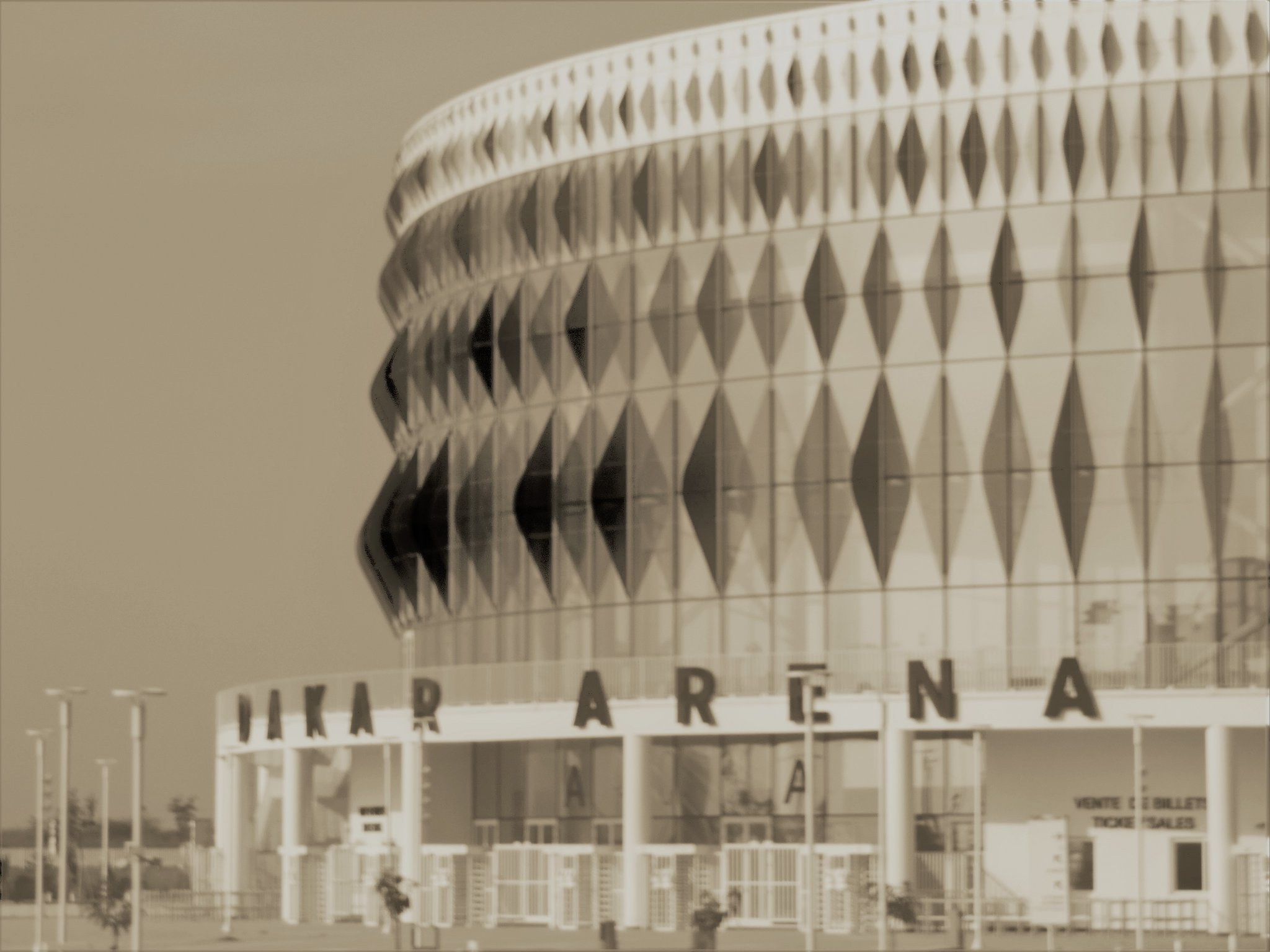
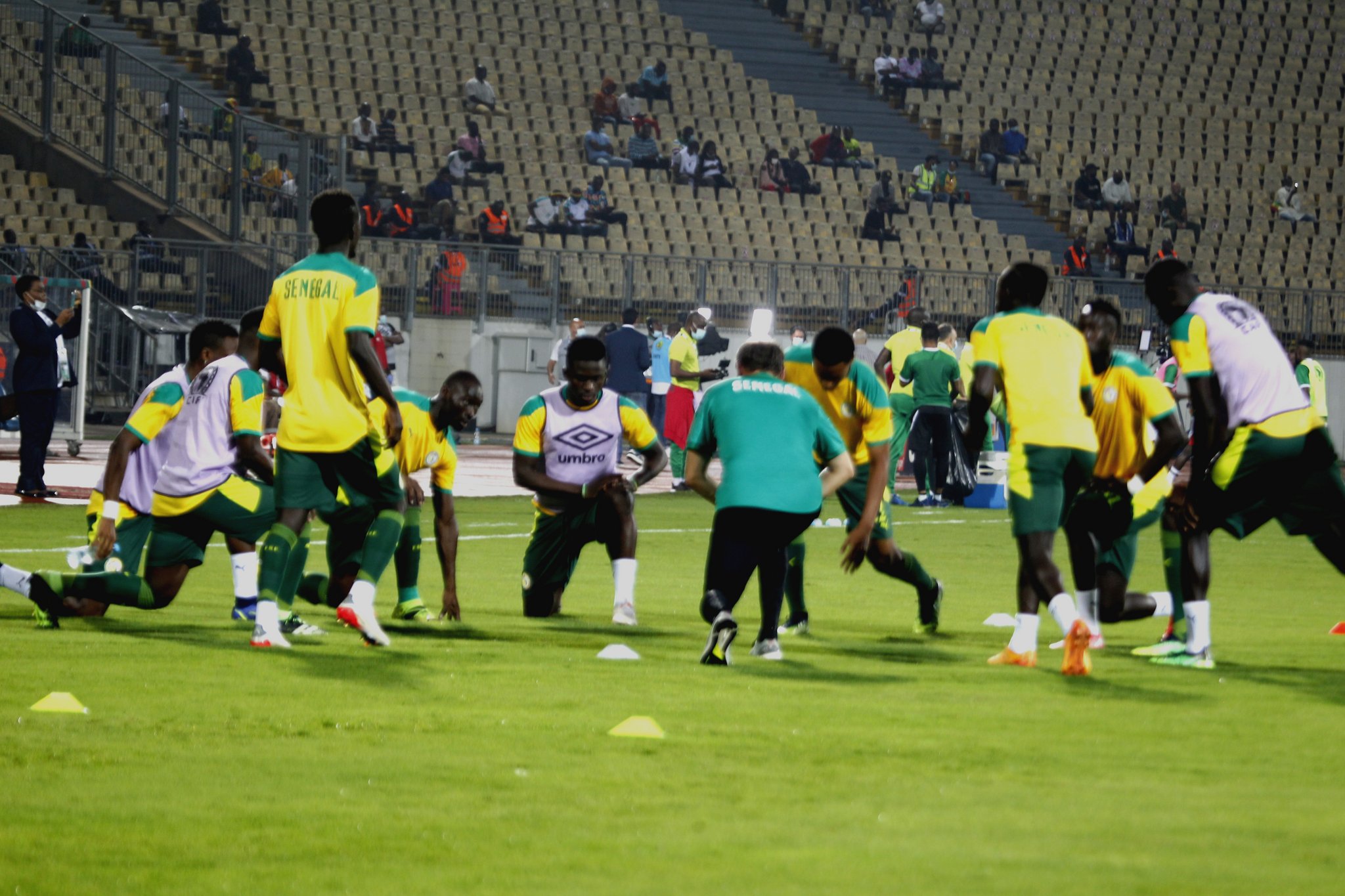
The ceremony at the Stade Abdoulaye Wade — Senegal’s 50,000-seat national stadium, opened in 2022 in the new city of Diamniadio — was built around the theme the organisers have pressed since the bid: this is Africa’s Games, hosted by Senegal on the continent’s behalf. The athletes’ parade brought more than 200 delegations into the stadium, the largest gatherings of nations ever assembled for a sporting event on African soil. Senegal’s own team, at about 136 athletes according to local reporting, is one of the largest host delegations in Youth Olympic history — a statement of intent from a country that intends to be seen competing, not merely organising.
The Youth Olympic Games 2026 opening ceremony and a president’s welcome
Two figures framed the evening. President Faye, whose government inherited the final, most expensive stretch of preparations, was expected to perform the formal declaration opening the Games — the ritual sentence that converts a construction project into an Olympic host. And in the stands sat Kirsty Coventry, the president of the International Olympic Committee: a former Olympic swimming champion from Zimbabwe, the most decorated African Olympian of her era, and the first African ever to lead the IOC. Coventry has described the Dakar Games as an opportunity to change perceptions of Africa — a formulation she has returned to repeatedly, and one that carries an unusual double meaning coming from her: the Games are meant to change how the world sees Africa, and how the Olympic movement itself accounts for a century of holding its biggest party everywhere else.
Why this matters
A 130-year absence, ended. The modern Olympic Games began in Athens in 1896. Since then the Summer Games have been held in Europe, North America, South America, Asia and Oceania — and the Youth Games added their own editions on three continents before this one. Africa, throughout, supplied the talent without ever supplying the stage: generations of champions, from Ethiopian distance runners who redefined endurance sport to Senegal’s own footballers and the swimmers, boxers, judokas and sprinters of fifty-four nations, all of them crowned somewhere else. The absence was never about merit. It was about the Olympic movement’s working assumptions — about infrastructure, security, finance and organisational capacity — applied, decade after decade, in ways that always pointed the Games somewhere else. Saturday night did not erase that history. It did, finally, interrupt it.
Dakar as a test case for a senior African bid. Nobody in the Olympic movement pretends a Youth Games is a senior Games: the athlete count, the media footprint and the cost differ by an order of magnitude. But the questions a host must answer are the same questions at smaller scale. Can venues be finished and filled? Can 200 delegations be moved, housed, fed and kept safe across three host communities? Can a transport network built around a new city — Diamniadio, with its arena, its stadium and its express train to Dakar — absorb an Olympic fortnight without seizing up? Can the ceremonies, the broadcasting and the daily operations run to the standard the rings demand? Dakar 2026 is where those questions get African answers on the record. A successful fortnight becomes the evidence file for the argument, already being made in several African capitals, that a senior Summer Games on the continent — for 2036, 2040 or beyond — is not a fantasy but a scheduling decision.
What a successful Games actually proves. The proof, notably, is not the opening ceremony; opening ceremonies almost always succeed. It is the unglamorous middle: the Tuesday-morning transport runs, the venue operations in Saly, the security perimeter that holds without smothering the festival atmosphere, the young Senegalese officials and volunteers running sessions on time. The Dakar 2026 Learning Academy, which has trained cohorts of young African sports professionals in the disciplines of Games delivery, is part of the same wager — that the most durable legacy of these Games would be a generation of Africans who know, from the inside, how an Olympics is actually run, and who can staff the next bid rather than merely applaud it. If Dakar works, the burden of proof in every future host debate shifts: the question stops being whether Africa can do this, and becomes why it would be asked to wait.
Context and background: an eight-year road from award to opening night
Dakar was awarded the Games in 2018, when the IOC — then under Thomas Bach — chose Senegal’s capital as the first African host in Olympic history. The original date was 2022. That plan did not survive the COVID-19 pandemic: in 2020, the IOC and Senegal agreed to postpone the Games by four years, to 2026, the first postponement of its kind for a Youth Olympics and a decision taken when the pandemic had already forced the Tokyo senior Games into a year’s delay. The four-year slip reshaped the project. Venues and infrastructure in Diamniadio that might have been rushed were instead folded into Senegal’s longer-term development of the new city; the organising committee had time, though not always money, and the political ground shifted beneath the project as Senegal changed presidents — Faye’s government, elected in 2024 amid a cost-of-living crisis, inherited the final straight of a Games awarded under a predecessor era.
The Youth Olympic model itself explains much of Dakar’s shape. Conceived as something more than a junior championship, the Youth Games pair elite competition for athletes aged up to 17 with education and cultural exchange: athletes live together, attend workshops and cultural programmes, and compete in formats — mixed-gender and mixed-nation teams among them — designed to teach the Olympic values the movement likes to print on banners. The 10 engagement sports in the Dakar programme, showcased without medals, belong to the same philosophy: sport as an invitation, particularly to young people who may never have touched a fencing piste or a rowing ergometer. Dakar has leaned into the model with tools like the Learning Academy, which has run multi-week training for young professionals from across Africa in fields from venue management to media operations — capacity-building that is meant to outlast the closing ceremony.
The sequence of editions tells its own story about the movement’s geography. Singapore 2010 proved the concept in Asia; Nanjing 2014 scaled it; Buenos Aires 2018 took it to South America and set attendance marks that organisers still cite. Each edition moved the Youth Games further from the movement’s European centre of gravity. Dakar completes the pattern — and, in doing so, closes the last continental gap in the Olympic hosting map at any level. What the senior Games do next is the question this fortnight is really asking.
The numbers in context: 2,700 athletes, 153 medal events, three host communities
Set Dakar against a senior Summer Games and the proportions clarify what kind of test this is. A senior Olympics draws roughly 10,500 athletes; Dakar’s roughly 2,700 is about a quarter of that — a village, not a city, but a village drawn from more than 200 delegations, essentially the full Olympic family. The 153 medal events across 25 competition sports compress the essential disciplines of the summer programme into fourteen days, while the three-community footprint — Dakar, Diamniadio and Saly — deliberately distributes the Games across the capital’s historic peninsula, the purpose-built new city inland and the Atlantic resort coast. It is a geography that shows off three different Senegals, and that stress-tests three different kinds of hosting at once: urban, greenfield and resort.
The age cap — athletes up to 17 — is the other defining number. These Games will be won, in large part, by athletes the wider public has not yet met: the class of 2026 is, by design, a preview of Los Angeles 2028 and Brisbane 2032. Youth Olympic champions from Singapore and Buenos Aires went on to senior podiums; scouts, federations and sponsors treat the fortnight accordingly. For the host, the arithmetic cuts the other way as well: Senegal’s approximately 136-strong team gives home crowds someone to follow in nearly every session, and gives Senegalese sport a measurable before-and-after — entries, finals, medals — against which the Games’ domestic promise can honestly be judged.
Multiple angles: who benefits — and who is asking harder questions
The clearest beneficiaries are Senegal’s young athletes and the generation behind them. A home Youth Olympics puts world-class competition, coaching exchange and facilities on the doorstep of a country where sporting talent has never been the scarce resource — opportunity has. African sport federations gain something less visible but possibly more valuable: proximity. Officials, coaches and administrators from across the continent can study a live Games operation at regional travel cost, and the Learning Academy’s graduates carry that knowledge home with them. And the IOC itself gains legitimacy it has openly sought. A movement that claims universality while never hosting on one continent carried an obvious asterisk; under its first African president, removing that asterisk in her first full year in office is both a sporting milestone and an institutional one. Coventry’s framing — changing perceptions of Africa — is also a defence of the Olympic idea in the place that idea had most conspicuously never been tried.
The questions are real, and Senegalese debate has aired them for years. Mega-events everywhere face the cost-and-legacy scepticism that Dakar cannot exempt itself from: money spent on venues and ceremonies in a country under acute fiscal pressure — Signal Post News reported this month on the ruling Pastef party’s refusal to pass its own government’s budget amid a debt burden above 130 percent of GDP and a $2.2 billion IMF programme in doubt — is money whose alternative uses are easy to name. Legacy sceptics ask the question that haunts every Games: will the venues still be used, maintained and full in 2031, or will Dakar join the long photographic essay of Olympic facilities decaying in the sun? The honest answer is that Diamniadio’s stadium and arena were built as national infrastructure before they were Olympic venues, which improves their odds — Senegal’s football team fills the Stade Abdoulaye Wade on its own calendar — but the fortnight will be judged, as every Games is judged, by what is still running five years later.
There is a third angle between celebration and scepticism, and it belongs to the rest of the continent. For African Olympic committees watching from Nairobi, Cairo, Lagos or Johannesburg, Dakar is a proof they did not have to pay for: if Senegal delivers, the template — regional hub city, new-city venue cluster, youth-scale programme — becomes the working model for a senior bid consortium or a future African host. If it stumbles, the setback will be generalised, unfairly but predictably, to a continent of fifty-four nations judged by one fortnight. That asymmetry is precisely why so much of Africa has adopted these Games as its own, and why the motto puts the continent before the city: “Africa Welcomes, Dakar Celebrates.”
A debut beyond the medals: the Youth Olympics refugee team in Dakar
Among the more than 200 delegations in the parade was one that belongs to no nation. For the first time in Youth Olympic history, a Refugee Olympic Team competes at the Games: six young athletes, based in Kenya and Uganda, contesting athletics, judo and taekwondo. Refugee teams have appeared at senior Games since Rio 2016; extending the model to the youth level — to athletes who are, by definition, at the age where displacement most often ends sporting lives — is Dakar’s quietest first and may prove one of its most consequential. For the six athletes themselves, the fortnight offers what every other competitor takes for granted: a team, a flag ceremony, a start list with their names on it. For the movement, it is a test of whether its inclusion rhetoric scales down to the level where it is hardest to deliver.
What to watch across the 14 days — and what Dakar means for 2036 and 2040
The sporting fortnight runs to November 13, and its rhythm is already set: baseball5, which opened competition on Friday, will be among the early medal stories, while the stadium programme builds toward the athletics finals in Diamniadio and the closing ceremony on the final Friday. Watch, first, the refugee team’s six athletes — their heats and bouts will be the most closely read results of the Games relative to their size. Watch Senegal’s 136: a host nation’s medal count is the crudest metric of a Games’ domestic success, and every Senegalese final will play to a full house. And watch the operations rather than the podium where the senior-bid question is concerned: transport between the three communities, crowd management at the Stade Abdoulaye Wade, and the daily verdict of 200 visiting delegations are the data points the 2036 and 2040 conversations will actually cite.
Analysis, not forecast. Dakar cannot, by itself, deliver a senior African Olympics; the IOC’s host-selection politics, broadcast economics and the sheer capital cost of a senior Games all stand between a successful youth fortnight and a 2036 or 2040 award. What Dakar can do — what Saturday night has already begun — is retire the oldest argument against one. For 130 years, the absence of an African Games could be treated, in the rooms where hosts are chosen, as evidence that Africa was not ready. A continent that has now staged the ceremony, housed the family and lit the flame has a reply on the record. The flame lit in Diamniadio will go out on November 13. The argument it started is scheduled to run considerably longer.
Related coverage: Senegal’s Own Ruling Party Just Blocked Its Government’s Budget — and Put a $2.2 Billion IMF Deal in Doubt · Brewers Beat Rays 4-1 in Game 5 to Win First World Series Title in Franchise History
Sources
- Olympics.com — Dakar 2026 Youth Olympic Games (IOC) — the Games’ dates (October 31–November 13, 2026), the programme of 25 competition sports, 10 engagement sports and 153 medal events across Dakar, Diamniadio and Saly, the motto “Africa Welcomes, Dakar Celebrates,” the mascot Ayo, and the history of the award to Dakar in 2018 and the postponement from 2022 because of the COVID-19 pandemic.
- Olympics.com news (IOC, October 2026) — approximately 2,700 athletes aged up to 17 from more than 200 delegations; baseball5 competition beginning October 30; the first Refugee Olympic Team at a Youth Olympic Games (six athletes based in Kenya and Uganda, in athletics, judo and taekwondo); IOC President Kirsty Coventry on the Games as an opportunity to change perceptions of Africa; and the Dakar 2026 Learning Academy.
- Associated Press (October 31, 2026) — the opening ceremony at the Stade Abdoulaye Wade in Diamniadio from 18:30 local time, the Games as the first Olympic event held in Africa, President Bassirou Diomaye Faye expected to declare the Games open, and Dakar as the fourth Summer Youth Olympic Games after Singapore 2010, Nanjing 2014 and Buenos Aires 2018.
- Reuters (October 31, 2026) — opening-day reporting from Dakar and Diamniadio and the Games’ place in the debate over a future African bid for the senior Summer Olympics.