Gaza forced marriage crisis
The Gaza forced marriage crisis has accelerated far faster than the overall rise in reported gender-based violence. Cases of early and forced marriage reaching service providers jumped 123% in the second quarter of 2026 compared with the first, while all reported gender-based violence rose 27% from April through June, according to new analysis by the UN Population Fund. A separate UNFPA study based on testimony from 230 displaced women in Gaza City and Khan Younis describes girls exchanged for food, orphaned teenagers pushed into marriage and rape survivors married to their alleged attackers.
Together, the reports expose a layer of the Gaza war that casualty totals and ceasefire maps do not show: the transformation of marriage into a survival transaction inside a society stripped of food security, privacy, courts and ordinary systems of protection. The data do not measure every abuse in Gaza, and the individual accounts were recorded by researchers rather than independently investigated by Signal Post News. But the scale and direction of the trend are clear enough to demand a policy response.
The numbers behind the crisis
UNFPA's first report analyzed case data gathered by 10 organizations for April through June 2026. It found what the agency called a “severe escalation” in early and forced marriage and said the protracted crisis had “created conditions in which women and girls face escalating risks of gender-based violence.” The 123% quarter-to-quarter increase means reports of forced and early marriage more than doubled in three months. That is more than four times the pace of the 27% increase across all reported gender-based violence during the quarter.
Women aged 18 to 59 accounted for 68% of recorded survivors. In the reporting frame highlighted by UNFPA, forced and early marriage ranked first among the recorded forms of gender-based violence, followed by psychological and emotional violence, physical violence and sexual violence. The ordering reinforces the reports' central conclusion: economic deprivation and personal violence are becoming inseparable.
These are reports received by service providers, not a population-wide prevalence survey. War makes gender-based violence harder to measure, not easier. Families move repeatedly; police, courts and clinics cease functioning; survivors lack safe transport; informal marriages go unregistered; and stigma or fear of retaliation can suppress disclosure. Expanded services can also increase the number of cases recorded without proving that the underlying incidence rose at exactly the same rate. The responsible reading is therefore directional: the figures are indicative, likely incomplete and alarming, rather than a final census of abuse.
What 230 women told researchers
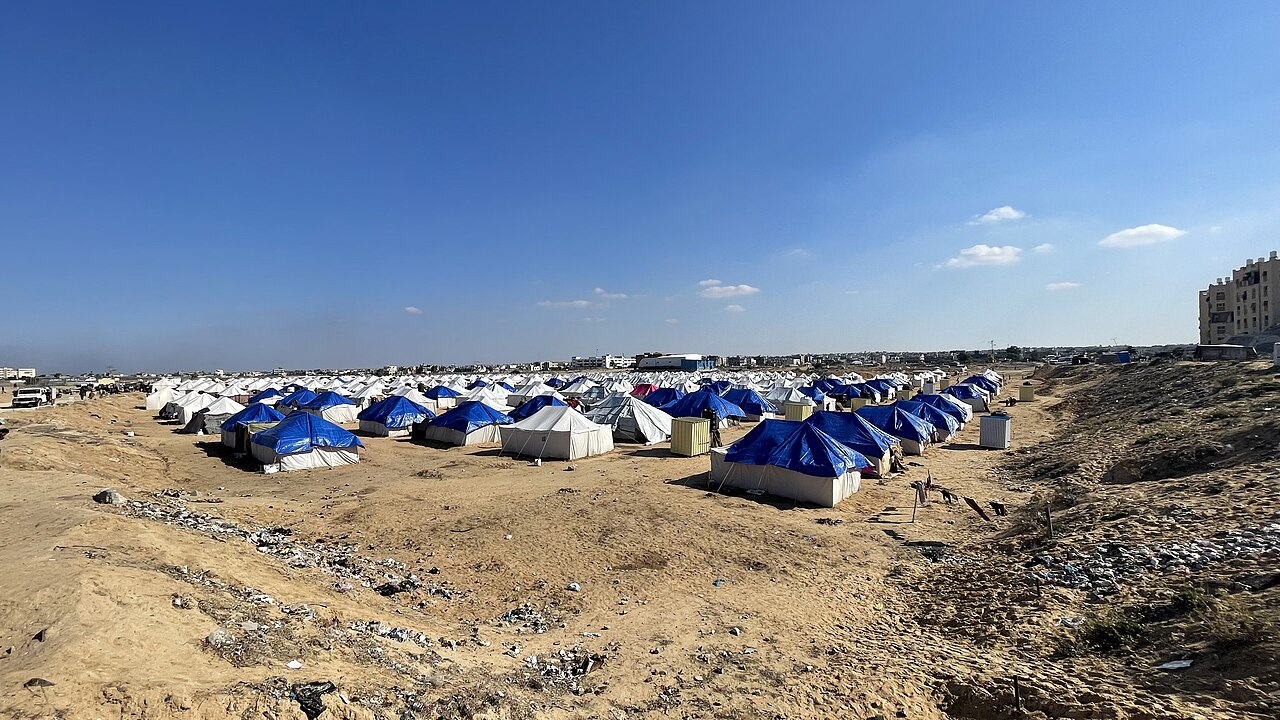
The second UNFPA report records testimony from 230 women living in crowded displacement camps in Gaza City and Khan Younis. Their accounts turn the trend line into a picture of coercion. One displaced woman in a school converted into a shelter said rape survivors were regularly married to their alleged attackers in an attempt to avoid stigma: “When rape cases are discovered in schools, you find weddings and celebrations at the school the next day.”
Another account described a father marrying off his 14-year-old daughter in exchange for “two bags of flour so he and his [other] children could eat.” Women in several camps reported exchanges of this kind. Other testimony said orphaned girls aged 14 and 15 were married by uncles who no longer wanted, or could no longer afford, responsibility for their care after the girls' parents were killed.
Those accounts should be handled with precision. They describe what respondents said they had experienced or witnessed; they are not criminal verdicts, and they cannot establish how frequently every pattern occurs across Gaza. Their significance lies in repetition across different camps and in how closely they match the economic and institutional pressures documented in the quantitative report.
Why this matters
Forced marriage in this context is not merely a private family decision made under stress. It is an economic coping mechanism that transfers the cost of feeding and sheltering a girl from one household to another, often at the expense of her consent, education, health and legal protection. When flour becomes consideration in a marriage arrangement, food has become a form of coercive currency.
Researchers connected the increase to overcrowded shelters and severely limited access to food, water, hygiene supplies and clothing. Nestor Owomuhangi, UNFPA's representative to Palestine, said protective systems “have effectively eroded, leaving no institutional framework to protect vulnerable populations.” The phrase describes more than a shortage of services. It means there may be no functioning school counselor to notice a child disappearing from class, no court able to test consent, no confidential clinic to document an assault and no safe shelter to offer an alternative.
The damage is intergenerational. A girl married at 14 may lose access to education, face early pregnancy and become economically dependent before adulthood. Trauma can follow her children, while the loss of schooling narrows Gaza's future pool of teachers, nurses and professionals. The immediate act reduces one household's burden; the long-term cost is borne by the girl, her family and a society that will need every trained adult it can retain during reconstruction.
How we got here
The war began after the Hamas-led attacks of October 7, 2023, which killed about 1,200 people in southern Israel, according to Israeli figures cited by Reuters. Gaza health authorities say more than 73,000 Palestinians have been killed in the Israeli assault. The two sides dispute responsibility for ceasefire violations and elements of the wider casualty narrative, while international reporting continues to attribute totals to the authorities that supplied them.
A U.S.-brokered ceasefire agreed in 2025 ended the largest phase of fighting and calls for reconstruction, but at least 1,400 Palestinians — mostly civilians, according to Gaza health officials cited by Reuters — have been killed since it took effect. Negotiators have not agreed the terms for Hamas to disarm or for Israel to withdraw troops, and Israeli airstrikes have continued. Political deadlock has left reconstruction promises suspended between diplomacy and implementation.
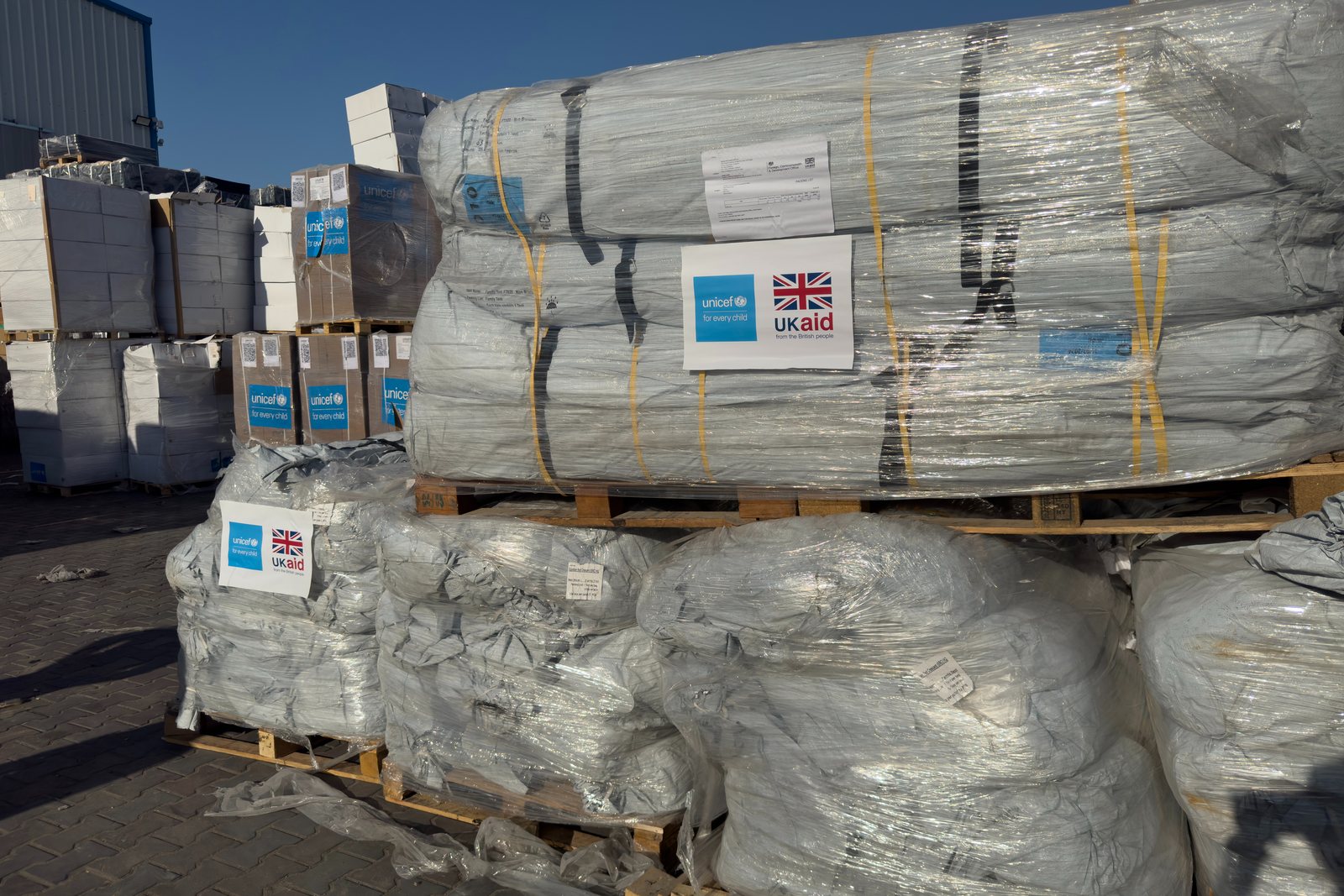
That delay matters to women in tents now. Repeated displacement has compressed unrelated families into schools and camps with little privacy. Jobs, savings and ordinary markets have collapsed or become inaccessible. Aid can keep people alive, but irregular delivery and household scarcity create points at which gatekeepers, relatives or potential spouses can exploit control over food, shelter and information.
Who loses — and the hard questions for aid policy
Women and girls lose first. They face violence in spaces meant to provide refuge, while widows, unaccompanied adolescents and female-headed households have fewer buffers against exploitation. Boys and men can also experience sexual and gender-based violence, and underreporting affects them too, but the UNFPA data show women and girls carrying the largest documented burden.
Washington and aid agencies face an oversight dilemma. Slowing relief to prevent diversion can deepen scarcity and increase the bargaining power of anyone who controls food or shelter. Moving aid rapidly without protection safeguards can leave women exposed at distribution points and in camps. The answer is not to choose between aid and safety. It is to design delivery so women can access both without passing through a coercive intermediary.
Protection agencies have called for safer shelter layouts, functioning locks and partitions, sanitation that women can reach without crossing unlit areas, reliable lighting, confidential case-management services, cash support and legal assistance. Funding has to cover those systems as core humanitarian infrastructure, not as an optional addition after food and tents. The Board of Peace recovery proposal and the eight-nation Gaza road map will be judged partly on whether protection measures reach camp level rather than remaining language in a plan.
Data quality remains a constraint. Service-provider records can show who reaches help, but not everyone who cannot. Future reporting should disclose changes in provider coverage, the geographic distribution of cases, age breakdowns and the share of informal marriages that never enter court records. Better evidence is essential, but uncertainty is not a reason to wait when every known bias points toward undercounting.
What happens next
Winter is approaching while Gaza's shelter stock remains dangerously weak. Local authorities have warned that more than 2,000 war-damaged buildings may be at risk of collapse and identified 255 for planned evacuation, even as equipment and funding shortages limit inspections and demolition. Signal Post News's report on the al-Saada building collapse and Gaza's unsafe structures explains why families can be forced to choose between unstable concrete and exposed tents.
For protection experts, the priorities are concrete: restore confidential reporting channels, keep specialized services funded, create safe shelter and sanitation, support girls' return to education and ensure aid reaches female-headed households directly. Marriage registration and age safeguards also need a functioning legal framework, but formal rules will have limited effect if a family still believes two bags of flour stand between its children and hunger.
The wider test is whether ceasefire diplomacy can produce institutions quickly enough to matter. Reconstruction remains stalled, protective systems have collapsed and the next weather emergency will intensify the pressure inside crowded shelters. The 123% surge is therefore not only evidence of what happened in one quarter. It is an early warning about what prolonged displacement can normalize if food security, safe housing and legal protection are not rebuilt together.
Sources
- BBC News report by Yolande Knell and Malak Hassouneh, syndicated by Asha News, September 23, 2026
- New York Post: Women in Gaza traded for food and forced to marry their attackers, September 23, 2026
- UNFPA: Gaza gender-based violence trends, April–June 2026
- UNFPA: Drivers of gender-based violence in Gaza, testimony from 230 women, September 2026
- Reuters: Gaza war toll and ceasefire context, September 23, 2026
Reporting basis: Fixed September 23, 2026 snapshot. UNFPA case records are indicative rather than a prevalence survey; testimony is attributed to report participants, and casualty figures are attributed to the authorities cited by Reuters. Analysis is Signal Post News's.