Lead
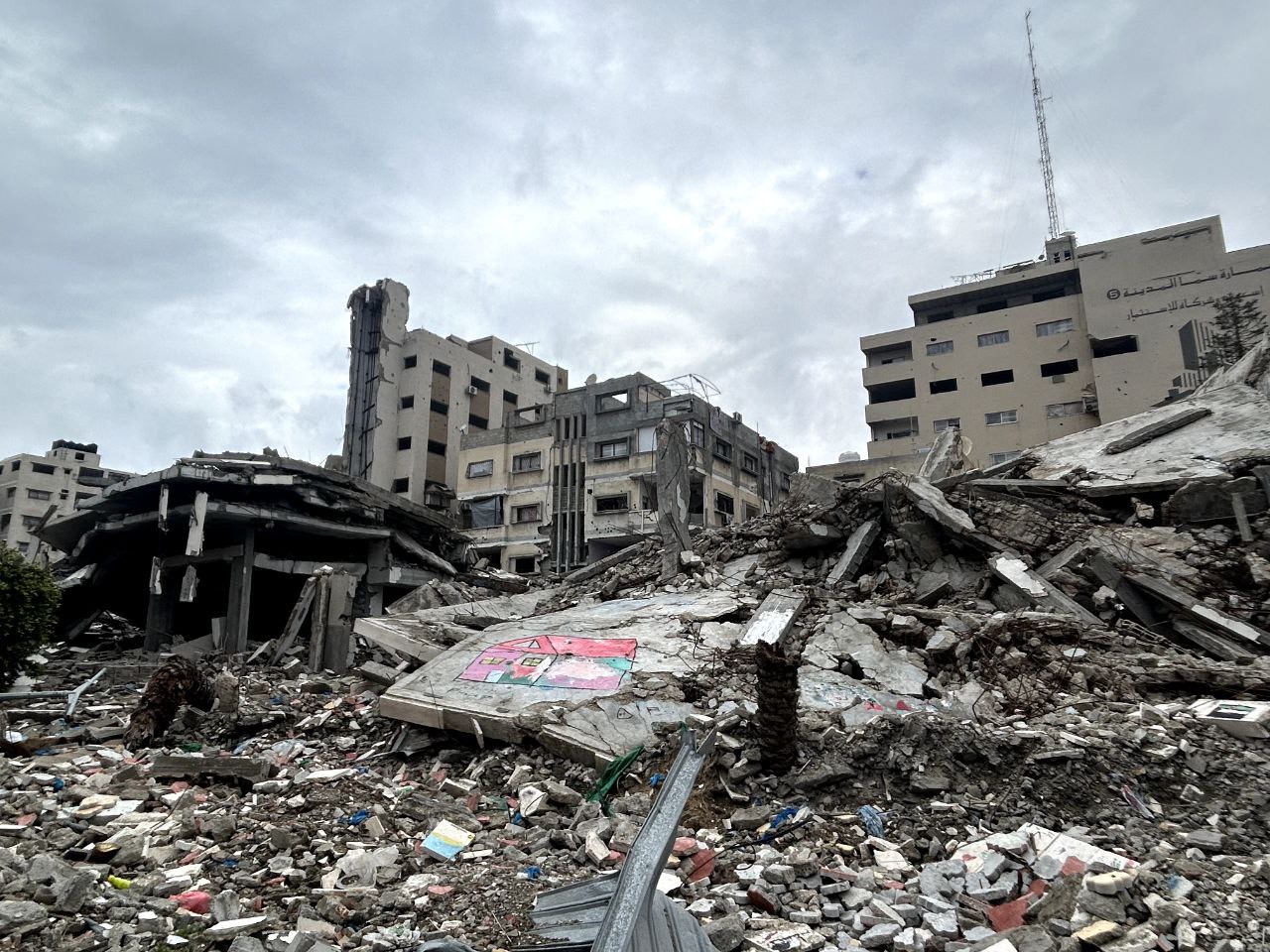
A six-story residential building already weakened by Israeli airstrikes early in the Gaza war collapsed suddenly in Gaza City in the early hours of Wednesday, September 16, killing at least 21 people in their sleep, including 11 children, according to Gaza's health ministry. Rescuers worked through the rubble with bare hands, hampered by a shortage of heavy machinery.
What happened
The al-Sa'ada building, in western Gaza City near the headquarters of the UN relief agency UNRWA, came down in the early hours of Wednesday, according to civil defense spokesperson Mahmoud Basal. The building had been struck and partially destroyed by Israeli bombardment earlier in the war and was known to be structurally unsound.
Around 100 displaced people were sheltering in the building, residents said. During a 16-hour rescue operation, Basal said, civil defense teams rescued 45 people alive and recovered 21 bodies; another 35 people managed to escape. Dozens of grieving relatives gathered outside the collapsed building, some digging with their bare hands, according to Xinhua's reporting from the scene. Louay al-Ajla, 54, said he lost nearly 10 family members: "I received the news at dawn. It was devastating."
Zaher al-Wahidi, a spokesperson for the Gaza Health Ministry, put the death toll at 21, including 11 children, the Associated Press reported. Accounts differed on other details: the AP reported five women among the dead and at least 14 injured, while Xinhua reported six women killed and more than 25 injured. Dr. Mohammed Abu Salmiya, the director of al-Shifa Hospital, confirmed the figure of 21 dead including 11 children to CNN. About six displaced families had been living in the building despite knowing it was unstable, according to Gaza's civil defense. "The lack of options and alternatives left them with no other choice," said rescuer Aboud Majdalawi.
The immediate cause of the collapse was not determined, though the building's documented war damage was the central factor cited by local officials. Satellite imagery shows the area around the building was targeted in the early weeks of the war, with damage to the structure itself first becoming evident in 2024.
Palestinian authorities blamed Israel for restricting the heavy machinery and rescue equipment needed for the response. The Hamas-run media office in Gaza said more than 8,500 missing people remained buried beneath rubble across the Strip, calling thousands of damaged buildings "ticking time bombs." Israel's position is that its restrictions are meant to keep equipment out of the hands of Palestinian armed groups for whom it could have military uses. COGAT, the Israeli military body that coordinates aid to Gaza, said the Israeli government's policy is that heavy machinery is allowed into Gaza.
Why it matters
The collapse crystallizes a secondary crisis of the war: the buildings that survived the bombing are themselves now killing people. The head of the United Nations Development Programme's Gaza office, Alessandro Mrakic, visited the scene and told reporters "we don't have the equipment and machinery that is needed," warning that around 400 other war-damaged buildings across Gaza were at imminent risk of collapse, particularly with winter approaching. Gaza's civil defense put the number of buildings at risk even higher, at more than 2,000.
Families are sheltering in these structures because they have nowhere else to go. No large-scale reconstruction has taken place since the October 2025 ceasefire took effect nearly a year ago, and Israel has said it will not permit rebuilding until Hamas disarms — leaving the disarmament deadlock as a direct obstacle to physical safety. The UN's humanitarian relief coordinator, Ramiz Alakbarov, urged Israeli authorities to approve deliveries of heavy machinery, tents, tarpaulins, and other non-food items for displaced people ahead of the winter rains.
The numbers in context
According to the United Nations, about 82 percent of all structures in Gaza — roughly 200,000 buildings — have been damaged, with two-thirds of them destroyed. A UN satellite assessment (UNOSAT) estimated the number of destroyed structures has increased by 9 percent since the October 2025 ceasefire was declared, with demolitions continuing in areas under Israeli military control.
About 1.9 million Palestinians in Gaza — roughly 90 percent of the population — have been displaced during the war, many of them multiple times, and about 1.2 million are living in tents or makeshift shelters, the UN says. Gaza's overall death toll stands at more than 73,700, according to the territory's health ministry, whose figures the UN considers reliable; more than 1,375 Palestinians have been killed since the ceasefire took effect, the ministry says.
What happens next
Winter is the hard deadline. As rains arrive, weakened structures become more dangerous and tents less survivable, and humanitarian officials are warning of "imminent disasters" if machinery and shelter materials are not allowed in. Whether Israel loosens equipment restrictions — and whether the disarmament dispute that blocks reconstruction can be resolved — will determine how many more al-Sa'ada-style collapses occur.
The longer-term picture is bleaker: with roughly 200,000 damaged structures, clearance of explosive remnants of war estimated by the UN to take decades, and no reconstruction framework agreed, Gaza faces years in which its residents live among ruins that can still kill them. The al-Sa'ada collapse may be the first high-casualty event of its kind since the ceasefire, but local officials insist it will not be the last.
Sources and reporting notes
- Associated Press (via Barchart), Sept 16 2026: Jehad Alshrafi, Wafaa Shurafa and Julia Frankel on the collapse, the death toll, and the rescue effort
- CNN, Sept 16 2026: Dr. Mohammed Abu Salmiya's death toll, the Rimal location, and the UN damage figures (page could not be re-fetched at publication time; figures confirmed via AP and Xinhua)
- Xinhua, Sept 16 2026: Mahmoud Basal's rescue figures, the UNRWA proximity, and the displaced families housed in the building
- UN News, Aug 2026: UNRWA/UNOSAT assessment — 82 percent of structures damaged, 9 percent rise in destruction since the ceasefire
Reporting cutoff: September 22, 2026. The death toll (21, including 11 children) is attributed to Gaza's health ministry and al-Shifa Hospital's director and could not be independently verified. Reports differed on the number of women killed (five per AP, six per Xinhua) and the number injured (at least 14 per AP, more than 25 per Xinhua); those discrepancies are noted above. The CNN page could not be fetched directly on September 22, so CNN-attributed figures are used only where corroborated by the AP or Xinhua accounts.