Gaza ceasefire violations Israel strikes
Gaza ceasefire violations Israel strikesHalawa camp Jabalia strike GazaGaza strikes September 30 2026al-Tuffah drone strike Gaza CityIsrael Hamas ceasefire truce violationsGaza civilian casualties September 2026
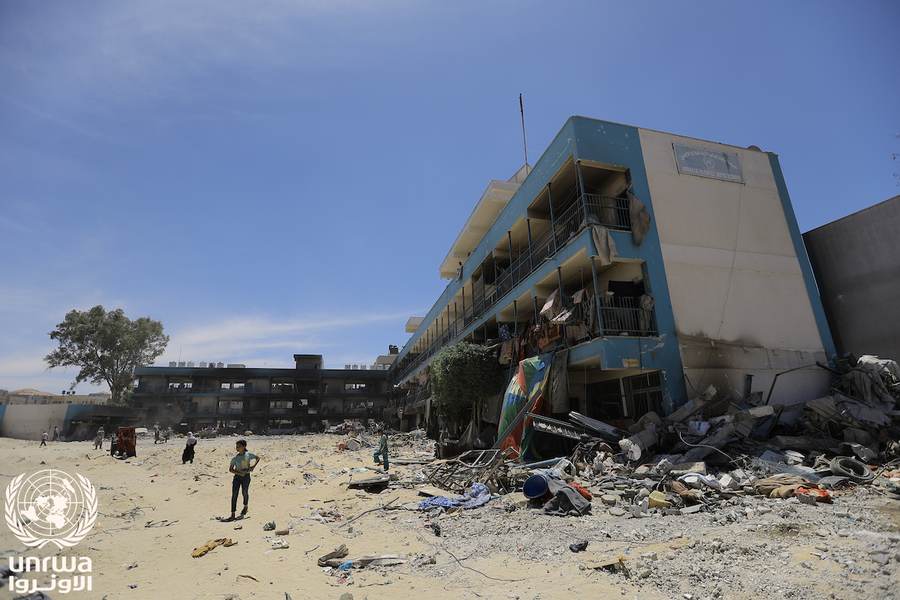
GAZA STRIP — Gaza ceasefire violations, Israel strikes and the difficulty of counting casualties in real time converged again on September 30. Reports described an Israeli drone strike in al-Tuffah in Gaza City, shelling at the Halawa displaced-persons camp in Jabalia, a fatal shooting in Deir al-Balah and demolition operations in Rafah. The geographical spread matters: this was not one isolated target, and it was broader than the already reported killing of Hamas commander Izz al-Din Al-Beik.
The most carefully supportable account is also the least dramatic one: several Palestinians were reported killed across multiple incidents, but the available reports do not establish a single verified daywide total. QNA, carried by Fana News, reported eight deaths since dawn. Spain's Demócrata, citing the Palestinian outlet Filastín, reported five. Reuters, carried by TBS News in its report on the Al-Beik strike, corroborated a Jabalia clinic-area attack and gave a day toll of three. Each figure is presented here with its attribution; none is adopted as the final count.
What the reports say happened
Fana News's QNA account said one person was killed in an al-Tuffah drone strike in Gaza City. It reported three killed and seven injured when shelling hit the Halawa camp in Jabalia, and also described Israeli demolition operations in Rafah. Its total of eight deaths since dawn appears to include incidents beyond the three locations described in detail.
Demócrata's account named five reported fatalities: three at Halawa, one in al-Tuffah and Ahmed Abu Mur, whom it said was shot in Deir al-Balah. That report supplies a name and a fourth location but a lower overall count. Reuters, in a broader dispatch about the killing of Al-Beik, reported that a strike near a clinic in Jabalia killed three people that day.
The overlap is significant. Independent reports converge on three deaths in the Jabalia area and on violence in northern Gaza. They do not converge on whether every incident fell inside the same reporting window, whether some deaths were counted later, or whether all eight attributed by QNA were included in the narrower accounts. In a war zone, those are not bookkeeping details. They determine whether readers are seeing corroboration or accidental double counting.
Why this matters
The ceasefire can survive politically while failing physically. A truce is not only a signed framework; it is the lived difference between a family sleeping in a displacement camp and that camp coming under fire. When violence reaches al-Tuffah, Jabalia, Deir al-Balah and Rafah in one reporting cycle, the argument that incidents are isolated becomes harder to sustain even when the legal and military status of each strike remains disputed.
This wave also reveals how targeted-killing logic and civilian-protection obligations collide. Israel says it is continuing to pursue Hamas figures and said it had killed 20 Hamas members during September. Hamas confirmed that Al-Beik co-led the October 7, 2023 attack, according to Reuters. Those facts help explain Israel's operational rationale, but they do not answer whether each strike was necessary, proportionate or conducted with sufficient precautions, nor do they explain deaths reported at a displaced-persons camp.
For Hamas, civilian harm reinforces its political case that Israel is hollowing out the truce. For Israel, continued Hamas command structures and unresolved disarmament reinforce the case that the military threat has not ended. Both narratives can draw strength from the same day of violence. Civilians bear the cost while mediators lose leverage.
From the October 2025 truce to a war managed by exceptions
The October 10, 2025 truce was supposed to move the conflict away from open-ended combat. Its unresolved core was always enforcement: who would verify violations, how alleged violations would be answered and which steps would come first. Israel sought security guarantees and Hamas disarmament. Palestinians sought an end to attacks, withdrawal and reconstruction. Those sequencing disputes never disappeared.
The Board of Peace disarmament deal was meant to provide a political bridge by coupling a postwar framework with a path toward removing weapons from the conflict. But a framework without trusted verification invites each side to treat its own actions as enforcement and the other's as breach. That is how a ceasefire becomes a ledger of exceptions rather than a durable halt.
The Gaza Government Media Office claims Israel has committed 5,147 ceasefire violations since October 10, 2025, killing 1,421 Palestinians and wounding 4,983. Those are claims by a Gaza authority and have not been independently verified here. Israel disputes the framing of its operations and says it acts against continuing threats. The figures nevertheless indicate the scale of the accusation: averaged across roughly 355 days, 5,147 alleged violations would amount to about 14.5 per day, while 1,421 claimed deaths would average about four per day.
Those averages do not prove what happened in any particular strike. They do show why another multi-location attack wave carries more weight than a single tactical event. If the office's aggregate is broadly accurate, September 30 fits a sustained pattern. If the total is inflated or uses a broad definition of violation, the absence of a mutually trusted monitoring mechanism still leaves the public unable to resolve the dispute.
What the toll figures actually imply
The gap between eight, five and three is not a minor rounding difference. Eight is more than two and a half times three. That spread warns against the common temptation to select the largest number for urgency or the smallest for caution. Neither choice produces accuracy.
The three-death Reuters figure appears tied to the corroborated Jabalia incident and its immediate reporting window. Demócrata's five adds al-Tuffah and Deir al-Balah. Fana's eight is a broader since-dawn count and includes a wider set of incidents, some described only generally. The figures may therefore describe nested scopes rather than direct contradictions. Until hospital lists, names, locations and times are reconciled, that remains an inference—not a settled fact.
Sourcing note: Fana News/QNA reported eight Palestinians killed since dawn; Demócrata, citing Filastín, reported five; Reuters via TBS News reported three killed in the Jabalia clinic-area strike and a day toll of three. Signal Post News does not combine, average or choose among these figures. The discrepancy likely reflects different cut-off times and incident scopes, but that explanation has not been independently confirmed.
Who gains, who loses
Israel's government gains a short-term claim of operational pressure: it can point to the deaths of senior Hamas figures and argue that delay would permit rearmament. Yet every disputed civilian death increases diplomatic exposure and weakens the credibility of claims that the truce remains intact.
Hamas can use civilian casualties to rally opposition to Israel and resist disarmament on the argument that weapons remain necessary. It also faces a real command problem if Israel's assertion that 20 Hamas figures were killed in September is accurate. Leadership losses can fragment control, making any centrally enforced ceasefire harder.
Mediators and the Board of Peace lose when neither side trusts the enforcement process. Their leverage depends on being able to distinguish a breach from an agreed response. Without transparent incident review, diplomacy becomes retrospective accusation.
Displaced Palestinians lose most immediately. Camps are not abstractions; they are places where families have already fled once or several times. Shelling reported at Halawa turns displacement itself into no guarantee of safety. Rafah demolitions, meanwhile, can make return and reconstruction less plausible even when major fighting is said to have stopped.
Critics' strongest case—and its limits
Critics of Israel's campaign argue that repeated strikes and demolitions amount to normalization of lethal force under the label of a ceasefire. Their strongest evidence is cumulative: a broad geographic pattern, repeated civilian reports and a claimed post-truce toll above 1,400. Their case is weakened when all Palestinian official figures are presented as independently verified or when distinct incidents are merged.
Critics of Hamas argue that retaining armed structures after a disarmament-centered agreement makes renewed Israeli operations predictable and places civilians near an unresolved military confrontation. Their strongest evidence is Hamas's confirmation of Al-Beik's role in the October 7 attack and Israel's claimed September campaign against Hamas figures. Their case is weakened when an alleged militant presence is treated as automatic justification for every strike or as proof that civilian harm was unavoidable.
A serious account must hold both propositions at once: armed groups have obligations, and a state using force has obligations. One does not cancel the other.
What happens next
Scenario one: contained violence. Israel continues targeted operations while both sides avoid declaring the truce dead. Casualty reports keep accumulating, but diplomacy survives as crisis management rather than conflict resolution.
Scenario two: monitored enforcement. Mediators establish a public incident mechanism with timestamps, locations, named casualties where available and responses from both parties. That would not end disagreement, but it would reduce the space for dueling totals and make consequences more predictable.
Scenario three: retaliation and collapse. Hamas or another armed group answers the latest strikes, Israel expands its campaign and the Board of Peace framework loses practical relevance. Rafah demolitions and stalled reconstruction would then look less like postwar policy than preparation for renewed conflict.
Scenario four: a sequenced bargain. Verified steps on disarmament are paired with verified limits on Israeli strikes, phased withdrawal and reconstruction access. This is the hardest route because it requires both sides to surrender the advantage of unilateral action. It is also the only scenario that turns the ceasefire from a disputed label into a measurable reduction in harm.
The central judgment is sobering: a ceasefire that produces incompatible death tolls, repeated strikes and no trusted arbiter is not stable merely because neither side has formally abandoned it. September 30 shows the truce's real test is no longer whether the agreement exists, but whether civilians can experience it.
Sources and reporting notes
- QNA via Fana News — eight reported killed since dawn, including one in al-Tuffah; three killed and seven injured at Halawa; Rafah demolitions reported.
- Demócrata, citing Filastín — five reported killed: three at Halawa, one in al-Tuffah and Ahmed Abu Mur in Deir al-Balah.
- Reuters via TBS News — Jabalia clinic-area strike; Hamas confirmation of Al-Beik's role; Israel's statement that it killed 20 Hamas figures in September.
Source note: Casualty claims remain attributed to the outlets and authorities reporting them. The eight, five and three figures have different apparent scopes and must not be read as independently confirmed totals for the same set of events.