War · Middle East · Gaza
Dia'a Abu al-Rous was on his way to the Malaysian School on Saturday morning when a drone strike near Nuseirat killed him — one of two Palestinian deaths reported in Gaza before noon, more than a year into a ceasefire that has never fully stopped the fire.
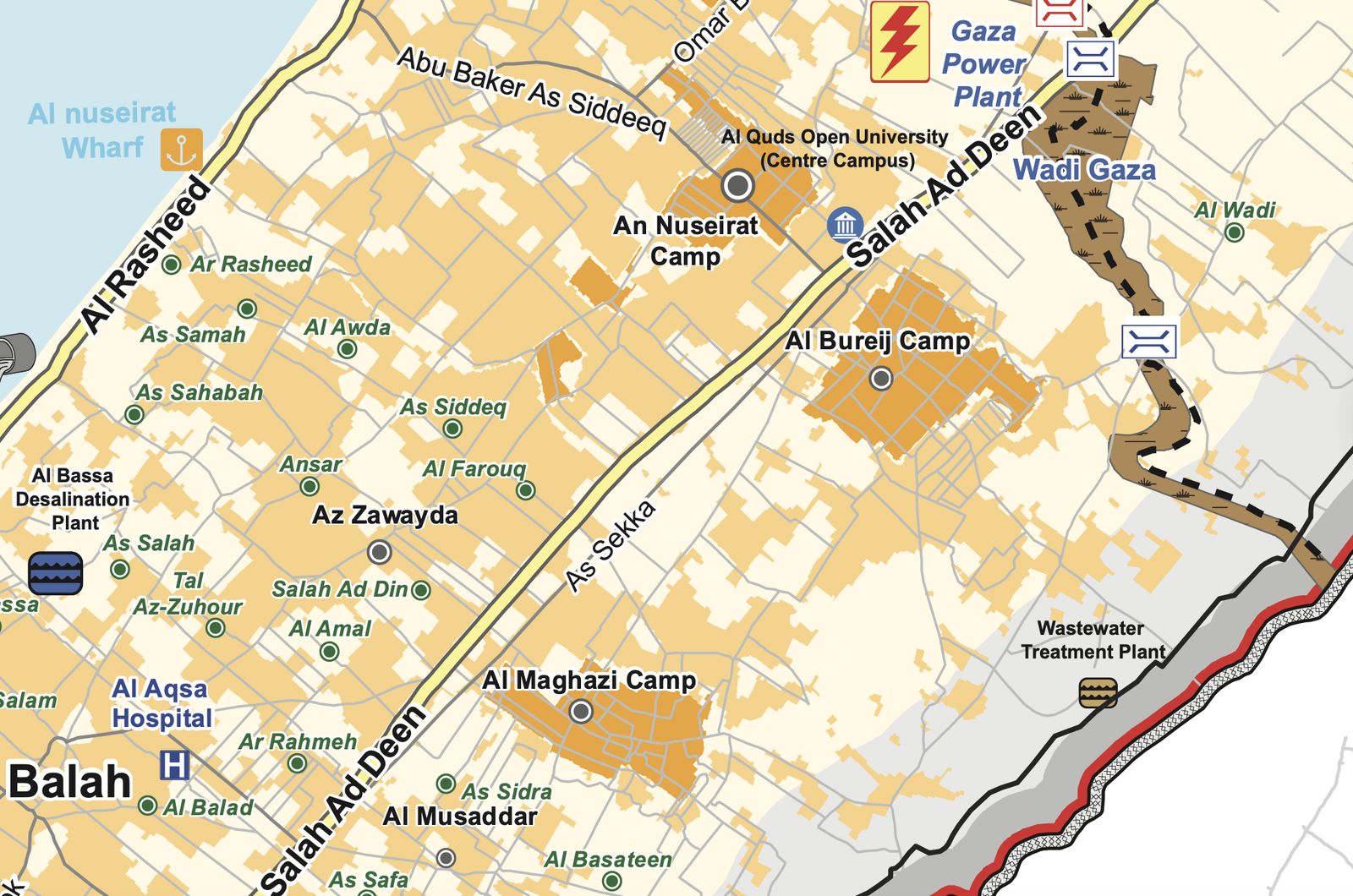
NUSEIRAT, Gaza Strip — A Gaza teacher was killed in an Israeli strike near the Nuseirat refugee camp in central Gaza early on Saturday, October 31, according to the Palestinian Ministry of Education and medical sources reported by the Wafa news agency — the latest death in a war that continues under the name of a ceasefire. Dia'a Abu al-Rous, who taught at the Malaysian School, was on his way to work when the drone struck an area north-west of the camp, near the local electricity company, the reports said.
Track it live: Israel war map
What happened on Saturday morning
Abu al-Rous was travelling to the Malaysian School, where he taught, when the strike hit north-west of Nuseirat, near the camp's electricity company, according to the Palestinian Ministry of Education and medical sources cited by Wafa and reported by Quds News Network. The Education Ministry condemned the killing as an attack on Gaza's education community — its characterisation, reported here as the ministry stated it. No details about the intended target of the strike were given in the Palestinian reports, and the Israeli military had not publicly commented on the specific Nuseirat strike in the reports reviewed at publication time.
His was the second Palestinian death reported in Gaza on Saturday morning. Arafat al-Ar'ir died of wounds sustained in an earlier strike on the Tel al-Hawa neighbourhood of south-western Gaza City, according to a medical source and reporting from Al-Shifa Hospital carried by ABNA and Press TV. The two deaths, hours and districts apart, are the pattern this ceasefire has settled into: not a single battle, but a scatter of lethal incidents across the Strip, recorded one funeral at a time.
The fire was wider than the two fatal incidents. Press TV reported artillery shelling and gunfire in Beit Lahia in the north, in Gaza City, and in Khan Younis and Deir al-Balah further south on Saturday morning; Israeli warships fired toward the Gaza City coastline, it said; military vehicles opened fire near the al-Sanafour intersection in Gaza City's Tuffah neighbourhood; and tents sheltering displaced families in the al-Iqlimi and Bir 19 areas of Khan Younis were struck, with no injuries reported in those tent strikes. Those details are Press TV's account, attributed as such, and could not be independently verified by Signal Post News.
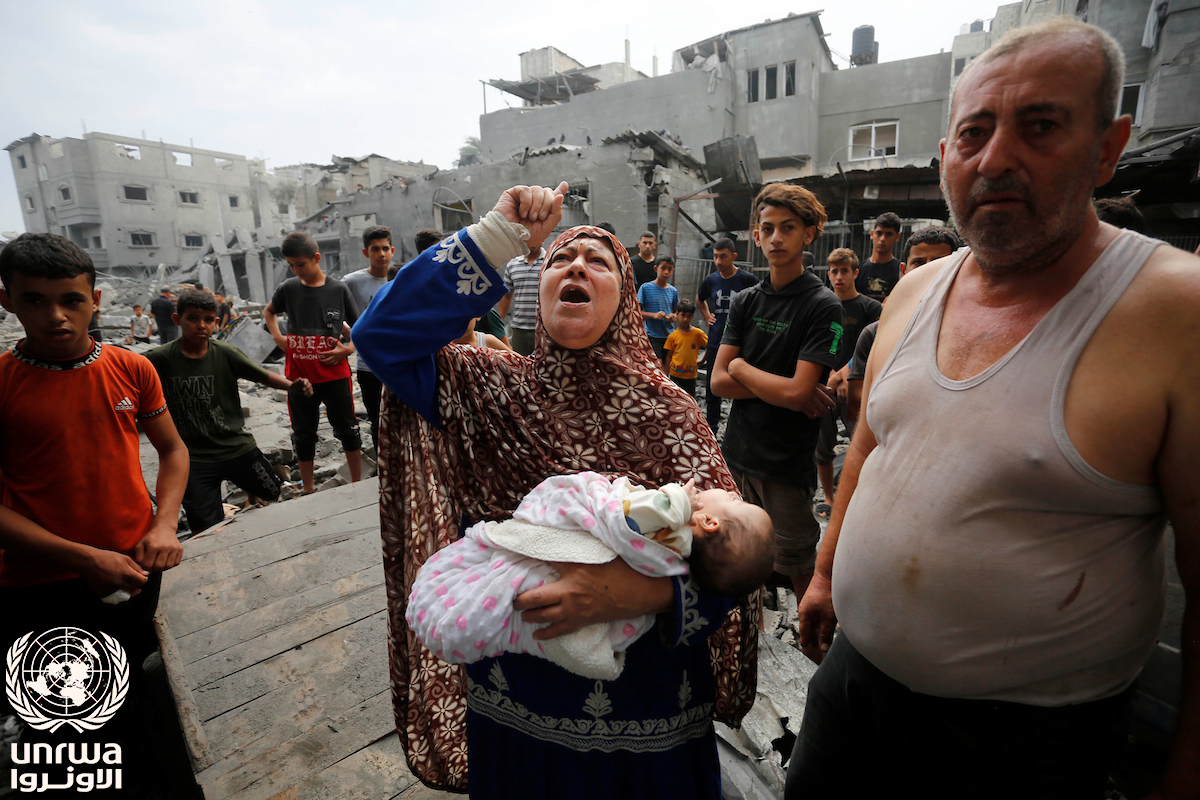
Each side's standing position frames the same morning differently, and both are matters of record. Israel says its forces target Hamas, accuses Hamas of violating the ceasefire, and demands the group's full disarmament as a condition of the deal's next phase. Palestinian officials accuse Israel of repeated ceasefire violations and of restricting the aid the agreement promised. Signal Post News reports those as the attributed positions they are; Saturday's specific incidents, beyond the named sources above, remain unverified. The broader pattern of fire inside the truce is one this newsroom has examined in why Israel strikes Gaza despite the ceasefire.
The ceasefire toll, in numbers
The Gaza Health Ministry's latest figures, published Friday, put the war's toll at 74,570 people killed and 175,808 wounded since October 7, 2023. Since the ceasefire took effect on October 10, 2025, the ministry says, 1,574 people have been killed, 5,687 wounded, and 845 bodies recovered from under the rubble. Two cautions belong with those numbers wherever they are used. The ministry is run by Gaza's Hamas-led authorities, and its figures cannot be fully independently verified — a limitation that applies to casualty claims from either side. At the same time, UN agencies widely cite the ministry's overall toll, and no alternative comprehensive count exists.
Read as an average, the ceasefire figure is its own indictment of the word “ceasefire”: 1,574 deaths across roughly 386 days works out to about four deaths a day, every day, for more than a year — a rate that would be called a war in most other contexts. Gaza's Government Media Office claims 5,147 recorded ceasefire violations since October 2025, a figure it published on September 29; that is the office's claim, attributed as such, and Israel disputes Palestinian violation counts just as Palestinian officials dispute Israel's.
Children are a large share of the continuing toll. In an October 20 statement, UNICEF's regional director said 351 children had been killed since the ceasefire announcement, including eight children killed and 20 injured in a single six-day span in mid-October. Abu al-Rous's death adds a different category to the same ledger: not a pupil, but the teacher on his way to teach them.
Why this matters
A ceasefire that still produces daily funerals is functioning, in practice, as a lower-intensity war rather than a peace. The UN human rights office, OHCHR, has said attacks inside Gaza never fully stopped, and that Israel has expanded the areas where its forces are deployed — the territory east of the so-called yellow line, which the UN warns is becoming a kill zone as control expands toward 70 percent of the Strip. On October 26, a UN Commission of Inquiry published findings on Gaza that reached conclusions Israel rejects outright; Signal Post News covered that report as the UN commission's Gaza genocide and ceasefire report, and Israel's rejection of it — like its rejection of genocide allegations generally, alongside its position that its operations target Hamas — is part of the record this article reports, not a question it settles.
Education is the slow casualty underneath the daily one. As of the UN OCHA count of October 1, 2025, 780 education staff and 18,069 pupils had been killed in Gaza. The Palestinian Education Ministry said on October 5, 2026, that more than 800 teachers have now been killed since October 2023, and about 280,000 children are learning in tents and damaged rooms rather than schools. Every teacher killed on the road to a classroom is therefore two losses at once: a life, and a roomful of lessons that do not happen — in a school system trying to restart inside a territory where most buildings are damaged and the school day itself depends on a truce holding until the afternoon.
The aid arithmetic points the same way. Al Jazeera has reported about 150 aid trucks a day entering Gaza, against the 600 a day set out in the ceasefire terms — figures attributed to that reporting. And the Health Ministry says 21,468 patients and wounded people need medical travel abroad, including 6,430 priority cases, as it urges the reopening of the Rafah crossing. A teacher's death on a Saturday morning is a single line in that arithmetic, but it is the kind of line that tells you what the totals are made of.
Context: how Gaza got here
The war began on October 7, 2023, and the ceasefire that nominally ended its main phase took effect in October 2025 under a US-backed plan associated with President Donald Trump. Its first phase stopped the largest-scale fighting; its later phases — Hamas's disarmament, a fuller Israeli withdrawal, reconstruction — have stalled on the disarmament dispute, with each side citing the other's non-compliance. Reuters reported on October 19 that Israeli forces hold more than 60 percent of the territory and conduct almost daily strikes, a description attributed here to Reuters. Reconstruction, meanwhile, has barely begun: the rubble from which 845 bodies have been recovered during the “ceasefire” is still, in much of Gaza, simply the landscape.
What happens next
Nothing in Saturday's reports suggests the pattern is about to break, and the honest scenarios are variations on it. In the first, the present arrangement holds: low-level strikes continue under the ceasefire label, each side logs the other's violations, and the toll climbs by single digits most days — the future the last 386 days most resemble. In the second, pressure builds around Rafah and medical evacuations, where 21,468 people waiting to travel give mediators a concrete, human deadline that abstract disarmament language lacks. In the third, the disarmament talks themselves become the trigger: they are the condition both sides cite for everything else, and their collapse would remove the framework that keeps the fire at its current level. The UN's Middle East envoy has warned in coverage on this site of the risk of a slide back to open war. Which scenario arrives is not predictable from one Saturday morning in Nuseirat — but the morning itself, a teacher killed on his way to school a year into a ceasefire, is what the status quo actually looks like.
Related coverage
- Why Israel Strikes Gaza Despite the Ceasefire, Explained
- UN Commission on Gaza: Genocide Finding and the Ceasefire Report
- UN Says Gaza's Yellow Line Has Become a 'Kill Zone' as Israel Expands Control Toward 70 Percent
Sources
- Quds News Network — “Israeli strike kills Palestinian teacher on his way to school in central Gaza” (October 31, 2026): the killing of Dia'a Abu al-Rous near Nuseirat and the Education Ministry's response.
- Wafa via Demócrata — “New Israeli bombings in Gaza leave at least two Palestinian civilians dead despite the ceasefire” (October 31, 2026): the Wafa account of Saturday's two deaths.
- Press TV — “Israel kills two Palestinians in Gaza amid ongoing ceasefire violations” (October 31, 2026): the second death in Tel al-Hawa and the wider shelling and gunfire reported across the Strip.
- Al Jazeera via LaPresse — “Gaza: Israeli forces kill two Palestinians” (October 31, 2026): Saturday's deaths and the aid-truck figures in the ceasefire.
- ABNA — “Israeli shelling and gunfire continue across Gaza, killing previously wounded man” (October 31, 2026): Arafat al-Ar'ir's death at Al-Shifa Hospital and the morning's fire across Gaza.
- UNICEF via ReliefWeb — statement by Regional Director Edouard Beigbeder on the ongoing killings of children across the Gaza Strip (October 20, 2026): 351 children killed since the ceasefire announcement.
This article is based on reporting of October 31, 2026, by Quds News Network, Wafa as carried by Demócrata, Press TV, Al Jazeera as carried by LaPresse, and ABNA, and on the UNICEF statement of October 20, 2026, as republished by ReliefWeb. Casualty figures are the Gaza Health Ministry's, published Friday and attributed as such; the ministry is run by Gaza's Hamas-led authorities, its figures are widely cited by UN agencies, and neither side's figures can be fully independently verified. The Israeli military had not publicly commented on the specific Nuseirat strike in the reports reviewed at publication time. Analysis is by Signal Post News.