Politics / Brazil
Flavio Bolsonaro declares himself leader of Brazil — not president, in the end, but leader. Hours after landing in Miami on Wednesday, the defeated candidate deleted the first version of his open letter, in which he had called himself Brazil's elected president, and reposted a revised text with that single word downgraded. The claim that survived the edit is still extraordinary: that a certified election, recognised by Brazil's electoral court, both houses of Congress, international observers and his own party, was in fact stolen by a criminal organisation — a claim for which he has offered no evidence.

Flavio Bolsonaro declares himself leader of Brazil — in an open letter posted from Miami, three days after Brazil's voters chose someone else. Senator Flávio Bolsonaro, who lost Sunday's presidential runoff to President Luiz Inácio Lula da Silva by about 4.43 million votes, published the letter on X on Wednesday, October 28, hours after his chartered jet landed in Florida. Titled “CARTA À NAÇÃO BRASILEIRA” — Letter to the Brazilian Nation — it alleged that Brazil's election had been stolen and named the thief as an alliance of the president-elect and the country's courts. “I am the leader, and the criminals who stole Brazil's election are part of a criminal organisation that has imposed tyranny,” he wrote, in the revised wording reported by AFP. He alleged electoral fraud and an “electoral coup” by Lula and the Supreme Court. He offered no evidence for any of it. And the most revealing detail of the whole episode may be an edit: the letter he ended up standing behind is not the letter he first published.
The declaration caps a 72-hour sequence without precedent in Brazilian democracy. On Sunday, Bolsonaro lost the runoff. On Monday, a Supreme Court justice ordered him to surrender his passports. On Tuesday night, he crossed into Argentina with his wife and two daughters. On Wednesday morning, he landed in Miami, welcomed by a US administration whose president had already called the Brazilian result “rigged” — and by Wednesday evening, the defeated candidate was asserting, from American soil, a rival claim to lead the country he had just left. Signal Post News has followed each step: how Flávio Bolsonaro left Brazil for the US as Trump approved his entry, and how Lula won Brazil's presidential runoff that set the flight in motion. This article is about what Bolsonaro said once he arrived — and about the one word he took back.
The letter, the deletion and the downgrade
There were two letters. In the first version, posted to his X account, @FlavioBolsonaro, on October 28, Bolsonaro went the whole distance: he described himself as Brazil's “elected president” and its “true president-elect” — a direct assertion that the office itself was his by right and Lula's by theft. That version was deleted. In its place he posted a revised letter, identical in its accusations but different in its central claim: he was no longer the true president-elect, but Brazil's rightful “leader.” The sentence that anchors the revision, as reported by AFP, is the one quoted above: “I am the leader, and the criminals who stole Brazil's election are part of a criminal organisation that has imposed tyranny.”
One word changed. Everything it implies changed with it. “President-elect” is a legal status: it asserts that a specific constitutional process produced a specific officeholder, and that the man certified by the Superior Electoral Court (TSE) is an impostor occupying an office that belongs to someone else. It is the vocabulary of a parallel presidency — the claim, made in other countries' crises, that there are two presidents and only one is legitimate. “Leader” is something else: a political status, not a legal one. A leader leads a movement, an opposition, a camp. Nobody needs a court's permission to call himself a leader, and no constitution is contradicted by the word. Whoever advised the edit — or whatever second thought produced it — moved Bolsonaro's claim out of the register of constitutional usurpation and into the register of political rhetoric, where it is safer, deniable and far harder to prosecute.
The rest of the letter did not soften. Bolsonaro insisted he had not fled: “I did not flee Brazil. I left Brazil, but I did not abandon the Brazilian people.” In another passage of the letter, reported by the BBC, he cast the departure itself as the making of his claim: “It was never my intention to leave my homeland, but I know exactly where this is heading... I departed from a regime of exception so that I could become the leader my people deserve.” He said he would “lead the opposition from here” — “here” being the United States. He thanked Argentine President Javier Milei for help with his travel and US President Donald Trump for the visas issued to his family. The fraud allegation itself — that Lula and the Supreme Court carried out an “electoral coup” — remained, stated as fact in his text and supported, in his text, by nothing. That asymmetry is the letter's defining feature: the maximal claim about his enemies survived the edit intact; the maximal claim about himself did not. The revision protected the author, not the accused.
The figures are settled; the quarrel is not
Against the letter stands a count, and the count is not close. Lula won the October 25 runoff with 51.79 percent of the vote — 64,256,232 votes — to Bolsonaro's 48.21 percent and 59,826,041 votes, according to the TSE's official results. The margin was about 4.43 million votes. Bolsonaro had won the first round on October 4, which makes the reversal dramatic but not ambiguous: three weeks later, in a two-man race counted by the same electoral machinery that had recorded his first-round victory, he lost by a margin larger than the population of many Brazilian states' capitals.
The result has been recognised by every institution whose recognition constitutes a result in a democracy: the TSE itself, which certified it; international observers; foreign leaders; and the leaders of both houses of Brazil's Congress. It has also been recognised — a point that matters for everything below — by Bolsonaro's own Liberal Party. There is no rival count, no parallel tally, no disputed province whose ballots could arithmetically bridge a 4.43-million-vote gap. The quarrel, then, is not about numbers. It is about whether the numbers are to be treated as the end of the argument — and Bolsonaro's letter is an attempt, addressed to his roughly 60 million voters, to keep the argument open after the arithmetic has closed.
His camp's one concrete grievance illustrates the gap between the claim and the evidence. Allies have argued that the Supreme Court's extension of voting hours on runoff day rigged the outcome. An analysis of electoral records by Pedro Burgos, a professor at Insper, found that fewer than 35,000 votes — about 0.03 percent of all votes cast — were cast in the extra two hours of voting ordered by the Supreme Court, against a margin of 4.43 million (64,256,232 votes to 59,826,041; 51.79 percent to 48.21 percent). Even if every one of those votes were treated as illegitimate, and every one had gone to Lula — neither of which anyone has established — they would account for less than one percent of the gap. The grievance survives as rhetoric precisely because it cannot survive as arithmetic, and it is reported here as what it is: a claim, attributed to his camp, contradicted in scale by the figures his own side has not disputed.
Even his own party won't say it
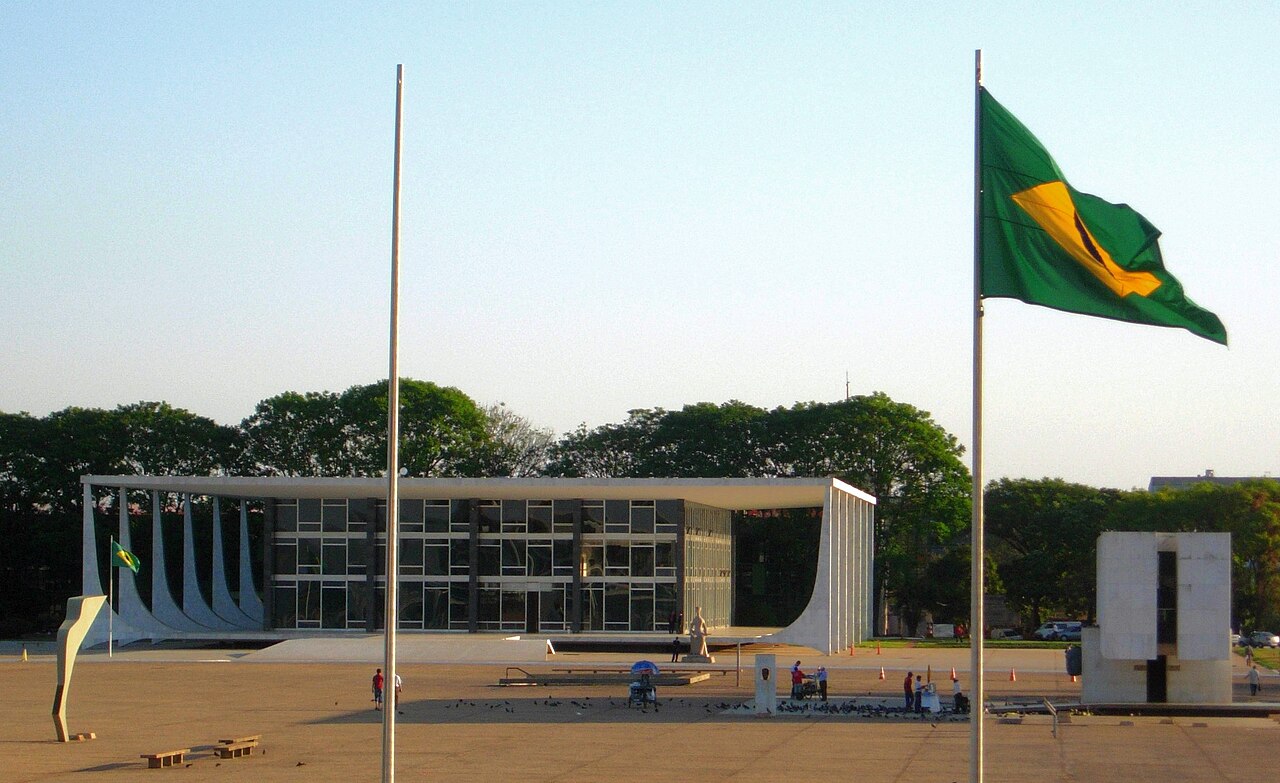
The most damaging response to the letter came not from Lula's camp but from Bolsonaro's own. Rogério Marinho, the Liberal Party's leader in the Senate and the coordinator of Bolsonaro's campaign, expressed solidarity with the departed candidate and described him as a political exile. But on the letter's central assertion — that the election was stolen — Marinho declined to follow. The party could not make that claim, he said, because there was no evidence for it. That is a remarkable sentence for a campaign chief to utter about his own candidate's founding assertion, and it splits the Brazilian right into two camps in a single quote: those who will repeat the fraud claim and those who will merely defend the man making it.
The distancing fits a pattern that began before the letter. The Liberal Party had already recognised the election result its candidate refused to concede — party president Valdemar Costa Neto said so publicly in the days after the runoff. The recognition list Bolsonaro is now defying therefore includes his own party's leadership, the Senate and Chamber leaderships, the electoral court that administered both rounds, the international observer missions and the foreign governments that have congratulated Lula as president-elect. A claim of stolen election normally needs at least one institution willing to lend it credibility. Bolsonaro's, at the moment of its maximal statement, has none — not even his own.
What Marinho's formulation offers instead is a landing zone: Bolsonaro as exile, not as president-in-waiting; solidarity with the man, silence on the claim. Whether the party settles there — compassion without endorsement — or is dragged further toward the letter's position by Bolsonaro's base is now the central internal question of the Brazilian right. The roughly 60 million votes Bolsonaro won are the largest opposition bloc in the country's history, and they belong, emotionally, to him. The party's institutions, however, have now twice declined to say the election was stolen. A movement can run on that contradiction for a while. It cannot run on it forever.
How he got to Miami
The letter's authority problem is compounded by the journey that preceded it, because the man claiming to lead Brazil arrived in Miami by a route that ran through a missed court deadline. As Signal Post News reported when Brazil's Supreme Court ordered Flávio Bolsonaro to surrender his passports, Justice Alexandre de Moraes ordered the senator on October 26 to hand over his passports and barred him from leaving the country. The order is linked to a money-laundering inquiry and to a separate case involving film financing and transfers connected to Banco Master, on which reporting has put the sums at roughly $70 million. Bolsonaro denies wrongdoing in both matters; the allegations are under investigation and no findings have been made against him.
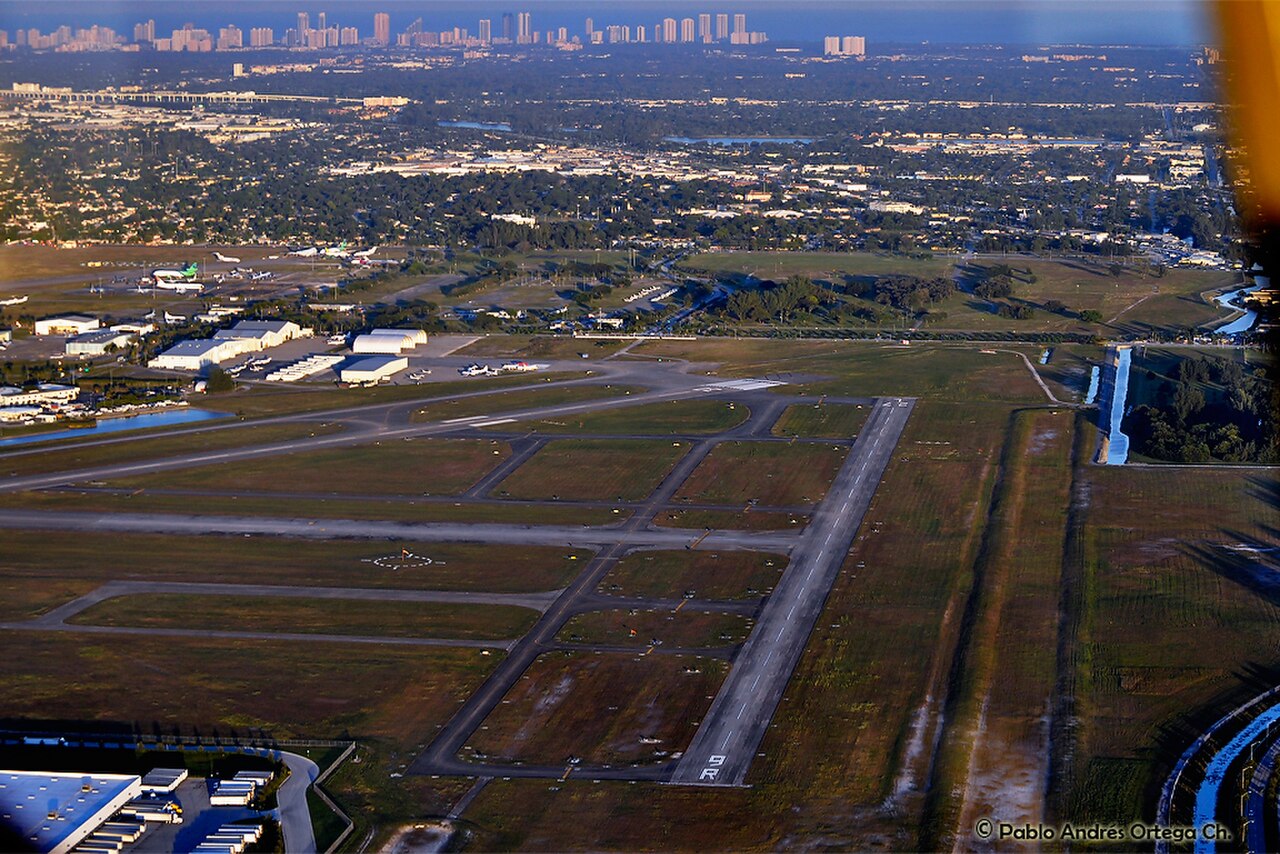
He did not surrender the passports. Instead, late on Tuesday, October 27, Bolsonaro crossed into Argentina with his wife and two daughters via the Tancredo Neves bridge, according to Reuters' reporting on Argentine migration records. He crossed, per manifest reporting, on a European — Italian — passport. Brazil cancelled his passports after he missed Moraes's deadline. At Puerto Iguazú, the family boarded a chartered Baires Fly Gulfstream G400, registration LV-JQW, which departed at 12:22 a.m. local time, landed in Guayaquil, Ecuador, at 3:46 a.m., and continued to Miami, where it was scheduled to land at Miami–Opa Locka Executive Airport at 9:18 a.m. local time on Wednesday. Argentina's Milei government, which has not recognised Lula's victory, gave “no statement” on the transit. Trump told reporters he approved of Bolsonaro coming to the United States and said the Brazilian results “looked like another rigged election” — a claim he, too, offered without evidence — and the State Department said it would issue the family's entry visas.
The sequence matters for how the letter reads in Brasília. A defeated candidate who had stayed, faced the inquiries and led his opposition from the Senate would be making a political claim his opponents would have to answer politically. A candidate who left under a travel ban, on a foreign passport, after publicly indicating he would comply with the court's order, makes the same claim from inside a legal problem of his own making — one that converts every institutional response in Brazil, from the court's next steps to the party's positioning, into a question not just of politics but of whether court orders bind the powerful. Bolsonaro's letter does not mention the passport order at all.
Why this matters
Begin with what is genuinely new. Defeated candidates have refused to concede before; losing candidates have left their countries before; this family has done both. What Brazil has not had is a defeated candidate asserting a rival title to national leadership from the territory of the hemisphere's dominant power, with that power's president publicly echoing his fraud language and its State Department issuing his family's visas. The venue is the message. A fraud claim made in Brasília is a domestic dispute. The same claim made from Miami, under American protection, with American amplification, becomes a standing complication in US–Brazil relations for as long as Lula's government lasts — a government that has already accused Washington of colluding with the Bolsonaro family, an accusation US officials deny. Every future friction between the two governments — trade, security, the inauguration itself — will now be read in Brasília through the fact that the man calling Lula a criminal is living, unbothered, in Florida.
Second, the precedent inside Brazil is the one nobody in Brasília needs explained: January 8, 2023. After the 2022 election, Jair Bolsonaro — Flávio's father — refused to concede to Lula, travelled to the United States, and stayed away while his supporters, marinated in stolen-election claims for which no evidence was ever produced, stormed the seats of all three branches of government in Brasília. The elder Bolsonaro later returned to Brazil and was sentenced to 27 years in prison for plotting a coup. The son's letter is not a call to storm anything, and it should not be reported as one. But its core assertion — the election was stolen by a criminal organisation that has imposed tyranny — is the same assertion that preceded January 8, now issued by the family's new standard-bearer to a base of 60 million voters, in a country that has already seen where an evidence-free stolen-election claim can lead. That is why a one-word edit in a social-media post is a national story in Brazil: everyone there has read this script before, and everyone knows what the second act cost.
Third, the claim's practical ceiling should be stated as plainly as its audacity. An exile opposition can do real things: it can hold a movement's loyalty, command media attention, raise money, lobby a friendly superpower and wait for the government at home to stumble. What it cannot do is govern, legislate, or convert its claim into office — and every week spent in Miami is a week in which the opposition's daily work in Congress, in state governments and in the party machinery is done by people who are actually in Brazil, accumulating the standing that exile spends. Marinho's careful formulation — exile yes, fraud claim no — is what that process looks like at its start. Bolsonaro's letter is best understood as an attempt to arrest it: to fix his title before the movement at home renegotiates it without him. The deletion of “president-elect” suggests even he, or his advisers, understood that the maximal version could not be held. The question the next months answer is whether the downgraded version can.
Who benefits, who loses
Bolsonaro himself is the clearest beneficiary in the short term: the letter re-centres him, from exile, as the protagonist of Brazilian politics, and gives his base a text to organise around. Trump gains a loyalist cause that costs him little and pleases his own movement, for whom “rigged election” is a native language. Milei, whose government facilitated the transit while withholding recognition of Lula, gains standing as the region's ideological waystation. The losers are equally identifiable. The Liberal Party's institutional leadership loses control of its own message, trapped between a base that believes the letter and a record that contradicts it. Lula loses something subtler: a clean start. His government formation must now proceed alongside a rival claimant broadcasting from Florida with a superpower's hospitality behind him — a permanent heckler with state-level amplification. And Brazil's courts lose either way they move: act against a man under American protection and invite a sovereignty confrontation; refrain, and confirm the letter's insinuation that orders are optional for the well-connected.
The critics, attributed, line up where expected — and one place they do not. Lula's camp has called the flight shameful and the fraud claim a fabrication, and Lula has accused Washington of collusion with the family, which US officials deny. Government supporters argue the letter proves the departure was flight from justice dressed as politics. Bolsonaro's supporters answer that a man facing a Supreme Court they regard as persecutory had no fair process to stay for, and that exile leadership is a honourable Latin American tradition. The criticism that cannot be filed under either camp is Marinho's, because it comes from inside: solidarity for the exile, refusal of the claim. When a candidate's own campaign coordinator will not say the election was stolen, the claim's remaining constituency is the faithful — numerous, loud, and not, by themselves, an institution.
What happens next
Five questions now run in parallel. First, status: no asylum application by Bolsonaro has been confirmed by any US or Brazilian official, and none should be reported as filed or granted; whether he remains a visa-holding visitor or seeks formal protection will determine how directly Washington owns his exile and how permanent it is. Second, the courts: Brazil's judiciary must decide what follows a missed surrender deadline and a departure under a travel ban — steps taken against an absent defendant, under American protection, with the January 8 precedent making every procedural choice politically charged. Third, the party: watch whether the Liberal Party's distancing hardens into a formal break with the fraud claim, or whether Bolsonaro's base pulls it back toward the letter; Marinho's formulation is a position, not yet a settlement. Fourth, the government: Lula's inauguration and cabinet formation proceed on the TSE's certification regardless of Miami, and the speed and confidence of that formation is itself Brasília's institutional answer to the letter. Fifth, Washington's balancing act: the Trump administration has approved the entry, issued the visas and, in the president's earlier comments, echoed the rhetoric — yet Trump's own words since the arrival have been notably more distant than the welcome. Asked after Bolsonaro had landed, Trump said he would not get involved, said he thought Bolsonaro and his family had been “treated very unfairly,” and said he had not spoken to Bolsonaro, according to reporting on the president's remarks; Fox News covered the arrival. Whether Washington sustains that posture as the costs in the bilateral relationship come due — Lula has already alleged collusion, and US officials have denied interfering in Brazil's election — will decide whether the Miami letter remains an exile's broadside or becomes a durable feature of inter-American politics.
For now, the record stands in two documents. One is a certified count: 64,256,232 votes to 59,826,041, recognised by Brazil's electoral court, its Congress, its observers, its neighbours and the defeated man's own party. The other is a letter, posted from Florida, revised once before it was allowed to stand — in which the loser of that count calls himself Brazil's leader and its winners a criminal organisation, and offers no evidence. Between those two documents, Brazil's next chapter will be argued.
Related coverage
Flávio Bolsonaro flees Brazil for the US as Trump approves his entry and Lula calls the flight 'shameful' · Lula wins Brazil's presidential runoff against Flávio Bolsonaro · Brazil court orders Flávio Bolsonaro to surrender his passports a day after losing the presidency to Lula
Sources
Reuters, “Flavio Bolsonaro expected to land in Miami shortly after Trump offers Brazil exit” (October 28, 2026) — reuters.com (the Argentine crossing, the Baires Fly Gulfstream G400 routing via Guayaquil to Miami Opa-Locka, the passport cancellation, Trump's remarks and the State Department visa statement). Reuters reporting via the Daily Caller, “Flavio Bolsonaro declares himself president of Brazil after fleeing to the US” (October 28, 2026) — dailycaller.com (the letter's original “president” wording, the 51.79/48.21 result and the Moraes order). AFP via Jawawa (October 28, 2026) — jawawa.id (the revised “leader” statement and the “I am the leader” quotation). Flávio Bolsonaro, “CARTA À NAÇÃO BRASILEIRA,” posted on X (@FlavioBolsonaro), October 28, 2026. BBC reporting on the letter (October 2026) — the “regime of exception” passage quoted above. Fox News coverage of Bolsonaro's arrival in Florida and of President Trump's post-arrival remarks (October 2026). Pedro Burgos (Insper), analysis of electoral records — fewer than 35,000 votes, about 0.03 percent of the total, were cast in the Supreme Court-ordered two-hour extension of voting. Brazil election results October 25 2026: Superior Electoral Court (TSE) official results as reported — Lula 64,256,232 votes (51.79 percent), Bolsonaro 59,826,041 votes (48.21 percent). Throughout this article, the fraud allegations are Bolsonaro's claims, attributed to him and his camp, and are reported with the fact that no evidence has been offered for them; the money-laundering and Banco Master-related allegations against Bolsonaro are under investigation and are denied by him; and no asylum application has been confirmed by any US or Brazilian official.