War · Sudan · Africa
War / Sudan — A Sudan drone strike on the Um Dabaker power station in the early hours of Thursday knocked the plant offline and cut electricity to White Nile and North Kordofan states, Sudanese officials and regional reporting said — the fourth consecutive day of strikes on Sudan’s electricity network, and the blow that landed hours after Khartoum publicly accused neighbouring Ethiopia of hosting the launch sites the drones came from.
Track it live: Africa wars tracker
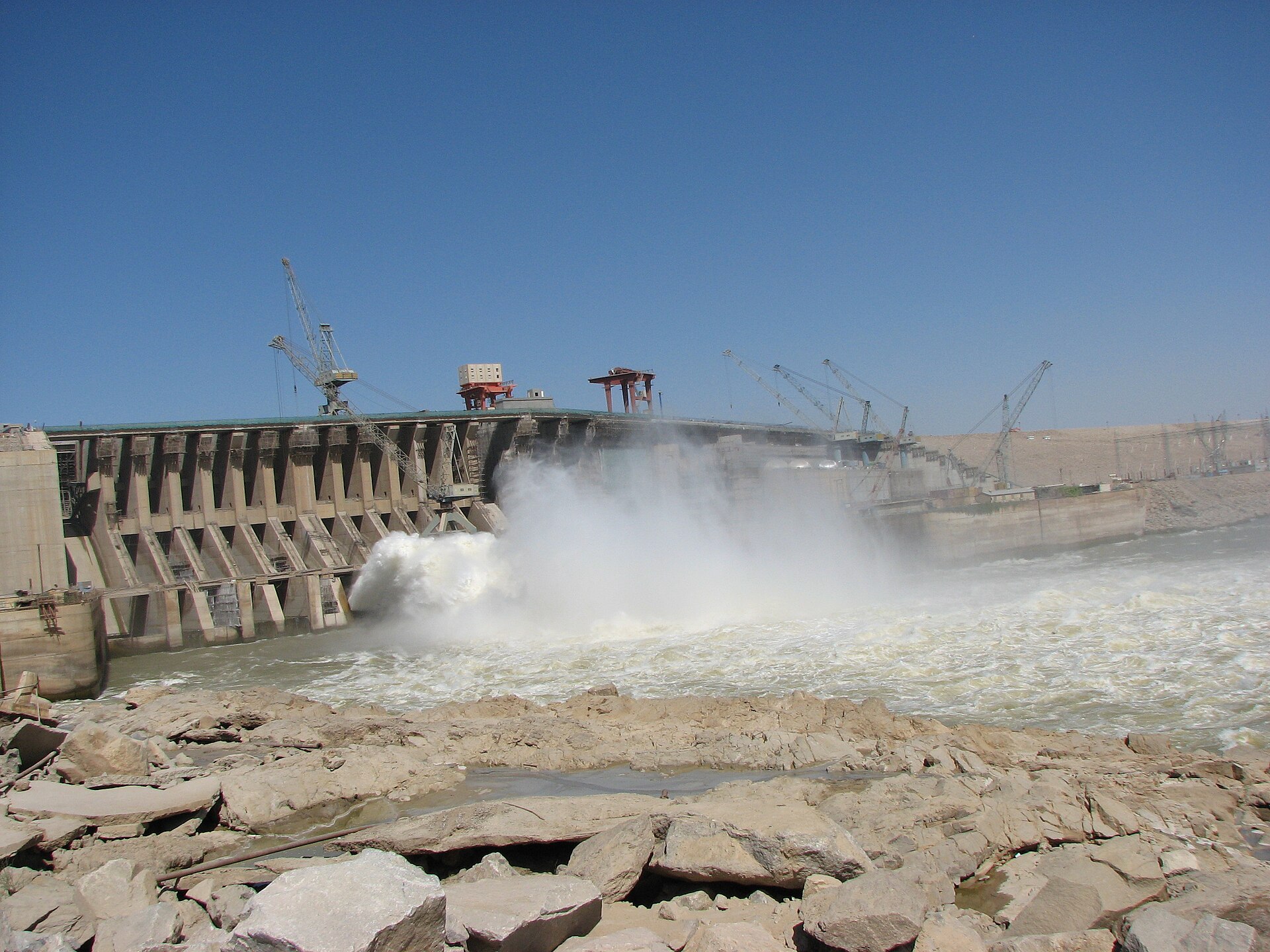
Kamikaze drones struck the Um Dabaker thermal power station at Rabak in Sudan’s White Nile State in the early hours of Thursday, October 29, damaging the plant’s main electrical feeders and its control room and forcing it offline, according to reporting by Sudan Tribune carried by The Eastleigh Voice. The outage cut electricity to two states — White Nile and North Kordofan — and eyewitnesses described violent explosions and plumes of smoke rising from the plant.
Sudan’s authorities attribute the strike, and the three days of attacks on electricity and fuel installations that preceded it, to the paramilitary Rapid Support Forces (RSF), which has fought the Sudanese Armed Forces since April 2023. The RSF rarely comments on such accusations and had not publicly responded to the Um Dabaker attribution in the reporting available on Thursday. No casualty figures for the Um Dabaker strike itself had been confirmed in the sources reporting it, and the claims in this article are attributed to the officials and organisations making them; the technical material Khartoum says supports its wider accusations has not been independently verified.
The strike did not arrive on its own. It closed a four-day sequence in which, by Sudanese officials’ account, drones hit five substations on Monday, a transformer station serving greater Khartoum on Tuesday, and electricity and fuel facilities in Gezira and Red Sea states on Wednesday — the day Khartoum used a formal briefing to accuse Ethiopia of allowing its territory to be used as a launch platform, an accusation Ethiopia has rejected in previous rounds and had not yet answered in this one in the sources checked. The campaign against the grid is the subject of continuing Signal Post News coverage, including our report on Monday’s strikes on power stations across the southeast.
What happened at Um Dabaker
Um Dabaker is not a minor node. The plant, near Kosti in White Nile State, is a crude-oil-fired steam power station of about 500 megawatts that entered service in 2016, according to Wikipedia’s list of power stations in Sudan — one of the larger thermal plants on a national grid that was already short of generation before this week. A plant of that size going offline at a stroke removes both generation and a control point: the reported damage was to the station’s main electrical feeders and its control room, the parts that connect a power station to the network it feeds and that operators use to run it.
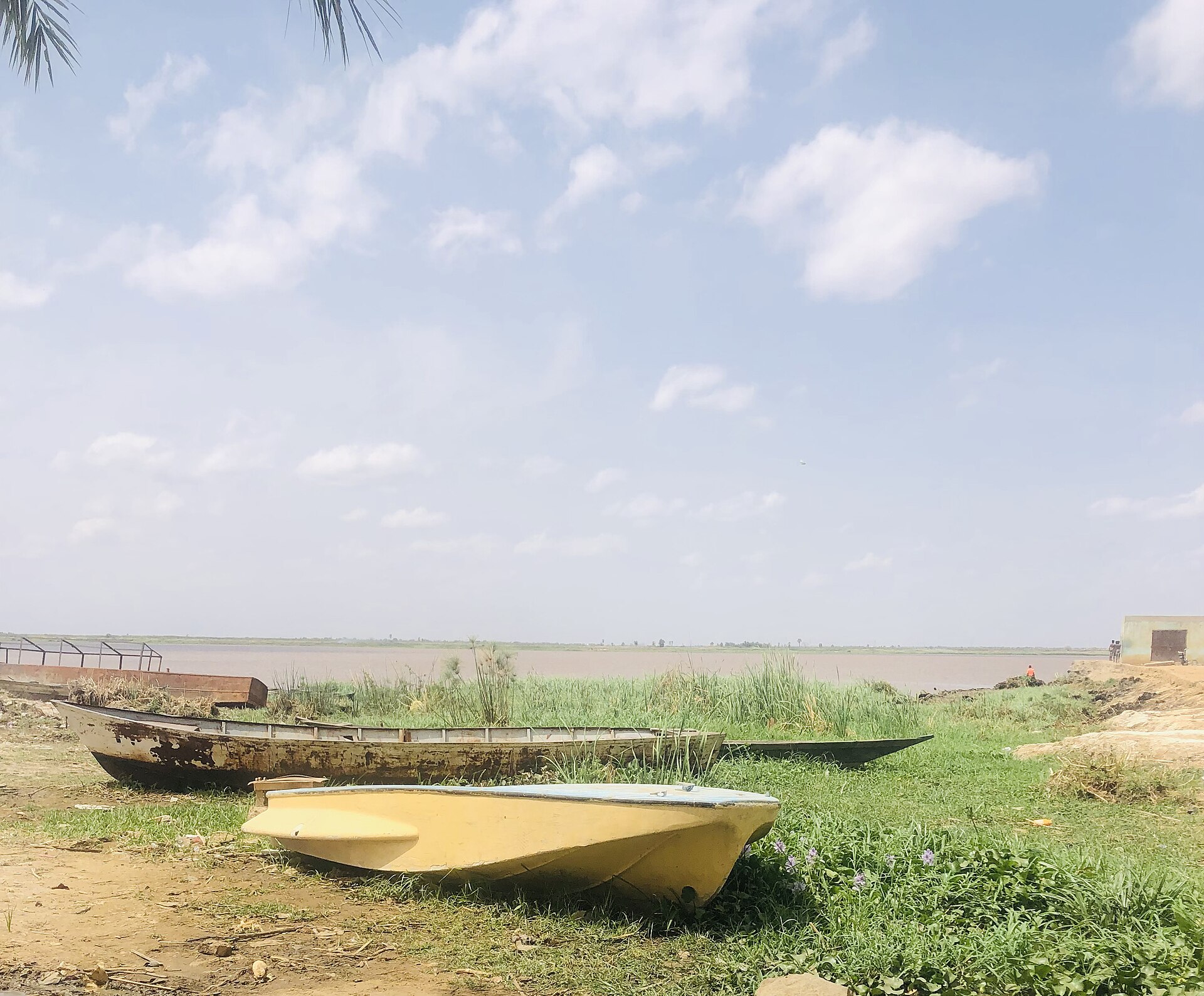
According to The Eastleigh Voice, summarising Sudan Tribune’s reporting, the drones struck in the early hours of Thursday and the damage forced the plant offline, cutting power to White Nile State — where Rabak and Kosti sit on the west bank of the White Nile — and to North Kordofan, the state whose capital, El Obeid, lies north-west of the plant. Eyewitnesses described violent explosions and plumes of smoke. That is the confirmed core of the Um Dabaker story: a named plant, a named mechanism of damage, two states darkened, and an attribution by Sudan’s authorities to the RSF that the RSF, in line with its usual practice, had not publicly addressed.
What a feeder and control-room hit means in practice is worth spelling out, because it shapes how long an outage lasts. Generation equipment can sometimes be restarted within hours if it is undamaged; damaged feeders and a damaged control room are a different order of repair, requiring parts, specialist crews and safe access — in a war zone, none of those is guaranteed. Sudan Electricity Holding Company, the state operator, had already warned on Monday that transformer damage from this week’s strikes threatens the stability of the national grid as a whole, a warning that Thursday’s strike on one of the country’s largest thermal plants makes harder to read as routine.
Four days against the grid: how the campaign unfolded
Read in sequence, the week describes a campaign moving across the map of army-held Sudan, from the agricultural south-east toward the capital and the Red Sea coast, and then back to the White Nile. Each day’s strikes are attributed below to the source that reported them.
Monday, October 26: five substations
The sequence opened on Monday with strikes on five substations — El Geneid (also rendered Al Junaid), Singa, El Hawata, Al Faw (Al Fao) and Mashkour — across Gezira, Sennar, Gedaref and White Nile states, according to Sudan Electricity Holding Company. The operator warned that the transformer damage threatened national grid stability. Signal Post News covered Monday’s blackout in depth in Sudan Drone Strikes on Power Stations Cut Power Across Southeast.
Tuesday, October 27: Al-Markhiyat and the capital’s edge
On Tuesday, a strike disabled the Al-Markhiyat transformer station north-west of Omdurman, Khartoum’s twin city across the Nile, cutting power across parts of greater Khartoum. A transformer station is not a generator; it is a junction. Disabling one does not reduce how much electricity Sudan can produce — it reduces how much of it can reach the capital region, which is why a single substation strike can darken districts far from the point of impact.
Wednesday, October 28: El Manaqil, Haya and the briefing
Wednesday’s strikes widened the target set from electricity to fuel. Strikes hit electricity and fuel facilities at El Manaqil in Gezira State, causing widespread blackouts; civil defence teams extinguished the fires and no casualties among installation personnel were confirmed, according to The Arabian Post. Further east, strikes hit fuel storage near Haya in Red Sea State, including infrastructure linked to the Bashayer oil export terminal — the outlet through which Sudan’s crude reaches the sea. The same day, in Khartoum, the government held the briefing at which it accused Ethiopia of hosting launch sites, described in detail below.
Thursday, October 29: Um Dabaker
The week’s fourth day brought the largest single target: the Um Dabaker plant itself. Emergency Lawyers, a Sudanese legal collective, said about 13 power stations had been targeted during October, and condemned the strikes on electricity and fuel installations on October 27 and 28, attributing them to the RSF. The UN Office for the Coordination of Humanitarian Affairs (OCHA) has expressed concern about escalating drone attacks on civilian infrastructure and the disruption they cause to power and water supplies. And behind the infrastructure figures sits a human one that Signal Post News reported earlier this week: UN human rights chief Volker Türk said drone strikes killed at least 306 people in Sudan in the first three weeks of October alone, a toll examined in Sudan Drone Strikes Killed at Least 306 People in Three Weeks, UN Says.
Khartoum accuses Ethiopia of hosting the launch sites
The diplomatic charge was laid out on Wednesday, October 28, at a briefing in Khartoum reported by the Sudan News Agency. Foreign Ministry Undersecretary Muawiya Osman Khalid said Sudan has information that drones targeting civilian infrastructure originated from Ethiopian territory, including locations near Bahir Dar Airport — Bahir Dar being the capital of Ethiopia’s Amhara region, on the southern shore of Lake Tana, several hundred kilometres from the Sudanese border. Khalid called the alleged hosting a dangerous development and said Sudan reserved the right to defend its security by all legitimate means.
The briefing was staged as an evidence presentation, not merely a statement. Officials from the defence, foreign affairs and information ministries and from the General Intelligence Service presented drone fragments, satellite imagery and flight-path coordinates that they said supported the accusation. Information Undersecretary Graham Abdel Qader said the attacks had hit civilian facilities across Khartoum, Gezira, White Nile, Sennar, Blue Nile and Red Sea states. Khartoum has also accused the United Arab Emirates of supporting the attacks — an accusation in the same family as Sudan’s long-running claim that the RSF is sustained by outside sponsors, which the accused parties have denied in previous rounds.
The timing matters to how the accusation will be read. It was made on the third day of the grid campaign, a day before the Um Dabaker strike, and it names a specific airfield’s vicinity rather than speaking in generalities. A specific claim is, in principle, a checkable one: flight paths either do or do not cross the border where Khartoum says they did. But checkable is not the same as checked, and that distinction is where this story has to be handled with care.
What is — and is not — verified
Three things can be said with confidence. First, the strikes themselves are multiply reported: the grid attacks of October 26–29 were reported by Sudan’s state operator, by regional outlets including Sudan Tribune, The Eastleigh Voice and The Arabian Post, and were condemned by Emergency Lawyers and noted with concern by UN OCHA. Second, Khartoum’s accusation against Ethiopia was made publicly, on the record, by named officials who presented physical and documentary material. Third, Sudan’s authorities attribute the campaign to the RSF, and the RSF, which rarely comments on such accusations, had not done so here.
What cannot be said is that the Ethiopian claim has been independently established. Independent verification of the technical material presented in Khartoum — the fragments, imagery and coordinates — is unavailable: outside investigators have not examined it, and satellite or signals corroboration from a neutral party has not been published. Ethiopia, for its part, has previously rejected such allegations: its foreign ministry has denied hosting RSF camps or launch sites. In this latest round, Ethiopia had not yet commented in the sources checked for this article, so its position here is a prior denial, not a response to Wednesday’s specific presentation — a difference readers should keep in view.
One further finding belongs in the balance, because it cuts in a more complicated direction than either capital’s statements. A UN fact-finding mission reported in September 2026 that it had found Ethiopian nationals among RSF-associated foreign fighters, but no evidence that the Ethiopian government directed them or supplied weapons or financing. Foreign fighters fighting alongside a force is one claim; a neighbouring state hosting launch sites for strikes on civilian infrastructure is a much graver one, and on the public evidence available on Thursday, the second claim rests on material presented by one party to the dispute and not yet tested by anyone else. The International Committee of the Red Cross has separately warned about the civilian harm caused by Sudan’s drone and aerial attacks, the subject of our report on the ICRC’s warning on drone and aerial attacks in Sudan.
Why this matters
As a Sudan drone strike power station story, Um Dabaker is best understood as strategy rather than incident. A campaign that hits about 13 power stations in a single month, according to Emergency Lawyers’ count, is not trying to win a battle at any one of those sites. It is degrading a system. Sudan’s generation capacity was already cut by roughly 40 percent, according to a September 2026 UK government assessment, before this week’s strikes — which means each additional plant or transformer lost falls on a grid with progressively less spare capacity to reroute around the damage. That is the arithmetic behind the operator’s warning about national grid stability: grids fail not only when generation is destroyed, but when the remaining network can no longer balance what is left.
The reason grid warfare lands so heavily on civilians is that electricity is an input to almost everything else. Water systems need power for pumping and treatment, so a blackout becomes a water outage on a lag of hours to days. Hospitals need it for theatres, oxygen concentrators, dialysis and the refrigeration of blood and vaccines. Insulin and other medicines need cold chains that end at a household refrigerator. Food spoils; grain mills and irrigation pumps stop; the farming calendar in states like Gezira — Sudan’s agricultural heartland, and one of the states struck this week — does not pause because the power has. UN OCHA’s expressed concern about drone attacks on civilian infrastructure disrupting power and water is, in effect, a concern about exactly this cascade, and it is why attacks on electricity systems draw condemnation from humanitarian lawyers even when, as at El Manaqil on Wednesday, no casualties among installation staff are confirmed.
There is also a regional dimension that Monday’s strikes did not have and Thursday’s do. A drone campaign inside Sudan’s civil war is a catastrophe for Sudan. A drone campaign that one government says is launched from a neighbour’s territory, near a named airport, with a reserved “right to defend” attached, is a claim that points beyond the civil war’s borders — toward the possibility, still only a possibility on the public evidence, of a confrontation between two states that each have other wars and armed rebellions already on their hands.
Background: a war since April 2023, and a plant struck before
Sudan’s war began in April 2023, when a dispute over integrating the RSF into the regular military escalated into open fighting between the Sudanese Armed Forces and the paramilitary force that had once been its partner. Three and a half years on, the war has displaced millions, produced famine conditions in parts of the country, and — increasingly through 2025 and 2026 — migrated into the air. Drones are the war’s leveller: relatively cheap, increasingly long-ranged, and able to strike deep inside territory the other side holds, from Khartoum’s airport to markets in Darfur. Türk’s figure of at least 306 people killed by drone strikes in the first three weeks of October, cited above, is the measure of how central the drone war has become to the conflict’s toll.
Um Dabaker itself has been struck before, and the history is directly relevant to what a prolonged outage can do. In February 2025, attacks on the Um Dabaker plant cut power to Kosti and Rabak, and the resulting loss of powered water pumping was followed by a cholera wave in the two cities, documented in reporting by Médecins Sans Frontières (MSF) at the time. That sequence — power station hit, water system down, waterborne disease up — is the clearest worked example in this war of the cascade described above, and it happened in the same two cities that lost power again on Thursday. It is history, dated February 2025, and it is cited here because it is the strongest available evidence for what aid agencies fear a long Um Dabaker outage would mean this time.
What happens next
Three tracks will decide what this week becomes. The first is diplomatic: whether Ethiopia responds to Wednesday’s presentation — and if it repeats its previous denials, whether Khartoum publishes more of its material, seeks to internationalise the claim, or acts on its reserved right of self-defence in some form. The second is technical: how quickly Sudan Electricity Holding Company can repair or bypass damaged feeders, control rooms and transformers across at least five states’ worth of strikes in four days, in a country where spare transformers are scarce, imports are slow and repair crews work in a war. The third is military: whether the grid campaign continues into a fifth day and beyond, and whether fuel infrastructure like the Bashayer-linked storage hit on Wednesday becomes a standing target set alongside electricity.
Each track carries its own escalation risk. A grid that cannot be repaired faster than it is struck enters a spiral in which blackouts lengthen and services fail in sequence. A cross-border accusation left publicly unanswered, or answered with contempt, raises pressure on both capitals. And a war in which drones can reach power stations, fuel terminals and airports at will is a war in which almost no civilian system is out of range. For the residents of White Nile and North Kordofan who woke on Thursday without power, those strategic questions resolve into immediate ones: whether the water is running, whether the hospital generator has fuel, and whether the insulin in the refrigerator is still cold.
Related coverage: Sudan Drone Strikes on Power Stations Cut Power Across Southeast · Sudan Drone Strikes Killed at Least 306 People in Three Weeks, UN Says · ICRC Warns Sudan Drone and Aerial Attacks Are Harming Civilians
Sources
- The Eastleigh Voice, “Sudan drone strike knocks out power station, plunges two states into darkness” (October 29, 2026) — the Um Dabaker strike, the feeder and control-room damage, the White Nile and North Kordofan outage, and eyewitness accounts of explosions and smoke, summarising Sudan Tribune reporting.
- The Arabian Post, “Sudan renews accusations against Ethiopia over drone attacks” (October 29, 2026) — the Wednesday strikes at El Manaqil and near Haya and the Bashayer terminal, and Khartoum’s renewed accusations against Ethiopia.
- The Eastleigh Voice, “Sudan accuses Ethiopia of hosting launch platforms for drone attacks on its territory” (October 29, 2026) — the Khartoum briefing, Muawiya Osman Khalid’s statements and the material presented by Sudanese officials.
- Africa Center for Strategic Studies, Africa Media Review for October 29, 2026 — the Um Dabaker item summarising Sudan Tribune, alongside the week’s wider African security coverage.
- Sudan Electricity Holding Company statements (October 26, 2026) — the five substations struck on Monday and the warning on national grid stability; Emergency Lawyers (October 2026) — about 13 power stations targeted during October; UN OCHA — concern at drone attacks on civilian infrastructure; UN human rights chief Volker Türk — at least 306 people killed by drone strikes in the first three weeks of October; UK government assessment (September 2026) — generation capacity cut by about 40 percent; UN fact-finding mission (September 2026) — Ethiopian nationals among RSF-associated foreign fighters, no evidence of Ethiopian government direction or supply; MSF reporting (February 2025) — the earlier Um Dabaker attacks and the Kosti–Rabak cholera wave.