Blockchain · Crypto · Regulation
The MEXC FinCEN order US banks must now prepare for is the most aggressive use yet of a little-known Russia money-laundering law: the Treasury’s financial-crimes bureau has found MEXC Global to be of primary money laundering concern and barred every covered US financial institution from transmitting funds to or from it — fiat or crypto — over at least $16.7 billion in likely illicit flows across five years.
Track it live: Live crypto tracker
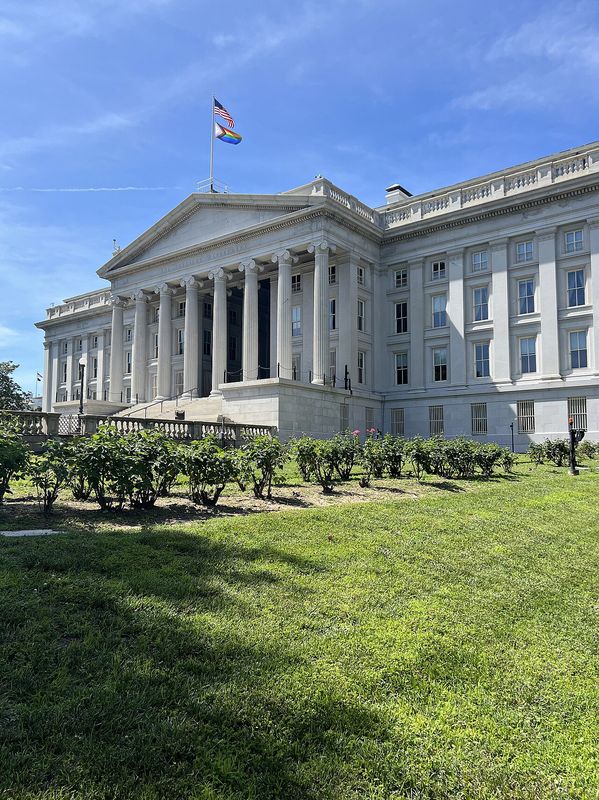
WASHINGTON, November 8, 2026 — On Friday, November 6, the Financial Crimes Enforcement Network (FinCEN) issued an order under Operation Economic Outcast that effectively severs MEXC Global from the US financial system. FinCEN found the Seychelles-incorporated exchange — founded in 2018, ranked among the world’s 20 largest crypto exchanges, processing more than $1 billion in transactions a day and holding roughly $5 billion in reserves — to be of primary money laundering concern in connection with Russian illicit finance, under Section 9714(a) of the Combating Russian Money Laundering Act. The order prohibits covered US financial institutions from engaging in any transmittal of funds to or from MEXC, expressly including convertible virtual currency, and it extends to the exchange’s subsidiaries and successors. It carries no end date.
The finding behind it is unusually specific. FinCEN says MEXC facilitated at least $16.7 billion in likely illicit flows between May 2021 and May 2026. Within that total, roughly $1.5 billion is tied to Russian sanctions evasion — including dealings with Garantex, the Russian exchange designated by OFAC in April 2022, and its successor Grinex, with transactions continuing as recently as June 2026. The remaining categories span Iranian and North Korean sanctions evasion, ransomware proceeds and fraud. “Financial institutions cannot have it both ways: either you support the Iranian regime, or you have access to the US financial system,” Treasury Secretary Scott Bessent said in the announcement.
What the order does — and what it does not do
The legal mechanics matter, because the order is routinely misdescribed as a sanctions designation. It is not. Section 9714, as amended by the fiscal 2022 defence authorisation, lets the Treasury impose the special measures of Section 311 of the USA PATRIOT Act on a foreign institution of primary money laundering concern — or, as FinCEN chose here, a sixth measure: a prohibition on transmittals of funds. The duty falls on US institutions, not on MEXC’s users. FinCEN judged that lighter measures — extra record-keeping, correspondent-account conditions — would still let transfers reach illicit actors through other foreign intermediaries, and so chose the outright ban.
Three consequences follow. First, no assets are frozen: this is not an OFAC listing, MEXC is not on the Specially Designated Nationals list, and holding an account at MEXC is not in itself illegal. Second, the practical choke point is total anyway — without US banks, money transmitters and US-facing crypto venues able to touch its flows, MEXC’s dollar connectivity ends, and counterparties worldwide must decide whether their own US access is worth more than their MEXC business. Third, the clock has not started: the order takes effect 30 days after publication in the Federal Register, the released text carries that date as a placeholder, and as of November 8 the order had not yet been published — a compliance window that US institutions are expected to use to map and sever MEXC exposure.

Background: Section 9714 grows teeth
Section 9714 was built for Russian illicit finance after the 2022 invasion of Ukraine, and until now its targets were small: lesser-known exchanges and payment channels accused of serving sanctioned Russian actors, in a line of actions Signal Post News has followed through cases such as the A7 network sanctions. MEXC is categorically larger — by FinCEN’s own figures, roughly 9% of centralised-exchange trading volume at the end of 2025, more than $1 billion a day. Applying a Russia-specific statute to an exchange whose alleged flows also involve Iran and North Korea shows how the tool is being generalised: the legal hook is the Russian connection — the $1.5 billion, Garantex, Grinex — and the practical effect sweeps in everything else.
The market backdrop did the order no favours, or the market no good. The same week, US spot Bitcoin and Ether ETFs recorded roughly $1.65 billion in net outflows, per Farside Investors data — a reminder that institutional crypto money is already edging toward the exits when regulatory risk spikes, a shift visible in the ETF demand cycle this quarter. An order that instructs every US compliance department to treat a top-20 exchange as radioactive lands in that environment as both an enforcement action and a sentiment event.

Who gains, who loses, who pushes back
US regulators gain a precedent with reach: a transmittal ban drafted once can now be pointed at any offshore venue whose compliance Treasury distrusts, without the evidentiary and diplomatic overhead of an OFAC designation. Compliant exchanges gain competitively — every basis point of MEXC’s volume that migrates will migrate toward venues that can advertise US banking access, and at least one rival has already warned users against direct transfers from MEXC.
MEXC and its users lose the dollar system, the deepest pool of crypto liquidity there is. The exchange says it is reviewing the order with its legal and compliance teams, is operating normally, and has launched an independent review of its AML controls; it had also recently announced an exit from serving users in Russia and Belarus. None of that answers FinCEN’s core allegation — that stated KYC and AML policies coexisted with at least $16.7 billion in flows the policies existed to stop.
Critics of the approach raise due-process and proportionality points worth stating plainly. A Section 9714 finding is an administrative determination, not a criminal conviction; FinCEN’s figures are the government’s characterisation of flows, and category totals overlap rather than add. The absence of an end date, and the extension to unnamed “successors,” give the order a breadth that compliance lawyers will test. Against that, FinCEN’s response is built into the order itself: five years of documented flows, continuing Garantex-linked transactions four years after that exchange was designated, and a judgment that anything short of a ban leaves the channels open.
Why this matters
The unit of enforcement has changed
For a decade, US crypto enforcement worked by naming bad actors — a mixer, a darknet market, a designated exchange. The MEXC order works by instructing the entire US financial system to refuse a counterparty, which is how traditional finance polices correspondent banking. That is the model of the dollar’s plumbing applied to crypto’s: you do not have to prove a crime in court to end a business’s access; you have to make a finding and let ten thousand compliance departments do the rest. Every offshore exchange above a certain size now has to price that risk.
Allegation and proof are doing different work
Readers should hold two facts at once. The $16.7 billion figure is FinCEN’s finding, assembled from the agency’s analysis of five years of transactions, and the Garantex/Grinex strand is specific, dated and checkable against OFAC’s 2022 designation. It is also, as of today, untested in court, and MEXC’s promised independent AML review is the first step of what could become a challenge. The honest summary is that the US government has asserted, in a formal order with legal effect, that one of the world’s largest exchanges ran a five-year laundromat — and the burden of practical response now sits with the exchange, not the accuser.
The Russia statute is becoming a general crypto weapon
Comparative context: Garantex itself was handled through OFAC designation; smaller Russia-linked venues drew earlier Section 9714 actions. MEXC is the largest exchange ever hit under Section 9714, per CoinDesk’s assessment, and the first where the target’s centre of gravity is global retail volume rather than a sanctions-evasion niche. If the order survives its Federal Register publication without legal interruption, the template — Russia finding, global effect — is available for any exchange Treasury decides has failed the same test.
What happens next
The immediate milestone is administrative: publication of the order in the Federal Register, which starts the 30-day clock to effectiveness; as of November 8 it had not appeared. In that window, watch four things. US institutions’ cutoff notices to customers and counterparties with MEXC exposure. MEXC’s independent review — its scope, its reviewer, and whether FinCEN treats it as mitigation or as an admission framework. Any legal challenge to the finding, which would be the first full test of Section 9714’s transmittal ban at this scale. And the volume data: whether MEXC’s roughly 9% share of centralised-exchange trading bleeds to rivals, and whether the ETF outflow week extends into a trend. The order has no cessation date, so unlike a designation with a delisting path argued case by case, MEXC’s route back runs through FinCEN’s discretion — conditions, exemptions, or rescission — and no one in Washington is describing that route as short.
What do you think — is cutting an exchange off from US banks the right tool for illicit crypto flows, or should cases like this have to be proven in court first? Follow Signal Post News for the Federal Register publication and the effective date, and share your thoughts below.
Sources
Sources: FinCEN, “Operation Economic Outcast Severs MEXC Global’s Access to the U.S. Financial System” (November 6, 2026); US Department of the Treasury, press release sb0685 (November 6, 2026), including the text of the Section 9714(a) order; CoinDesk, “U.S. Treasury moves to cut off crypto exchange MEXC over $16 billion in alleged illicit flows” (November 7, 2026); ETF flow figures: Farside Investors. Photos: Wikimedia Commons, as credited in the captions.