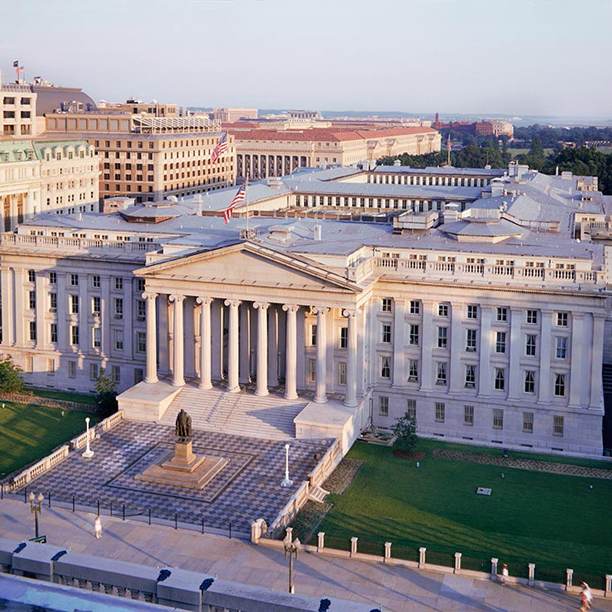
WASHINGTON — The U.S. Treasury Department on October 1 sanctioned the Russia-linked A7 Network as a “significant transnational criminal organization,” escalating a campaign against the shadow banking channels that officials say moved money for sanctioned Russian entities, Iran's central bank, the Islamic Revolutionary Guard Corps, Iran-backed groups including Hamas, and cybercriminals.
The action under Operation Economic Outcast does more than place another name on a blacklist. OFAC's designation immediately blocks property under U.S. jurisdiction and generally bars U.S. persons from dealing with the network. In parallel, FinCEN proposed a rule that would prohibit covered U.S. financial institutions from transmitting funds involving identified A7 sub-agents after a 30-day public-comment period. One move freezes; the other is designed to deny the network a route through American finance.
Why this matters: Washington is sanctioning the network, not just the nodes
This is the first time Treasury has applied the significant transnational criminal organization label to a Russian financial network. That legal framing matters because A7's architecture was meant to survive entity-by-entity designations. A shell company can be renamed, a bank account replaced and a payment rerouted; a network-level designation tells compliance departments to examine control, behavior and counterparties rather than wait for every front company to appear on a list.
The designation also collapses what had been treated as separate sanctions problems. Russian trade settlement, Iranian oil receipts, weapons procurement, ransomware proceeds and cryptocurrency transfers were moving through overlapping infrastructure. Treasury's thesis is that A7 was not merely a Russian workaround adopted by Iran; it was a reusable financial utility for actors shut out of conventional channels.
The numbers show two rails operating at industrial scale
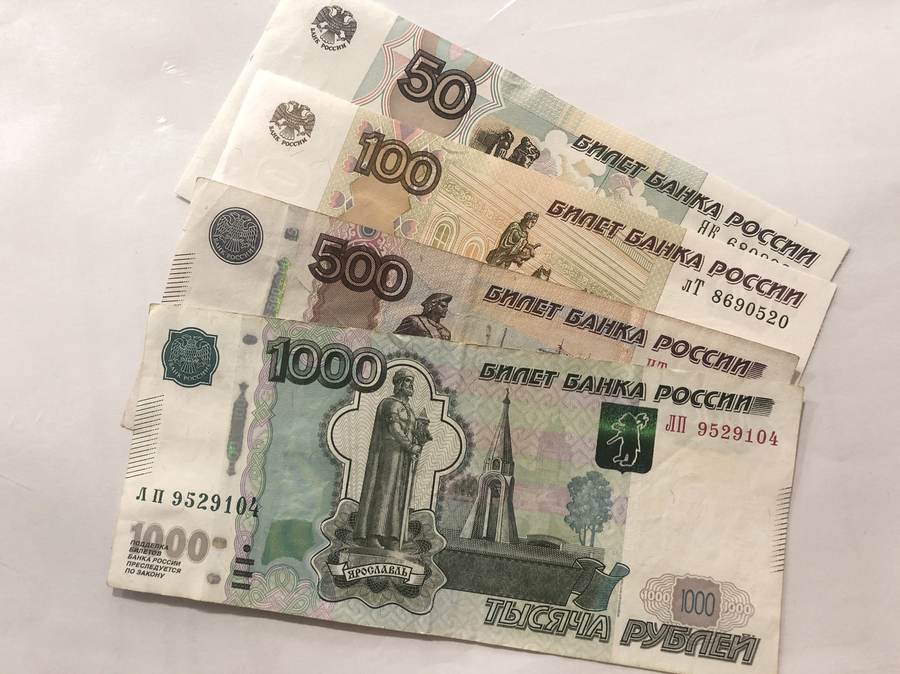
FinCEN said A7 sub-agents processed more than $17 billion in aggregated transfers from January 2025 through June 2026. A7 itself claimed that, by January 2026, it had processed 7.5 trillion rubles, equivalent to about 81.44 billion euros ($91.5 billion), through more than 2,000 transactions a day. Treasury put that self-reported figure at roughly 13% of Russia's 2025 foreign trade.
Those totals are not interchangeable. The $17 billion describes activity FinCEN attributed to sub-agents; the $91.5 billion is A7's own broader claim. The crypto layer is larger still: more than 180 entities moved at least $179.1 billion in transactions involving A7A5, the ruble-backed token, according to reporting on FinCEN's findings. Transaction volume can include repeated transfers of the same value and may overlap with fiat settlement, so it should not be read as $179.1 billion of unique economic activity. Its significance is reach, velocity and the ability to move value outside correspondent banking.
A7A5 turns the ruble into a sanctions rail
The A7A5 crypto token Russia connection is the most consequential part of the case. A dollar transfer usually touches banks that can screen names, countries and transaction narratives. A token can travel wallet to wallet before value re-enters the banking system. A7A5 was issued by Old Vector LLC, which the United States sanctioned in August 2025, and backed by ruble deposits tied to the A7 ecosystem.
That design offers sanctioned users a synthetic bridge: keep the unit of account linked to the ruble, move it across blockchains, then settle through sub-agents that appear to be ordinary trading companies. It is not decentralization in the Bitcoin sense; an issuer, reserve assets and service providers remain potential chokepoints. But it reduces reliance on the correspondent accounts that made earlier shadow-banking crackdowns effective. FinCEN therefore chose a transmittal-of-funds prohibition broad enough to reach convertible virtual currency as well as fiat payments.
How the Russia-Iran sanctions evasion network worked
Treasury describes A7's sub-agents as foreign companies built to receive and remit payments while concealing the real sponsor. Staff controlled websites and bank accounts, accessed accounts through custom virtual private networks, and paired shell firms with falsified import-export records and misleading product descriptions. The objective was prosaic: make a restricted transfer look like an invoice for normal goods.
The network was led by Ilan Mironovich Shor, a sanctioned businessman and convicted fraudster, and linked to Promsvyazbank, the Russian state-owned bank serving the country's defense sector. That combination joined entrepreneurial evasion with state financial capacity. A7's claimed banking relationships — roughly 435 financial institutions in 83 countries — show why the enforcement burden now spreads far beyond Moscow and Tehran.
Treasury said one sub-agent dealt with entities in Iran's oil “shadow fleet,” while that company and a sister firm received nearly $140 million from Iran-sanctions-evasion entities. Another sub-agent sent about $1.6 million to a company linked to Iranian evasion and weapons procurement. Those examples are small beside A7's headline totals, but they connect the network's plumbing to identifiable oil and military flows.
Operation Economic Outcast widens without directly confronting China
Operation Economic Outcast began in August 2026 as a campaign against Iran's financial lifelines. Earlier actions focused on regional banks and services sustaining Iranian aviation. The A7 move is broader because it targets infrastructure serving several sanctioned economies, yet the strategy still avoids a direct collision with China, the buyer of roughly 90% of Iran's oil.
That restraint is deliberate. Sanctioning Chinese demand at scale could disrupt oil markets and the wider U.S.-China relationship. Striking the payment intermediaries instead aims to raise the cost, delay and risk of moving proceeds without immediately trying to remove every barrel from the market. The result is a pressure strategy focused on pipes rather than the biggest customer.
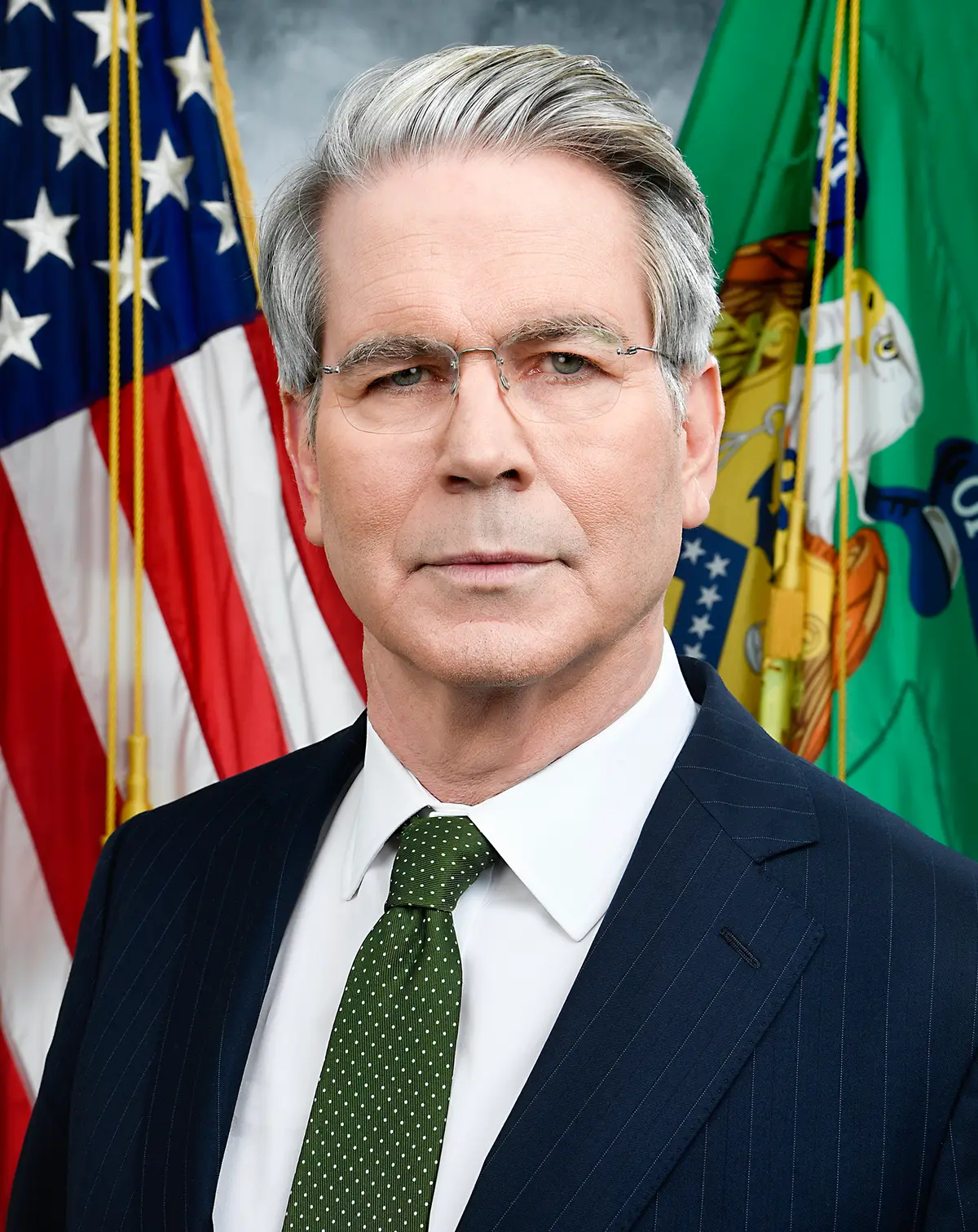
“Treasury is dismantling the financial infrastructure that allows Iran and other adversaries to evade sanctions, move illicit funds, and undermine the integrity of the global financial system,” Treasury Secretary Scott Bessent said. “Today’s action targeting A7 continues Treasury’s unprecedented efforts to isolate Iran and its financial enablers and sends a clear message that if you facilitate illicit finance for America’s adversaries, you will lose access to the U.S. financial system.”
Who wins, who loses — and where the risk moves
The immediate losers are A7's clients and intermediaries. Iranian oil sellers and procurement networks face more payment friction. Russian exporters that treated A7 as an alternative settlement route may have to accept higher fees, slower transfers or more volatile assets. The 435 banks associated with the network now face costly look-backs, enhanced due diligence and the possibility that a customer or nested correspondent exposed them without their knowledge.
U.S. and allied regulators gain a common map. The designation, FinCEN alert and proposed rule give banks a shared vocabulary for suspicious-activity reports. Large compliance vendors and blockchain-analytics firms are also likely to benefit as institutions screen wallets, beneficial owners and trade documents together.
The winners on the illicit side will be smaller, less efficient substitutes. History suggests that pressure on one channel fragments activity rather than ending it. Hawala brokers, commodity swaps, regional currencies and newer tokens may absorb some flows. That displacement is still meaningful: it raises spreads, increases counterparty risk and makes sanctions evasion harder to scale. But it also pushes activity toward jurisdictions with weaker supervision.
How this compares with earlier shadow-banking actions
Past U.S. actions often focused on named banks, correspondent accounts, tanker fleets or individual crypto addresses. The A7 package layers three tools: an OFAC network designation, a FinCEN alert with red flags, and a proposed rule against transfers involving sub-agents. It is closer to a system interdiction than a traditional blacklist.
The comparison also exposes a limit. Banks can freeze funds they hold; a blockchain record cannot be erased. Enforcement depends on exchanges, issuers, custodians and the points where tokens become bank money or goods. The A7A5 sanctions will therefore be judged less by the nominal volume blacklisted than by whether liquidity, redemption and merchant acceptance deteriorate.
What happens next
The next formal step is the 30-day comment period after FinCEN's proposal appears in the Federal Register. Banks, payment companies and digital-asset firms will press for clarity on how to identify sub-agents, how quickly institutions must reject transfers, and how the rule applies when an intermediary is hidden behind trade finance or a crypto address.
Three scenarios deserve attention. First, Treasury could designate additional sub-agents and their beneficial owners as banks complete look-backs. Second, allies may align their lists, making it harder for A7-linked firms to shift from dollars into euros, sterling or regional currencies. Third, A7 may migrate toward smaller institutions and more opaque tokens, producing short-term disruption rather than collapse.
Market effects are likely to be concentrated. The broad ruble, oil and crypto markets may absorb the action unless follow-on sanctions reach major buyers or exchanges. The sharper moves should appear in A7A5 liquidity, spreads for Russia-linked trade settlement and compliance costs at exposed banks. A sudden fall in A7A5 turnover would signal that intermediaries are retreating; stable volume would suggest the network has found enough non-U.S. exits to keep operating.
The larger test
Treasury sanctions A7 Network Russia not because one company moved one prohibited payment, but because a parallel system industrialized concealment. Its scale — thousands of daily transactions, hundreds of banks and a token with enormous reported turnover — turns the case into a referendum on sanctions enforcement in a multipolar financial system.
The United States still controls the world's most important currency and retains formidable leverage over institutions that need dollars. A7's answer was to combine ordinary trade paperwork, third-country companies and ruble-backed crypto. Washington's answer is to treat those pieces as one criminal network. The contest now moves from the announcement to implementation: whether banks can identify the hidden sub-agents faster than A7 can replace them.
Sources
- U.S. Department of the Treasury — Operation Economic Outcast action against the A7 Network, October 1, 2026
- FinCEN — proposed rule and alert on A7 sub-agents, October 1, 2026
- Financial Times — “US sanctions Kremlin-backed fintech A7 for allegedly assisting Iran,” October 1, 2026.
- The New York Times — “US Sanctions A7, a Russia Firm That Helps Sidestep Economic Restrictions,” October 1, 2026.
- Bloomberg — “US Further Targets Iran-Linked Russian A7 Financial Network,” October 1, 2026.
- CoinDesk — coverage of the A7 designation and its ruble-backed crypto channel, October 2, 2026.
Method: Dollar, ruble and token totals refer to different measures and may overlap; they are presented separately rather than added together. Government allegations are attributed to Treasury and FinCEN and are not presented as criminal convictions of every network participant.