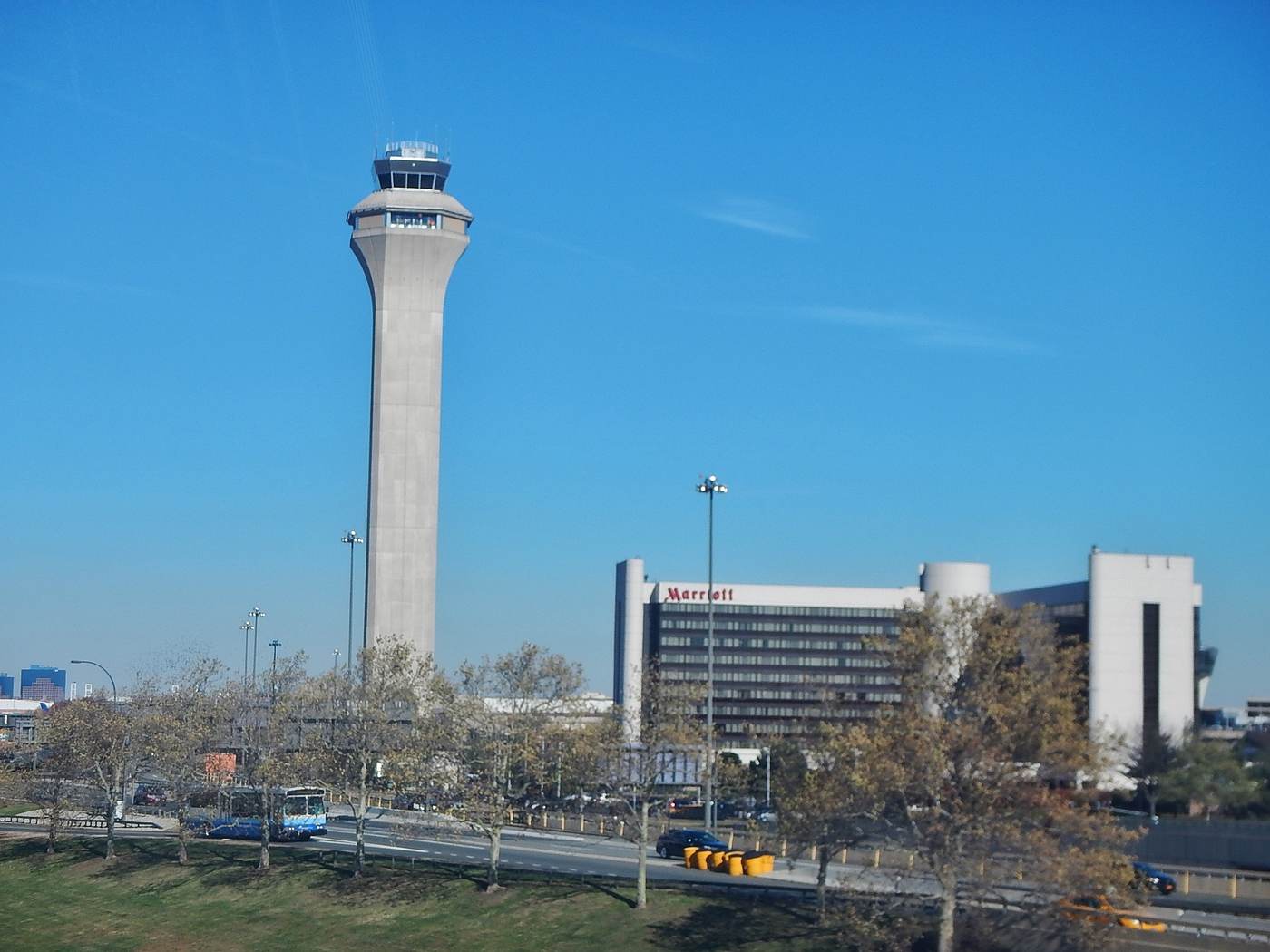
Air traffic across the northeastern United States was restricted for hours on Monday, September 21, after a communications failure at the Federal Aviation Administration facility that manages approaches and departures around Philadelphia and parts of the New York region. A primary circuit failed. When controllers needed the backup, they learned that construction work in New Jersey had cut roughly 600 feet of fiber, according to The Wall Street Journal.
That sequence—not a single broken cable—is the central fact. Redundancy failed at the moment it was needed. The FAA reduced traffic through Philadelphia International, Newark Liberty, Teterboro, John F. Kennedy and LaGuardia, while Boston absorbed spillover from diversions. The disruption landed as delegations for the United Nations General Assembly converged on New York. Reuters reporting said arrivals by 130 world leaders were under way.
No reporting cited here indicates sabotage or an unsafe loss of aircraft separation. Ground stops are a protective measure: flights are held at their origins so controllers do not receive more traffic than degraded communications can safely support. The system chose delay over risk. The policy question is why two supposedly separate paths could be unavailable together.
What happened, hour by hour
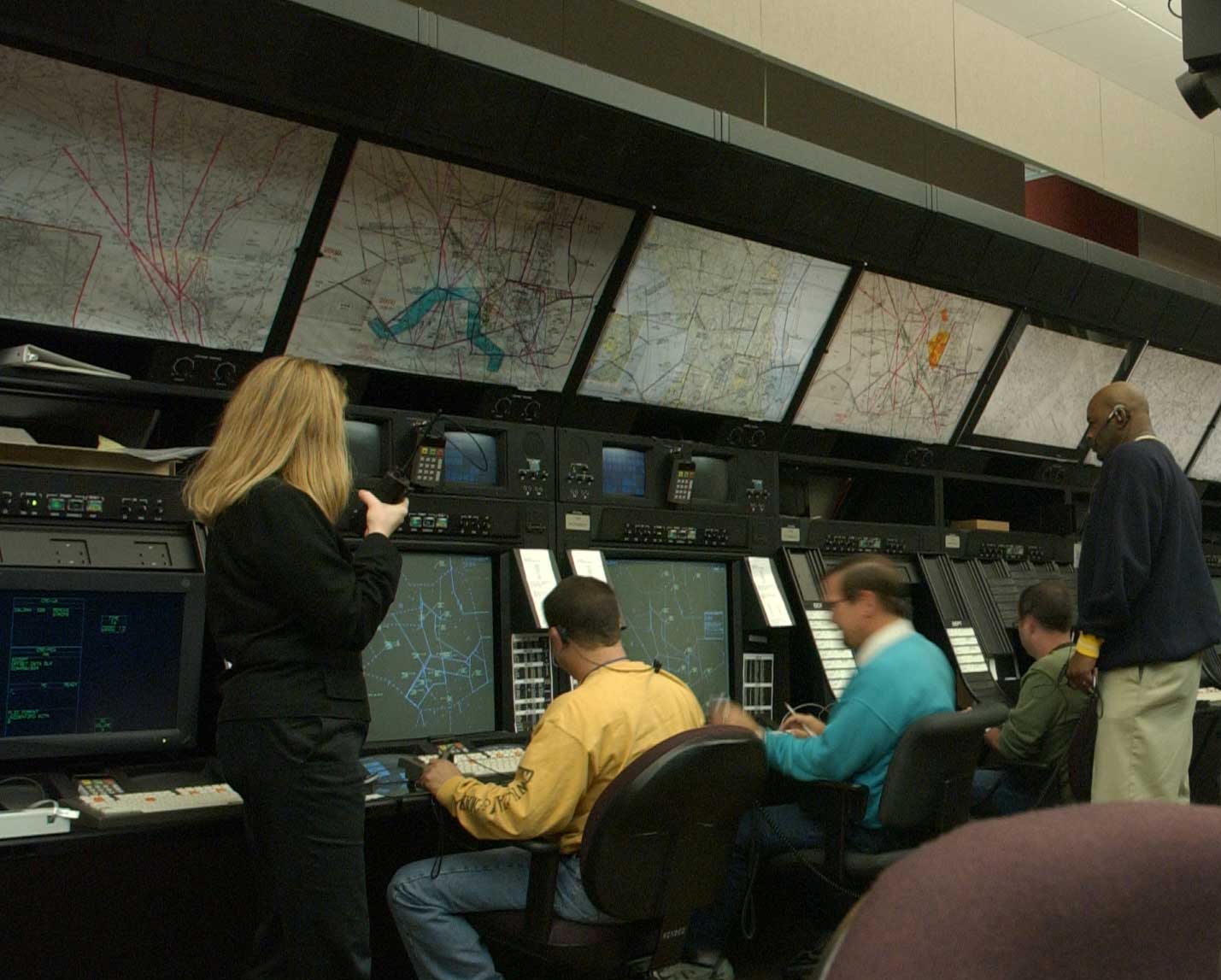
About 9:30–10:00 a.m. Eastern: The primary telecommunications circuit serving Philadelphia Terminal Radar Approach Control, or TRACON, failed. Public accounts do not establish a single exact minute. The facility sequences aircraft moving between airports and the high-altitude route network, including traffic associated with Philadelphia, Newark and Teterboro.
Late morning: Controllers and technicians attempted to rely on the backup route. Officials then discovered that a fiber line had been severed at a New Jersey construction site. With radar and radio capability degraded, the FAA issued ground stops and delay programs. Philadelphia, Newark and Teterboro were the first major pressure points; JFK and LaGuardia were drawn into the response as the regional network backed up.
Early afternoon: Diversions multiplied. The Wall Street Journal reported about 90 diversions by early afternoon. Flights that could not safely continue to their original airport landed elsewhere, creating new gate, fuel, crew and baggage problems. Boston also experienced delay pressure as diverted traffic and displaced schedules accumulated.
Late afternoon: Repair crews worked on the severed fiber while the FAA installed or activated another circuit. Officials gradually moved some airports from full ground stops to managed delays. A partial reopening did not clear the queue: aircraft and crews were already out of position, and passengers had missed connections.
Around 6 p.m. Eastern: Repairs were reported complete, according to USA Today. The Wall Street Journal likewise reported completion Monday night. Restoration of a circuit, however, is not the same as restoration of the airline timetable.
By about 9 p.m. Eastern: USA Today reported that Newark’s schedule showed 55% of flights canceled and another 11% delayed; Philadelphia showed 22% canceled and 41% delayed. Those percentages were late-evening snapshots, not permanent final totals. United, whose largest hub is Newark, offered a travel waiver.
By the end of the reporting day: Reuters counted more than 5,600 delayed or canceled U.S. flights, about 1,200 affected at the three New York-area airports and more than 100 diversions. Those later numbers should not be added to the earlier snapshots: they describe the same disruption at different times and with different groupings.
Who cut the cable? The blame game
Transportation Secretary Sean Duffy initially said an Amtrak crew had cut the line. Amtrak denied responsibility. NJ Transit later acknowledged that work connected to its project was involved. The Wall Street Journal reported that excavation occurred about 10 feet from utility markings and that it remained unclear who placed those markings.
Those are not trivial distinctions. “Who cut it?” can mean the equipment operator, the operator’s employer, a subcontractor, the agency that commissioned the job, the utility locator that marked the ground, or the telecommunications owner responsible for protecting and documenting its route. The public record available on September 22 does not establish which party bears legal responsibility.
The physical evidence is narrower: approximately 600 feet of fiber was damaged during construction work in New Jersey; the damaged route was needed as the backup when the primary circuit failed. A credible investigation must preserve excavation logs, mark-out requests, construction plans and the communications carrier’s route records before political claims harden into a conclusion.
Duffy’s early attribution and Amtrak’s denial show the risk of assigning blame during an operational emergency. NJ Transit’s acknowledgment narrows the chain of responsibility, but it does not settle whether the contractor excavated outside an approved zone, whether markings were wrong, or whether a critical aviation backup should have been routed through that corridor at all.
Why this matters
The Northeast corridor is a tightly coupled network. Newark, JFK and LaGuardia are separate airports, but their arrival streams, departure routes, weather plans and diversions interact. Philadelphia is both a major airport and the site of a control facility with responsibilities that reach into New York-area traffic. Teterboro carries heavy business-aviation demand. A communications constraint at one node can therefore reduce capacity across several states.
The timing increased the consequences. Reuters reported that delegations representing 130 world leaders were arriving for the U.N. General Assembly. There is no evidence the outage targeted the event. But a routine construction failure became an international logistics problem because the system had little spare capacity at the exact moment official aircraft, security movements and commercial passengers were competing for it.
The outage also tests the meaning of redundancy. A backup is not resilient merely because it exists on a diagram. It must be physically independent, continuously monitored and able to carry the required load. If a primary service is already obsolete and its backup can be disabled by nearby excavation, the architecture contains a shared operational vulnerability even if the circuits fail for different reasons.
Context: America’s aging air-traffic system
FAA Administrator Bryan Bedford described the failed primary link as an old Verizon/L3 circuit already scheduled for replacement under an obsolescence plan. “Timing is absolutely horrible,” Bedford said, according to The Wall Street Journal. He also said the agency would “do what is necessary to make sure the airspace is safe.” Both points matter: the equipment problem was known in a general modernization sense, while the specific coincidence with a severed backup was not planned for successfully.
The disruption follows earlier communications failures affecting Newark-area operations in 2026. Those incidents do not prove the same technical cause, but they strengthen the case for examining the full dependency chain: leased telecommunications circuits, radios, radar feeds, power, software, staffing, spares and construction coordination.
Modernization is expensive but no longer hypothetical. Reuters reported that $12.5 billion had already been approved for air-traffic upgrades and that officials were seeking another $17.5 billion. The amounts sound large because the system is large. They do not by themselves establish whether money is reaching the highest-risk links quickly enough, whether contracts are sequenced well, or whether physical routes are truly diverse.
Background reporting has also highlighted staffing and system-age pressures. A Karmactive review of earlier Newark outages, citing federal oversight findings, described a nationwide shortage of roughly 3,500 controllers and said 51 of 138 critical FAA systems had been labeled unsustainable. Those figures provide context for modernization; they are not evidence that staffing caused Monday’s cable-and-circuit failure.
The numbers, in context
The most reliable way to read the totals is as a progression rather than one final score. Early reports counted more than 600 delays at Newark and Philadelphia. The Wall Street Journal’s early-afternoon snapshot put diversions near 90. Reuters later reported more than 100 diversions, about 1,200 affected flights across the New York-area airports and more than 5,600 delayed or canceled nationwide.
USA Today’s late-evening percentages show why a regional outage can remain visible after the technical repair: 55% canceled and 11% delayed at Newark; 22% canceled and 41% delayed at Philadelphia. A canceled departure also removes the aircraft and crew expected to operate a later flight. A diversion may strand luggage and time out a crew. Each operational decision produces second-order effects that no single airport count captures.
The national total should not be interpreted as 5,600 flights caused exclusively by the FAA failure. Weather, maintenance and unrelated airline disruptions continue on the same day. Reuters described the number in the context of the outage; it remains a broad U.S. tally, not a laboratory estimate of causation. The regional airport and diversion counts are more directly connected to the event.
Winners, losers, and the critics
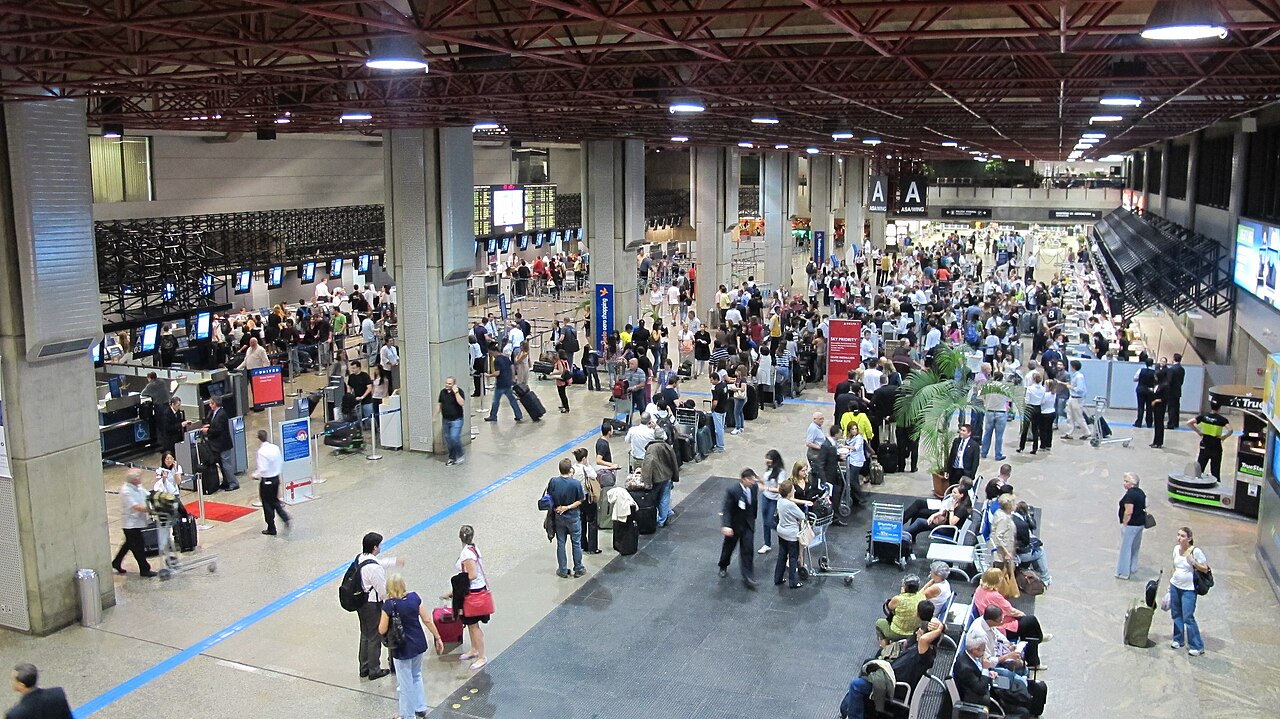
There were no meaningful winners among travelers. Passengers lost time, connections and certainty; some absorbed hotel, food or ground-transport costs. Flight crews faced duty-time limits, and airport workers inherited irregular operations. United carried the largest concentrated exposure because Newark is its principal hub, though every airline using the constrained airspace paid some cost.
The FAA’s controllers and traffic managers made the least bad operational choice by reducing demand. Critics may focus on the length and breadth of the stops, but keeping schedules moving through unreliable communications would have shifted risk from inconvenience toward safety. The more substantial criticism belongs upstream: obsolete circuits, an unavailable backup and incomplete coordination around construction near critical infrastructure.
Amtrak, NJ Transit, the contractor, the locator and the telecommunications providers now have different reputational and legal interests. Early public statements create incentives to minimize responsibility. That is why the investigation should publish a timeline, route diagram and responsibility chain rather than merely announce that the cable was repaired.
The modernization program gains political urgency, but it also faces sharper scrutiny. Additional appropriations can accelerate replacement; they can also disappear into fragmented contracts unless the FAA identifies single points of failure, requires physical route diversity and measures whether backup systems work under real load.
What happens next
- A technical incident report. The FAA should document the primary circuit failure, the state of the backup before the outage, every operational restriction and the sequence of restoration.
- A responsibility finding. NJ Transit, Amtrak, contractors, utility locators and carriers need a reconciled account of who authorized, marked and performed the excavation.
- A route-diversity audit. Critical primary and backup telecommunications paths should be checked for shared ducts, bridges, rights of way, power dependencies and construction exposure.
- Schedule recovery. Airlines will continue repositioning aircraft and crews after the repair. Travelers should verify status and waiver terms directly with their carrier before traveling to the airport.
- Modernization oversight. Congress and the Transportation Department will need to connect the $12.5 billion already approved—and the additional $17.5 billion sought—to measurable replacement deadlines and resilience tests.
The real test will come after Monday’s queues disappear. If the investigation ends with a repaired cable and competing press statements, the same design weakness survives. If officials publish the dependency map, replace the obsolete primary link and prove that the next backup occupies a genuinely independent path, this outage can become a forcing event rather than a rehearsal.
Sources
- The Wall Street Journal: cable length, diversion count, repair, agency dispute, excavation markings and circuit obsolescence
- USA Today: airport restrictions, repair time, late-evening cancellation and delay shares, and United waiver
- Reuters syndication: later national and New York-area totals, diversions, U.N. arrivals and modernization funding
- CNN: regional operational timeline and airport effects
- NorthJersey.com: FAA briefing, NJ Transit statement, diversions and repair status
- New York Post: New York-area ground-stop reporting
- Karmactive: contextual review of earlier Newark outages, controller staffing and aging FAA systems
- Wikimedia Commons: Newark Liberty panorama by qwesy qwesy, CC BY 3.0
- Wikimedia Commons: “Air traffic controllers at the Washington ARTCC,” a federal public-domain file photograph
- Wikivoyage / Wikimedia Commons: airport-terminal file photograph and CC BY-SA 3.0 attribution
Reporting cutoff: September 22, 2026. Counts are attributed, time-specific snapshots and should not be added together. Responsibility for the cable damage remains under investigation. This page is a fixed reporting snapshot and does not update automatically.