Iranian missile attack Hormuz Marines
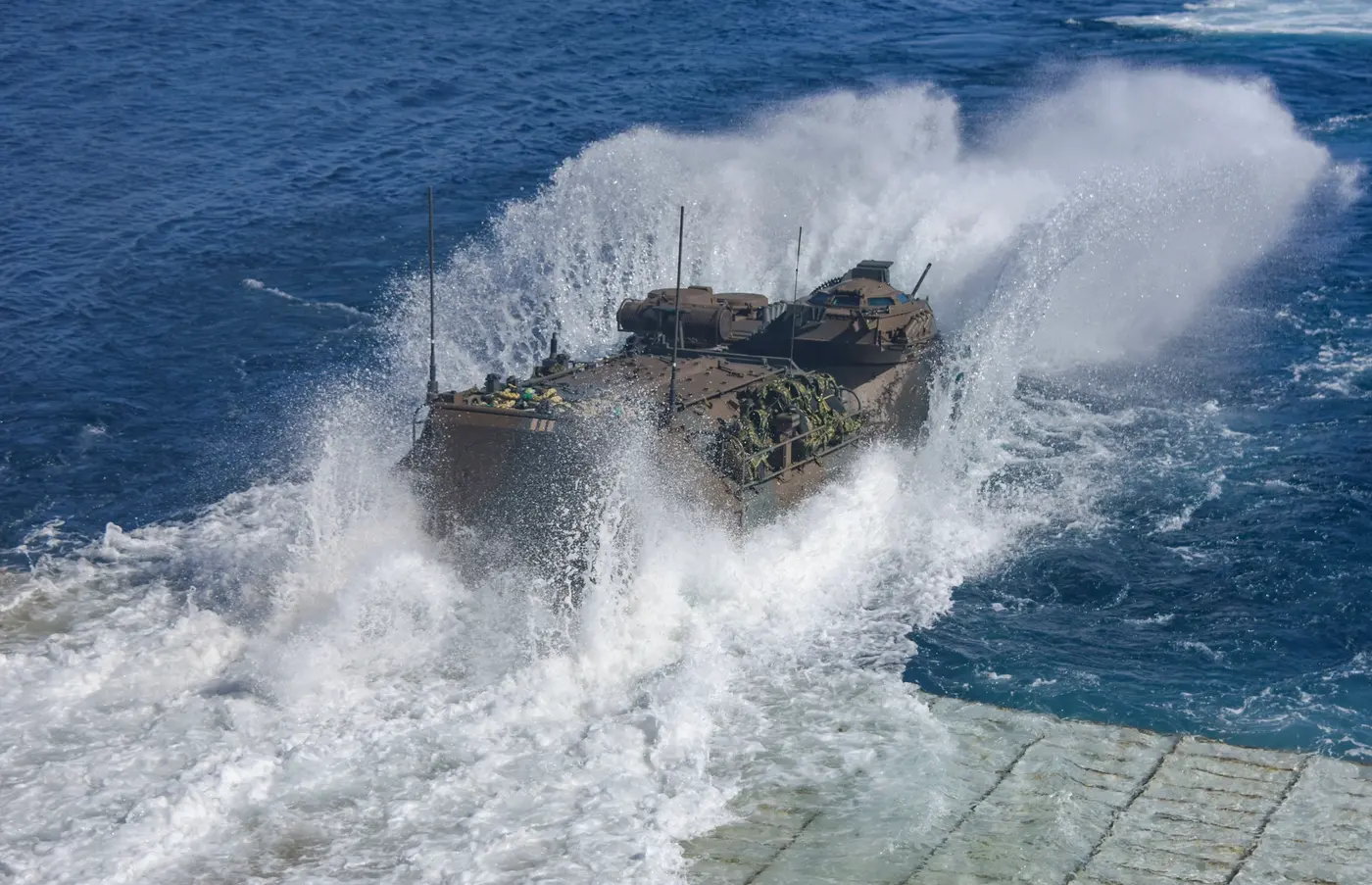
WASHINGTON — The Iranian missile attack Hormuz Marines case began with an anti-ship cruise missile striking a vessel carrying U.S. Marines in the Strait of Hormuz on September 14, according to two officials briefed on the incident who spoke anonymously to NBC News. Eight Marines — seven enlisted personnel and one officer serving with a battalion landing team — suffered smoke inhalation, headaches or concussion-like symptoms, and possible traumatic brain injuries. None was seriously hurt, and all returned to duty shortly afterward.
The central fact is serious enough without embellishment: an Iranian weapon hit a vessel carrying American forces in one of the world's most consequential waterways, injured eight people and remained outside public view for roughly two weeks. Military.com, summarizing NBC's reporting, said the vessel was not a commissioned U.S. Navy ship. Officials would identify it only as a “maritime vessel” or a “naval asset”; earlier reporting described it as U.S.-contracted. That distinction matters. It suggests a wider exposure picture than the Navy's named warships alone, while leaving the vessel's mission, ownership and damage undisclosed.
U.S. Central Command declined to comment, and the Defense Department referred questions to CENTCOM, according to the same reporting. Signal Post News has not independently identified the vessel or the officials. The attribution must therefore remain explicit: this account rests on multiple anonymous officials and Pentagon casualty data, not a public incident report with a ship name, location trace and after-action chronology.
What the September 14 Hormuz attack tells us
The date and weapon narrow the operational picture. An Iranian anti-ship cruise missile is designed to travel low over water and exploit the compressed detection times of maritime defense. A hit on a vessel carrying a battalion landing team means a weapon penetrated whatever warning, interception or avoidance measures were available around that particular transit. It does not, by itself, establish whether the vessel was directly targeted because it carried Marines, selected as a U.S.-linked asset, or struck through misidentification. The public evidence does not answer that question.
The injury pattern is consistent with the hidden violence of a shipboard blast: smoke moving through enclosed spaces, abrupt pressure effects, personnel thrown or struck, and neurological symptoms that may emerge later. The phrase traumatic brain injury Marines should not be read as a final diagnosis for all eight. Officials described possible TBIs alongside headaches and concussion-like symptoms. What is clear is that battlefield medicine often detects those effects after the immediate event, not at the first head count.
All eight returning to duty is reassuring, but it should not turn the incident into a near-miss. A service member can be medically cleared and still have suffered a reportable wound. The public casualty ledger exists to count harm, not only deaths or permanent disability.
Why this matters: the attack the public did not know about
The strongest criticism is not that officials have proved a deliberate suppression. They have not. The stronger, more defensible question is why an enemy missile strike on a vessel carrying Americans was absent from public reporting until journalists asked about a late casualty update. Operational security can justify withholding a ship's name, route or tactical vulnerabilities. It is harder to see why basic facts — that a strike occurred, that eight Marines were injured and that none was seriously hurt — could not have been disclosed sooner.
The cases entered the Pentagon's Defense Casualty Analysis System nearly 10 days after the strike. One official said latent concussion symptoms and a database that is not updated in real time explain the lag. That is plausible for the medical classification. It does not fully explain the separate communications decision. A delayed Pentagon casualty database DCAS entry and a delayed public acknowledgment are related, but they are not the same process.
Transparency in war is not a demand for tactical detail on command. It is the minimum information citizens need to judge the cost and direction of a campaign. If a cruise missile can hit a U.S.-linked vessel, injure a battalion landing team and surface only through a database change, Congress and the public are entitled to ask what other incidents remain known only inside military reporting channels.
The Al Asad precedent for delayed brain-injury counts
The closest recent precedent is Iran's January 2020 missile attack on Al Asad Air Base in Iraq. Initial public statements emphasized that no Americans had been killed and, at first, that no injuries were reported. Over subsequent days and weeks, the number of diagnosed traumatic brain injuries rose as symptoms appeared and troops were evaluated. The episode demonstrated two truths at once: concussion effects can genuinely be delayed, and early official descriptions can minimize a strike's human cost even without an explicit false statement.
That precedent supports part of the Pentagon explanation here. It also raises the disclosure standard. Defense officials have six years of institutional experience showing that head-injury counts change. A credible system should acknowledge an attack promptly, label the number provisional and update it as medical findings evolve. Waiting for a database to settle is not the only available model.
Seven months of war, and a shipping corridor collapsing
The U.S.-Israel war with Iran began on February 28 and is entering its seventh month. That duration changes the meaning of a single strike. It is no longer an isolated exchange at the edge of a short campaign; it is another data point in a sustained conflict whose risks are accumulating across bases, vessels, commercial routes and civilian economies.
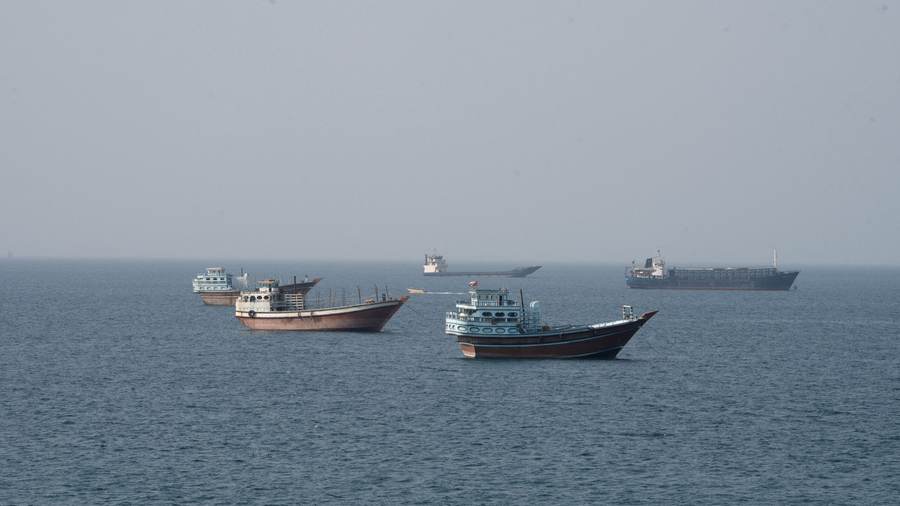
The Strait of Hormuz is the conflict's most visible economic pressure point. Reuters reported that visible traffic fell from roughly 125 large vessels a day before the war to just two commodity vessels on September 21. That is a 98.4% decline in the observed count. It is not proof that only two ships moved through the strait: vessels operating with automatic identification system transponders switched off may not appear in commercial tracking. But even with that caveat, the collapse in visible traffic describes a chokepoint functioning far below normal commercial conditions.
The military and economic stories are inseparable. A shipping company sees the same waterway differently after a missile has demonstrably struck a vessel carrying U.S. troops. Insurers price the possibility of another hit. Crews weigh pay against personal risk. Governments decide whether escort operations reduce danger or add more military targets. Our earlier analysis of Iranian military readiness and the rejected Hormuz framework explains why the waterway remains both a bargaining instrument and a battlefield.
US Iran war wounded September 2026: reading the numbers
DCAS listed 861 U.S. personnel wounded as of Wednesday. The Washington Post reported 37 additions during the week of September 21: the eight Marines from the Hormuz vessel and 29 sailors. Separately, The Business Standard reported the Pentagon's updated total. Military.com cited Pentagon data showing 18 service members dead and more than 800 wounded.
Those figures need careful handling. Eighteen dead and 861 wounded describe different reporting categories and cutoffs, not a tidy snapshot assembled by one newsroom at one moment. Using the current DCAS wounded count, the eight Marines represent just under 1% of all listed wounded. The 37 additions in one week amount to roughly 4.3% of the 861 total. Those percentages do not make the September 14 attack small. They reveal how a protracted war converts episodic headlines into a steadily expanding casualty base.
The roughly 10-day reporting lag matters mathematically as well as politically. A casualty total on any given morning is not necessarily the number of people wounded by that morning; it is the number processed into the system by then. Analysts, lawmakers and journalists should treat it as a lagging indicator, particularly for concussions and other injuries diagnosed after an event.
That same discipline applies to the previously reported death toll. Signal Post News has also covered the identification of Capt. Bianca Wilkerson as the 19th U.S. service member to die in the conflict. Different official updates can produce different counts depending on classification and date; readers deserve the source and cutoff every time, not a number presented as timeless.
Who gains, who loses, and who is under pressure
Iran gains evidence that the maritime threat is credible
For Tehran, a successful Iranian cruise missile Strait of Hormuz strike reinforces deterrence. Even without sinking a vessel or causing severe casualties, penetrating defenses can make every future transit more expensive. That leverage works only up to a point: attacks that injure Americans also strengthen arguments inside Washington for retaliation and can narrow the political space for negotiation.
The Pentagon controls details but loses trust when the gap widens
The Defense Department may protect operations by withholding the vessel's identity. It risks losing public trust when the existence of the attack is withheld as well. Critics will reasonably ask whether a battalion landing team vessel attacked by a cruise missile meets any normal threshold for prompt disclosure. The Pentagon can answer without naming the ship: publish the reporting timeline, explain when symptoms were recognized, and distinguish operational secrecy from casualty accounting.
Marines and merchant crews carry the physical risk
The immediate losers are the eight injured Marines and the crews who continue to operate in the corridor. Commercial shipping, Gulf exporters and energy consumers absorb the secondary cost through reduced sailings, insurance premiums, detours and price volatility. The strategic contest is conducted by states; much of its burden falls on people who do not set policy.
Congress and war critics gain a concrete oversight case
Lawmakers skeptical of the campaign now have a specific disclosure sequence to examine: strike on September 14, delayed injury recognition and database entry, then a public account on September 28. Supporters of the campaign may see the limited injuries and rapid return to duty as evidence of resilience. Both sides should be able to agree that oversight requires a reliable incident chronology.
Diplomacy versus another escalation cycle
The report arrived as President Donald Trump said he expected more talks with Iran. Iranian Foreign Minister Abbas Araghchi told NBC, “we did not come to New York to sell a war … came to forge peace.” Diplomatic language and military action can coexist; in fact, they often intensify together when each side tries to improve its bargaining position.
The danger is that a lightly wounded crew becomes the prelude rather than the endpoint. Washington can cite the strike to demand stronger maritime guarantees. Tehran can cite continued U.S. military presence and the wider war to defend coercive control of the strait. Every undisclosed incident weakens the shared factual base negotiators need, because each side can fill an information vacuum with its preferred narrative.
Our report on Trump's rejection of Iran's Hormuz proposal shows how navigation rules, fees and security guarantees have already become inseparable from ceasefire diplomacy. The September 14 strike adds a new demand to any durable arrangement: a mechanism for preventing miscalculation around military and contracted vessels.
What happens next
The first test is disclosure. The Pentagon faces pressure to release a basic timeline: when commanders learned the ship had been hit, when each Marine was evaluated, when the cases entered DCAS, what category of vessel was involved and what operational reason justified withholding the incident. It can redact tactical details while answering those questions.
The second test is congressional. Committees can request the incident report, medical reporting sequence and rules used to notify the public. With midterm elections approaching, the administration's description of a costly seven-month conflict will receive sharper scrutiny. Casualty transparency is likely to become part of that political argument, especially if later database updates reveal injuries from events not previously acknowledged.
The third test is operational. Commanders will review missile warning, close-in defense, routing, escort and damage-control procedures for every ship and contracted platform carrying U.S. personnel. Insurers and shipping firms will watch whether visible traffic recovers from the September 21 low. Negotiators will watch whether Tehran treats the strike as leverage or a boundary.
The facts presently support a measured conclusion. Eight Marines were injured and returned to duty. A U.S.-linked maritime vessel was hit but remains unidentified. The delay may partly reflect the real medical complexity of concussion diagnosis and a lagging database. None of that eliminates the public-interest question. In a war entering its seventh month, the government should not require journalists to discover a missile strike through a delayed casualty ledger.
Sources and reporting notes
This analysis draws on Military.com's account of NBC reporting, gCaptain's corroborating summary, and Reuters reporting on the collapse in tracked vessel traffic and the September 21 shipping picture. The officials describing the strike were anonymous, and the vessel remains undisclosed. Signal Post News has not independently verified the ship's identity or damage.