Rubio orders Iran delegation to leave
Rubio orders Iran delegation to leaveIran UN delegation expelledAraghchi leaves New YorkUS Iran ceasefire talks stallQatar mediates US Iran talksStrait of Hormuz ceasefire negotiationsTrump Iran war deal or bombingIran delegation UN General Assembly visas
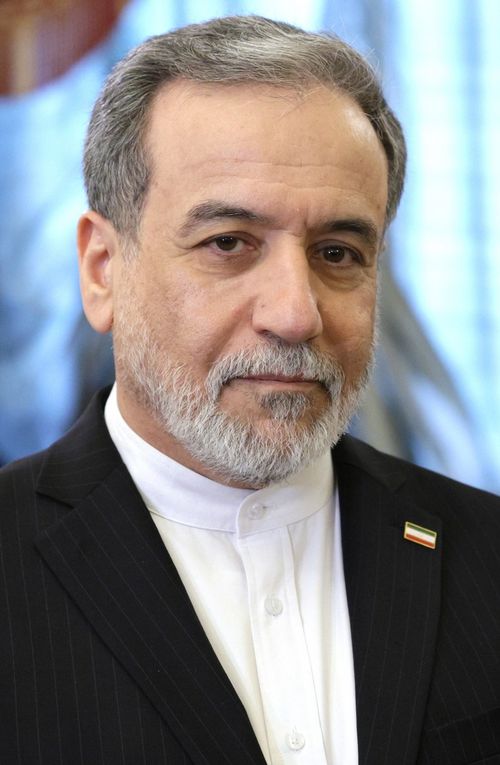
WASHINGTON — Rubio orders Iran delegation to leave New York after a weekend of indirect ceasefire diplomacy failed to close the central gaps between the two countries, according to U.S. officials who spoke to Axios and the Associated Press. Secretary of State Marco Rubio delivered the order Monday evening to the Iranian team led by Foreign Minister Abbas Araghchi, his counterpart and Tehran's chief negotiator. The delegation boarded a New York-to-Doha flight at 1:20 a.m. Tuesday, September 29.
The administration's account is blunt. “Secretary Rubio kicked out the Iranian delegation who had overstayed their welcome,” a U.S. official told Axios. “The UN General Assembly was over, so it was time for them to go.” The Associated Press later reported that two U.S. officials confirmed Rubio had directed the visitors to leave earlier than at least some in the group had expected.
Iran rejects that version. Its U.N. mission said the delegation left on a schedule communicated to the State Department on September 17 and accused Washington of “propagating baseless and worthless news.” One of the U.S.-side sources also acknowledged that Araghchi had been due to travel Monday night anyway. Those details leave two facts in tension: Rubio issued an order, according to multiple American officials; Tehran says the order changed nothing because departure was already planned.
Why this matters
An Iran UN delegation expelled after a wartime visa gamble
The deeper significance is not the flight timetable. It is the choice to turn the presence of an accredited U.N. delegation into leverage while the United States and Iran are at war. Washington, as host of the United Nations, had issued tightly restricted visas to President Masoud Pezeshkian, Araghchi and their delegations despite seven months of hostilities. The access was never normal diplomatic hospitality; it was a calculated exception designed to preserve a narrow negotiating channel without pretending relations had normalized.
Ordering the delegation out once the talks stalled converts that exception into a message. It tells Tehran that New York access is conditional and temporary. It tells U.S. allies that the administration will use every point of pressure, including visas, alongside the naval blockade. And it tells domestic audiences that failed diplomacy will not be allowed to look open-ended. That makes the move politically useful, but diplomatically costly: the next time Washington offers restricted access for talks, Iranian negotiators will ask whether the meeting room comes with an expulsion clock.
The distinction between an immigration order and a diplomatic rupture also matters. The United States did not sever talks, close an embassy or cancel a formal agreement; none exists. It ended a rare physical presence after UNGA. Yet wartime diplomacy often depends on precisely these temporary spaces. Removing one can be symbolic and operational at the same time.
How we got here
Seven months of war after a four-to-five-week forecast
The U.S.–Iran war began February 28, 2026. Trump initially described a campaign likely to last roughly four to five weeks, and Rubio said in March that the horizon was “weeks, not months.” October has now arrived with the conflict past seven months, a U.S. naval blockade still central to Washington's strategy and the Strait of Hormuz still central to Tehran's leverage.
That gap between prediction and reality shapes every new negotiating round. An administration that promised speed must explain why more force or more patience will produce the result previous months did not. Iran, meanwhile, has reason to believe time can raise the political price of the war through energy costs and the approaching U.S. midterms. The expulsion order is therefore about chronology as much as protocol: each side thinks the calendar can make the other concede.
Iran delegation UN General Assembly visas kept one channel open
Pezeshkian left New York after his General Assembly speech, but Araghchi stayed behind for contacts through Qatar. The agenda was expansive: a wider ceasefire, reopening the Strait of Hormuz, the terms of the U.S. blockade and a possible return to nuclear negotiations. The White House believed Monday morning that progress remained possible. By late afternoon, the talks were deadlocked over the same three pillars — the nuclear program, maritime restrictions and the security terms for Hormuz.
Signal Post News has followed the Qatari-mediated U.S.–Iran shuttle talks at UNGA, Tehran's proposal to reopen the strait and Trump's UNGA warning that Iran could face annihilation. The same pattern runs through all three: contact is real, but the parties are negotiating over the machinery of war, not merely the language of peace.
Qatar mediates US Iran talks without owning the outcome
Qatar's role is to carry proposals between governments that cannot or will not trust direct contact. That gives Doha access and relevance, but not control. A mediator can clarify sequencing — what happens first on shipping, sanctions, inspections or fire — yet cannot manufacture political permission in Washington or Tehran. Monday's collapse demonstrates the limit: Qatar could keep messages moving while Rubio and Araghchi remained in New York, but it could not bridge the underlying bargain.
Araghchi's departure for Doha is therefore not evidence that mediation ended. It may instead move the channel back to the mediator's home ground. But diplomacy conducted entirely through shuttles becomes slower and more vulnerable to deliberate ambiguity. Each side can tell its own public that it never yielded, and each can blame the messenger when a formula fails.
Who benefits, who loses
Rubio gains a hard line; Araghchi gets a face-saving denial
Rubio gains the cleanest political benefit. He can say he tested negotiations, found Iran unwilling to move and ended its privileged stay. With November's midterms approaching, that is a sharper message than allowing talks to drift. It positions the secretary as the official who controlled the door while Trump keeps both a deal and greater force available.
Araghchi loses physical access to U.S. territory but gains a domestic defense: Iran says he left on schedule, not under American compulsion. That denial is not a trivial public-relations exercise. A chief negotiator cannot afford to look expelled at the moment he is arguing that Iran can withstand a blockade and bargain from strength. The September 17 itinerary gives Tehran a factual basis for its version even if Rubio separately communicated that the delegation had to go.
Qatar loses room to maneuver when the principals weaponize the logistics of negotiation. Oil importers and shipping companies lose clarity. Traders can price barrels and vessel risk, but they cannot easily price whether an overnight departure was diplomatic theater or the final prelude to escalation.
Araghchi leaves New York, but the argument stays
The competing accounts are not mutually exclusive. Araghchi may have been scheduled to leave Monday night, and Rubio may still have ordered him to leave immediately. What cannot yet be established from public evidence is whether the instruction advanced the flight, shortened any remaining meetings or simply formalized an itinerary already under way. Responsible reporting should preserve that uncertainty rather than turn an official's colorful quote into the whole story.
The phrase “overstayed their welcome” is revealing nonetheless. It recasts a negotiation over war and nuclear risk as a matter of guest and host. That is useful for asserting dominance, but dangerous if it obscures the reciprocal stakes. Iran does not need to remain in Manhattan to disrupt shipping, and the United States does not need an Iranian delegation in New York to intensify the blockade or strike targets.
The numbers behind the bargaining
Strait of Hormuz ceasefire negotiations meet the oil market
Before the war, roughly one-fifth of the world's crude oil and liquefied natural gas moved through the Strait of Hormuz. That is why a maritime clause in any ceasefire is not secondary to the nuclear file. It is the economic center of the negotiation. A partial reopening can lower freight and insurance costs before a political settlement exists; renewed disruption can transmit military risk into fuel prices around the world within hours.
Brent futures traded below $97 a barrel this week as regional flows recovered. That does not mean the risk premium has disappeared. It means markets are rewarding evidence that more oil is moving even while diplomacy remains unstable. The price response also cuts both ways politically: lower prices reduce pressure on the White House, while steadier export routes reduce the urgency for Tehran to trade away nuclear leverage.
The blockade-versus-nuclear tradeoff
The reported Iranian proposal, described by the Wall Street Journal, would have the United States halt its blockade on Iranian ports in exchange for Iran reopening the rest of the strait and returning to nuclear talks. Trump rejected it. The structure explains why. Iran offered a reversible maritime step and renewed negotiation; Washington wants durable restrictions on the nuclear program, not merely another process.
Yet the American alternative also carries risk. A blockade can reduce revenue and restrict military supply, but it does not by itself produce a verifiable nuclear settlement. If relief is withheld until a comprehensive agreement exists, Tehran has less incentive to make an initial maritime concession. If relief comes first, Washington fears surrendering its strongest bargaining chip. That sequencing problem — not the tone of one encounter — is why the U.S. Iran ceasefire talks stall.
What happens next
Trump Iran war: deal or bombing after the midterms
Trump is keeping both outcomes alive. He told reporters Wednesday: “Maybe I will blow 'em up. … We will blow 'em up or make a deal. But the time is coming.” In a Time interview published Thursday, he answered “Possible” when asked whether he would ramp up bombing after the midterms, and again said “possible” when asked whether he might “annihilate Iran.” He also said the United States had been stocking up weapons for six months.
“Possible” is not an operational announcement. It does not identify targets, timing, military objectives or an authorized plan. It does, however, preserve coercive ambiguity. Trump can signal that Iran should not interpret election-year caution as a permanent limit while avoiding a commitment that could move markets or constrain commanders. The danger is that ambiguity can deter, but it can also invite miscalculation if Tehran treats it as bluff or Washington treats Iranian delay as proof that only force works.
The first scenario is a narrower deal: maritime access and selected blockade relief paired with a framework for nuclear talks. It would not end every dispute, but it could reduce immediate shipping and energy risk. The second is continued shuttle diplomacy with no public breakthrough, allowing both governments to wait for the midterms while containing the conflict. The third is post-election escalation — heavier U.S. strikes, a tighter blockade or Iranian retaliation around Hormuz.
What to watch is concrete. Does Qatar announce another round? Do Iranian officials present a revised sequence for opening the strait? Does Washington define the nuclear concessions needed for limited blockade relief? Do U.S. force movements match Trump's rhetoric? And do oil flows continue recovering while Brent remains below the psychological $100 line?
The New York departure is best understood as a warning, not a verdict. It shows how little trust remains and how quickly a temporary diplomatic opening can close. It does not prove that talks are over. But after seven months of war, an administration that predicted weeks is now telling Iran that the time for a decision is coming — while refusing to say whether the next decision will be a bargain or a bombing order.
Sources and reporting notes
- Associated Press, October 1, 2026 — confirmation from two U.S. officials, visa restrictions, the delegation's departure and Iran's denial.
- NewsLooks, October 1, 2026 — the Axios-reported order, Hormuz context and the Time interview excerpts.
- Fox News Digital report republished by Eric Deters Media, October 1, 2026 — U.S. confirmation and Trump's post-midterm remarks.
Reporting cutoff: October 1, 2026 at 6:22 p.m. PDT. The U.S. officials' account and Iran's denial are both presented; public evidence does not establish whether Rubio's order changed the delegation's pre-filed travel schedule.