Iran army ready renewed US attack
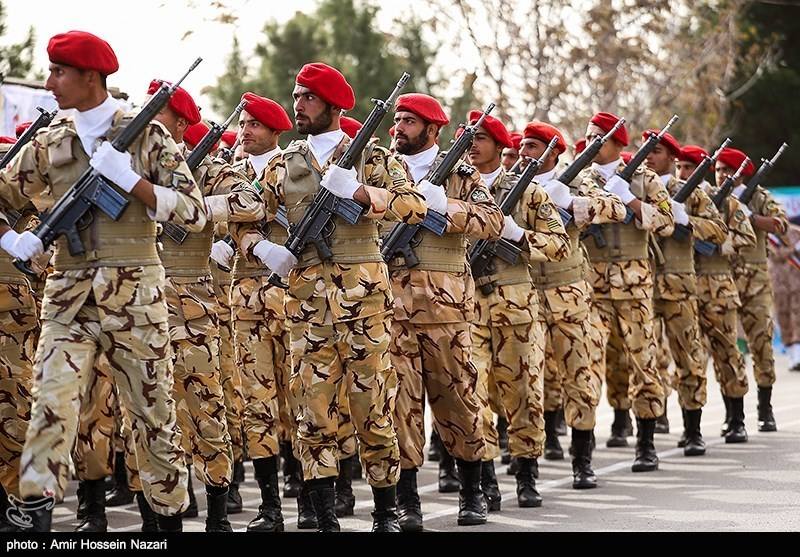
TEHRAN — Iran's armed forces said on Sunday they are fully prepared for any renewed American attack, after US President Donald Trump said he had rejected an Iranian proposal to reopen the Strait of Hormuz and bring the fighting to an end. Army spokesperson Mohammad Akraminia, quoted in Iranian state media, said the country's armed forces stood ready for confrontation — and warned that the United States would suffer greater damage if it launched another attack.
What Tehran announced
Army spokesperson Mohammad Akraminia said Iran's armed forces are fully prepared for confrontation with the United States, according to Iranian state media reports carried by the Reuters wire from Dubai on September 27. He warned that Washington would suffer greater damage than before if it launched a fresh attack on Iran.
Separately, Iranian Army Commander-in-Chief Amir Hatami said the war had reached a “critical and decisive stage” and tied the Strait of Hormuz directly to the conflict's outcome: “If Iran cannot trade, if Iran cannot live, no one will be able to trade or live. The Strait of Hormuz is the strait of our dignity and honour, and it will not be allowed for the country's enemies to use this major logistical chokepoint while the Iranian people are deprived.” The statements followed Trump's disclosure that he had turned down Tehran's offer to reopen the waterway and end hostilities.
Why this matters
This is the most explicit readiness declaration from Iran's regular military since the 60-day memorandum lapsed in August, and it deliberately fuses two separate pressure tracks — the battlefield and the Strait of Hormuz — into a single bargain: no trade for Iran, no trade for anyone. By putting the threat in the mouth of the army's spokesperson rather than a political official, Tehran is signaling that the message is operational, not merely rhetorical.
The timing, during the UN General Assembly's high-level week in New York, is equally deliberate: deterrence messaging aimed at Washington's negotiators while a possible Trump–Pezeshkian meeting is still being weighed. For energy markets and Gulf states, the subtext is that the Hormuz closure is now openly wielded as a weapon of negotiation rather than a temporary wartime measure.
The road to this point
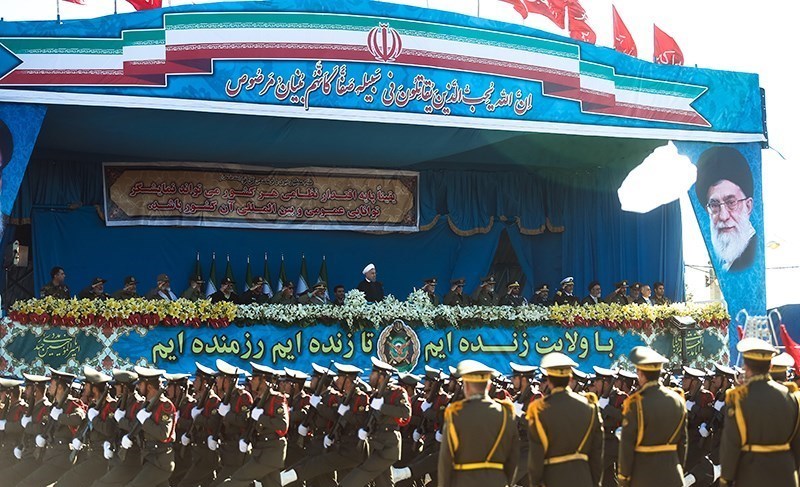
The war is now in roughly its seventh month. It began with US-Israeli strikes on Iran in February 2026. A 60-day memorandum ended the strikes in June, but it expired in August without a successor agreement, and tit-for-tat exchanges have continued since. Iran has kept the Strait of Hormuz — the narrow waterway through which a major share of the world's seaborne oil moves — effectively closed, turning global energy flows into a standing pressure point.
The latest statements land one day after Houthi missile and drone strikes hit Riyadh and Yanbu in Saudi Arabia on Saturday, and after the US State Department issued a security alert over Middle East escalation. Diplomacy has not stopped: the 81st UN General Assembly high-level debate is under way in New York this week, and Trump is weighing a meeting with Iranian President Masoud Pezeshkian — so threats and talks are advancing in parallel, each shaping the other's leverage.
The Hormuz lever
Tehran's offer, as described by Trump, was straightforward: reopen the strait, end the fighting. Trump's rejection keeps the closure in place — and Hatami's language explains why Iran sees that as sustainable leverage. “If Iran cannot trade, if Iran cannot live, no one will be able to trade or live” is a doctrine of mutual denial: the economic pain of the closure is presented as the price of Iran's own strangulation.
What is verified: the statements were made, the strait remains closed, and the offer was rejected. What is a claim: Akraminia's warning that the US would suffer “greater damage” — a deterrence assertion, not a demonstrated capability. What is analysis: that Tehran believes the energy weapon strengthens its hand more than it invites retaliation.
Who gains, who loses — and what the critics say
Escalation rhetoric tends to strengthen hardliners on both sides: in Tehran, it justifies military budgets and domestic control; in Washington, it feeds the case for decisive action. The losers are the parties with no seat at the table — Gulf Arab states living under the Houthi strike arc, oil-importing economies absorbing price risk, and civilians in the line of any renewed exchange.
Critics of Tehran's posture argue the readiness claims are unverifiable and that linking Hormuz to the war effort amounts to coercion against the global economy, which could harden rather than soften Washington's stance. Critics of the US position counter that rejecting a Hormuz reopening offer prolongs a closure that punishes allies as much as adversaries. Both critiques share a premise: the current equilibrium is expensive for everyone except those who profit from tension.
What happens next
Four scenarios now compete. First, UNGA diplomacy: a Trump–Pezeshkian encounter in New York could convert this week's threats into a framework — the pattern of past breakthroughs is that maximalist statements precede them. Second, managed deterrence: both sides hold positions, Hormuz stays closed, and the war grinds on at its current tempo.
Third, miscalculation: with Houthi strikes hitting Saudi cities and US forces on alert, a single incident could trigger the “renewed attack” Akraminia warns about. Fourth, a renewed memorandum: quiet channels could produce a June-style pause, though August's expiry shows such deals decay without enforcement. Watch three indicators: commercial traffic signals around Hormuz, US force-posture moves in the region, and whether the Pezeshkian meeting stays on Trump's public schedule.
Sources
Reporting basis: Iranian state media was the origin of the Akraminia and Hatami statements carried by Reuters. The officials' readiness and damage claims are attributed; analysis is Signal Post News's.