Army identifies 19th Iran war death
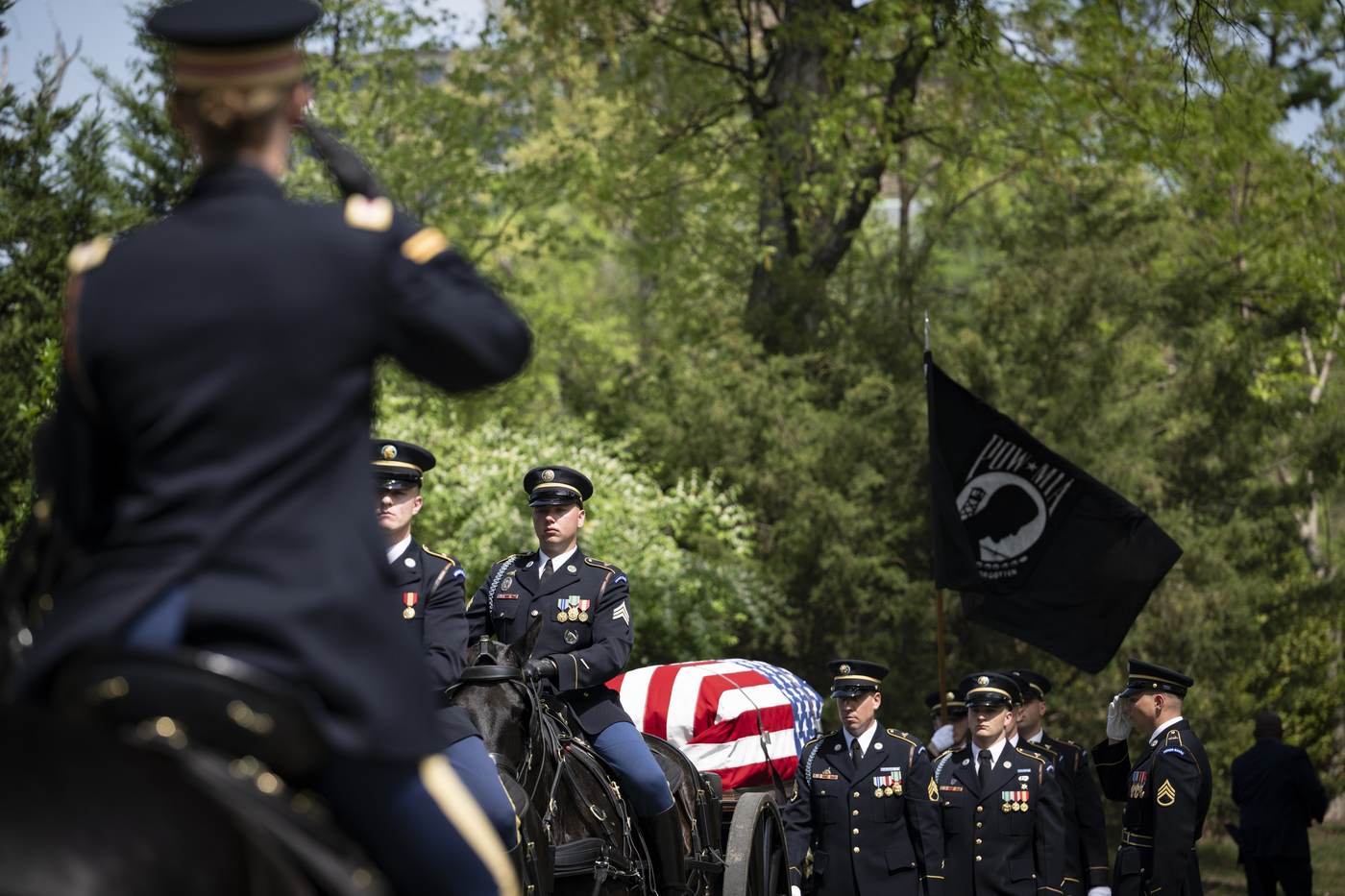
The Army identifies 19th Iran war death in its public accounting: Capt. Bianca C. Wilkerson, 37, of Norfolk, Virginia, died September 18 after a medical incident while traveling aboard a military aircraft, according to reporting based on Army and defense-official statements. The service described the incident as non-combat-related. A defense official said she was posthumously promoted to major.
Wilkerson was assigned to Headquarters, U.S. Army Central and Third Army at Shaw Air Force Base, South Carolina, and was deployed to Doha, Qatar. A defense official told news organizations that she suffered the medical incident while the flight was headed toward Saudi Arabia. The cause has not been publicly established: the Defense Casualty Analysis System, known as DCAS, lists it as “undetermined,” and reporting said an autopsy and investigation remained pending.
Her death was entered into DCAS on September 21 and publicly identified by the Army on September 23. It brings the Pentagon’s publicly documented total connected to the Iran-war period to 19: 14 recorded under Operation Epic Fury and five recorded under the broader “Overseas Operations” heading. That is the verified public count available for this report. A Washington Post report, based on unnamed officials, said the internal number may be higher. Defense Secretary Pete Hegseth rejected that account. The two claims are not equivalent evidence, and neither should be collapsed into a single definitive total.
Why this matters
Wilkerson’s death matters first as the death of a named service member, not as one more unit in a political argument. The available record identifies an officer, a hometown, a command and a date. It does not yet identify the medical cause. Treating “non-combat-related” as a complete explanation would outrun the evidence: that classification distinguishes the death from hostile action, but it does not answer what happened or whether deployment conditions played any role.
The case also exposes a basic problem in wartime accountability. The public hears a single question—how many Americans have died?—while the military database answers several narrower questions through operation labels, hostile or non-hostile categories and administrative reporting rules. Those distinctions can be legitimate. But when the total changes only after a death is entered days later, and when unnamed officials allege a larger internal count, the categories themselves become part of the story.
The result is a transparency test for the Pentagon. Families need accurate recognition. Commanders need data that distinguishes combat losses from illness, accident and self-harm so they can reduce preventable risk. Congress and the public need an accounting broad enough to assess the real human cost of sustained operations. A number can serve all three purposes only if the rules behind it are visible.
How we got here
Operation Epic Fury began on February 28, 2026, according to the public chronology cited in the reporting reviewed for this article. The Pentagon’s casualty system eventually recorded 14 deaths under that named operation. After officials described a July ceasefire as ending that phase, subsequent fatalities in the region were entered under “Overseas Operations,” a broader heading that now contains five deaths, including Wilkerson’s.
That administrative shift does not mean the regional mission stopped. Wilkerson was deployed to Doha, and the reported medical incident occurred aboard a military flight bound for Saudi Arabia. Meanwhile, U.S. forces and ships continued operating across the Gulf and Arabian Sea. Our related reporting on mental-health strain aboard the USS Abraham Lincoln examined how extended deployments can create risks that do not fit neatly into the category of battlefield casualties.
The regional setting has also remained volatile. Iran’s president arrived in New York for U.N. diplomacy as the war’s military and economic consequences continued; see our report on President Masoud Pezeshkian’s U.N. visit. At the same time, strikes and interception claims around Saudi Arabia and Yemen have widened the operational map, as detailed in our analysis of the Riyadh and Yanbu claims. That context helps explain why “combat” and “non-combat” do not map cleanly onto “war-related” and “unrelated.”
Who’s right about the numbers
The strongest verifiable baseline is 19 because it is assembled from the Pentagon’s public records: 14 deaths under Operation Epic Fury and five under Overseas Operations. Wilkerson’s entry is the latest addition to that record. Signal Post News therefore uses 19 as the confirmed public total, while making clear that the database’s category boundaries are part of the dispute.
The Washington Post reported, citing six unnamed U.S. officials familiar with internal casualty accounting, that five put the number at at least 22 and a sixth put it at 23 since February 28. The report also said not every additional death was necessarily caused directly by combat, but involved personnel serving in the Middle East during the hostilities. Because the sources were anonymous and the underlying internal records were not made public, the higher totals are an attributed claim—not an independently confirmed replacement for DCAS.
Hegseth called the report false and said the government would not hide a combat death. That rebuttal addresses deliberate concealment of combat fatalities. It does not, by itself, reconcile the wider question raised by the reporting: whether non-hostile deaths involving deployed personnel are being counted consistently across public categories. The Pentagon could settle much of the dispute by publishing a dated roster, the inclusion rules for each operation and a reconciliation of additions made after the initial reports.
What the numbers imply
The gap between 19 and 23 is four deaths, or about 21 percent of the confirmed public total. That is too large to dismiss as rounding, yet too poorly documented to treat as settled. It could reflect timing, different geographic boundaries, different definitions of service “amid” the war, or records that have not been publicly assigned to an operation. Without the underlying names and classifications, any sharper conclusion would be speculation.
The split between 14 and five is equally important. Nearly three-quarters of the public count sits under the named combat operation, while just over one-quarter sits under Overseas Operations. A database designed for formal operational accounting can therefore understate the intuitive answer to a broader public question: how many personnel died while the United States was sustaining this regional war effort?
Non-hostile does not mean inconsequential. Military aviation, long deployments, heat, sleep loss, medical emergencies and mental-health crises require different prevention measures from missile attacks, but they remain command responsibilities when they occur during service. The precise classification affects benefits, honors, historical records and policy lessons. It also affects public confidence: ambiguity that persists after names become public encourages every side to choose the number that best supports its argument.
What happens next
The investigation: The Army’s inquiry and the pending autopsy are the next sources capable of explaining Wilkerson’s medical cause of death. Until findings are released, “undetermined” is the accurate description.
The database: DCAS may be updated again as casualty records are reviewed and assigned. Any change should be checked against the date of entry, operation heading and hostile/non-hostile status rather than presented as a silent revision to one running total.
The disputed count: The higher figure will remain unverified unless the Pentagon publishes a reconciliation, Congress obtains documentary evidence or reporters identify additional service members through records and family confirmation. Anonymous sourcing can reveal a discrepancy; it cannot by itself close it.
The policy question: Lawmakers are likely to press for a definition that captures the full human cost of deployment without erasing the distinction between hostile and non-hostile deaths. The most credible answer is not one number stripped of context, but a transparent ledger showing who is counted, under which operation and why.
Conclusion
Capt. Bianca Wilkerson is the 19th U.S. service member publicly identified in the Pentagon’s Iran-war-era casualty accounting. The known facts are limited but consequential: she died during deployment after a reported medical incident, the Army classifies the death as non-combat-related, and the cause remains under investigation. The public record supports 19. The reported 22 or 23 remains disputed. Respect for Wilkerson and for every family represented by these totals requires keeping both statements clear—and insisting that the government explain the distance between them.
Sources
- Military Times: “Army identifies 19th US service member to die amid Iran war”
- Army Times: “Army identifies 19th US service member to die amid Iran war”
- Military.com: “Army Identifies Female Captain as 19th Iran War-Related Death”
- Heroes News Network: “Army identifies 19th US service member to die amid Iran war”
- Open Chronicle: summary of the disputed higher casualty figures
Reporting basis: Fixed September 24, 2026 snapshot. The verified public count and the disputed higher figures are presented separately. File photographs are clearly identified and do not depict Capt. Wilkerson.