DOJ charges 28 in California voting cases landed on Monday, October 19, when federal agents arrested 11 green card holders across the state in "Operation Protect the Vote" — a coordinated sweep by all four California U.S. attorney's offices accusing lawful permanent residents of fraudulently registering and, in most cases, illegally voting, 15 days before the November 3 midterm elections.
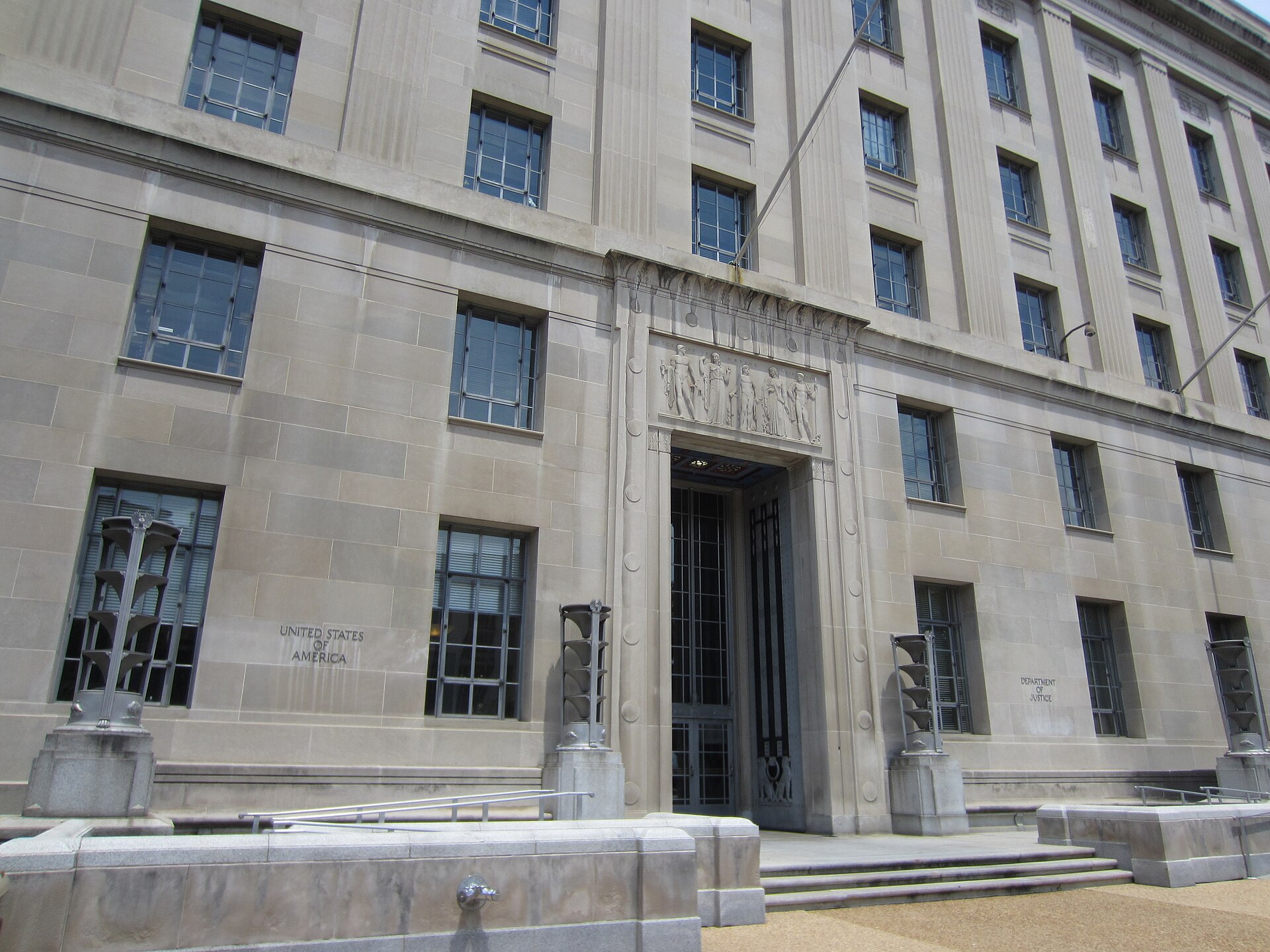
What federal prosecutors announced on Monday
WASHINGTON — All 28 defendants are lawful permanent residents, the Justice Department said in its announcement: people with legal immigration status in the United States who are not citizens and are therefore not permitted to vote in U.S. elections. The charges, filed in criminal complaints across California's four federal districts, include making false statements in a naturalization application and fraudulent voter registration — both felonies carrying a maximum of five years in federal prison — and, for some defendants, unlawful voting by an alien and falsely claiming U.S. citizenship in order to vote or register. Acting Deputy Attorney General Trent McCotter, announcing the cases in Los Angeles, said the defendants were charged with "some combination" of those offences and with knowingly depriving California residents of a fair and impartial election process.
"Every illegal vote cancels out the vote of a lawful American citizen," McCotter said. "This Department of Justice will not look the other way while non-citizens vote in federal elections." Of the 28, prosecutors say 21 actually cast unlawful ballots — some in multiple elections, most of them, on the department's account, in contests from 2020 through 2024, with one alleged to have voted in the June 2026 primary. Eleven defendants were in custody by the time of the announcement; First Assistant U.S. Attorney Bill Essayli, the Central District's top federal prosecutor, said the rest would be taken into custody "in the near future." Those arrested were expected to make initial court appearances on Monday afternoon. No pleas were taken, no defendant has been convicted of anything, and every one of the 28 is presumed innocent unless the government proves its case.
The California cases are one front in a much wider campaign. McCotter said federal authorities have now charged 113 people across 20 states with voting-related crimes in the preceding seven weeks — a figure he contrasted with 13 such charges brought during four years under the Biden administration. The department has also sued some 30 states and the District of Columbia for detailed voter data, including dates of birth, addresses, driver's licence numbers and partial Social Security numbers; those lawsuits, NBC reported, have so far been unsuccessful. California, with 23.1 million registered voters, is simply the largest battlefield — and, after Monday, the one with arrests in it.
How we got here: a list, a 48-hour deadline, a lawsuit, a warning — then arrests
The sequence matters, because Monday's arrests were the fourth step, not the first. On October 13, the federal government gave California officials a list of more than 20,000 registered voters it describes as "likely noncitizens" who had been sent mail ballots, and demanded — first on a thumb drive delivered to Los Angeles County with a handwritten password note, then in formal letters — that the state set those voters' ballots aside within 48 hours until their citizenship could be confirmed. Los Angeles County Registrar Dean Logan's office said it never opened the drive, because doing so would have violated data-security protocols, and that it had no authority to withhold ballots on unverified allegations. Secretary of State Shirley Weber refused the demand outright.
When the deadline passed, the department sued — the case we covered in DOJ sues California to block 20,000 ballots — asking a federal court to order the ballots held out of the count. On Friday, McCotter escalated again in a letter made public on Monday, warning Los Angeles County that election workers who knowingly tabulate ballots cast by people federal agencies identify as noncitizens could themselves face criminal investigation and prosecution, a threat we reported in the DOJ's warning to California election officials. Monday's operation then supplied the evidentiary centrepiece the department had been missing: named defendants, complaints, and arrests, every one of them, McCotter noted, drawn from that same 20,000-name list.
"Today's arrests confirm what we suspected and what we put California on notice for: noncitizens are voting in California elections, which is unconstitutional and illegal," Essayli said. That is the department's theory of the sequence — warning, refusal, proof. California's officials tell the same week in reverse: an unverified list, an impossible deadline, a lawsuit, a threat against county workers, and finally a set of cases covering roughly 25 to 27 ballots that the state says cannot carry the weight being placed on them.
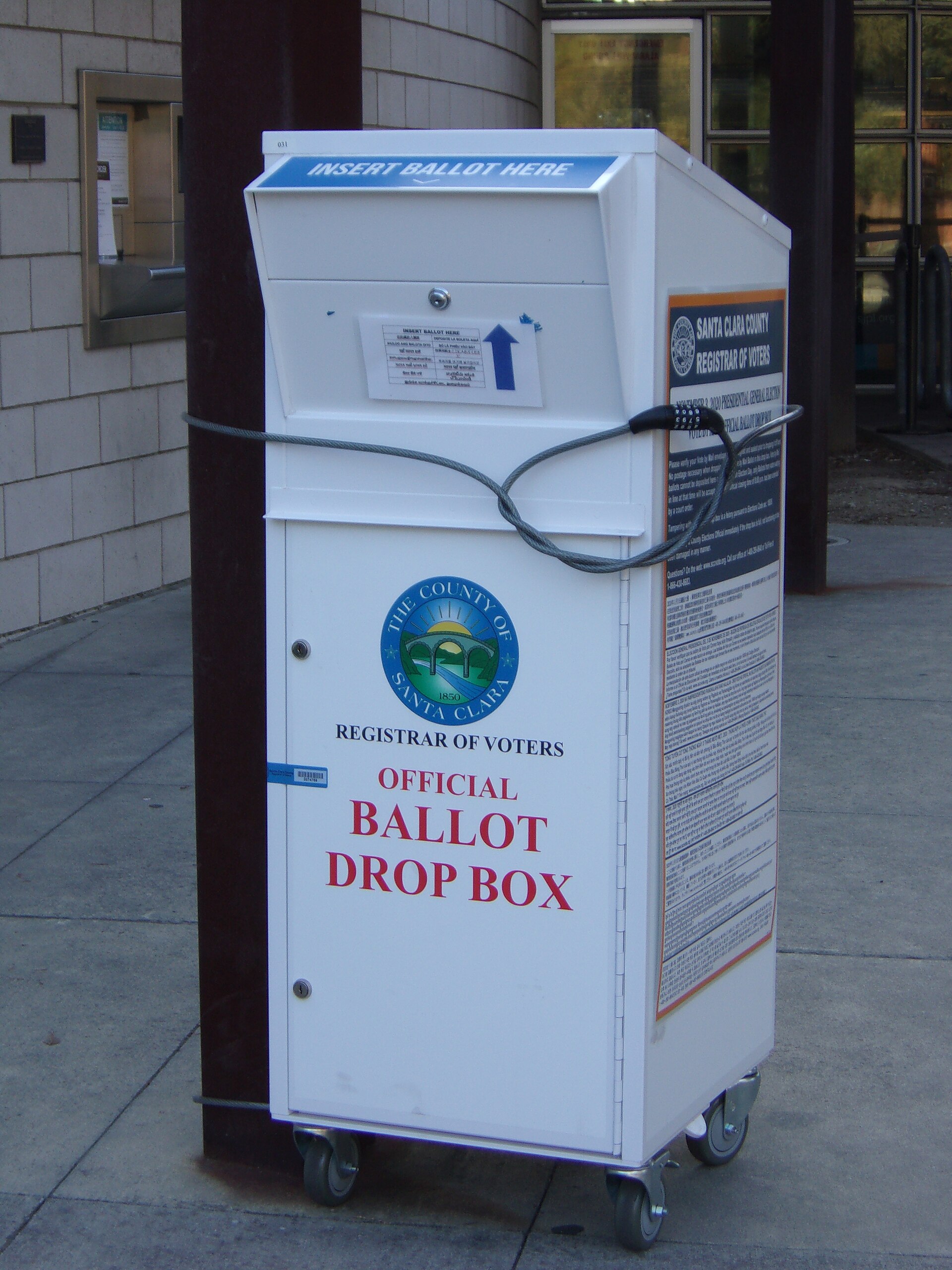
Why this matters
Start with the principle nobody in this fight actually disputes: only citizens may vote in federal elections, a noncitizen who knowingly registers and votes commits a crime, and a lawful permanent resident who does so also puts their immigration future — including any path to citizenship — in jeopardy, which is why false statements in a naturalization application sit at the centre of so many of these complaints. If the government proves that 21 green card holders voted illegally, those are real crimes with real victims in the abstract sense McCotter described: an illegal ballot does dilute a lawful one. Enforcement of that law is not, by itself, controversial.
What is contested — fiercely, and now in federal court — is everything around the 28. The department is not merely prosecuting individuals; it is using the prosecutions to justify holding the ballots of more than 20,000 other voters whose status it has not proven, in an election that is already under way, 15 days before Election Day. Weber's objection is procedural and, on its face, substantial: federal election law restricts systematic voter-list removals close to an election precisely because errors near a deadline cannot be fixed in time, and the department's own spokesman acknowledged the list may contain citizens. McCotter described 190,000 — the figure the Department of Homeland Security floated in July — as a "ceiling" and 20,000 as a "floor" of its most confident cases, and said "there may be some names on there who, it turns out, ultimately are citizens." A list whose own authors concede it contains an unknown number of citizens is a difficult foundation for setting aside ballots first and verifying later. Nevada offered a live demonstration of the risk last month, when state officials said DHS had wrongly identified 185 people there as noncitizens.
The deeper significance is institutional. Elections in the United States are run by states and counties; the federal government's role in who appears on a state's rolls has historically been narrow, and courts have repeatedly said so — Governor Gavin Newsom made exactly that argument against the lawsuit, calling it an attempt to interfere with the state's election process. A federal operation that moves from demanding a state's voter data, to suing for it, to warning county workers of prosecution, to arresting voters drawn from its own contested list — all inside the final three weeks of a midterm campaign — is testing how far that federal role can stretch. Whatever the courts decide about the 20,000 ballots, the precedent set this October will be cited in every election-administration fight that follows it.
What the numbers actually imply
Put Monday's figures next to each other and the argument sharpens rather than settles. Twenty-eight defendants are about 0.14 percent of the 20,000-name list — the department would say that is precisely the point: the list identified real cases. Twenty-one alleged illegal voters, casting roughly 25 to 27 ballots across the 2020, 2022 and 2024 general elections on a close reading of the complaints, stand against some 45 million ballots cast in California in those same elections — about one alleged illegal vote for every 1.7 million cast, a rate that could not have changed any of those outcomes and that matches what election researchers have long found: noncitizen voting in the United States is real, prosecutable and extremely rare, and it has not been shown to change election results. Both readings are arithmetically honest. They answer different questions. The department's number answers "did it happen, and will it be punished?" — yes, on its evidence. California's number answers "does it justify intervening in 20,000 voters' ballots mid-election?" — a question about proportionality that the first number does not settle.
The national figures cut the same two ways. One hundred thirteen charges in seven weeks, against 13 in the previous administration's four years, can be read as a backlog of ignored crime finally enforced, or as a measure of prosecutorial priority rather than of underlying incidence — the same underlying behaviour, counted by people looking harder for it. What the figures cannot tell us yet is the only number that would resolve the underlying dispute: how many of the 20,000 flagged Californians are actually noncitizens. The department has not published its methodology in a form the state can audit, California has not verified the names itself, and until a court orders one side or the other to produce checked names rather than estimates, "20,000" and "190,000" alike remain claims, not findings.
What each side says — and what is not in dispute
The department's case, stated plainly: California was warned, California refused to act, and Monday proved the warning was justified. Essayli accused state officials of "lying" about citizenship checks, noting that California registration relies on an applicant's attestation of citizenship without documentary proof — a design the department portrays as an open door. Democrats and voting-rights groups answer that the operation's timing is the tell: a sweep announced two weeks before midterms, built on a list the state calls unsupported, functions — whatever its intent — to cast doubt on the election's legitimacy and to chill lawful voters who fear their ballots will be challenged. Weber called the federal demands "outrageous" and said she "will not disenfranchise thousands of Californians based on an unsupported and likely inaccurate belief." Logan, the county registrar who actually runs Los Angeles's count, put the operational version: "We cannot withhold or refuse to count ballots based solely on unverified allegations, nor can we disregard the legal requirements governing our election."
Not in dispute: the 28 are charged, not convicted; the ballots at issue in the lawsuit have already been delivered and voting is under way; and no official on either side claims Monday's cases involve ballots cast in the November 2026 election itself — the alleged voting runs from 2020 to the June 2026 primary. If you are a citizen registered in California, nothing announced on Monday changes your ballot's status; the fight over the 20,000 names is a court fight, and it has not been decided.
What happens next
Three clocks are now running. The criminal clock: the 11 arrested defendants begin court appearances, the remaining 17 are expected in custody shortly, and the complaints will be tested in preliminary proceedings where the government must show its evidence defendant by defendant — the first real check on how strong the flagship cases are. The civil clock: the lawsuit over the 20,000 ballots needs a ruling before those ballots are counted, which makes an emergency hearing in the coming days close to inevitable; a judge will have to weigh the department's list against the federal quiet-period protections and the state's administration rights, with the count itself as the deadline. And the political clock: 15 days to Election Day, with both parties already folding Monday into their closing arguments — Republicans as proof the system needed policing, Democrats as proof the policing is the interference. The likeliest honest forecast is that the criminal cases end quietly, one plea or verdict at a time, long after the midterms — while the ballot lawsuit produces the decision that actually matters, quite possibly within the week. Watch the courtroom, not the podium: Monday was the loudest day of this fight, but it will not be the decisive one.
Update — Monday, October 26: the California 28 become part of a national 48
On Monday, October 26, the Justice Department folded the California cases into a national announcement — “Justice Department Announces Charges Involving 48 Aliens for Election-Related Crimes” — bundling the 28 California defendants with 20 further cases publicised in the preceding days: nine in Pennsylvania, six in Florida, four in New York and one in Nevada. Of the 48, the department says 47 are lawful permanent residents; the 48th, Alfredo Santiesteban, 73, of Philadelphia, a Cuban national, is described by the department as an illegal alien and is charged with one count of voting by an alien in the 2024 general election.
The charges across the release include voting by an alien (18 U.S.C. § 611 — the Eastern District of California cases are misdemeanours carrying up to one year), false claims of U.S. citizenship to register or vote, and false statements in naturalisation applications, the felonies carrying up to five years. Most defendants are accused of voting in the 2024 general election, several in 2022 as well, with registrations dating back as far as 2002; the most recent alleged vote is a June 2026 primary in Fresno County. Among the named allegations: Omar Alexander Muñoz, 72, is accused of registering in September 2019 and voting in 2020, twice in 2022 and in 2024, and of lying in a naturalisation application; Maricela Nazarín González, 43, is accused of voting in 2022, twice in 2024 and in 2025. Every defendant is charged, not convicted, and each allegation remains unproven.
One case carries a defence voice. Artur Kopacz, 50, of Philadelphia, is among those accused in Pennsylvania; his attorney, Chuck Peruto, told Votebeat that Kopacz passed the citizenship test twice, believed he was eligible while awaiting citizenship, and has lived in the United States since he was 17. Votebeat also notes there is no evidence the cases are related, or that fraud is widespread or coordinated. Acting Deputy Attorney General Trent McCotter said: “Every illegal vote cancels out the vote of a lawful American citizen,” noting that each California defendant appears on the list of more than 20,000 names given to California officials, who, he said, “refused to look at that list.” First Assistant U.S. Attorney Bill Essayli has said: “California is mailing ballots to noncitizens.” For scale, Reuters' July investigation found 129 federal noncitizen-voting charges in total historically, many apparently stemming from confusion or administrative error rather than intentional fraud.
Sources
U.S. Department of Justice, Office of Public Affairs, October 19, 2026, "Justice Department Charges 28 Foreign Nationals in California for Election Crimes" (Operation Protect the Vote; all 28 lawful permanent residents; felony charges and five-year maximums; October 13 list and the ensuing lawsuit); U.S. Attorney's Office, Central District of California, October 19, 2026 (11 arrested statewide; initial appearances); USA Today, October 19, 2026 (McCotter and Essayli statements, 113 charged nationwide, defendant communities, Weber and Logan responses, 23 million registered voters); The Guardian, October 19, 2026, as syndicated (21 of 28 alleged to have cast ballots, Weber "outrageous," McCotter's ceiling/floor and list-accuracy remarks, Nevada's 185 wrongly flagged voters, expert concerns); NBC Los Angeles / NBC Bay Area, October 19, 2026 (rarity context, federal voter-data lawsuits against 30 states and D.C.); Washington Examiner, October 19, 2026 (Friday warning letter to Los Angeles County, Newsom response); Democracy Docket, October 19, 2026 (complaint-level count of roughly 25–27 alleged general-election ballots against 45,071,805 cast in California in 2020–2024). All defendants are presumed innocent; charges are allegations until proven.