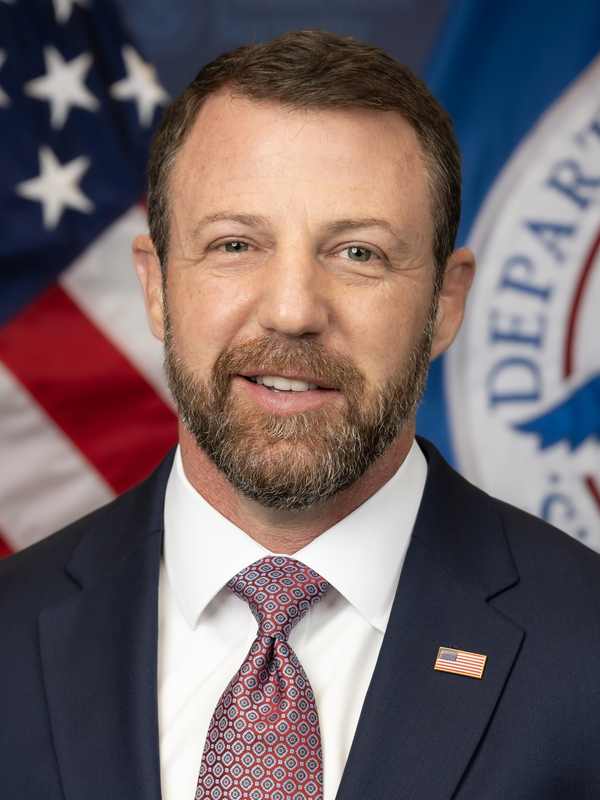
Markwayne Mullin said Trump offered to hand the wounded suspect to NYPD custody — and Mamdani demanded he go free. He also revealed New York ignored 14,766 ICE detainer requests covering 47,750 felony charges. The federal-city showdown, explained.
Mullin rips Mamdani ICE shooting rhetoric in a confrontation that has turned one disputed federal operation in the Bronx into a national argument over sanctuary policy, police safety and political responsibility. At a Friday, October 9 press availability at ICE headquarters in Washington, Homeland Security Secretary Markwayne Mullin said New York City Mayor Zohran Mamdani was inflaming hostility after an ICE agent shot Oscar Belgal during an arrest operation. “I'm speaking facts. The mayor speaks with a political tone. His words are dangerous, and incite hostility. It doesn't help,” Mullin said. He accused Mamdani of incitement “in the name of political theater.”
The exchange was more than a harsh press-cycle rebuttal. A Cabinet secretary publicly accused the mayor of America's largest city of making federal officers less safe; the mayor had called the secretary's agency “rotten to its core” and demanded that it leave New York. The rupture has converted a still-unexplained shooting into a test of who controls immigration enforcement in a city that deliberately limits cooperation with ICE.
The two-hour calls that produced no agreement
Mullin said he spent roughly two hours speaking with Mamdani. According to the secretary's account, the mayor demanded two outcomes: that the wounded man be released and that ICE end operations in New York City. Mullin said President Donald Trump also spoke with Mamdani and offered to transfer Belgal to NYPD custody. The mayor, Mullin said, would not accept that compromise and instead demanded Belgal's outright release.
“We arrest thousands, weekly, that are criminals and he turns a blind eye to it and won't even stand up for his own NYPD officers, that by the way, protect him every single day,” Mullin said. He also rejected Mamdani's description of Belgal as a “New Yorker,” arguing that the mayor was using civic belonging to obscure the federal government's immigration and criminal allegations.
Mamdani's camp frames the calls differently: as an emergency attempt to secure the return of a wounded city resident whose shooting had not been explained and whose 5-year-old child was in the vehicle. Both accounts establish the duration and failure of the negotiation. Neither side has released a transcript that would independently establish every demand or proposed term.
DHS says New York ignored 14,766 detainers
Mullin paired his criticism of the mayor with a new data claim. DHS, he said, had issued 14,766 immigration detainer requests to New York law-enforcement entities and received no meaningful cooperation: “Silence. Absolute silence is what we've got.” The people covered by those requests were accused of 47,750 felony charges in total, he said, while at least 258 foreign nationals were being held on murder charges.
The secretary accused “sanctuary politicians” of enabling criminal activity. He also faulted Mamdani for saying nothing publicly about the stabbing of an off-duty NYPD officer the previous week, an attack allegedly committed by an immigrant in the country illegally. The argument is designed to broaden the dispute beyond Belgal: DHS wants New Yorkers to see the shooting as one consequence of a local policy that, in its view, prevents safer jailhouse transfers.
New York's policy is based on a different premise. The city limits compliance with many civil immigration detainers so residents can report crimes, seek treatment and use local services without assuming every interaction will become an immigration arrest. Civil-rights advocates also note that a charge is an accusation, not a conviction, and that aggregate felony counts can include multiple charges tied to the same person or incident.
ICE's case against Oscar Belgal
Marcos Charles, ICE's executive associate director for Enforcement and Removal Operations, said Belgal was the named target of an investigation, had previously evaded law enforcement and refused to comply when federal agents approached him Thursday. DHS says Belgal has a grand-larceny conviction and prior arrests on allegations involving robbery, theft and being armed with a deadly weapon. As of April 2025, the department said, he was serving five years of probation for felony grand larceny.
DHS further alleges that Belgal has ties to the Trinitarios gang. The department says NYPD arrested him on December 7, 2023 and that he was released days later under city sanctuary rules. Mamdani himself confirmed, according to Fox News, that Belgal had been arrested twice in the city. Those facts and allegations explain why federal agents targeted him. They do not, standing alone, answer whether firing seven rounds was justified.
The Trinitarios began among Dominican prisoners on Rikers Island in the early 1990s and later developed street chapters. That history makes the gang allegation politically potent in New York, but the allegation remains DHS's claim unless and until evidence tied to Belgal is tested in court. A criminal record can establish why an arrest was sought; it cannot retroactively supply the missing seconds that led an agent to fire.
What happened in Marble Hill
The operation unfolded at about 4 p.m. Eastern time Thursday in Marble Hill, the Bronx. ICE agents were conducting a targeted operation to arrest Belgal when at least one agent opened fire. Belgal was struck in the neck and taken to NewYork-Presbyterian Allen Hospital. Federal personnel later removed him from the hospital in unmarked ICE vehicles.
A 5-year-old child believed to be Belgal's son was sitting in the back of the gray Honda CR-V. Reports said the child was physically unharmed. NYPD Commissioner Jessica Tisch said at least one federal agent fired seven rounds and emphasized that NYPD had no involvement before the shooting. Surveillance footage showed plainclothes federal officers approaching the CR-V with guns drawn, but the cameras did not capture the shooting itself.
DHS has not publicly explained what prompted the gunfire. That is the central unresolved fact. Charles's statement that Belgal refused commands describes noncompliance; it does not by itself describe an imminent threat. The FBI and Homeland Security Investigations were at the scene, and their work must determine the vehicle's movement, the agents' positions, what commands were given and why the shooter believed seven rounds were necessary.
Mamdani's late-night answer: “ICE must be abolished”
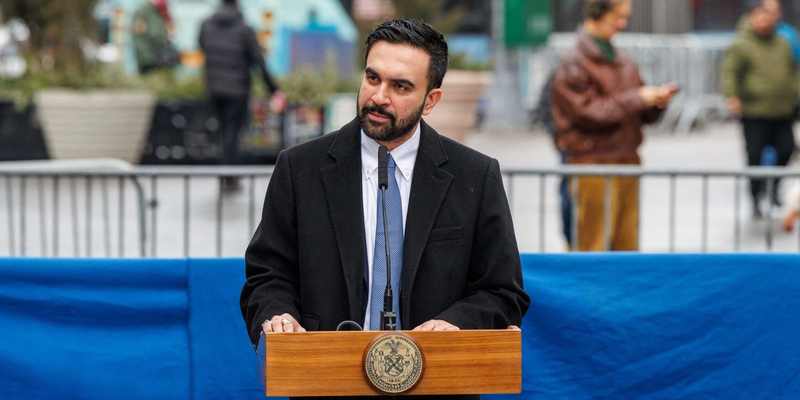
At a late-night press conference near West 225th Street and Marble Hill Avenue, Mamdani spoke over protesters chanting “complicit.” He called ICE “rotten to its core,” said it “must be abolished” and disclosed his unsuccessful two-hour calls with Trump and Mullin. He demanded that ICE leave the scene and stop all enforcement operations in the city. “All they do is terrorize this city,” the mayor said.
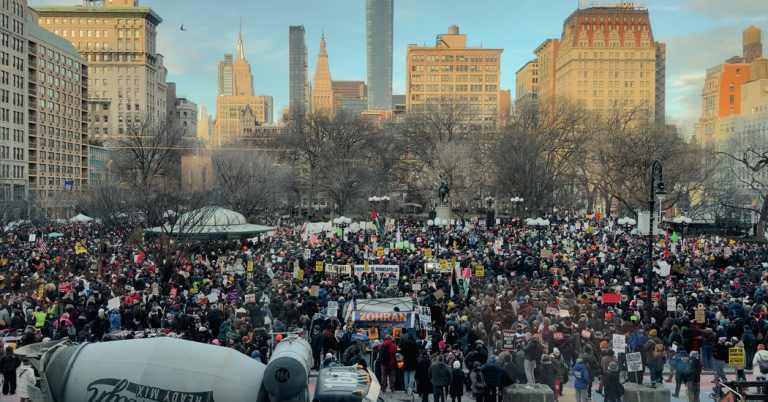
Protesters gathered near Allen Hospital, and brief clashes followed as police managed barricades and the crowd. Bronx Borough President Vanessa Gibson urged those gathered to “turn it into a movement.” Mamdani's language converted “abolish ICE” from an activist slogan into the stated demand of a sitting mayor in the middle of an active federal investigation.
Governor Kathy Hochul took a narrower position. She said she had spoken with Trump and Mullin, expressed outrage, urged a halt to ICE enforcement operations in New York and asked that any body-camera footage be released “so we can establish the facts and get to the truth.” Her request for evidence is the closest thing to shared ground: federal officials say the operation was legitimate, while city and state leaders say the public must see what happened.
Why this matters
This is now a public rupture between a Cabinet secretary and the mayor of America's largest city. Federal-city cooperation has not merely weakened; it has collapsed into competing press conferences, dueling claims about officer safety and a failed two-hour negotiation over one man's custody.
The timing nationalizes the confrontation. The November 3 midterms are 25 days away, and immigration enforcement is an unusually efficient wedge issue. Republicans can point to a Democratic mayor demanding the abolition of a federal agency after it targeted a man with a felony conviction. Democrats and civil-liberties groups can point to seven rounds fired at a vehicle carrying a child, without a public explanation of the threat.
Mamdani's demand raises the stakes beyond oversight of a single shooting. “Abolish ICE” is no longer only movement language; it is the position of New York's mayor. Yet a mayor cannot abolish a federal agency. The demand can mobilize voters, shape city cooperation and frame litigation, but Congress would have to dismantle ICE or redistribute its functions.
How sanctuary policy and federal detainers collide
An ICE detainer asks a local or state agency to notify federal immigration authorities before release and, in some circumstances, hold a person briefly beyond the time local law otherwise requires. New York City limits cooperation to specified serious cases and legal conditions. Supporters argue those limits protect due process and preserve trust between immigrant communities and police. Federal officials argue they cause removable noncitizens to be released before ICE can arrange a controlled transfer.
Belgal's December 2023 arrest and release is the case study DHS keeps citing. To federal officials, it shows that sanctuary restrictions forced agents to attempt an unpredictable street arrest. To city-policy defenders, a prior release under local rules does not relieve federal agents of the duty to justify lethal force in a later encounter.
Mamdani's mayoralty made such a collision foreseeable. He has maintained a long-standing anti-ICE posture and built part of his political identity around resistance to federal immigration tactics. At the same time, reports of a pre-midterms surge in ICE arrests have increased the number of public encounters and the opportunity for a single operation to become a national flashpoint.
Who benefits — and who loses
DHS, Mamdani and Trump each gain a political frame
DHS benefits if the public accepts its sanctuary-cost framing: local releases, the department argues, replace orderly jail transfers with volatile arrests in streets and vehicles. A visible show of force also signals that city resistance will not stop federal enforcement. Mamdani benefits by mobilizing the coalition that elected him and raising his national profile as the mayor willing to confront Trump directly. Trump benefits from issue ownership: immigration, crime and urban Democratic leadership are now fused into one pre-midterm argument.
Those benefits are political, not necessarily public. The 5-year-old who witnessed the confrontation is not helped by either side's messaging. NYPD officers are caught between City Hall's denunciation of ICE and federal operations they do not control but whose protests they must police. Public trust loses when the government's account supplies a target's history but not the immediate reason for gunfire, and when political leaders reach conclusions before investigators release the evidence.
Critics warn the rhetoric can make the next encounter worse
Civil-rights advocates warn that language depicting whole communities as threats — or federal agents as inherently illegitimate — can escalate danger on the street for agents and residents alike. DHS counters that sanctuary releases create the very street-level encounters critics call dangerous. Both arguments describe a feedback loop: lower cooperation produces more contested arrests; more contested arrests harden opposition to cooperation.
Facts, disputed claims and what the data proves
The established figures: Tisch said at least one federal agent fired seven rounds. Mullin said DHS issued 14,766 detainers involving people accused of 47,750 felony charges. Both sides describe a roughly two-hour call. A child was in the vehicle and was reported physically unharmed.
The disputed or incomplete questions: DHS has not explained what prompted the shot. The surveillance cameras did not capture the gunfire. The detainer totals do not by themselves establish how many requests met New York's legal criteria, how many involved convictions, or whether honoring every request would have prevented a later offense.
The arithmetic — 47,750 felony charges divided by 14,766 detainers — works out to about 3.2 charges per detainer. That ratio shows that many of the named people faced multiple accusations. It does not show 47,750 separate people, 47,750 convictions or 47,750 crimes committed after release. Charge counts measure prosecutorial allegations; outcomes require case-level data.
The 258 people held on murder charges is a grave number, but it also needs a denominator and jurisdictional clarity before comparison with New York City's overall homicide totals. “Currently held” is different from “released despite a detainer,” and a murder charge is not a conviction. DHS's figure supports the claim that some detainer subjects face the most serious allegations; it does not, alone, validate every inference made from the larger dataset.
Seven rounds is similarly concrete but incomplete. It measures force; it does not explain why force was used. The two-hour failed negotiation is perhaps the clearest measure of political distance: even direct conversations among the president, a Cabinet secretary and the mayor could not produce a custodial compromise.
What happens next
Body-camera footage: Hochul's request is the one bridge both camps have named. If footage exists, its release could establish commands, timing and perceived danger. If it is withheld for investigative reasons, uncertainty will continue to be filled by partisan accounts.
The FBI and HSI review: Investigators must reconstruct the shooting from surveillance video, ballistics, witnesses, medical evidence and agent statements. Belgal's court and immigration proceedings will determine his custody and legal status separately from any review of the agent's conduct.
The enforcement surge: DHS could answer Mamdani's demand by escalating the reported pre-midterms arrest surge in New York, testing whether political resistance limits operations or provides more targets for them. The next high-visibility arrest near a school, hospital or crowded street could trigger a confrontation before this one is resolved.
The midterm clock: Voters will decide on November 3 whether “abolish ICE” energizes Democrats or helps Republicans portray the party as hostile to enforcement. Mamdani may benefit in New York while creating a harder message for swing-district Democrats elsewhere. Trump may own the issue, but ownership also brings responsibility for every unexplained use of force.
The most constructive scenario is evidence first: footage released, findings explained and Belgal's case handled in court. The most combustible is reciprocal escalation — more federal operations, larger protests and rhetoric that assigns motive before facts. The likely path may fall between them, with investigators moving slowly while campaigns turn uncertainty into certainty for political effect.
Related coverage
- ICE agent shoots man in the Bronx as a 5-year-old sits in the car
- Mamdani calls ICE “rotten to its core” after the Bronx shooting
- Reuters/Ipsos poll finds a Trump voter enthusiasm gap before the midterms
Sources
- New York Post — Mullin's response to Mamdani and account of the calls
- Fox News — DHS press availability and competing statements
- New York Post — detainer and felony-charge figures
- USA Today — shooting, child in the vehicle and official responses
- Fox News — Mamdani's presser, protest and Belgal background
Reporting the established facts, disputed claims and political consequences without choosing a side.