War / Europe — Denmark long-range missiles Russia deterrence took a concrete step on Thursday, October 22, as Copenhagen agreed to buy its first long-range precision missiles: Kongsberg Joint Strike Missiles for its F-35 jets and ground-launched Anthem cruise missiles from U.S. firm Covenant. Moscow's embassy called the policy a path to "inevitable disastrous consequences."
Denmark long-range missiles Russia planning moved from intention to contract on Thursday, when the Danish government announced it has agreed to buy its first long-range precision-strike missiles — a capability the small NATO country has never fielded before. Defence Minister Jeppe Bruus said the systems would let Denmark strike "behind enemy lines" if it were attacked. "We're in a serious and deteriorating security situation and that is why we are building up the defence and strengthening our combat power," Bruus told reporters in Copenhagen, in remarks reported by Reuters.
Track it live: Live wars tracker — conflicts and military operations worldwide
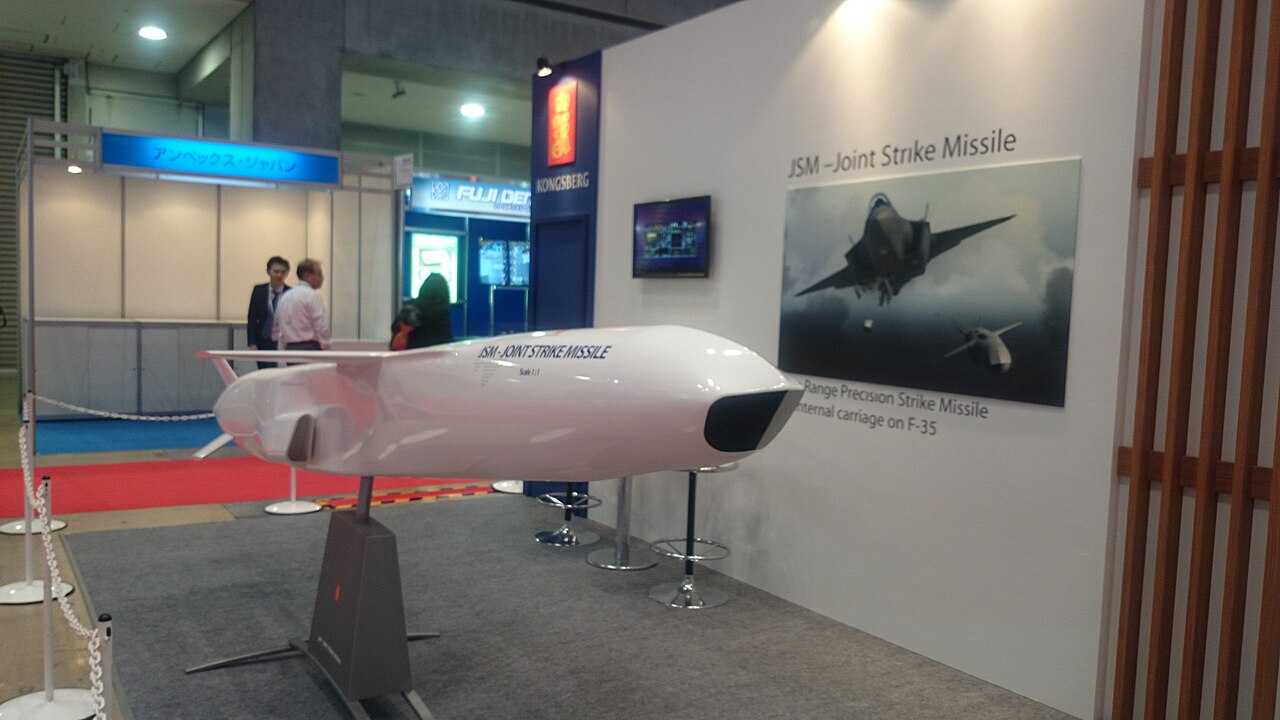
Two missiles, two ways to strike back
The package has two distinct parts. The first is the Joint Strike Missile (JSM), made by Norway's Kongsberg, for Denmark's F-35 fighter jets. The JSM is a fifth-generation stealth air-to-surface missile designed to be carried inside the F-35A's internal weapons bay, preserving the jet's low-observable profile. Kongsberg confirmed the selection the same day, noting Denmark becomes the seventh nation to choose the missile after Australia, Canada, Germany, Japan, Norway and the United States — and that the scope and value of the contract will be set in negotiations still to come.
The second part is newer and less proven: the Anthem cruise missile, made by the U.S. defence firm Covenant and produced in Germany, as a ground-launched option. Defence News and Breaking Defense, reporting the announcement independently of Reuters, described Anthem as a heavy-payload, deep precision-strike weapon that Covenant only unveiled last month, says it has flown more than 200 times since its first flight in August 2025, and is building a production site in eastern Germany with planned output of 1,000 missiles in 2027 and up to 5,000 a year after that. Bruus stressed the European sourcing: "That's where we will be sourcing them from, so we can be sure it's a European supply chain." He declined to say how many missiles Denmark has ordered, what they will cost, or when they will arrive.
Moscow's answer
Russia responded within the day. In a written statement, the Russian embassy in Copenhagen said Denmark's missile policy aims at confrontation with Moscow and warned of "inevitable disastrous consequences." "Copenhagen is enthralled by the dangerous illusions that purchasing offensive high-precision long-range weapons to pose a military threat to a nuclear power will help strengthen Denmark's security and defence," the embassy said. Danish officials frame the same purchase in precisely opposite terms: not a threat, but insurance — the ability, in Bruus's words, to "strike back" so that an attack on Denmark would not be cost-free.
Why this matters
This is why the Denmark long-range missiles Russia story matters beyond one procurement: a country of under six million people, which spent decades after the Cold War cutting its armed forces, is buying the ability to hit targets hundreds of kilometres beyond its own borders — and presenting that, publicly, as deterrence rather than escalation. Denmark said last year that it intended to buy long-range offensive weapons, and Prime Minister Mette Frederiksen at the time urged the military to "buy, buy, buy" after years of budget cuts, a shift prompted directly by Russia's full-scale war in Ukraine. Thursday's announcement converts that political decision into named weapons, named suppliers and a NATO commitment: Danish officials cite an alliance target under which Copenhagen is expected to offer NATO a long-range strike capability by 2030.
The choice of suppliers carries its own signal. One missile is Norwegian and European; the other is American-designed but manufactured in Germany, at a European plant, through a European supply chain. That is a deliberate hedge at a moment when European governments openly discuss how reliable U.S. support would be in a future crisis. Bruus linked the purchases explicitly to "the ambition that Europe should be able to defend itself by 2030 at the latest" — the same horizon the European Defence Agency has set for reaching what it calls battle-decisive munitions capacity.
What the numbers do — and do not — say
The unknowns are as important as the announcement. No quantities, no price, no delivery dates were disclosed, and for the JSM the contract itself still has to be negotiated. Missiles described as "long-range" in European programmes typically span roughly 500 to 1,500 kilometres depending on configuration, but neither Copenhagen nor the manufacturers published the performance of the Danish variants. Anthem, notably, is still in its testing phase: Denmark is buying into a production ramp — 1,000 missiles planned in 2027, up to 5,000 in 2028 — rather than into a warehouse of finished weapons. The deterrent effect Bruus describes is therefore, for now, partly a promise about industrial capacity as much as a count of missiles in Danish hands.

Who gains, who objects
Denmark's government gains a capability it can offer NATO and a visible answer to voters asking what four years of war in Ukraine mean for Danish security. Kongsberg gains a seventh JSM customer; Covenant, a two-year-old startup, gains a first European anchor buyer for a missile still in testing — a significant vote of confidence. Critics of the move, beyond Moscow's embassy, make a different argument in European debates over strike weapons generally: that offensive-range systems in more hands raise the temperature of every future crisis and make miscalculation more likely. Supporters answer that the temperature was set by the invasion of Ukraine, not by the countries responding to it, and that a state which cannot strike back invites the very attack it hopes to prevent. Both claims are now part of Denmark's public record — Bruus's "ability to strike back" on one side, the embassy's "disastrous consequences" on the other — and neither side has offered evidence that the other intends to act first.
What happens next
Three things will decide whether Thursday's announcement becomes a real capability or a headline. First, the JSM contract negotiations with Kongsberg, which will reveal scope and value. Second, Anthem's testing and the German plant's ramp — a startup's production promises are the riskiest part of the package. Third, the wider European pattern: Denmark is one of several NATO states racing to field long-range strike by 2030, alongside procurement moves such as Finland's deepening defence agreements with partners in Kyiv and alliance-wide sourcing deals through NATO's procurement agency. If those programmes deliver on schedule, the military map of northern Europe in 2030 will look very different from the one Russia's invasion encountered in 2022. If they slip, Thursday will read in hindsight as the moment the intention was announced — loudly, and with a warning from Moscow attached.
Sources
Reuters, "Danish military orders long-range missiles, drawing Russian ire," October 22, 2026 (Bruus remarks, Russian embassy statement, Anthem/JSM details, 2025 background). Defense News, "Denmark to buy Kongsberg, Covenant missiles for new long-range strike option," October 22, 2026 (air- vs ground-launched roles, TV2 reporting, 500–1,500 km typical range class, NATO 2030 contribution target). Breaking Defense, "'Ability to strike back': Denmark commits to long-range missile orders," October 22, 2026 (Danish defence ministry statement, 43-aircraft F-35 fleet, Anthem flight history and Covenant remarks). Kongsberg ASA market announcement, October 22, 2026 (Denmark seventh JSM nation; scope and value to be negotiated; internal-carriage stealth description). Defence Industry EU and Rapporteur, October 22, 2026 (Chief of Defence recommendation, European supply-chain and EDA 2030 context).
Related coverage: Finland and Ukraine sign €300 million in agreements in Kyiv · Ukraine joins NATO's NSPA procurement partnership · Denmark's intelligence warning on a limited Russian attack on NATO