War / Ukraine — Finnish Prime Minister Petteri Orpo signed seven agreements in Kyiv on Thursday worth about €300 million, headlined by a satellite deal with ICEYE and Nokia — signed hours after a Russian barrage, and days after Ukraine's Starlink problems showed Kyiv why it wants satellite capacity of its own.
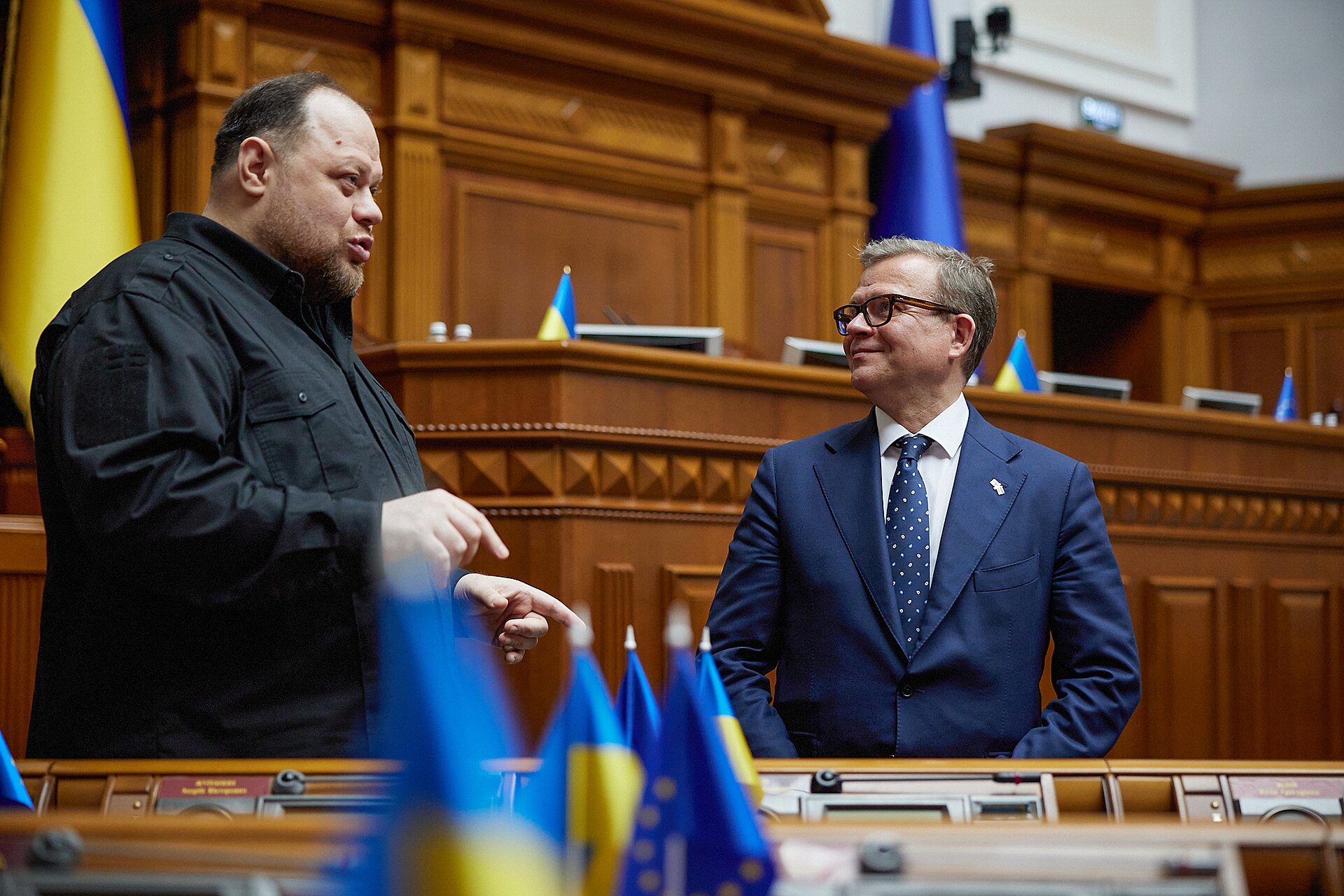
The latest Finland Ukraine support package took shape in Kyiv on Thursday, October 22, when Finnish Prime Minister Petteri Orpo arrived in the Ukrainian capital and the two governments signed seven documents worth a combined total of around €300 million (about $336 million). President Volodymyr Zelenskyy announced the package after the signing ceremony: "Today, there is a new support package for Ukraine from Finland, and there are agreements that expand our opportunities for cooperation. Seven documents have been signed, and the total value of today's agreements is around EUR 300 million." The centrepiece is a letter of intent between Ukraine's Ministry of Defence and two Finnish technology companies, ICEYE and Nokia, to explore sovereign satellite communications that Ukraine would control itself.
Track it live: Ukraine war map — live front-line and strike tracker
What Finland and Ukraine actually signed
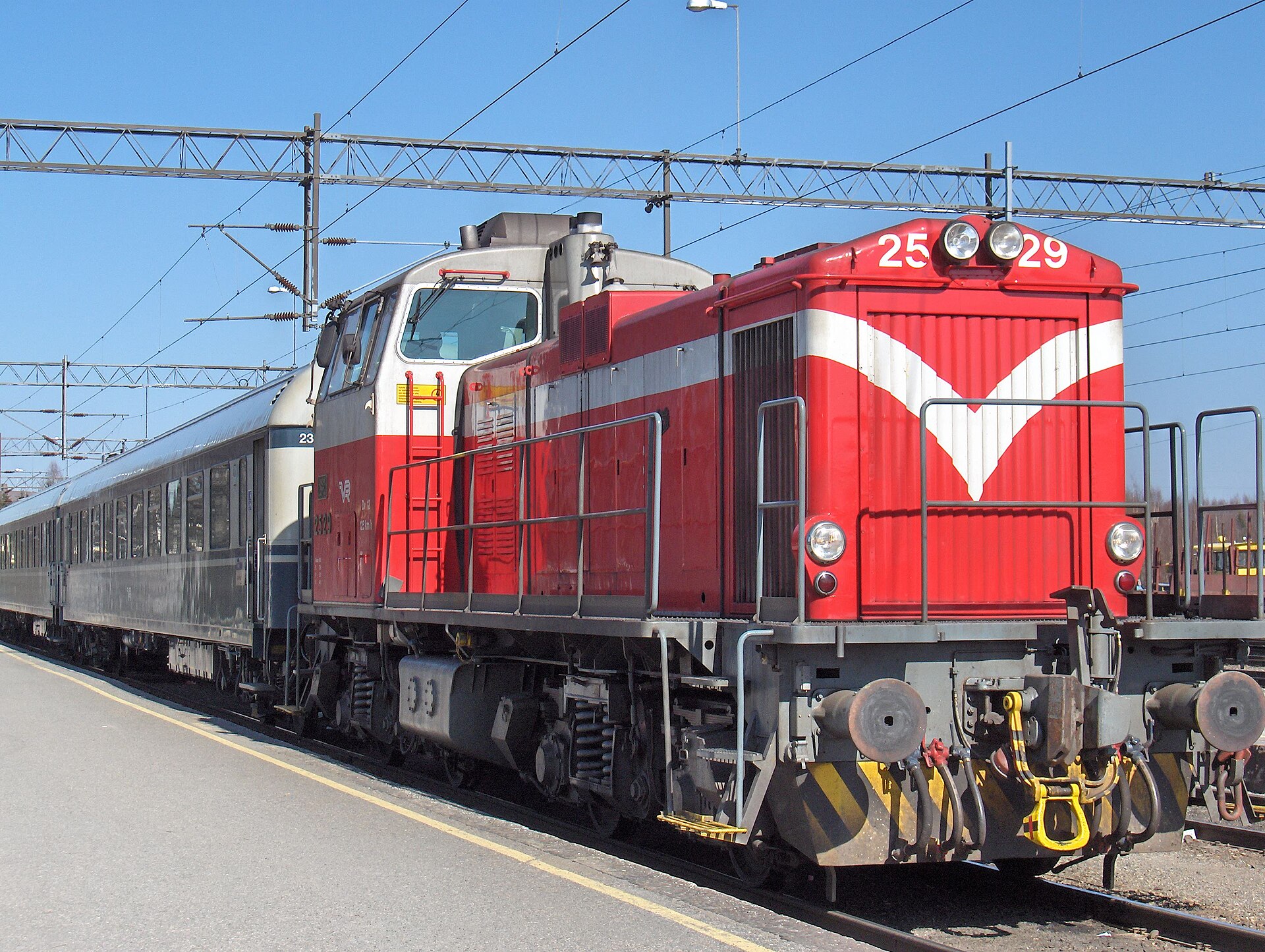
The seven documents, as itemised in Ukrinform's account of the signing ceremony, span defence, logistics, industry and reconstruction. Ukrainian Deputy Defence Minister Serhii Boyev, Nokia Defense vice-president Mikko Viitanen and ICEYE Ukraine chief executive Volodymyr Tsabal signed the space-sector letter of intent, covering cooperation on satellite communications capabilities for Ukraine's Defence Ministry. Ukrainian Prime Minister Sergii Koretskyi and Orpo signed a certificate confirming Finland's donation of ten diesel locomotives. Interior Minister Ivan Vyhivskyi signed a cooperation memorandum with KENNO TECH, a Finnish protective-structures company. Around those headline items sat an industrial package: a Ukrainian-Finnish Industrial Council, a Patria-linked plan for a joint venture in Finland to develop and manufacture military and dual-use unmanned systems, a Bavovna Miltech–INSTA statement of intent on facilities in Finland for heavy unmanned aerial systems, and an Elematic–Avantage Technology letter of intent on industrialised housing construction and a precast concrete plant.
Separately, Finland's Foreign Ministry announced €2 million (about $2.2 million) in humanitarian aid for Ukraine on Thursday. At a joint press conference, Zelenskyy said the two sides had discussed cooperation in satellite communication, energy and logistics, and thanked Finland for backing the two sectors Russia is now targeting hardest: "Thank you for your willingness to support our logistics and energy sectors — these are key targets for Russia right now, and having more locomotives, more energy equipment, and more resources to protect our energy infrastructure will truly make a difference."
The satellite deal is the strategic core
The ICEYE–Nokia letter of intent is an agreement to explore, not a purchase order — Nordic Defence Sector, reporting the companies' joint press release, was explicit that it does not constitute a procurement, and that no financial value, procurement plan or timetable has been announced for Ukraine specifically. What it does signal is direction. ICEYE chief executive Rafal Modrzewski said in the release: "Ukraine needs secure, sovereign and high-performance satellite communications systems that it controls. We have a proven track record of delivering sovereign missions at speed to help build that capability." The two companies announced a broader partnership on October 1 to build broadband satellite communications systems in low Earth orbit that governments can own and control — satellites, ground infrastructure and terminals — rather than renting capacity from a commercial operator, with the first satellites in that wider project expected in 2028.

Zelenskyy confirmed the agreement in a statement on Telegram, saying Ukraine had agreed to make greater use of Finland's satellite capabilities and identifying the cooperation as important for Ukraine's defence and resilience. Kyiv already relies heavily on satellite imagery and communications from foreign partners to detect Russian missile launches and coordinate its defences — which is precisely why the word "sovereign" in the Finnish offer matters, and why the timing of this package is not accidental.
Why this matters
Thursday's signings landed in the middle of the most uncomfortable week Ukraine has had with its own satellite lifeline. Ukrainian officials have spent days reporting that Starlink and Starshield services — the SpaceX systems Ukrainian units depend on for drone operations and battlefield communications — were restricted, throttling fast-moving drones (see our coverage of the Starlink disruptions on Ukraine's front lines). Zelenskyy told CNN on Thursday that Starshield, SpaceX's military-grade service, is still not fully restored. Against that backdrop, a deal whose entire selling point is satellite capacity that a government "controls itself" is not a routine industrial memorandum. It is Kyiv beginning, publicly, to diversify away from a single commercial supplier whose service can be slowed by decisions taken outside Ukraine.
The rest of the package is aimed at the war Russia is actually fighting this autumn. Moscow's campaign has swung back to energy infrastructure and logistics ahead of winter — the overnight barrage that hit Kyiv hours before Orpo's arrival damaged transport and medical infrastructure in the capital. Ten donated diesel locomotives sound modest next to missile defences, but rail is how Ukraine moves fuel, grain, equipment and evacuees when roads and power grids are under attack, and diesel traction keeps running when electric lines are cut. Energy equipment, protective structures and shelter expertise — Finland leads European work on civil-protection shelters — address the same target set from the defensive side.
There is also a political signal in who is signing, and where. Orpo used the Kyiv press conference to draw a line on energy trade, telling reporters, in Reuters' account, that no deals should be made to buy gas from Russia as long as Moscow's war continues. Finland stopped receiving Russian pipeline gas in May 2022, after refusing Moscow's demand to pay in roubles, and ended Russian liquefied natural gas imports completely in July 2024 under EU sanctions. Coming in the same week that Washington's diesel arrangements with Moscow have dominated the argument between the White House and Kyiv (see Zelenskyy's attack on the Trump–Putin diesel deal), a European prime minister standing in Kyiv and ruling out Russian energy purchases altogether is a deliberate contrast — and Zelenskyy's team will not have missed it.
What the numbers actually say
The €300 million figure needs handling with care, because it is a combined value of agreements — donations, memoranda and industrial intentions — not a single cash transfer or a weapons shipment of that size. The locomotive donation is a gift; the satellite item is an exploratory letter of intent with no price attached; several other documents are frameworks whose value depends on contracts that have not yet been signed. Set against Finland's record, though, the direction is consistent. According to the Finnish government, Helsinki has provided Ukraine with nearly €5 billion in support since Russia's full-scale invasion began, including about €3.6 billion in military equipment and defence materiel — a total that, relative to the size of Finland's economy, places it among Ukraine's strongest backers. Thursday's package is less a change of policy than the industrial deepening of an existing one: less charity, more co-production, with Ukrainian drone makers setting up in Finland and Finnish satellite and shelter firms embedding in Ukraine.
The wider day in Kyiv
Orpo's visit — his third to Ukraine, after August 2023 and May 2025 — also included a Ukrainian-Finnish business forum attended by representatives of more than ten Finnish companies, and talks covering Ukraine's European Union path; Ukrainian officials noted that Kyiv has opened four of the six negotiation clusters in its EU accession process and that Finland is a firm backer of membership. The visit came amid a renewed diplomatic push in which US envoy Steve Witkoff met Zelenskyy in Oslo on Tuesday and President Vladimir Putin in St Petersburg on Wednesday, and as Zelenskyy publicly floated freezing the current front lines as the basis of a ceasefire (see Zelenskyy accepting a freeze of the front lines). Finland's president, Alexander Stubb, took part in the Oslo meeting — meaning Helsinki was present at both ends of this week's diplomacy, in the peace-talk room and in Kyiv with a chequebook.
What happens next
Three tests will show whether Thursday's package is substance or ceremony. First, whether the ICEYE–Nokia letter of intent converts into a funded programme with dates; sovereign satellite communications take years, and the companies' own wider constellation is not expected to fly before 2028, so any near-term benefit would have to come from greater Ukrainian access to existing Finnish satellite capacity, which Zelenskyy's Telegram statement already hinted at. Second, whether the locomotive donation and energy support arrive before the winter grid campaign peaks — the value of both falls sharply if they land in spring. Third, whether the drone joint ventures in Finland move from memoranda to production lines, which would make Finland a physical part of Ukraine's supply chain rather than only a donor to it. What is already clear is the strategic thread connecting the day's documents: after a week in which Ukraine's dependence on other people's satellites became a headline, Kyiv signed a package whose core promise is infrastructure Ukraine controls itself.
Sources
Ukrinform reporting of the October 22 signing ceremony (seven documents, €300 million total, signatories and the locomotive certificate), via EuropeSays; Kyiv Independent reporting of Orpo's Kyiv visit (agreements worth over $336 million, satellite and energy support, €2 million humanitarian allocation), via EuropeSays; Nordic Defence Sector, "ICEYE and Nokia sign LoI with Ukraine on sovereign satellite communications," October 22, 2026 (joint ICEYE–Nokia press release details, Modrzewski quote, Zelenskyy Telegram statement, no-procurement precision); Reuters, October 22, 2026 (Orpo: no gas deals with Russia during the war; joint press conference topics; Finland's 2022–2024 break with Russian gas), via DevDiscourse; Finnish government visit reporting via 112.ua and MonteOz (nearly €5 billion in total support including €3.6 billion military, business forum, Orpo's 2023 and 2025 visits, EU cluster talks); CNN, October 22, 2026 (Zelenskyy Amanpour interview: Starshield not fully restored).